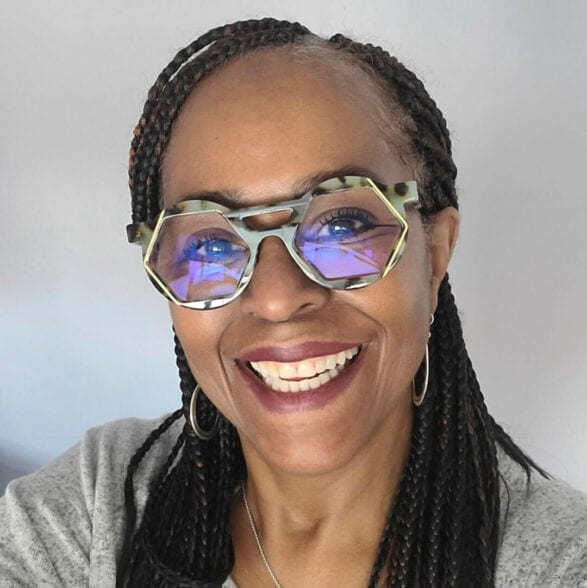
Leah Wilcox was introduced to basketball with a bang.
A playful tussle with her basketball-obsessed older brother Raymond when she tried to change the TV channel sparked her curiosity about the game he loved. It was the 1970 NBA Finals, won by the hometown New York Knicks, that helped shape her future.
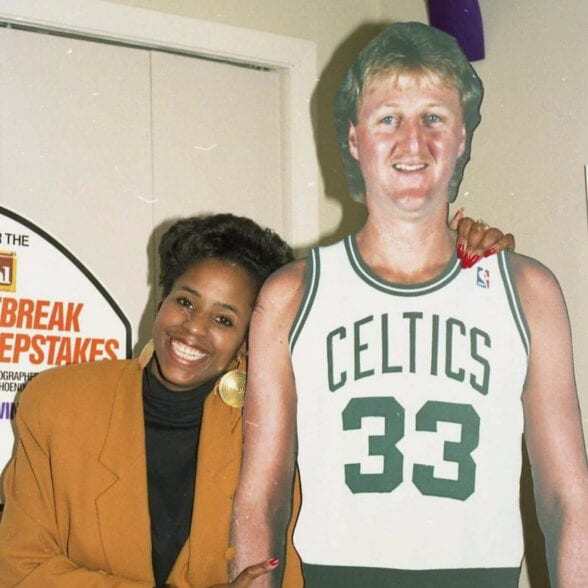
The series ignited a lifelong passion for the game, one Wilcox nurtured in the basketball-rich environment of New York City in the ’70s, ’80s, and ’90s. She spent countless hours at legendary summer league venues like West 4th Street, Rucker Park, City College, and I.S. 8 in Queens.
“I would attend all the games, so that was my buildup to the sport,” Wilcox says.
Now in her 41st season at the NBA, it began an extraordinary journey for Wilcox, the current Vice President, Commissioner’s Office Liaison, on her way to the 2026 John W. Bunn Lifetime Achievement Award. Aside from Enshrinement, it is the Naismith Basketball Hall of Fame’s highest honor.
“Few people in the NBA are as universally beloved and respected as Leah Wilcox,” NBA Commissioner Adam Silver says. “Leah’s impact on the league goes far beyond any single role or responsibility. She has helped shape the very fabric of the NBA community through her ability to build genuine, lasting relationships with generations of players and their families, who have relied on her over the years for advice, mentorship and a steady source of wisdom and reassurance. I cherish my relationship with Leah and continue to marvel at the way she touches so many lives.”
As Director and then Vice President of Player and Talent Relations, Wilcox was the first African American female vice president at the league office. In that role, she worked closely with players and their families, helping them acclimate to the NBA.
“When I hear the name Leah Wilcox, I think about transition,” Hall of Famer and Emmy Award-winning Inside the NBA co-host Shaquille O’Neal says. “Not for me, but for my family. She and my mother became very close. She explained to my mother what life would be like for an NBA mom of a superstar.
“Leah was always there for my mom, was always there for me, and she made my transition easy. You see stuff from the outside, but you don’t know until you get here. So being the number one pick, being highly touted—[Leah would say], ‘Yes… No… Shouldn’t say that, Shaquille… Don’t wear the rope chain in this interview… Wear a suit and tie.’”
He adds: “She gave me the CliffsNotes on how to act as a professional athlete, and she gave my mother the CliffsNotes on how to be a professional mom [of an athlete]. Without Leah, I don’t get recognized as fast. She was that voice you always respected and listened to. She was like a first mentor to me and my family.”
Charles Barkley, who also went from a Hall of Fame career to Emmy-winning broadcaster on Inside the NBA, echoed those sentiments in a tribute to Wilcox that aired on the show.
“You know, when you first get to the NBA, it’s a shock to your system. Money, fame, and all that stuff that goes with it. She has been like a Mom to all of us for all of these years. She’s been there through the good times, the great times, the bad times, the stupid times, where I’ve done stuff. I love her with everything I’ve got.”
Wilcox started her NBA career after a high school internship at RKO General Inc. That led her to working with legendary WRKS broadcaster Ken Webb in developing the Kiss Cards, the station’s community-oriented basketball team that was a rival to WBLS’ Sure Shots. Wilcox worked tirelessly behind the scenes in various roles to ensure the Cards’ success.
But she felt pulled toward the NBA, fueled by both her love for the sport and a defining moment at the 1983 All-Star Game.
“Marvin Gaye sang the national anthem,” Wilcox recalls. “And I said, ‘I need to be at that event.’ My ultimate dream would be to work in the NBA. And I didn’t even know what that meant.”
Persistence, relationships, and a chance conversation turned into being hired as a Unit Coordinator at NBA Entertainment, a division focused on expanding the league’s reach through archival and original content. That led to the development of the groundbreaking NBC show NBA Inside Stuff, co-hosted by Ahmad Rashad and Willow Bay.
It aired on NBC from 1990–2002, moved to ABC from 2002–06 and later returned on NBA TV from 2013 until its final season in 2018. In the pre-social media era, it provided an intimate view of NBA players that the public had never seen before. By showcasing their charitable endeavors, hobbies and personalities, the Saturday morning show became must-see viewing for a generation of NBA fans.
In 2024, NBA Inside Stuff was awarded the Naismith Basketball Hall of Fame’s Curt Gowdy Transformative Media Award.
Wilcox was at the center of it. She helped secure the talent and provide insight into players’ hobbies, interests and off-court pastimes, whether it was taking Hall of Fame player Dikembe Mutombo bowling for the first time, or following New York Knicks icon and Hall of Famer Patrick Ewing Christmas shopping at FAO Schwarz.
“On Inside Stuff, we had guests no one else could get,” Rashad says. “We’d be sitting there and Leah would say, ‘I got ’em.’ Next thing you know, they’re in the office, ready to shoot. It’s about teamwork, getting something done and putting that show together. There was no show quite like that on television, and Leah was a superstar.”
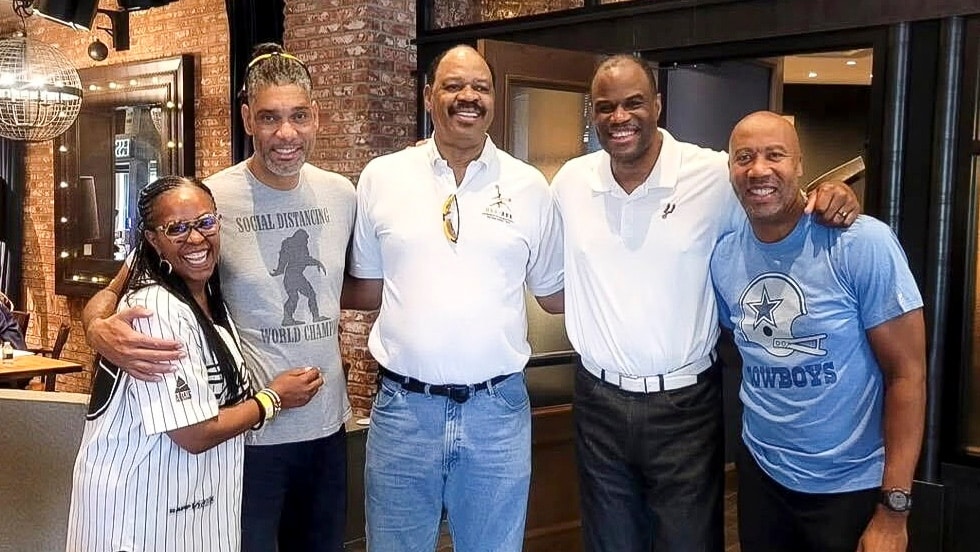
Wilcox has also played a role in mentoring the next generation of sports executives. Kori Davis Porter, Senior Vice President of Business Operations, has worked for the NBA for more than three decades. Wilcox encouraged her aspirations as a college student looking for a role in the sports industry, then worked side by side with her as a producer on Inside Stuff.
“I looked at her as an inspiration,” Davis Porter says. “At the time, not just as the first Black female vice president, but I saw her as a strong woman leading in the space on the only magazine show profiling players and their stories. Leah was somebody that we worked with daily on good story ideas for the players and to keep us abreast of all the exciting events that were happening. We really looked to her as a lead on the players we should profile and the stories that we should do. I could have never predicted [when I was in college] that I’d be her coworker.”
Forging relationships with the music and entertainment industry helped Inside Stuff expand beyond the league. In the ‘80s, hip hop was fast becoming a global phenomenon, and the NBA was on a similar trajectory. The two entities, along with film and TV, converged on Inside Stuff and Wilcox was the connective thread between them.
“When MTV was first getting started and they were looking to get into the NBA, they wanted to bring the camera crews in with Downtown Julie Brown and everyone,” Detroit Pistons star and Hall of Famer Isiah Thomas recalls. “Leah was right there with us making sure that everything was done right. And not only was NBA Entertainment launched but MTV was launched also, so it was good times.”
Her influence extended to NBA All-Star Weekend, which included securing talent for initiatives including the Stay in School Jam, Team Up and Read to Achieve. And true to her reputation as a facilitator with strong relationships in the entertainment community, she provided them with special experiences, too. Wilcox not only booked Grammy Award-winning singer Brandy to perform for the Stay in School Jam at the 1995 NBA All-Star Weekend in Phoenix, but she also helped plan her 16th birthday party that happened the same weekend.
“Leah was the main person telling you what to do, where to go,” says Chrissy Murray, the former Vice President of Media and Artist Relations for Atlantic Records. “She knew everybody and effortlessly, seamlessly, ushered us around the whole weekend until we were comfortable.”
Celebrity fans who attended games were no match for Wilcox’s warm demeanor, access to NBA-branded merchandise and shared love of the game. She bonded with Denzel Washington and his wife Pauletta over team affinities during the Lakers’ Showtime era. That helped her convince Washington to host and narrate the NBA at 50 special.
“They didn’t have courtside seats then,” she laughs. “They used to sit near the tunnel at the Forum. I’d be rooting for the opponent and they would yell at me, which I thought was great, because now we have dialogue!”
Even for an icon like Michael Jordan, Wilcox was able to make a difference. She once surprised Jordan with his sister, Roslyn, who flew in to support him while he was shooting the Michael Jordan’s Playground documentary in 1991.
Wilcox also helped establish the Mothers of Professional Basketball Players Inc. and Fathers & Men of Professional Basketball Players Inc., organizations that began as support networks and evolved into charitable groups.
“When I met Leah, she was so full of energy,” says Flora Allen-Hopson, the mother of Hall of Famer Ray Allen. “It was like, I’ve known her forever, because she comes in with so much energy and hype and this big ole smile, you know? Once she meets you, she never leaves you. She was the glue that held us together.”
As Wilcox’s influence grew, so did the league’s approach to player support. She was influential in the NBA expanding its role in developing its players off the court. Now, each team in the league has its own player development department.
“Everything that I seemed to initiate, I watch how my colleagues take it to the next level,” she says. “It was a wonderful opportunity to help fill the gap between the league, the players, and the entertainment industry. And now when I see the fusion of music and game highlights, I know Inside Stuff and the NBA Entertainment producers are a template for that.”
Her career has also made her a witness to some of the league’s most defining moments.
“When you talk about The Dream Team I, II, and III—I was there. I was at the 1998 NBA Finals with the Chicago Bulls, and I got to see the Knicks win the 2026 NBA Finals,” Wilcox says. “I feel like a female version of Forrest Gump. I was there for it all.”
For her contributions to the league, she was named to the Sports Illustrated list of 101 Most Influential African Americans in Sports in 2003. Wilcox currently serves on the Board as Vice President of the NBA Players Legacy Fund.
In recent years, Wilcox has focused on connecting retired players to resources and advocating for their health. Her work with the National Basketball Retired Players Association’s Cardiac Health Screening initiatives has helped save lives, addressing a critical issue among former basketball players who are disproportionately impacted by heart issues.
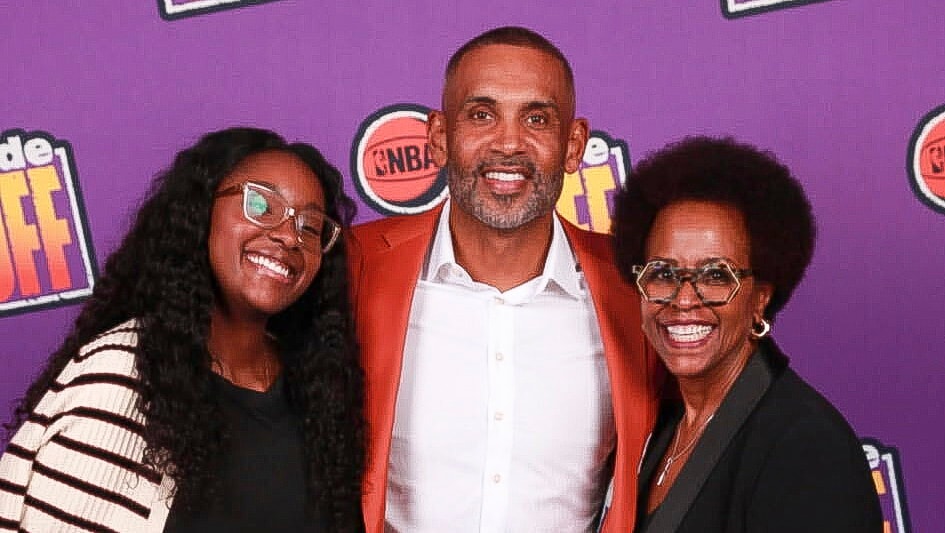
“I’ve cried when we’ve lost so many players in 2015,” Wilcox says. “It hurts. But it helps to know we’re making a difference.”
Among her many accomplishments, she is most proud of being a mother. Her daughter, Millisa, is a Social Media Manager at Universal Epic Universe, reflecting the same values of connection and service.
Despite the recognition, Wilcox remains grounded in what has guided her all along.
“We’re built to serve,” she says. “It’s in our DNA. I don’t see anyone as a stranger. I treat everyone equally. It doesn’t matter. Whether you’re the gentleman working the front desk, a member of the office cleaning crew or a senior league executive, we’re all in this together. Kindness goes a long way!”
She adds, “I enjoy watching people’s reaction to this league. Something I’m extremely blessed to be a part of. Even after 40-plus years, when I walk into the office, I still get excited as though it’s my first day. I’m greeted by the Larry O’Brien Trophy, the Jerry West logo man and the energy of my coworkers. How lucky am I? I was a unique individual placed here by God, in a unique position, nine months after my mother died. And now I am receiving the prestigious John W. Bunn Lifetime Achievement Award. Who knew? God knew.”
* * *
This story originally appeared in the 2026 Naismith Basketball Hall of Fame program.
Tonya Pendleton is an accomplished journalist, cultural critic and early contributor to Slam, ESPN and Jordan Magazines whose multimedia career has spanned the gamut from sports, news and entertainment.