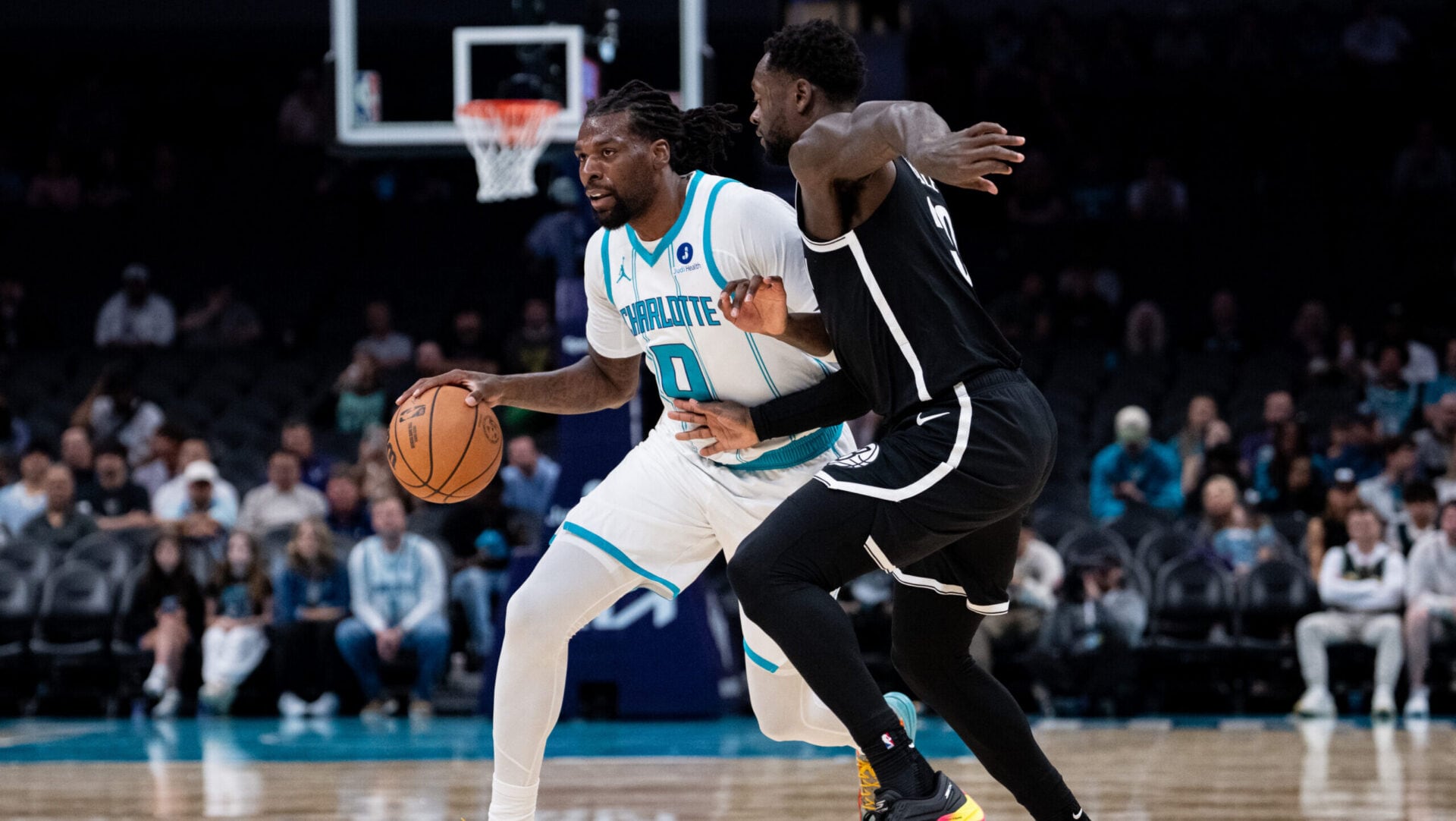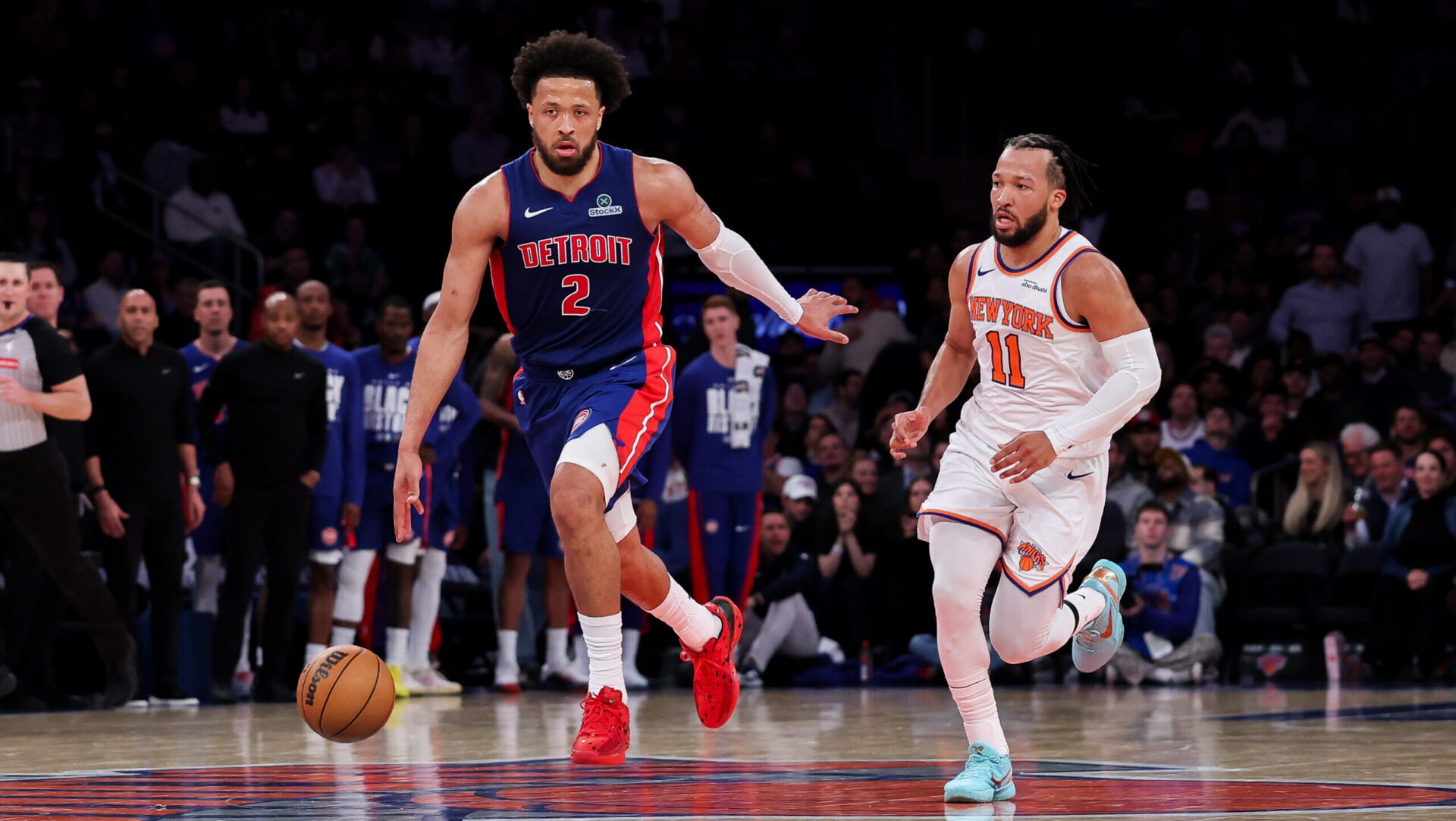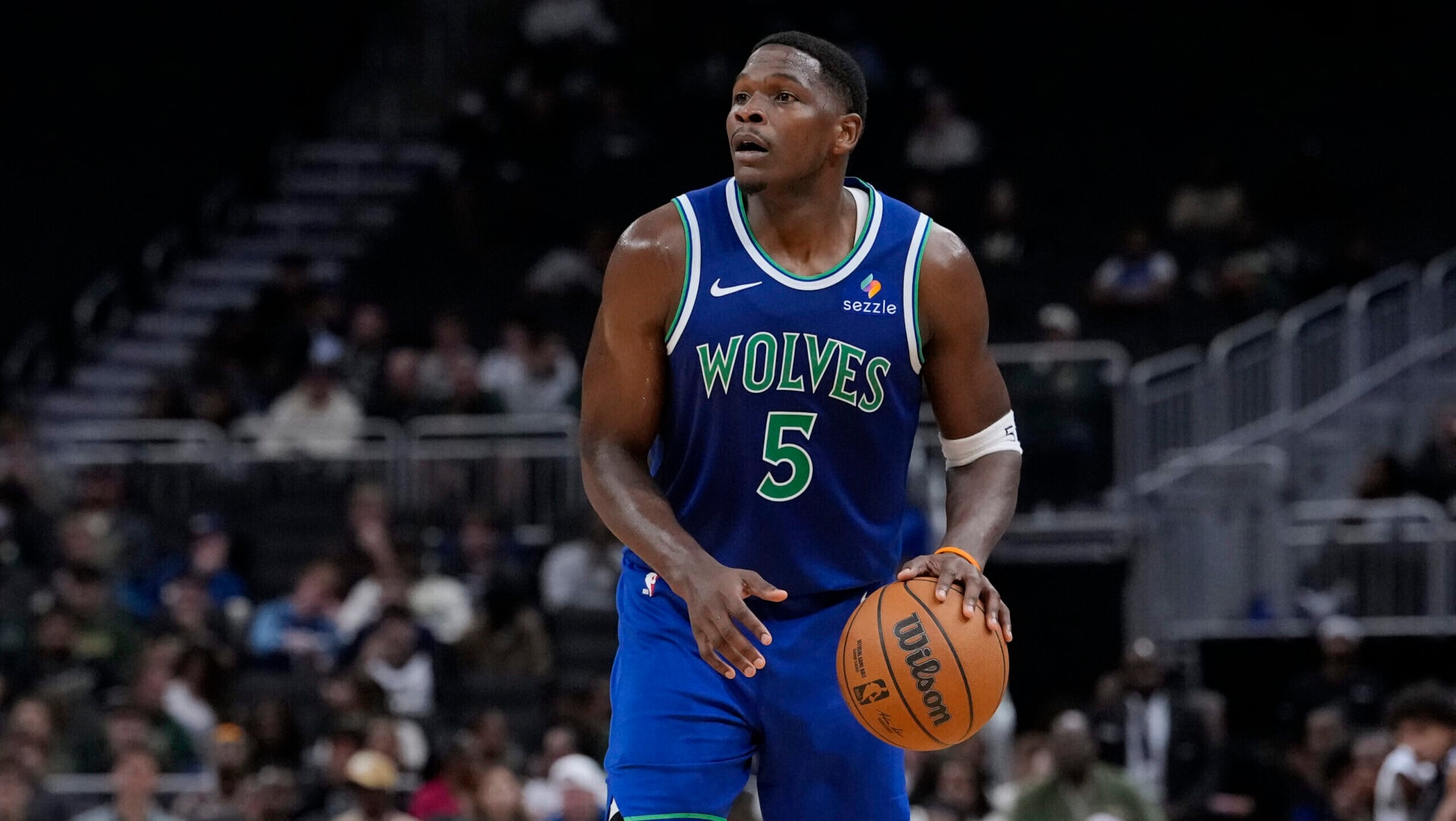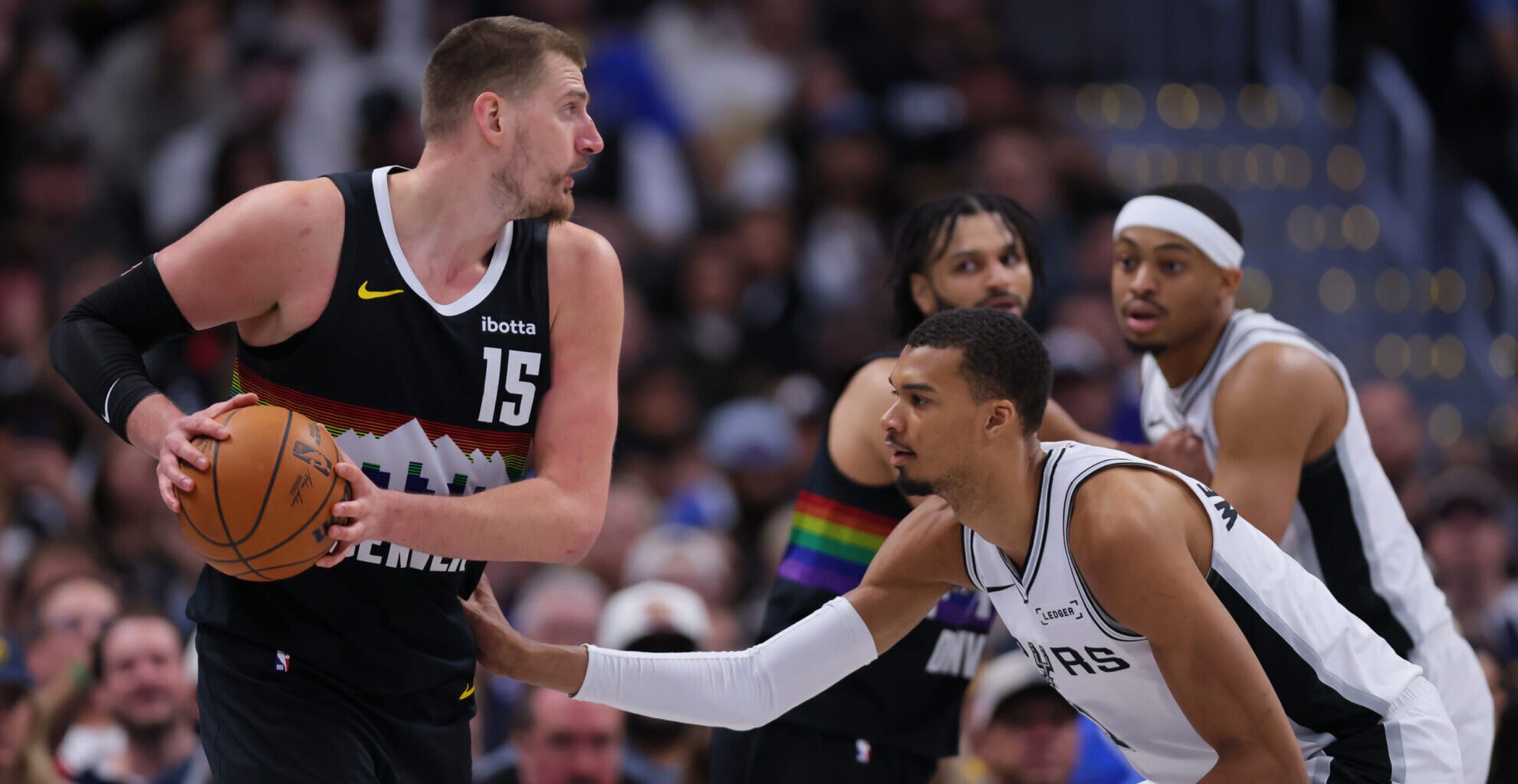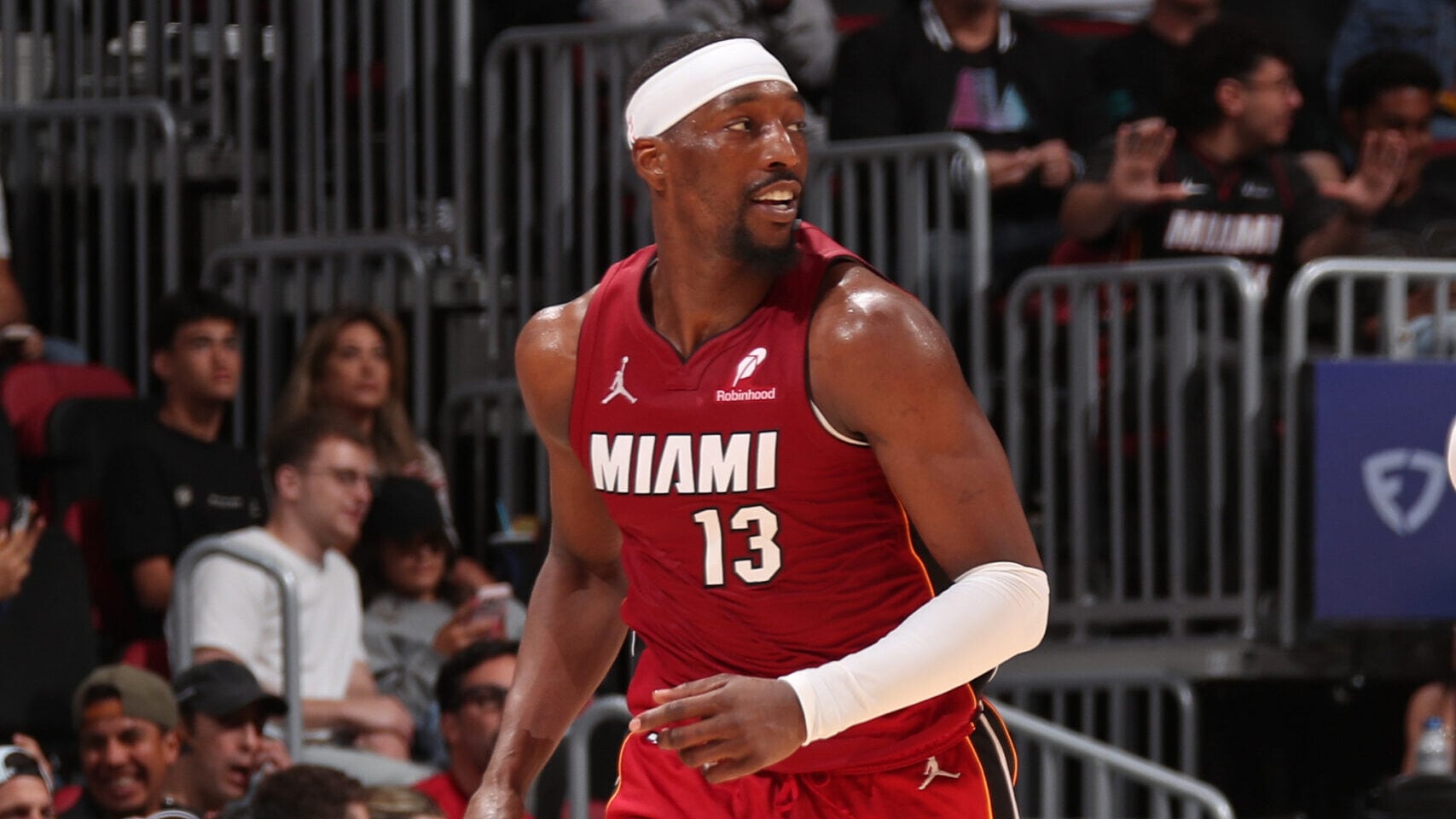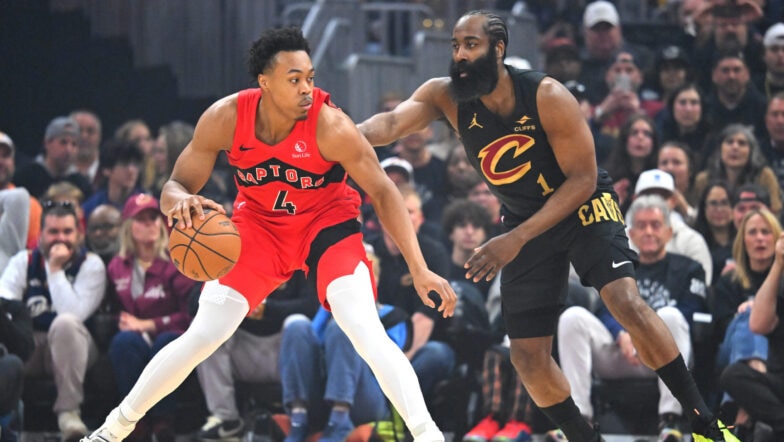
Scottie Barnes and James Harden are within the top 40 of RotoWire’s top 150 category league players.
Nikola Jokić and Victor Wembanyama continue to battle for the No. 1 overall player in all fantasy formats.
With the start of the regular season under two weeks away, NBA basketball is rapidly approaching. Along with it comes fantasy basketball. Below are RotoWire’s top 150 players for category leagues, with short analysis for each.
Round 1
1. Nikola Jokić, Denver Nuggets — There is no hole in the profile. Elite field-goal percentage on enormous volume, a free-throw line he actually helps you in, 3s at a workable clip, and top-of-the-league rebounds and assists with real steal totals attached.
2. Victor Wembanyama, San Antonio Spurs — The blocks are the single most valuable individual category asset in fantasy, and he pairs them with the rare combination of 3s and rebounds.
3. Shai Gilgeous-Alexander, Oklahoma City Thunder — Better here than in points leagues by a wide margin. Elite field-goal percentage for a guard, elite free-throw percentage on massive attempt volume, and a steal rate that plays.
4. Luka Dončić, Los Angeles Lakers — With LeBron James in Philadelphia, the usage goes up and so does everything that comes with it. The counting stats and 3-point volume are first-round quality; the field-goal percentage drag and the league-leading turnover totals are what separate him from the three names above.
5. Cade Cunningham, Detroit Pistons — Massive assist volume and good rebounding for a guard, plus 3s. The turnovers are punishing in this format, and the field-goal percentage has never been a strength. But he’s still young enough for things to improve.
6. Jayson Tatum, Boston Celtics — A year removed from the Achilles tear and back as Boston’s clear No. 1 with Brown gone. Tatum is one of the most well-rounded options you can get in the first round, opening up different types of team builds.
7. Jalen Johnson, Atlanta Hawks — Steals and blocks from a forward who also puts up 20/10/6 on good efficiency. The free-throw line is the weak spot and the turnovers are up with the playmaking load. Games played have also been a question mark.
8. Cooper Flagg, Dallas Mavericks — Produced an excellent rookie season, setting up a potential sophomore breakout into stardom. Steals and blocks from a forward, improving efficiency, and Kyrie Irving’s return should raise the quality of his shots without eating many of them.
9. Anthony Edwards, Minnesota Timberwolves — One of the league’s best combinations of 3-point volume and free-throw accuracy from a high-usage scorer, with steals on top. Swapping Naz Reid and Julius Randle for LaMelo Ball should mean cleaner looks but a lower assist rate for Edwards.
10. Giannis Antetokounmpo, Miami Heat — The classic category-league puzzle. Elite field-goal percentage, elite blocks, elite steals, elite rebounds, and a free-throw percentage plus 3-point total that force you to punt or pair carefully. Build the roster around the punt and he’s better than this rank would suggest.
11. Scottie Barnes, Toronto Raptors — Steals and blocks from a forward with rebounds and assists is perfect for category leagues. The free-throw percentage and the low 3-point volume are the drags, and swapping Brandon Ingram for Kawhi Leonard trims the usage further.
12. Tyrese Maxey, Philadelphia 76ers — 3s at volume, a strong free-throw percentage and a sneaky-useful steal rate. The concern is that Jaylen Brown and LeBron James arriving trims the usage, and possibly minutes. Efficiency should improve with the easier looks, which partly offsets it.
Round 2
13. Donovan Mitchell, Cleveland Cavaliers — 3-point volume, a reliable free-throw percentage and better steal totals than he gets credit for. James Harden handles the playmaking, so the assists stay modest. Durable and predictable.
14. Kevin Durant, Houston Rockets — Still one of the cleanest efficiency lines in basketball, both from the field and the line, with 3s and about a block a game. He turns 38 at the end of the month, so rest days are the risk, but the per-game category profile gives him first-round upside.
15. Karl-Anthony Towns, New York Knicks — Elite free-throw shooting from a center, good field-goal percentage, 3-point volume and 12 rebounds. His lack of blocks from the center position is something managers may need to rectify later in a draft.
16. Stephen Curry, Golden State Warriors — Much better here than in points formats. League-leading 3-point volume, a free-throw percentage near the top of the league and a real steal rate. Age and games played are a concern.
17. Tyrese Haliburton, Indiana Pacers — An elite assist-to-turnover ratio, which is worth a lot in category leagues, plus 3-point volume and an excellent free-throw percentage. The offense is built for him, but coming off an Achilles injury creates downside risk.
18. Austin Reaves, Los Angeles Lakers — Elite free-throw shooting on high-attempt volume, 3s and secondary playmaking with LeBron James gone. The turnovers climb with the usage, but four of the nine categories are clear positives.
19. Amen Thompson, Houston Rockets — Steals and blocks in combination from a wing is close to unique, and the field-goal percentage is strong. You are punting 3s and free-throw percentage to roster him, so plan the build around it.
20. Jamal Murray, Denver Nuggets — 3s, strong free-throw shooting and a career-best field-goal percentage next to Nikola Jokić. Assists at volume with manageable turnovers. One of the safest roles in the NBA.
21. LaMelo Ball, Minnesota Timberwolves — 3-point volume near the top of the league plus steals and assists. The field-goal percentage and turnovers are negatives, and now there’s a question of how much the offense runs through Anthony Edwards instead. Games played is still a question.
22. Alperen Sengun, Houston Rockets — Field-goal percentage, rebounds, assists and steals from the center spot, coming off career-high playmaking. The turnovers are heavy and he gives you nothing from 3, which is what keeps him behind Towns here.
23. Anthony Davis, Washington Wizards — Twenty games last year. When he plays, it’s a first-round category line: field-goal percentage, double-digit boards, blocks and steals together. Pair him with durable pieces and take the swing.
24. Trae Young, Washington Wizards — Assists, 3s and free-throw percentage at elite levels with a useful steal rate. The field-goal percentage and the turnovers have to be leaned into or worked around.
Round 3
25. Trey Murphy III, New Orleans Pelicans — A major category riser. High-volume 3-point shooting at a good clip, strong free-throw percentage and low turnovers. Dejounte Murray’s return trims the usage, but the shooting profile is exactly what this format pays for.
26. Josh Giddey, Chicago Bulls — Rebounds, assists and steals from a guard, with his 3-point shooting finally landing. The turnovers are the tax on a nightly triple-double threat running the offense.
27. Lauri Markkanen, Utah Jazz — 3-point volume, a very good free-throw percentage and rebounds from a forward. Utah’s win-now additions should improve his availability while costing him shots. Low steals, blocks and assists caps his upside.
28. Brandon Miller, Charlotte Hornets — Charlotte’s most likely usage winner after the LaMelo Ball trade, with 3-point volume as the main category contribution. The field-goal percentage needs to come with the shot increase for the upside case to pay off.
29. Evan Mobley, Cleveland Cavaliers — Blocks, steals and rebounds with an ordinarily strong field-goal percentage. Last year’s shooting slump is the reason he’s here rather than a round earlier, and a bounce-back is reasonable.
30. Chet Holmgren, Oklahoma City Thunder — A category-league player. Blocks and 3s from a center, with a solid field-goal percentage and a free-throw line he helps you in. The raw counting totals are ordinary, which matters much less here compared to points formats.
31. James Harden, Cleveland Cavaliers — 3s at volume, free-throw attempts at a good rate, assists and steals. The field-goal percentage and turnovers are both negatives, so he’s a build-around rather than a plug-in.
32. Jalen Williams, Oklahoma City Thunder — Balanced and efficient two-way statline. Wrist surgery and a hamstring problem wrecked last season, but he’s still OKC’s No. 2 option.
33. Devin Booker, Phoenix Suns — A down shooting year means he’s discounted. He’s still Phoenix’s primary creator with strong free-throw shooting, decent 3-point volume and assists. Positive regression on the field-goal percentage is the upside case.
34. Domantas Sabonis, Sacramento Kings — Field-goal percentage, huge rebounding and center-position assists. No blocks and heavy turnovers are the two holes. With Russell Westbrook retired and DeMar DeRozan in Denver, the usage should climb back toward his peak.
35. Bam Adebayo, Miami Heat — A well-rounded line from the center position. The addition of Giannis Antetokounmpo could mean fewer boards but more 3-pointers.
36. Jaren Jackson Jr., Utah Jazz — Blocks and 3s from a big, with an unusually good free-throw percentage for the position. The field-goal percentage and the foul trouble are the recurring problems.
Round 4
37. Kawhi Leonard, Toronto Raptors — A player still capable of MVP-level two-way numbers. A clean bill of health last season cuts against a decade of evidence, and Toronto’s depth gives him easy reasons to pull back on minutes and usage.
38. Deni Avdija, Portland Trail Blazers — An All-Star breakout with 3s, rebounds and playmaking from a forward. The field-goal percentage and turnovers are the drags, and the Ja Morant and Damian Lillard additions threaten his touches.
39. Walker Kessler, Los Angeles Lakers — Has been providing strong traditional big-man stats, and that’s not expected to change now that he’s in Los Angeles rather than Utah. Easy lobs from Luka Dončić give him strong field-goal percentage potential.
40. Derrick White, Boston Celtics — One of the format’s signature assets. 3s and blocks and steals in the same line, plus a strong free-throw percentage and low turnovers. Fewer shots with Jayson Tatum back and Paul George added, but the category shape is unaffected.
41. Jalen Brunson, New York Knicks — Excellent from the field and the line for a high-usage guard, with 3s and assists at volume. Zero blocks and modest steals mean you need defensive stats elsewhere.
42. Kyrie Irving, Dallas Mavericks — A strong category-league riser. Elite field-goal and free-throw percentages, 3-point volume, steals and one of the lowest turnover rates among high-usage guards. Coming off an ACL tear at 34, which is creating a discount.
43. Matas Buzelis, Chicago Bulls — Coming off a sophomore breakout and still has the potential for both more minutes and development. Provides strong two-way stats as a forward.
44. Jaylen Brown, Philadelphia 76ers — He should be Philadelphia’s second scoring option given Joel Embiid’s absences and LeBron’s likely load management. He’s typically been better in points leagues, however.
45. Franz Wagner, Orlando Magic — Provides 22/5/5 when healthy. The free-throw percentage and 3-point accuracy have both been erratic. Combined with injuries, that creates a discount relative to his potential.
46. Jalen Duren, Detroit Pistons — Elite field-goal percentage and a nightly double-double, with the free-throw line improving from a very low base. Blocks are thinner than you’d want and there are no 3s. Low variance, low ceiling.
47. Darius Garland, Los Angeles Clippers — Excellent free-throw percentage, 3-point volume and assists as the clear lead playmaker in LA. Recent injury issues create some downside risk. Brandon Ingram’s partial Achilles tear only gives Garland more upside.
48. Onyeka Okongwu, Atlanta Hawks — Field-goal percentage, rebounds and blocks from an entrenched starter playing 32 minutes. The new 3-point range is a meaningful category-league addition rather than a curiosity.
Round 5
49. Paolo Banchero, Orlando Magic — He’s a stat-sheet stuffer, but the field-goal percentage is mediocre, the free-throw line is inconsistent, the steals and blocks are thin and the turnovers are heavy.
50. Dejounte Murray, New Orleans Pelicans — Steals in bulk plus rebounds and assists from a guard. Back from an Achilles tear into 30-plus minutes.
51. Kon Knueppel, Charlotte Hornets — A second-year leap candidate whose calling card is what this format rewards: efficient shooting from the field and the line with 3-point volume. Will be handed some of Charlotte’s vacated usage. However, it’s unclear if he’ll be ready to start the season due to a hamstring issue.
52. Donovan Clingan, Portland Trail Blazers — Blocks and field-goal percentage with a double-double baseline in 27.2 minutes as a sophomore. Portland’s frontcourt is his to claim, and more minutes would create more upside.
53. Michael Porter Jr., Brooklyn Nets — 3-point volume at a high clip, good field-goal percentage, rebounds and very few turnovers. Randle’s arrival costs him shots, but the efficiency profile is a clean category fit.
54. LeBron James, Philadelphia 76ers — At his age, still a nightly triple-double threat on strong efficiency. But what will his minutes, role and games played actually look like?
55. Nickeil Alexander-Walker, Atlanta Hawks — The Most Improved Player award came from a 3-and-D profile, and 3-and-D is worth a lot in category leagues. 3s, steals and clean efficiency in a defined role.
56. OG Anunoby, New York Knicks — A premier mid-round 3-and-D pick in this format. 3s, steals, blocks, a good field-goal percentage and almost no turnovers from a low-usage wing.
57. Desmond Bane, Orlando Magic — High-volume 3-point shooting at a strong clip, good free-throw percentage, steals and low turnovers. Role cemented as Orlando’s No. 3 option.
58. Keyonte George, Utah Jazz — Coming off a breakout season where he produced All-Star level numbers. But will all the new additions cut his usage significantly?
59. Ryan Rollins, Milwaukee Bucks — Steals, 3s and efficient shooting in last year’s breakout, which came with Antetokounmpo out. Tyler Herro is in town, while Kevin Porter Jr. and Brayden Burries are competing for the same minutes, which makes the role murky.
60. Tyler Herro, Milwaukee Bucks — 3-point volume and an excellent free-throw percentage, now with the highest usage of his career as a lead playmaker. That also means the most turnovers of his career, and he gives you nothing defensively.
Round 6
61. Cameron Boozer, Memphis Grizzlies — The best-positioned rookie on the board and the market is climbing toward him. The caution is that rookie inefficiency and turnovers are charged at full price here, which is not true in points formats.
62. Pascal Siakam, Indiana Pacers — Good field-goal percentage, low turnovers for his usage and reliable steals. Haliburton’s return means fewer possessions but the efficiency should hold. Dependable, unexciting category inventory.
63. Stephon Castle, San Antonio Spurs — A category-league faller. His two weaknesses, shooting efficiency and turnovers, are the two things this format punishes hardest. The steals and assists are positives, though.
64. Zach Edey, Memphis Grizzlies — Excellent per-minute rebounding, blocks and field-goal percentage, coming off a lost season with a foot injury. A 30-minute role would mean he crushes this ranking.
65. Ivica Zubac, Indiana Pacers — Zubac provides solid center stats and should get great looks from Tyrese Haliburton. A lack of consistent shot-blocking drops him to a mid-round player relative to other bigs.
66. Joel Embiid, Philadelphia 76ers — Elite free-throw shooting on heavy attempts, blocks and a strong field-goal percentage. When he plays he wins categories outright. Philadelphia’s upgrades mean fewer minutes but less reason to push him. High-variance swing.
67. Julius Randle, Brooklyn Nets — Rebounds, assists and a good free-throw percentage, likely leading Brooklyn in combined points and assists. However, there isn’t much for defensive production.
68. Coby White, Charlotte Hornets — 3-point volume and a good free-throw percentage as the unambiguous starting point guard in Charlotte. However, a calf strain makes his availability for the start of the season unclear – the same calf that hampered him last year.
69. Dyson Daniels, Atlanta Hawks — The steals are still the point even after last year’s historic total didn’t repeat. Solid field-goal percentage. No 3s and a weak free-throw line.
70. Jaden McDaniels, Minnesota Timberwolves — Steals and blocks together from a forward with a solid field-goal percentage and improving 3-point shooting. LaMelo Ball running the offense should make the looks easier.
71. Ausar Thompson, Detroit Pistons — One of the best steal-plus-block combinations in the NBA on a per-minute basis. Shooting outside of the paint is a concern, but there’s higher upside than this just on the potential for a bigger workload.
72. Naz Reid, Charlotte Hornets — 3s, blocks and a good field-goal percentage from a big who should finally clear 30 minutes as a starting power forward.
Round 7
73. Kel’el Ware, Milwaukee Bucks — Blocks, field-goal percentage, rebounds and a bit of stretch shooting from a big. On a rebuilding Milwaukee team, the minutes should come.
74. De’Aaron Fox, San Antonio Spurs — Dealt with injuries, though still provided solid point-guard stats. Stephon Castle and Dylan Harper have eaten into the usage, but Fox is still a bounce-back candidate.
75. Damian Lillard, Portland Trail Blazers — Elite free-throw percentage and 3-point volume even in decline, which keeps him relevant here longer than in points formats. The bigger questions are the combination of age, injury and role in a crowded Portland backcourt.
76. Caleb Wilson, Chicago Bulls — The rookie is expected to start and play 30 minutes, and he has the tools to fill steals and blocks. Rookie shooting percentages are a cost in this format, unlike in points leagues.
77. Dylan Harper, San Antonio Spurs — A playoff breakout at 22.6 minutes as a rookie, with steals and good efficiency for a first-year guard. San Antonio’s backcourt logjam is the obstacle.
78. Alex Sarr, Washington Wizards — Blocks and stretch shooting are both category assets, which makes him more interesting here than in points formats. But a reshaped roster means fewer opportunities for the third-year big.
79. Paul George, Boston Celtics — Absences have piled up for George recently, and he’s not getting any younger. But his stats translate well to fantasy, as a low-turnover 3-and-D player who can create when needed.
80. Mikal Bridges, New York Knicks — The most durable player in basketball comprised over 82 games. 3s, steals, a good field-goal percentage and almost no turnovers.
81. Ja Morant, Portland Trail Blazers — Morant is walking into a situation where he is no longer the franchise player, giving his role some cloudiness it didn’t have previously. He’s also struggled to stay healthy.
82. Zion Williamson, New Orleans Pelicans — A category faller. Elite field-goal percentage is the primary driver, but it’s paired with a poor free-throw line, no 3s and heavy turnovers. Sixty-two games last year is encouraging but not the norm.
83. Ty Jerome, Memphis Grizzlies — Outstanding efficiency from the field and the line with 3-point volume and very few turnovers, all in 15 healthy games last year. The talent is obvious but the minutes projection is a guess.
84. Payton Pritchard, Boston Celtics — 3-point volume that rivals starters, a strong free-throw percentage and almost no turnovers. Jayson Tatum’s return and Paul George’s arrival mean fewer shots, but the shooting categories are what you’re buying and they don’t need volume the way points leagues do.
Round 8
85. VJ Edgecombe, Philadelphia 76ers — Steals and 3-point volume from a sophomore with secure minutes. Philadelphia’s offseason makes a big usage leap unlikely, but the category contributions don’t require one.
86. Jalen Suggs, Orlando Magic — A defense-first floor general whose stats translate well to category formats. Staying healthy is the biggest hurdle.
87. Derik Queen, New Orleans Pelicans — Eighty-one games as a rookie with good field-goal percentage, rebounds and passing for a big. The turnovers are heavy. New Orleans’ frontcourt minutes are the only obstacle.
88. Josh Hart, New York Knicks — Rebounds, assists and steals from a wing, with his new 3-point accuracy now a category asset. The free-throw line is a weak spot, and the minutes dipped last year.
89. Immanuel Quickley, Toronto Raptors — Provides typical point guard stats in a stable role, though there’s no lack of other offensive options in Toronto. A safe floor, but not much of a ceiling.
90. Cedric Coward, Memphis Grizzlies — Sophomore breakout candidate with efficient 3-point shooting and steals, and more minutes coming on a young Memphis roster.
91. Jarrett Allen, Cleveland Cavaliers — Minutes and production have been on the decline, but he’s still a nightly efficient double-double threat.
92. Day’Ron Sharpe, Brooklyn Nets — Elite rebounding rate, efficient interior scoring and useful steals for a big. Expected to start at center. The free-throw line and the historical minutes cap are the risks.
93. Rudy Gobert, Minnesota Timberwolves — Gobert doesn’t put up the volume numbers he used to, but he’s been durable and his role is extremely secure.
94. John Collins, Detroit Pistons — Replacing Tobias Harris should mean more minutes and touches than he had with the Clippers.
95. CJ McCollum, Atlanta Hawks — 3s, good percentages from the field and the line, and low turnovers in a defined backcourt role. Steady rather than interesting.
96. Darryn Peterson, Utah Jazz — The No. 2 pick starting at shooting guard means volume, but how much volume is there on a revamped Jazz roster? However, a reliable 3-pointer means his floor is fairly high.
Round 9
97. Darius Acuff Jr., Sacramento Kings — A rookie point guard expected to start on a rebuilding team. Potential turnovers and the rookie field-goal percentage are exactly what this format charges for. Better in points leagues for that reason.
98. Ayo Dosunmu, Minnesota Timberwolves — Good field-goal percentage and steals with scoring and assists in an expanded role. Earned a five-year deal.
99. Ajay Mitchell, Oklahoma City Thunder — Efficient from the field and the line in line for more usage after Oklahoma City’s wing exodus. Sixth Man candidate with starter upside.
100. Andrew Wiggins, Miami Heat — A quietly useful category line: 3s, steals, blocks and a fine field-goal percentage as the third option behind Antetokounmpo and Adebayo.
101. AJ Dybantsa, Washington Wizards — A category faller. The No. 1 pick’s self-creation is real, but efficiency could be a first-year issue. Usage competition with Trae Young and Anthony Davis compounds it.
102. Keegan Murray, Sacramento Kings — 3s, a decent field-goal percentage, blocks and very low turnovers from a forward. Murray appeared in just 23 games last year. A healthy season during Sacramento’s rebuild should mean shots.
103. Myles Turner, Milwaukee Bucks — Blocks and 3s from a center with a strong free-throw percentage is a premium category identity, which makes him a clear riser relative to points formats. A rough first year in Milwaukee and an unsettled roster are the reasons drafters are split.
104. Miles Bridges, Phoenix Suns — 3s and a good free-throw percentage from a secure starting forward, third in line behind Devin Booker and Jalen Green. The defensive stats are thin and the role is modest.
105. Jakob Poeltl, Toronto Raptors — Quality big-man stat profile. A back issue limited him to 46 games and 25 minutes last year.
106. Jabari Smith Jr., Houston Rockets — Finding shots behind Kevin Durant, Alperen Sengun, Amen Thompson and Fred VanVleet is the ceiling problem, but Smith has a high floor as a role player.
107. Toumani Camara, Portland Trail Blazers — A significant category riser. Steals, blocks, 3s and a solid field-goal percentage from a starting 3-and-D forward is close to the ideal late-round roster filler.
108. Nicolas Claxton, Chicago Bulls — Elite field-goal percentage, blocks and steals. The free-throw percentage is among the worst at the position and there are no 3s. Chicago acquired him to play him, which is the case for the minutes to rise. Availability is unclear to begin the season due to a hamstring injury.
Round 10
109. Collin Murray-Boyles, Toronto Raptors — Steals, blocks and a strong field-goal percentage from a versatile forward. No 3s and a shaky free-throw line. The question is how many minutes exist for him.
110. Kevin Porter Jr., Milwaukee Bucks — Assists and 3s with career-best numbers in 38 games. Milwaukee then added Tyler Herro and Brayden Burries while Ryan Rollins kept improving, so Porter Jr.’s role is murky.
111. Jaime Jaquez Jr., Milwaukee Bucks — Well-rounded offensive line in a breakout last season, with the inside track on forward minutes in a wide-open rotation. The lack of 3s is the limiter.
112. Norman Powell, Chicago Bulls — Two straight 20-point seasons on excellent efficiency from the field, the line and behind the arc. That shooting package plays in category leagues, even though he contributes little else.
113. Jalen Green, Phoenix Suns — A clear category faller. He scores in bursts on poor field-goal percentage with little defensive production, which is the profile this format treats worst.
114. RJ Barrett, Toronto Raptors — A category faller. A nightly 20-point scorer with a weak free-throw percentage, few 3s, and almost no defensive stats. Very little of what he does registers here.
115. DeMar DeRozan, Denver Nuggets — Elite free-throw percentage, a good field-goal percentage and very low turnovers taking clean looks from Nikola Jokić. The role is somewhat cloudy on a new team, but DeRozan has the inside track to be Denver’s sixth man.
116. Peyton Watson, Cleveland Cavaliers — A breakout 3-and-D wing who now has a starting job. Usage will be hard to come by, but the category contributions don’t need much of it.
117. Isaiah Hartenstein, Oklahoma City Thunder — Field-goal percentage, rebounds, assists and steals from a center. Calf issues and Oklahoma City’s depth are the limits, but the well-rounded line fills gaps.
118. Khaman Maluach, Phoenix Suns — With Mark Williams out a chunk of the season, Maluach has a real path to the starting job after an impressive Summer League. Speculative, but a double-double with two blocks is a live outcome.
119. Kyshawn George, Washington Wizards — Broke out as a two-way threat in Year 2. Washington’s roster got much busier, which makes the role hard to project.
120. Brandon Ingram, Los Angeles Clippers — A clear top-two option in LA after the Kawhi Leonard trade. He can easily provide 25/5/5, but modest 3-and-D contributions bring his category league value down. More importantly, he’s got a partially torn Achilles, and his return timetable is unclear.
Round 11
121. Tari Eason, Houston Rockets — Steals, blocks and rebounds at one of the best per-minute rates in the league, trapped in a deep Houston rotation.
122. Zach LaVine, Sacramento Kings — He’s missed 108 games in three years and could be traded into a smaller role, but for now, LaVine is a candidate to lead Sacramento in scoring and do it efficiently.
123. Cason Wallace, Oklahoma City Thunder — A steals specialist who also shoots 3s at a good clip with a strong field-goal percentage and minimal turnovers. Thin offensively, which matters less in category formats. One of the better late-round category values.
124. Neemias Queta, Boston Celtics — Field-goal percentage, rebounds and blocks in a breakout season, now sharing the position with Mitchell Robinson. The minutes risk is the reason for the discount.
125. Fred VanVleet, Houston Rockets — 3s at volume, a good free-throw percentage, steals and assists. He’s a 32-year-old guard coming off a torn ACL into a crowded backcourt.
126. Anthony Black, Orlando Magic — With Orlando healthy, the minutes and touches aren’t obviously there, but Black did have a breakout campaign last year.
127. Brandin Podziemski, Golden State Warriors — Can provide well-rounded numbers from the shooting guard spot, and is coming off a career year. After Stephen Curry, the offense is mostly open for the taking, and Podziemski could step up.
128. Kristaps Porziņģis, Golden State Warriors — Should demolish this ranking on a per-game basis, but he’s cleared 65 games twice in his career. He’s not at Warriors training camp as he deals with health issues.
129. P.J. Washington, Dallas Mavericks — 3s, steals and blocks from a dependable starting power forward with seven rebounds a night. A crowded frontcourt gives Washington some downside.
130. Devin Vassell, San Antonio Spurs — A source of late-round 3s with a good free-throw percentage, steals and low turnovers. Declining usage on a rising team is the concern.
131. Saddiq Bey, New Orleans Pelicans — Coming off a career year and just inked a brand-new contract extension. However, New Orleans has a long line of players competing for the same possessions.
132. Egor Dëmin, Brooklyn Nets — 3-point volume and assists as a rookie, offset by poor interior finishing that tanks the field-goal percentage. Mikel Brown Jr., Julius Randle and Michael Porter Jr. could all be ahead of him in the pecking order.
Round 12
133. Jeremiah Fears, New Orleans Pelicans — Microwave scorer with high usage, but Dejounte Murray’s return and Bennedict Mathurin’s arrival make a leap harder.
134. Yaxel Lendeborg, Golden State Warriors — A rookie with a chance to start. Lendeborg fits Golden State’s gameplan as a versatile two-way player.
135. Collin Gillespie, Phoenix Suns — 3s, a strong free-throw percentage and low turnovers. With Phoenix healthy he probably comes off the bench, but a shooting specialist off the bench still moves categories.
136. Reed Sheppard, Houston Rockets — Houston added Marcus Smart and got Fred VanVleet back, so the path to minutes narrowed for Sheppard. His stats translate in category formats, though.
137. Aaron Gordon, Denver Nuggets — Field-goal percentage and improving 3-point volume alongside Nikola Jokić and Jamal Murray. Safe role and good chemistry; injuries are the recurring issue.
138. Rui Hachimura, Los Angeles Clippers — With Brandon Ingram out indefinitely, Hachimura steps into a role as likely the No. 2 option behind Darius Garland. Career-high numbers could be on the way.
139. Quentin Grimes, Los Angeles Lakers — 3s, a good free-throw percentage and steals as a release valve for Luka Dončić and Austin Reaves. Competing to be the third option, which is where the upside is.
140. Davion Mitchell, Miami Heat — Assists with a tiny turnover rate and improved 3-point accuracy in a safe role. The turnover category alone makes him more useful here than his counting stats suggest.
141. Sandro Mamukelashvili, Los Angeles Lakers — Efficient per-minute producer with sixth-man upside on a Lakers team with sketchy frontcourt depth.
142. Andrew Nembhard, Indiana Pacers — Nembhard posted 16.9 points and 7.7 assists with Tyrese Haliburton out last season; treat that as a ceiling, not a baseline.
143. Christian Braun, Denver Nuggets — Injuries held Braun back last year, but assuming he’s back in full form, he can crack the top-100.
144. Daniel Gafford, Dallas Mavericks — With Dereck Lively II continuing to deal with injury issues, Gafford makes for a solid starting center.
Round 13
145. Cameron Johnson, Denver Nuggets — His counting stats collapsed in Denver while the shooting held up, which is a season that grades far better here than in points leagues.
146. Isaiah Jackson, Los Angeles Clippers — It appears Jackson will be starting at center for the Clippers, giving him interesting upside as a big who could average a double-double with two blocks.
147. Paul Reed, Detroit Pistons — Reed is one of the best per-minute big men in the NBA and will be the primary backup behind Jalen Duren.
148. Jrue Holiday, Portland Trail Blazers — Steals, 3s, a good free-throw percentage and low turnovers, which keeps him relevant here well after the scoring has faded. Age 36 with Ja Morant and Damian Lillard added ahead of him.
149. Mikel Brown Jr., Brooklyn Nets — Brown is dealing with an ankle injury and has yet to play in preseason but should help run Brooklyn’s offense as a rookie.
150. Gui Santos, Golden State Warriors — Golden State’s wing rotation is thin, and Santos proved at the end of last season that he could put up quality fantasy production.