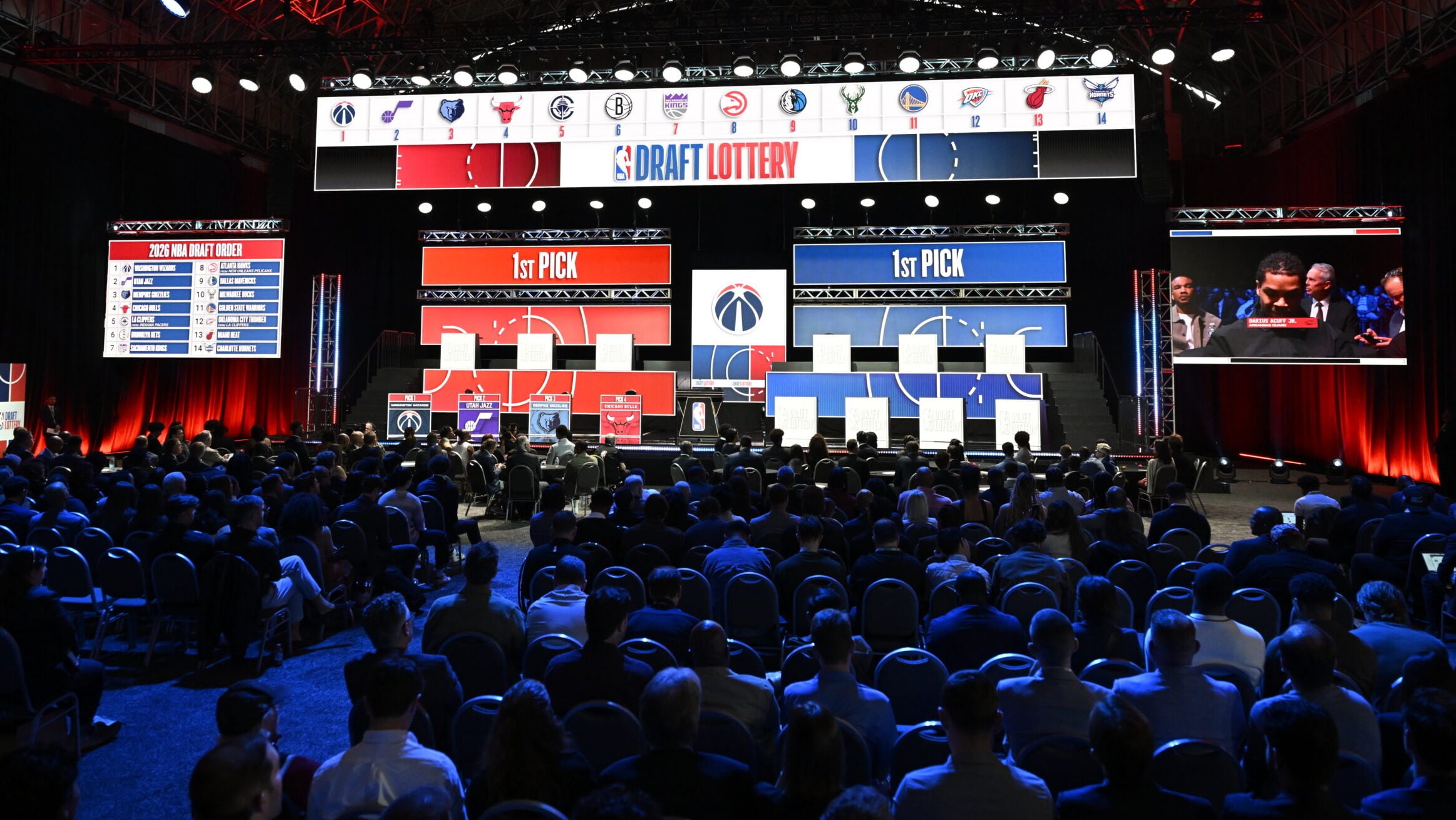
Watch the full 2026 NBA Draft Lottery drawing from Chicago that resulted in the Washington Wizards receiving the No. 1 overall pick.
• 2026 NBA Draft: Complete coverage
In the macro, NBA Executive Vice President and Head of Basketball Strategy and Growth Evan Wasch has worked on draft lottery reform since 2013, shortly after he began working at the league office.
In the micro, draft lottery reform – with the goal of eliminating losing as a means to secure a high draft pick – has been at the top of Wasch’s priority list since the start of the season.
In February, the NBA fined the Utah Jazz $500,000 and the Indiana Pacers $100,000 for benching or not playing players who could have contributed to victories.
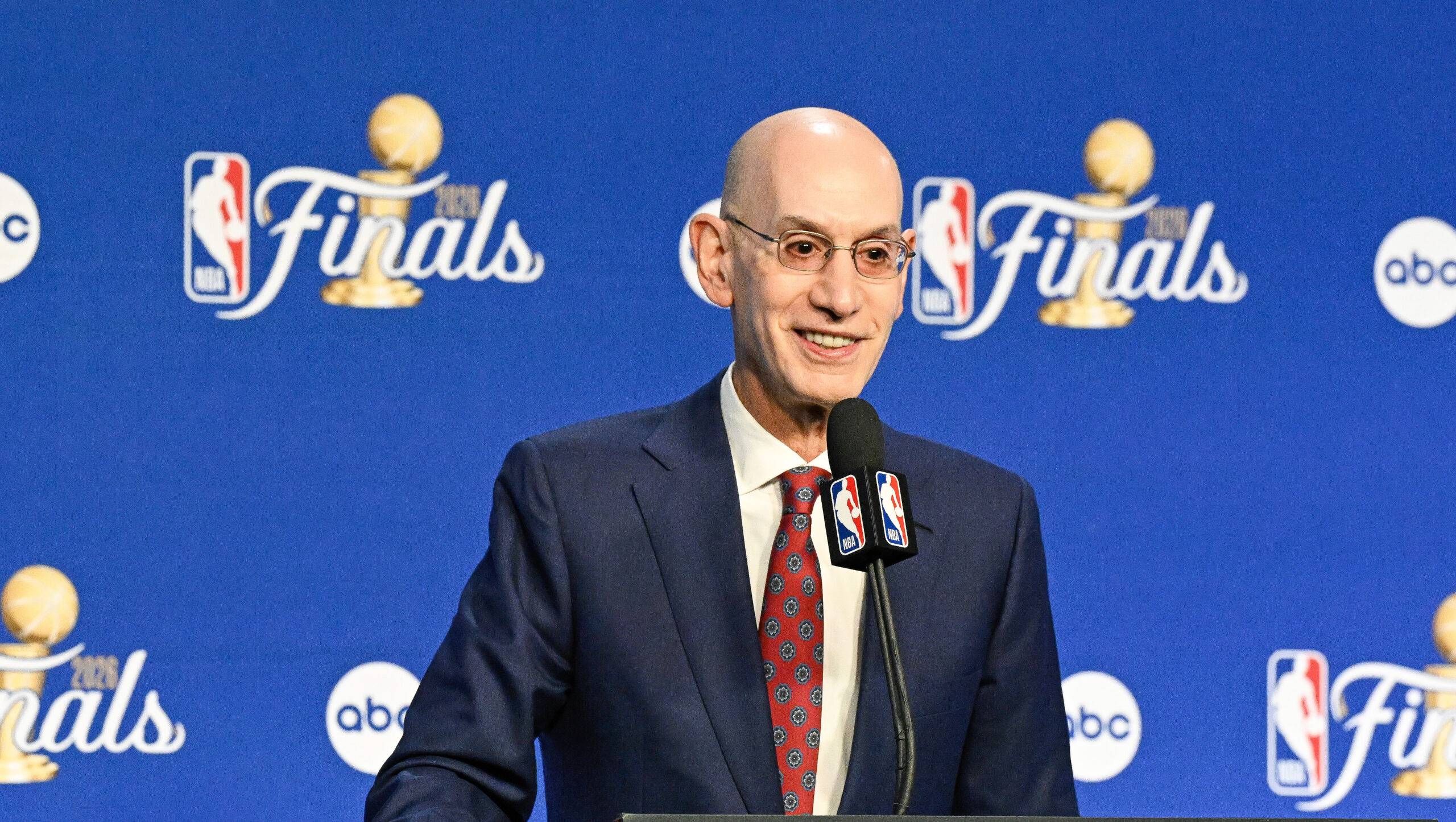
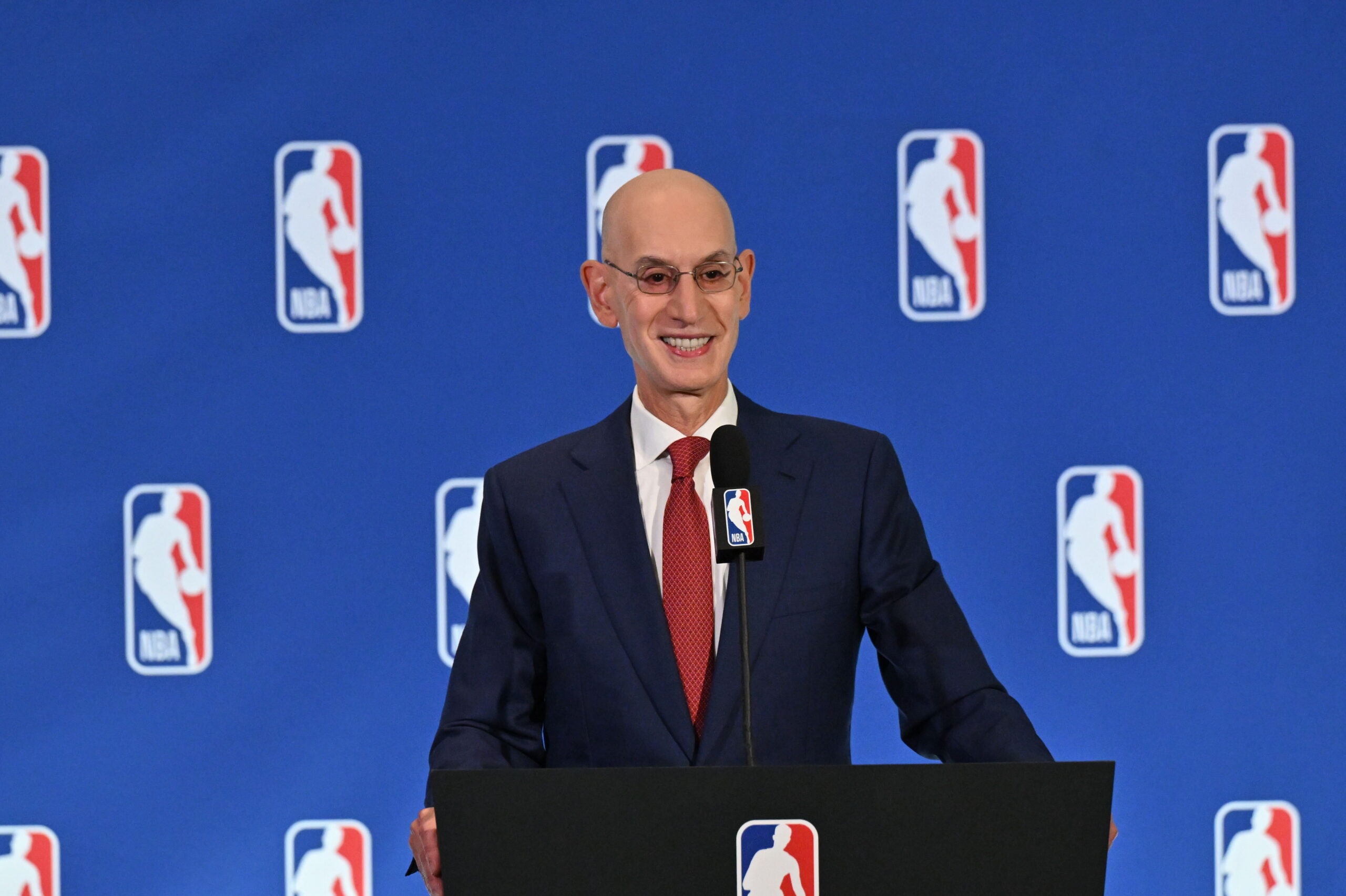
“Overt behavior like this that prioritizes draft position over winning undermines the foundation of NBA competition and we will respond accordingly to any further actions that compromise the integrity of our games,” NBA Commissioner Adam Silver said in a statement at the time. “Additionally, we are working with our Competition Committee and Board of Governors to implement further measures to root out this type of conduct.”
It was on Wasch and his staff, and NBA Executive Vice President, Head of Basketball Operations James Jones to find a solution.
On May 28, the NBA’s Board of Governors approved draft lottery reform. The change is intended to incentivize winning over Draft position, prevent teams from getting too many top-five picks in consecutive seasons, provide an opportunity to distribute talent throughout the league and give the commissioner power to discipline teams who engage in egregious behavior in an attempt to improve their lottery odds.
“We had a very large team of folks thinking about this across my group, across our legal department and our salary cap group,” Wasch said. “Many of the best minds at the NBA who think about competition issues have been engaged on this. I would say it’s fair to characterize it as something that was kind of difficult to get away from, in large part because it wasn’t just isolated thinking.
“It was a constant engagement with our teams. As you can imagine, this was a very passionate issue for a lot of teams and governors. Most of my days were calls, texts, emails, sharing ideas, exchanging proposal feedback with our stakeholders. It was a very collaborative process.”
That collaborative process led to draft lottery reform, also known as the “3-2-1 lottery” because each of the 16 teams in the lottery will receive either three, two or one lottery balls for the drawing.
The details:
- To incentivize winning, the three teams with the worst records will not have the best odds to win the No. 1 pick. Each of those teams will receive two lottery balls; each of the next seven non-play-in teams will receive three lottery balls; the No. 9 and No. 10 play-in seeds each will get two lottery balls; and losers of the No.7-No. 8 play-in game each will receive one lottery ball.
- The bottom three teams – considered “draft relegated” – will receive, at worst, the No. 12 pick. All other teams can pick as low as No. 16.
- No team’s pick will be permitted to be the first pick in two consecutive NBA Drafts or a top-five pick in three consecutive drafts.
- Teams cannot attach top-12 through top-15 protections on newly traded picks.
- The league will have “expanded disciplinary authority to address tanking, including the ability to reduce teams’ lottery odds, modify teams’ draft positions and impose significant fines on offending teams.”
- Lottery balls will be assigned to all 16 teams for a draw to determine the draft order.
- The teams with the three worst records have a 5.4% chance at the No. 1 pick, 16% chance at a top-3 pick, 28% chance at a top-five pick and 61% chance at a top-10 pick; the remaining non-play-in teams have 8.1% odds at the No. 1 pick, 24% odds at a top-three pick, 39% odds at a top-five pick and 73% odds at a top-10 pick; the Nos. 9-10 play-in seeds: 5.4% odds at the No. 1 pick, 16% at a top-three pick, 28% at a top-five pick and 59% at a top-10 pick; the losers of the 7-8 play-in games: 2.7% odds at the No. 1 pick, 8% odds at a top-three pick, 15% odds at a top-five pick and 35% odds at a top-10 pick.
- This format is for the 2027, ’28 and ’29 drafts.
“I was pleasantly surprised the various stakeholders came together very quickly,” Silver said. “There was largely agreement among our team owners, general managers and our coaches and ultimately the Players Association, as well — they can speak for themselves – but that this was not what we wanted to see in the NBA, that we needed to make some quick changes here and deal directly with those incentives so that teams were not put in the position where they felt they had no choice or that they would be at a competitive disadvantage if they didn’t engage in this type of behavior.
“Now standing here in June, I’m thrilled, frankly, that we got this done this year. Looking forward to seeing how this will play out next year – teams have an incentive to win all of their games.”
NBA President of League Operations Byron Spruell participated in multiple discussions as Wasch and Jones sought the appropriate path. Considerable thought and attention to detail are apparent.
“It was fun – Evan as the expert around these types of systems and James having been a general manager (with the Phoenix Suns) navigating these systems – to watch them interact and come up internally before we even got to the stakeholders with those types of discussions. Fascinating. Really good,” Spruell said.
‘A much more competitive dynamic’
Spruell, Jones and Wasch discussed lottery reform on a video call before Game 6 of the Western Conference Finals, and Wasch spoke with NBA.com following the video call.
Several themes emerged in the conversation, and integrity was the guiding force in lottery reform. It was recognized that bad teams need to rebuild, in part, through the draft. But if strategic losing is advantageous, that’s not good for the league. Corrosive was a word that popped up during the conversation.
“We still want to maintain a team’s ability to build through the draft, but we don’t need to reward the very worst teams with the top odds,” Wasch said. “This is still only a 16-team lottery. We’re not including 30 teams. The odds are still weighted toward the bottom teams. The bottom 10 teams in this system command roughly 73% of the odds. It’s still the teams that perform the weakest that are going to get picks near the top of the draft in this lottery. It’s just not as explicit a return on being the bottom team.”
The NBA envisions other benefits, too.
“Now teams across the spectrum with the incentive to build competitive rosters, play healthy players and attempt to win games, we should see a much more competitive dynamic and frankly shouldn’t see the depth of need that we’ve seen because everyone is on the same competitive footing versus essentially a league of have and have-nots trying to compete for playoffs and championships or compete for lottery balls,” Wasch said.
Jones suggested this will put a premium on roster building and finding talent throughout the draft. Take this season’s All-Rookie first and second teams. Of the 10 players, three were not drafted in the top 10. Go to the 2024-25 All-Rookie teams, and five of the 10 players were selected after the 10th pick. Ajay Mitchell, a key contributor to Oklahoma City’s 64-win season in 2025-26, was selected 38th.
It also has the potential to spread talent across more teams.
“From a basketball perspective, I don’t think the league’s ever been in a place where teams have been this deep and the talent pool is this strong,” Jones said. “There are a lot of good players, so many good players to the point where a lot of like NBA-caliber players can’t stay in our league for five or six years. It’s no longer a thing like it was years ago where you couldn’t find enough talent.”
Wasch and his team worked through all the hypothetical situations where a team could exploit the new reform rules and still try to get better odds for a higher pick. Having three lottery balls in the draw is still better than having two and two better than one. However, the odds are fairly flat.
“We tried to pressure test as much as we could both internally at the league office and then of course through all the stakeholder discussions because no one wanted to put in place a system that then would immediately be gamed and manipulated by teams,” Wasch said.
Silver’s authority allows him to discipline teams, “including the ability to reduce teams’ lottery odds, modify teams’ draft positions and impose significant fines on offending teams.”
James said systemic change was necessary rather than just keeping the prior draft lottery format and allowing Silver to adjudicate as necessary.
“We’ve seen the value of some of these picks and players is exponential,” Jones said. “If it’s a $10 million fine, is it worth to just keep taking a fine? You have to couch it in a system that overall says no matter what the NBA office is doing, it’s not to your benefit to go out there and lose a game.”
Said Spruell: “You can definitely think of the governor’s owning this as an issue along with Adam’s leadership and then we just followed the process to get to the right answer.”
* * *
Jeff Zillgitt has covered the NBA since 2008. You can email him at jzillgitt@nba.com, find his archive here and follow him on X.