OKC runs its postseason record to 8-0 by completing the sweep against the Lakers and punching its ticket to the West Finals.
• Download the NBA App
The Oklahoma City Thunder are the eighth team to sweep through the first two rounds of the playoffs since the first round went to a best-of-seven format in 2003 (24 years). The New York Knicks, meanwhile, have outscored their opponents by 19.4 points per game, the best differential for any team through two rounds since the playoffs went to a 16-team format in 1984.
The Thunder and Knicks should be the favorites in their respective conference finals series, but we should not assume that their dominance through the first two rounds will carry over.
The Thunder, Knicks and San Antonio Spurs are the 12th, 13th and 14th teams, respectively, to outscore their opponents by more than 13 points per game through the first two rounds since 1984. Seven of the previous 11 lost in the conference finals, with the most recent example being the 2019 Milwaukee Bucks. That Bucks team was 10-1 through the first two games of the Eastern Conference Finals, having outscored their opponents by 15.3 points per game … and then lost the next four to the Toronto Raptors.
Every series is different, any series can turn on a dime, and we should get some great basketball over the next two weeks.
Plus-Minus Players of the conference semis
* * *
Previously…
OffRtg: Points scored per 100 possessions (League Rank)
DefRtg: Points allowed per 100 possessions (League Rank)
NetRtg: Point differential per 100 possessions (League Rank)
Pace: Possessions per 48 minutes (League Rank)
The 16 teams have averaged 111.6 points scored per 100 possessions and 96.3 possessions (per team) per 48 minutes in the playoffs, down from 114.8 and 100.2 (for all 30 teams) in the regular season.
NBA.com’s Power Rankings, released every Monday during the season, are just one man’s opinion. If you have an issue with the rankings, or have a question or comment for John Schuhmann, contact him via Bluesky.
Last Week:1Playoffs: 8-0
OffRtg: 126.3 (1) DefRtg: 109.3 (6) NetRtg: +17.0 (2) Pace: 95.9 (9)
First round: Swept Phoenix, 4-0
Conference semis: Swept Los Angeles Lakers, 4-0
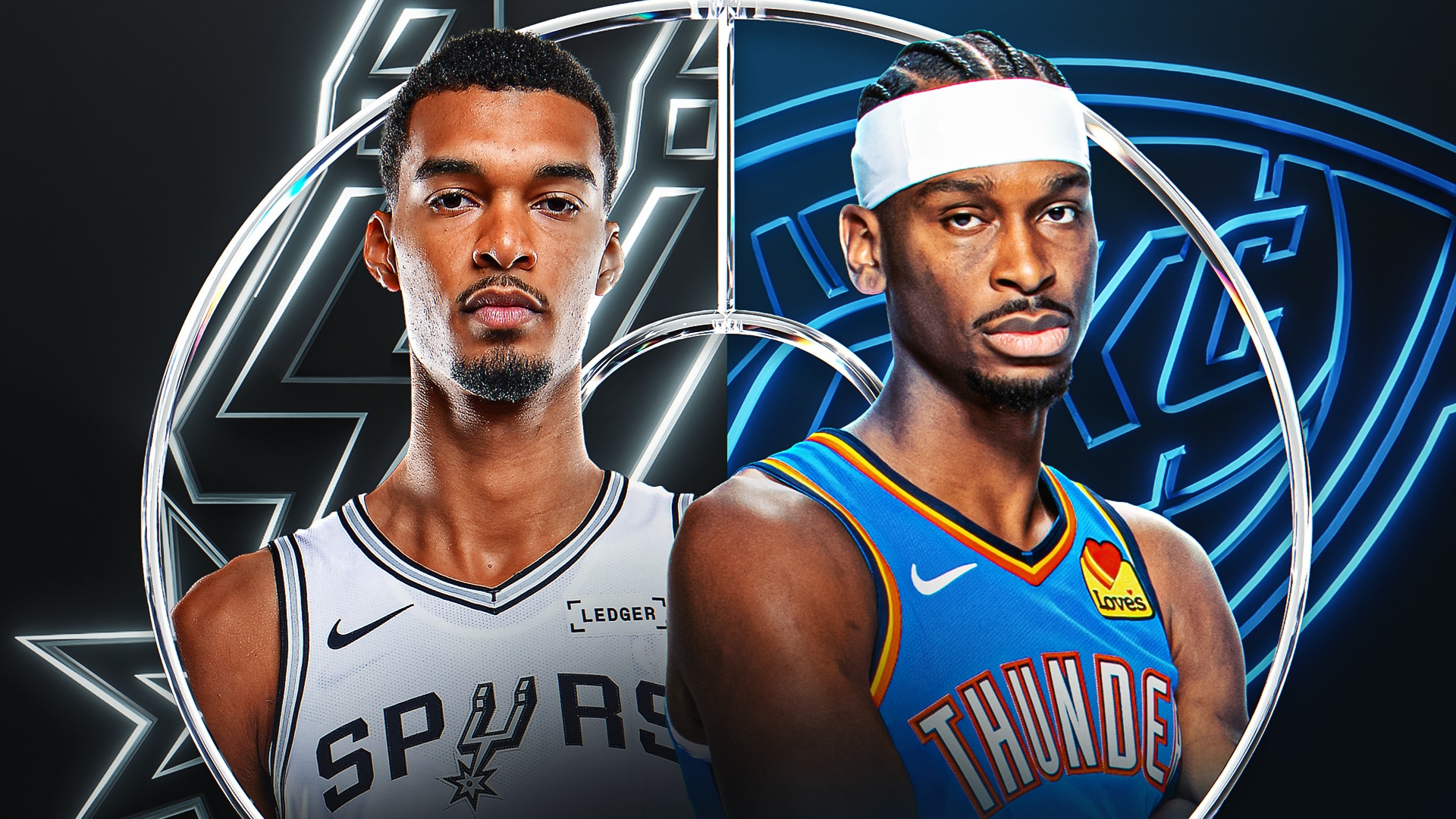
Conference finals: vs. San Antonio
We got the Western Conference finals series we’ve been anticipating since that first Thunder-Spurs game in mid-December. The Thunder will have had six days off when the series begins on Monday, and they’re expected to have Jalen Williams back in uniform.
Three takeaways
- The Thunder have scored an amazing 126.3 points per 100 possessions through the first two rounds, their best eight-game stretch of offense all season. In the first round, they scored 14.3 more per 100 than the Suns allowed in the regular season. In the conference semis, they scored 20.2 more than the Lakers allowed in the first round. They continue to take care of the ball and they’ve seen the biggest jump in offensive rebounding percentage from the regular season (26.4%, 28th) to the playoffs (33.3%, fifth).
- The Thunder have also scored more efficiently in Shai Gilgeous-Alexander’s 105 minutes on the bench (126.2 scored per 100) than they have in his 279 minutes on the floor (124.6 scored per 100), even though Williams has missed the last six games. Chet Holmgren has been on the floor for most of those non-SGA minutes and has a true shooting percentage of 70.0%, the second-best mark among 33 players who’ve averaged at least 18 points per game in the playoffs.
- The defense hasn’t quite been at the same level as it was in the regular season, though it certainly hasn’t had to be. The starting lineup (with Ajay Mitchell in Williams’ place) has allowed more than 120 points per 100 possessions in its 64 minutes and the rim protection has seen a drop-off. The Thunder are still forcing a ton of turnovers, though.
Something to watch in Game 1: Paint points. Both the Oklahoma City and San Antonio defenses are elite at protecting the basket. The Thunder outscored the Spurs by 16 points in the paint (56-40) in their one regular-season victory and by four points in the paint in their two-point loss. But the Spurs had the advantage in the other three games and outscored the Thunder by 9.8 points in the paint per 100 possessions in Victor Wembanyama’s 126 minutes on the floor.
Next game: Mon. vs. SAS, 8:30 p.m. ET, NBC/Peacock
Last Week:2Playoffs: 8-3
OffRtg: 117.3 (3) DefRtg: 102.2 (1) NetRtg: +15.2 (3) Pace: 100.0 (2)
First round: Beat Portland in 5 games
Conference semifinals: Beat Minnesota in 6 games
Conference finals: vs. Oklahoma City
The Spurs’ road to the conference finals hasn’t been as smooth, but regarding point differential, they’ve been only slightly less dominant than the Thunder. They’re here for the first time in nine years and they’ve experienced plenty of success against the defending champs.
Three takeaways
- In the first round, the Spurs held the Blazers to 10.9 fewer points per 100 possessions than they scored in the regular season. In the conference semis, they held the Wolves to 10.6 fewer per 100 than they scored in the first round. The Spurs lead the playoffs in opponent field goal percentage in the paint (47.1%), rank third in opponent free throw rate (25.5 attempts per 100 shots from the field) and are fourth in defensive rebounding percentage (69.3%).
- With his hard fall in Game 2 of the first round, his ejection in Game 4 against Minnesota, and some blowout garbage time, Victor Wembanyama has averaged just 28.8 minutes. He’s also shot just 17-for-57 (30%) from outside the paint and his 25.4 points per 36 minutes are down from 30.9 per 36 in the regular season. But his true shooting percentage (65.3%) is the second-best mark among the 24 players who’ve averaged at least 20 points per game. He’s shot 53-for-73 (73%) in the paint, with those 73 attempts being 56% of his total shots, up from 50% in the regular season.
- Stephon Castle is now 50-for-112 (44.6%) from 3-point range over his last 26 games, and Dylan Harper has an effective field goal percentage of 61.1% in the playoffs, ninth best among 63 players with at least 75 field goal attempts. De’Aaron Fox (who broke out of a mini-slump in Game 6 in Minnesota) continues to get more minutes than the younger guys, but the Spurs have been at their best (plus-19.3 per 100 possessions) with the Castle-Harper combination on the floor.
Something to watch in Game 1: The possession game. The Spurs have averaged 4.3 fewer shot opportunities per game than their opponents, the third-worst discrepancy in the playoffs. The Thunder have averaged 4.6 more than their opponents, the second-best differential. The Spurs had the slight edge in the possession game over the regular-season series, and it will be critical that they limit live-ball turnovers to keep the Thunder from scoring before Wembanyama can get back on defense.
Next game: Mon. @ OKC, 8:30 p.m. ET, NBC/Peacock
Last Week:3Playoffs: 8-2
OffRtg: 124.8 (2) DefRtg: 104.8 (2) NetRtg: +20.0 (1) Pace: 96.5 (8)
First round: Beat Atlanta in 6 games
Conference semifinals: Swept Philadelphia, 4-0.
Conference finals: vs. Cleveland
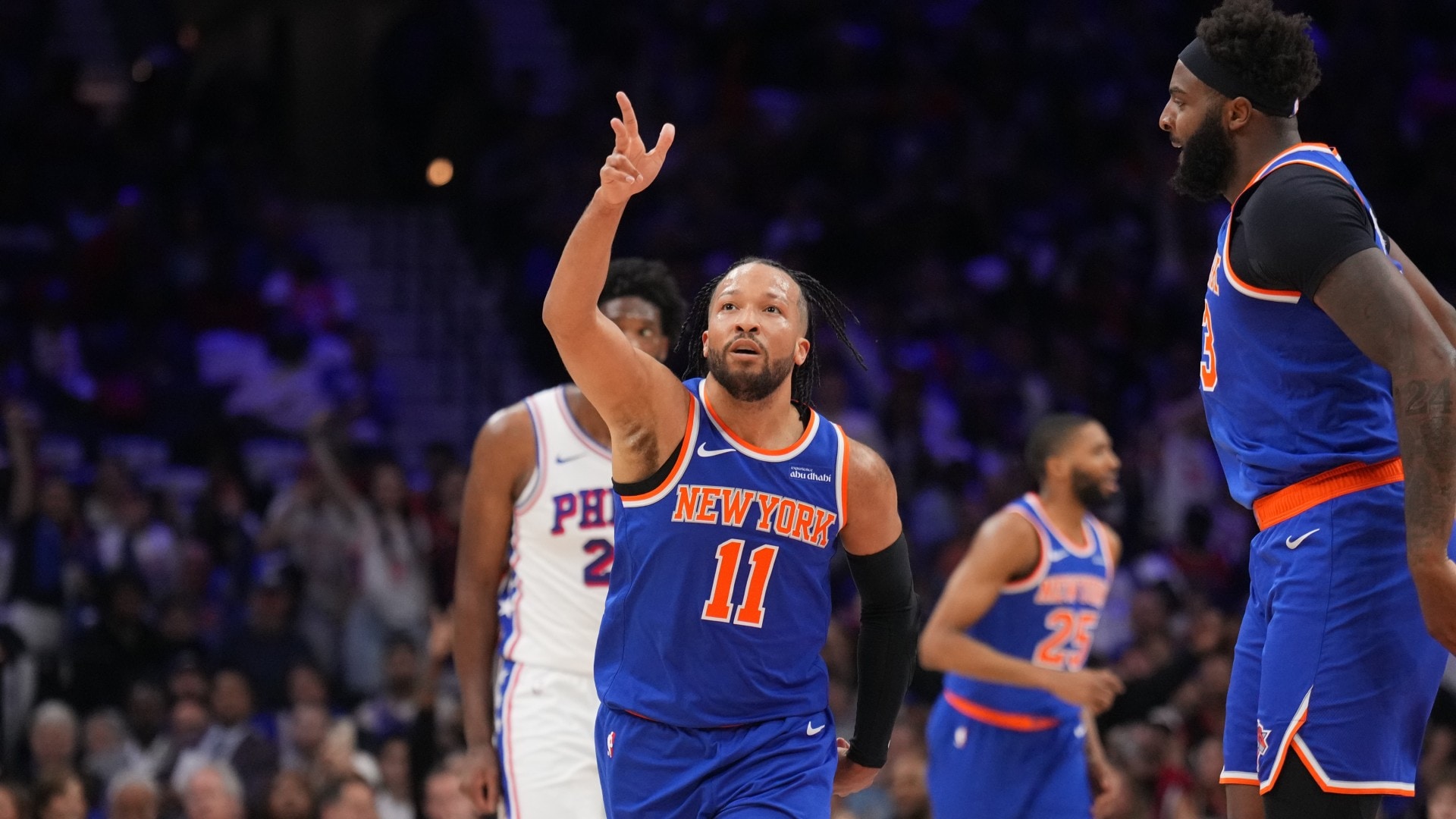
Last season, the Knicks had a negative point differential through Game 5 of the conference semis, only climbing into the positive with a 38-point win in Game 6 against Boston. This year, they’ve got the best point differential for any team through two rounds in the 43 years of the 16-team playoff format, with half of their wins having come by 29 points or more.
Three takeaways
- Only two teams – the Thunder and the Knicks – have scored more efficiently in the playoffs than they did in the regular season, with New York having seen the biggest jump in effective field goal percentage and the second biggest jump in free throw rate. Among the 87 players with at least 50 field goal attempts in the playoffs, OG Anunoby, Karl-Anthony Towns and Mikal Bridges have seen the biggest, second biggest and sixth biggest jumps in effective field goal percentage from the regular season.
- Unsurprisingly, the opponents have tried to attack both Towns and Jalen Brunson in the pick-and-roll. But the Knicks’ defense has held up, allowing just 0.85 points per chance when a ball-screen by the guy Brunson or Towns has defended has led directly to a shot, turnover or trip to the line. They’ve certainly benefitted from their opponents shooting just 31.2% from 3-point range, including just 31.7% on wide-open attempts.
- The starters have been better than they were in the regular season; The Knicks have outscored their opponents by 8.9 points per 100 possessions in 175 total minutes with their four healthy starters on the floor. But the Knicks have also had the No. 1 bench in the playoffs and outscored the Hawks and Sixers by an amazing 28.8 per 100 (allowing less than a point per possession) in Mitchell Robinson’s 130 minutes.
Something to watch in Game 1: Anunoby’s mobility and playing time. The Knicks did just fine without Anunoby in Games 3 and 4 in Philly, they will have had eight full days off before the start of this series, and he was a full participant in practice over the weekend. But hamstring injuries can linger and his return from one in the playoffs two years ago was short-lived. The Knicks get much smaller on the perimeter when he’s not available and the Cavs are a bigger opponent for their reserve wings to deal with. So we might see more double-big lineups (Towns and Mitchell Robinson) than we’ve seen thus far (20 total minutes).
Next game: Tue. vs. CLE, 8 p.m. ET, ESPN
Last Week:6↑Playoffs: 8-6
OffRtg: 113.5 (5) DefRtg: 112.6 (8) NetRtg: +1.0 (6) Pace: 95.5 (11)
First round: Beat Toronto in 7 games
Conference semifinals: Beat Detroit in 7 games
Conference finals: vs. New York
The Cavs are the sixth team since the first round went to a best-of-seven format (24 years) to win two seven-game series in the first two rounds. Four of the previous five lost in the conference finals, but the 2007-08 Celtics went on win the title.
Three takeaways
- The Cavs have trailed by double-digits more often in the playoffs (eight games) than they’ve led by double digits (seven). Game 7 in Detroit on Sunday was just the second time in the last nine games that they led after the first quarter. They’ve been terrific (plus-19.3 points per 100 possessions) in third quarters, but the other three remaining teams have all been better, and climbing out of holes will be tougher against the Knicks than it was against Toronto or Detroit. Good starts are good news, as the Cavs are now 22-0 since March 1 in games they’ve led by double-digits.
- There seems to be a defensive switch that the Cavs turn on and off from game to game or quarter to quarter, but the much bigger difference between their wins (120.7 points scored per 100 possessions) and their losses (103.7 per 100) has been on offense. Evan Mobley has a true shooting percentage of 70.6% in the eight wins and just 53.2% in the six losses, with that largely being about his field goal percentage in the paint and his free throw rate.
- The Knicks have had the longest possessions on average, but the Cavs have been a little better late in the shot clock. Their effective field percentage of 53.6% in the last seven seconds of the clock ranks second, behind only that of the Thunder (55.3%). The four teams that have been best late in the clock are the four teams remaining, and the eight teams that were worst late in the clock are the eight teams that lost in the first round.
Something to watch in Game 1: Rebounding. The Cavs have been the best offensive rebounding team in the playoffs, but they rank just 14th in defensive rebounding percentage, and the Knicks have the ability to punish them on the glass, with three of the top 11 individuals in offensive rebounding percentage. The winner of the possession game won the three regular-season meetings between Cleveland and New York, and it should be critical in the conference finals.
Next game: Tue. @ NYK, 8 p.m. ET, ESPN