The Cavaliers defeat the Pistons, 125-94, in Game 7 to win the series 4-3. Cavs advance to face the Knicks.
The New York Knicks and Cleveland Cavaliers took somewhat of a circuitous route, but they got to the Eastern Conference Finals matchup that most of us had anticipated seven months ago.
With the Boston Celtics and Indiana Pacers losing their best players to Achilles tears in last year’s playoffs, it was assumed that the Knicks and Cavs would be head-and-shoulders above the rest of the conference. Instead, they finished third and fourth.
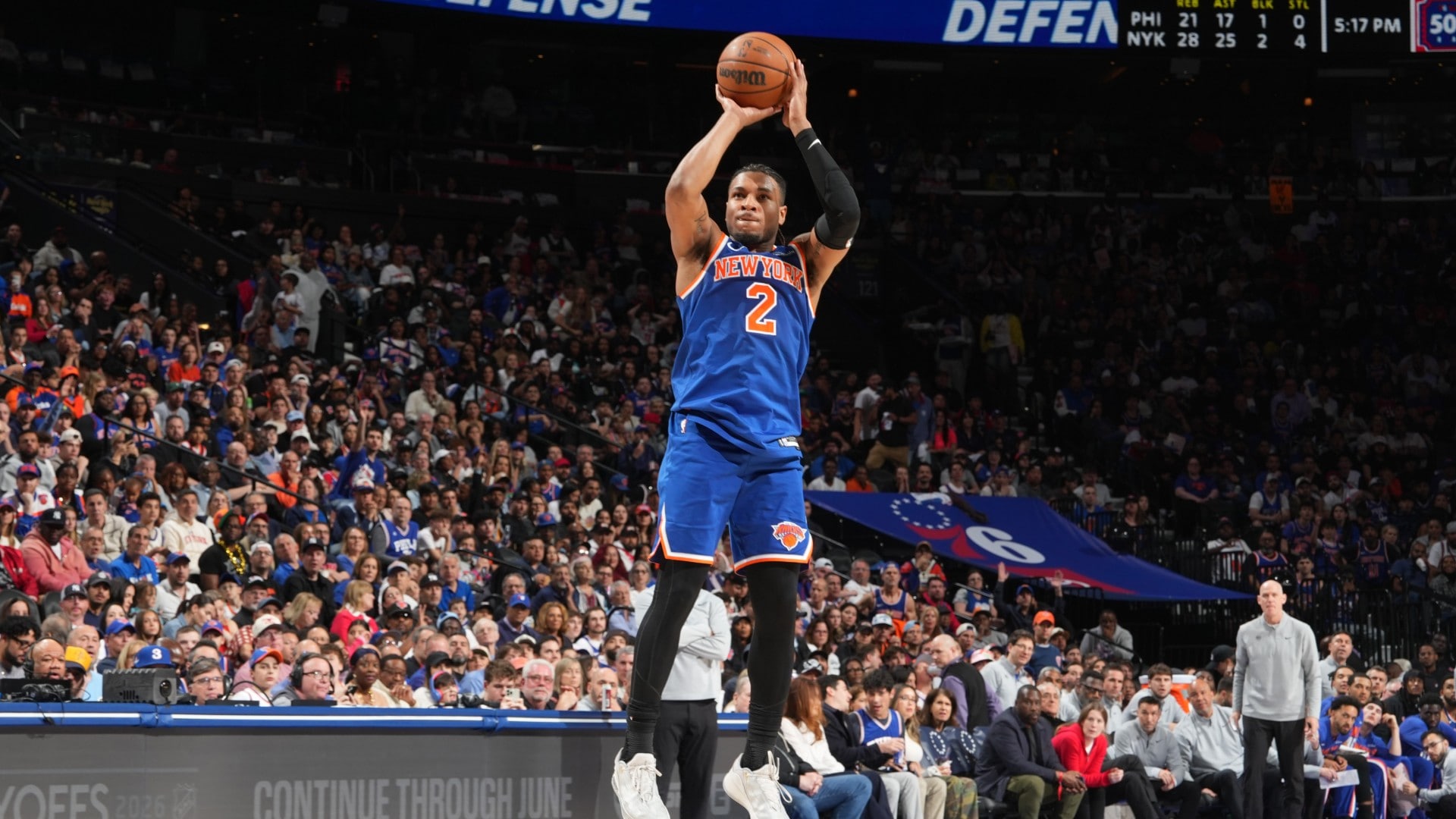
But they both found their way here. The Knicks have dominated their opponents, with seven of their eight playoff wins coming by double-figures, and four of those coming by 29 points or more. The Cavs have had a much bumpier path, needing seven games to eliminate both the Toronto Raptors and the top-seeded Detroit Pistons.
The Knicks won two of the three regular-season meetings, but the Cavs won the one (Feb. 24) after they acquired James Harden. That was, arguably, the best game they’ve played with Harden until Game 7 in Detroit on Sunday.
Both teams began the season with high expectations, and both have put themselves in position to be the East’s fourth different representative in the Finals in the last four years. But there can only be one.
Series schedule
Here’s how to watch the Knicks vs. Cavaliers series:
All times Eastern Standard Time
- Game 1: Cleveland at New York | Tuesday May 19 (8 ET, ESPN)
- Game 2: Cleveland at New York | Thursday May 21 (8 ET, ESPN)
- Game 3: New York at Cleveland | Saturday May 23 (8 ET, ABC)
- Game 4: New York at Cleveland | Monday May 25 (8 ET, ESPN)
- Game 5: Cleveland at New York | Wednesday May 27 (8 ET, ESPN)*
- Game 6: New York at Cleveland | Friday May 29 (8 ET, ESPN)*
- Game 7: Cleveland at New York | Sunday May 31 (8 ET, ESPN)*
* = If necessary
Regular-season results
- Oct. 22: Knicks 119, Cavaliers 111
- Dec. 25: Knicks 126, Cavaliers 124
- Feb. 24: Cavaliers 109, Knicks 94
Top storyline
The Knicks clinch against the Sixers in Game 4 in historic fashion, winning their franchise record 7th straight postseason game.
Can the Knicks continue to roll? The Knicks have been dominant through the first two rounds, outscoring the Hawks and Sixers by an an average of 19.4 points per game, the best differential for any team through two rounds in the 43 years of a 16-team playoff format.
It’s a great time for the Knicks to be playing their best basketball of the season, but history tells us that every series is different and that dominance through the first two rounds doesn’t always lead to a trip to the Finals. Seven of the previous 11 teams that outscored their opponents by more than 13 points per game through the first two rounds saw their seasons end in the conference finals.
Eight days off between games will have been beneficial in regard to the health of OG Anunoby, who suffered a strained hamstring in Game 2 of the conference semis. But the layoff may make it harder for the Knicks to rediscover their offensive rhythm. According to tracking data, they’ve overachieved in regard to their expected field goal percentage more than any other team in the playoffs, with Anunoby, Mikal Bridges and Karl-Anthony Towns all in the top eight among players.
Keep your eyes on
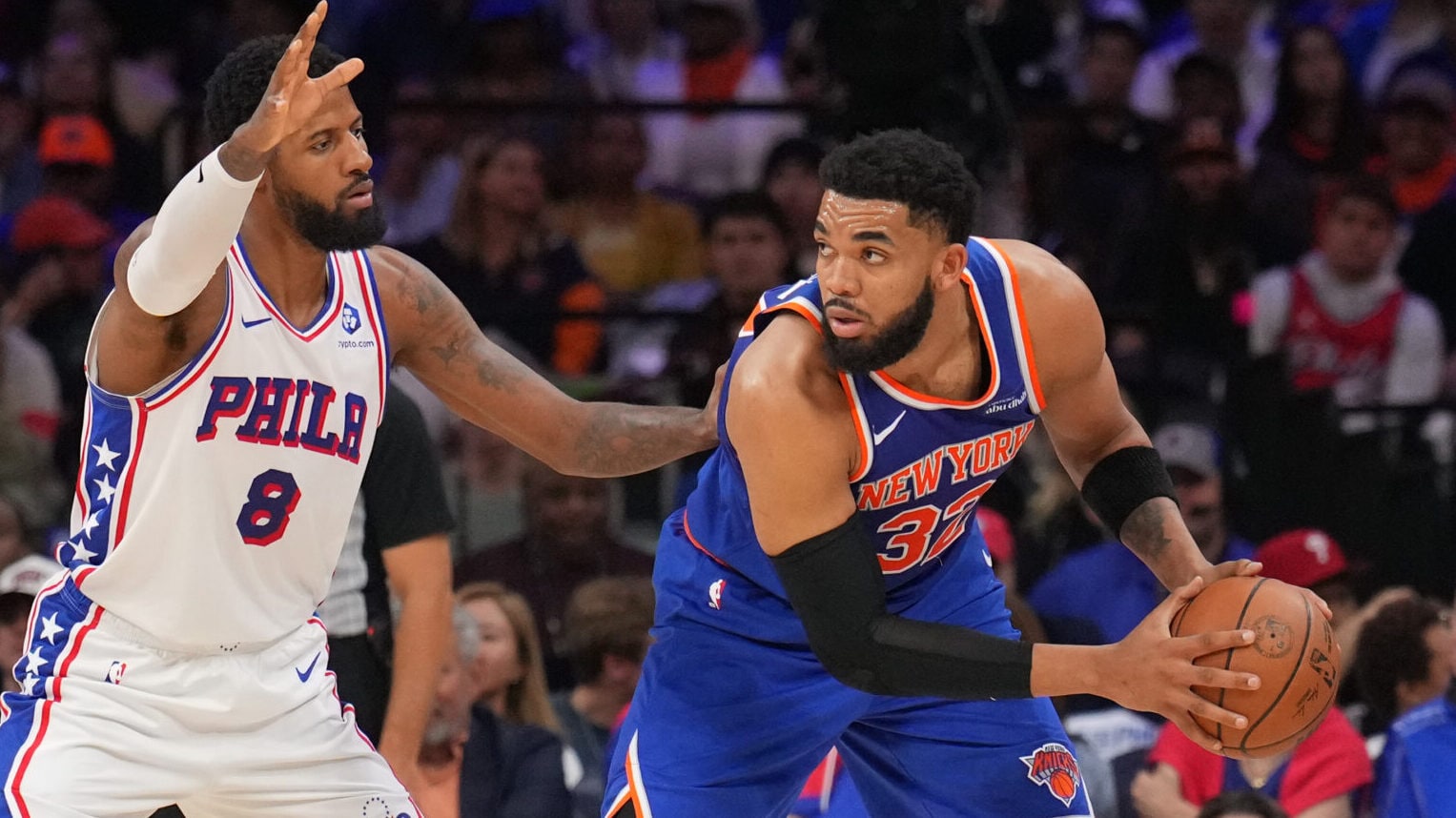
Attacking Towns and Brunson. Both the Atlanta Hawks and Philadelphia 76ers targeted Towns and Jalen Brunson in the pick-and-roll. According to tracking data, they’ve been the screener’s defender on 176 and 118 ball-screens respectively.
The Knicks’ defense has held up well in those situations, allowing just 0.85 points per chance when a ball-screen by the guy Brunson or Towns has defended has led directly to a shot, turnover or trip to the line. But there’s maybe some luck in that number, as the Knicks’ opponents have shot just just 31.2% from 3-point range, including just 31.7% on wide-open attempts.
The Cavs will certainly put both Brunson and Towns in ball-screen actions early and often in this series. How the Knicks defend those actions and how well the Cavs execute against New York’s coverages will go a long way in determining which team reaches the Finals..
One more thing to watch for each team
Mikal Bridges puts up 23 points in the Knicks' Game 3 win over the Sixers.
For New York: After averaging just 7.2 points on a true shooting percentage of 53.3% through the Knicks’ first five playoff games, Bridges has averaged 18.8 on 75.7% over the last five. His secondary scoring and playmaking is a little less critical with Anunoby’s expected return, but the Knicks still can’t have the Bridges of those first five games.
On the other end of the floor, he’ll likely have the assignment of guarding Mitchell. The Cavs will obviously set a ton of screens for their leading scorer and it will be important for Bridges to navigate those screens and keep Brunson and Towns from having to defend Mitchell one-on-one.
For Cleveland: The Cavs need to be ready to defend for more than 24 seconds. The Knicks will often have nothing going for the first 18 seconds of a possession, but then find a way to score as the shot clock is expiring. Much of that success comes from Brunson in one-on-one situations, but Bridges and Josh Hart have also made some timely cuts and big shots.
Even if the Cavs can get the initial stop, the job is not done, because the Knicks are one of the best offensive rebounding teams in the league. Among 147 players who’ve averaged at least 10 minutes in the playoffs, Mitchell Robinson (16.8%), Jordan Clarkson (11.1%) and Towns (10.6%) rank first, eighth and 11th in offensive rebounding percentage.
The Cavs had the sixth best defensive rebounding percentage (70.3%) against the Knicks in the regular season, but they rank 14th (65.2%) in the playoffs and they got destroyed on the glass when these two teams met in the first round three years ago.
One key number to know
22 – The Cavs have won their last 22 games that they led by double-digits, a streak that dates back to March 1 and includes their dominant win in Detroit in Game 7 on Sunday.
But they’ve trailed by double-digits in more playoff games (eight) than they’ve led by double-digits (seven). They’ve won three of those eight games, but it would be better if they can avoid falling into those big holes. They’ll be tougher to dig out of against the Knicks, who have mostly turned big leads into even bigger ones.
Game 7 in Detroit was just the second time in their last nine games that the Cavs won the first quarter. Prior to Sunday, they had scored 13.7 more points per 100 possessions in the second halves of games (120.0 per 100) than they have in first halves (106.3 per 100). And that difference was more about the possession game (turnovers and offensive rebounds) than it was about shooting.
Being able to come back is good, but not having to come back is better.
The pick
Knicks in 6. Some elements of the Knicks’ dominance through the first two rounds are unsustainable. Anunoby, Bridges and Towns have all shot much more effectively than they did in the regular season, and (as noted above) their opponents have shot poorly on wide-open 3-pointers. The Cavs are the most talented opponent they’ve faced in these playoffs, and Mitchell will be the toughest guy they’ve had to defend.
But while the Cavs looked awesome in Game 7 on Sunday, they’ve looked far less awesome for most of the last couple of months. While they haven’t been been consistently able to play at an elite level, the Knicks have, and New York should be favored to make its first trip to the Finals since 1999.
* * *
John Schuhmann has covered the NBA for more than 20 years. You can e-mail him here, find his archive here and follow him on Bluesky.