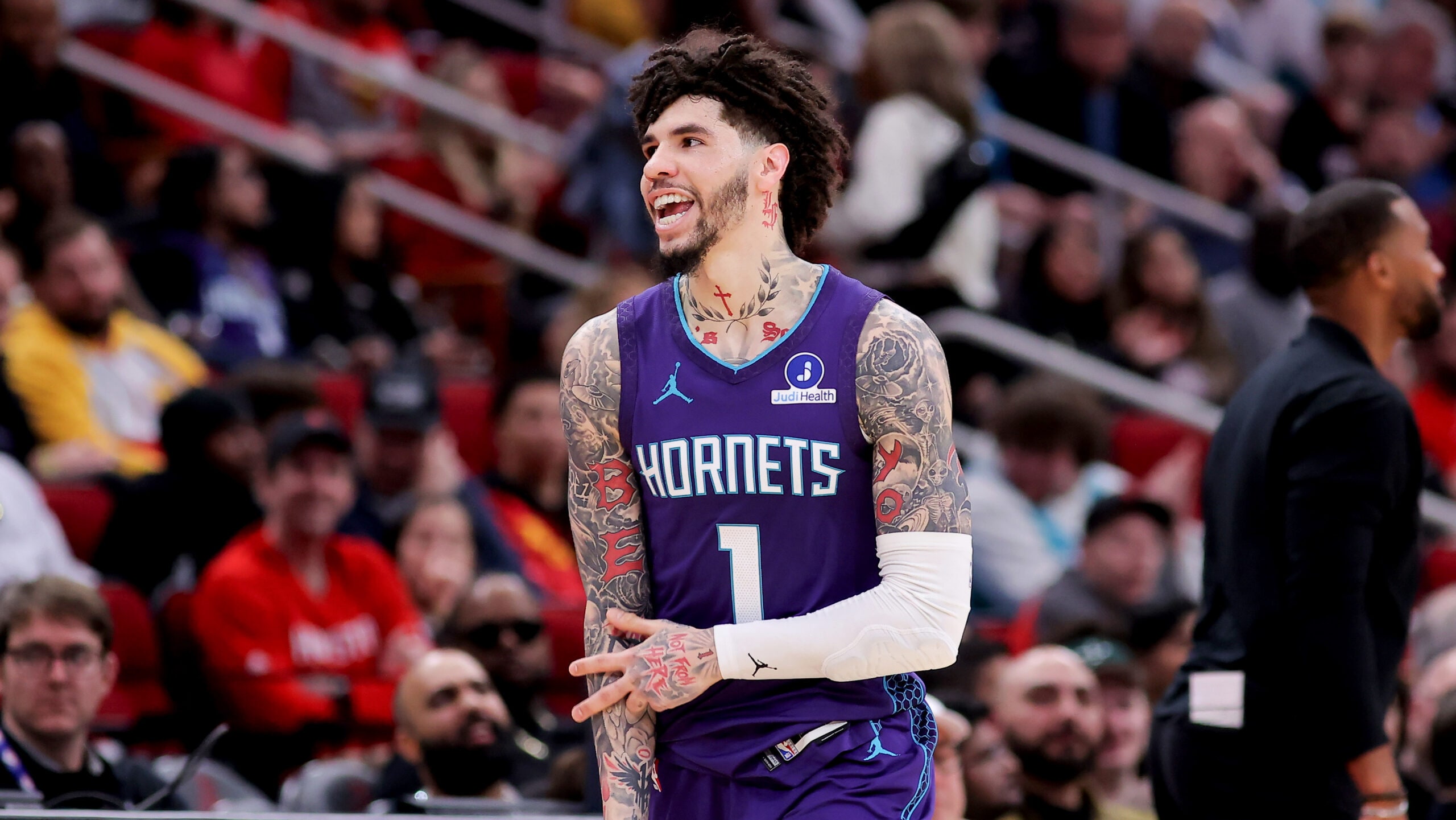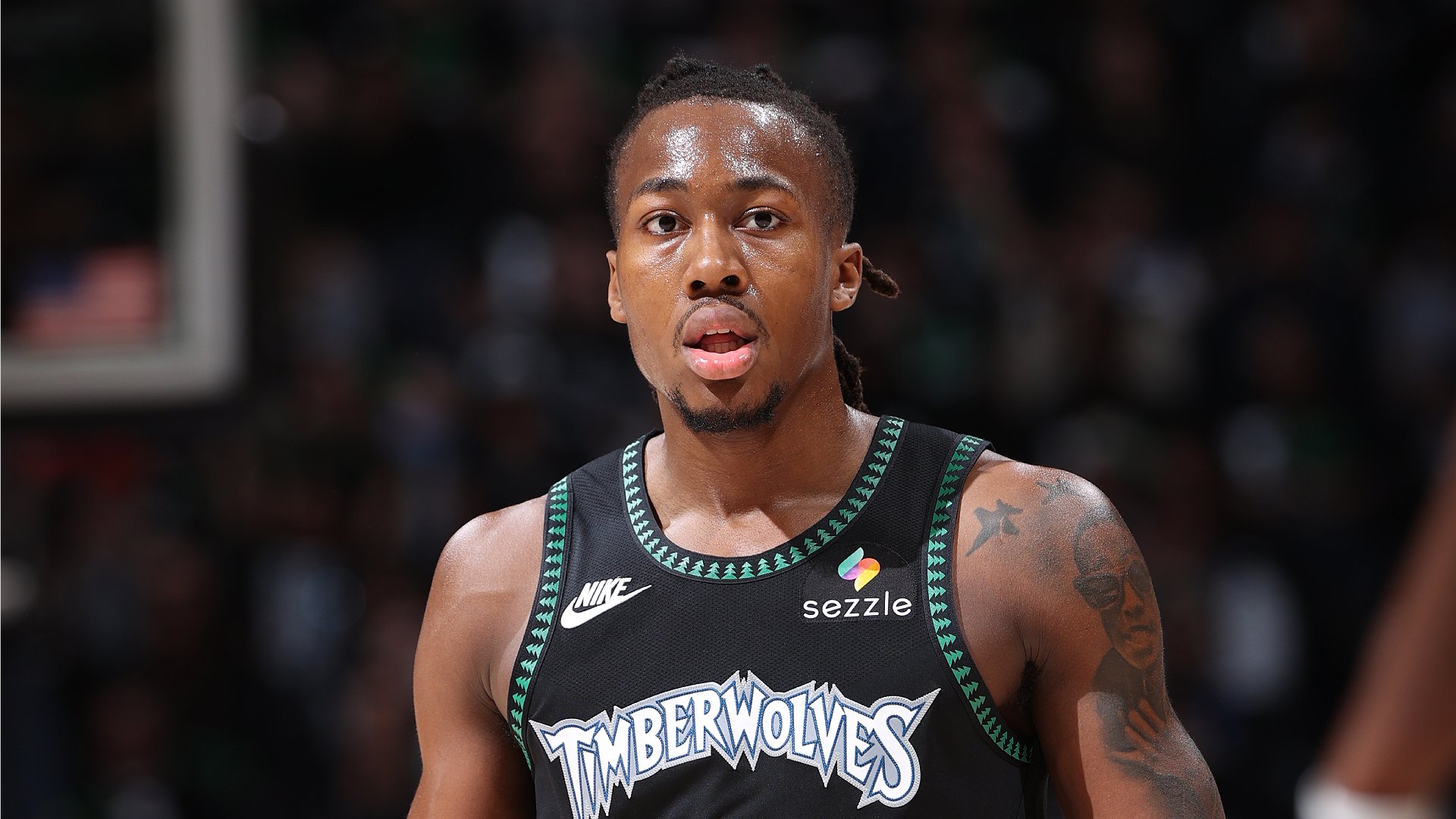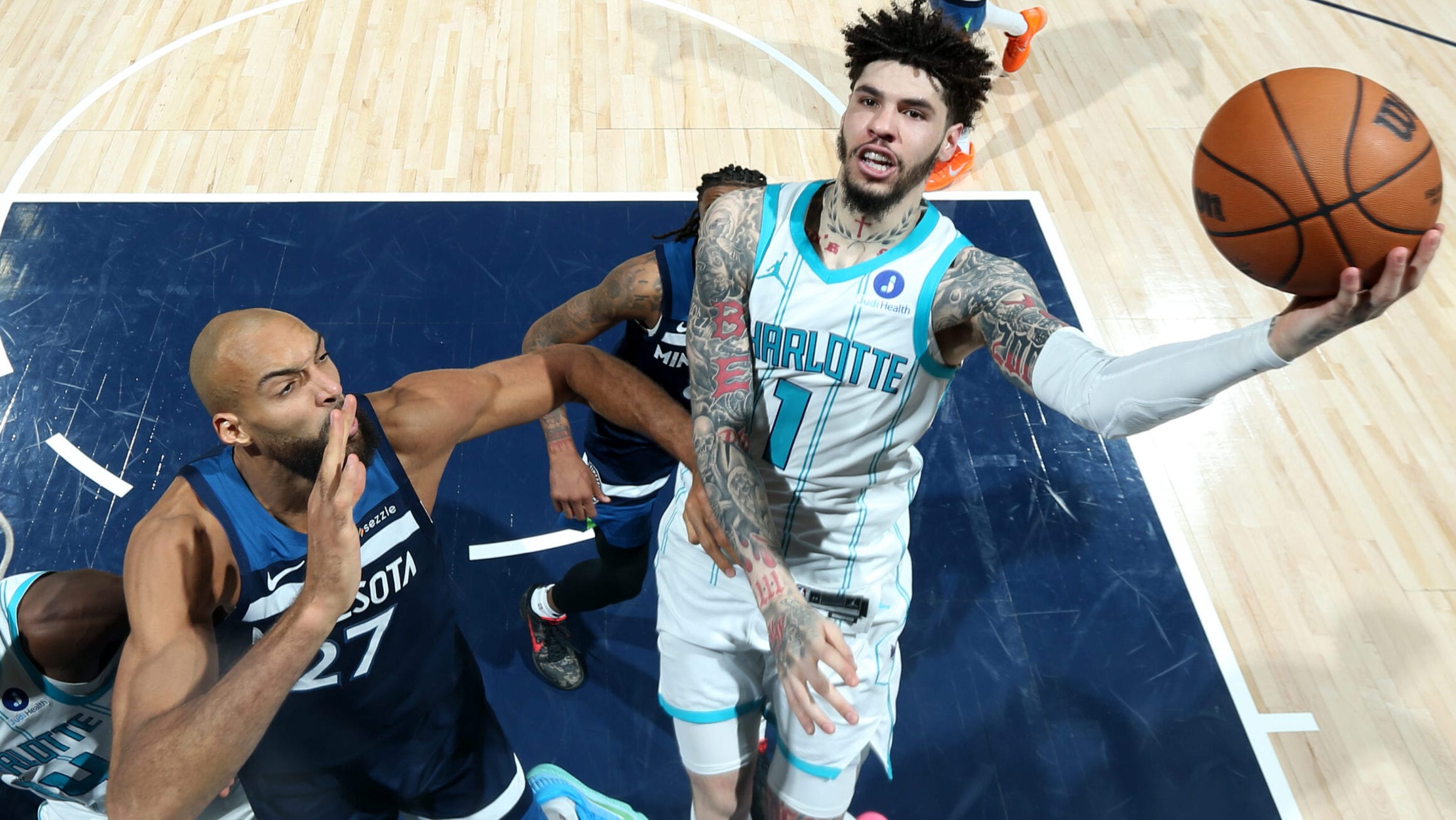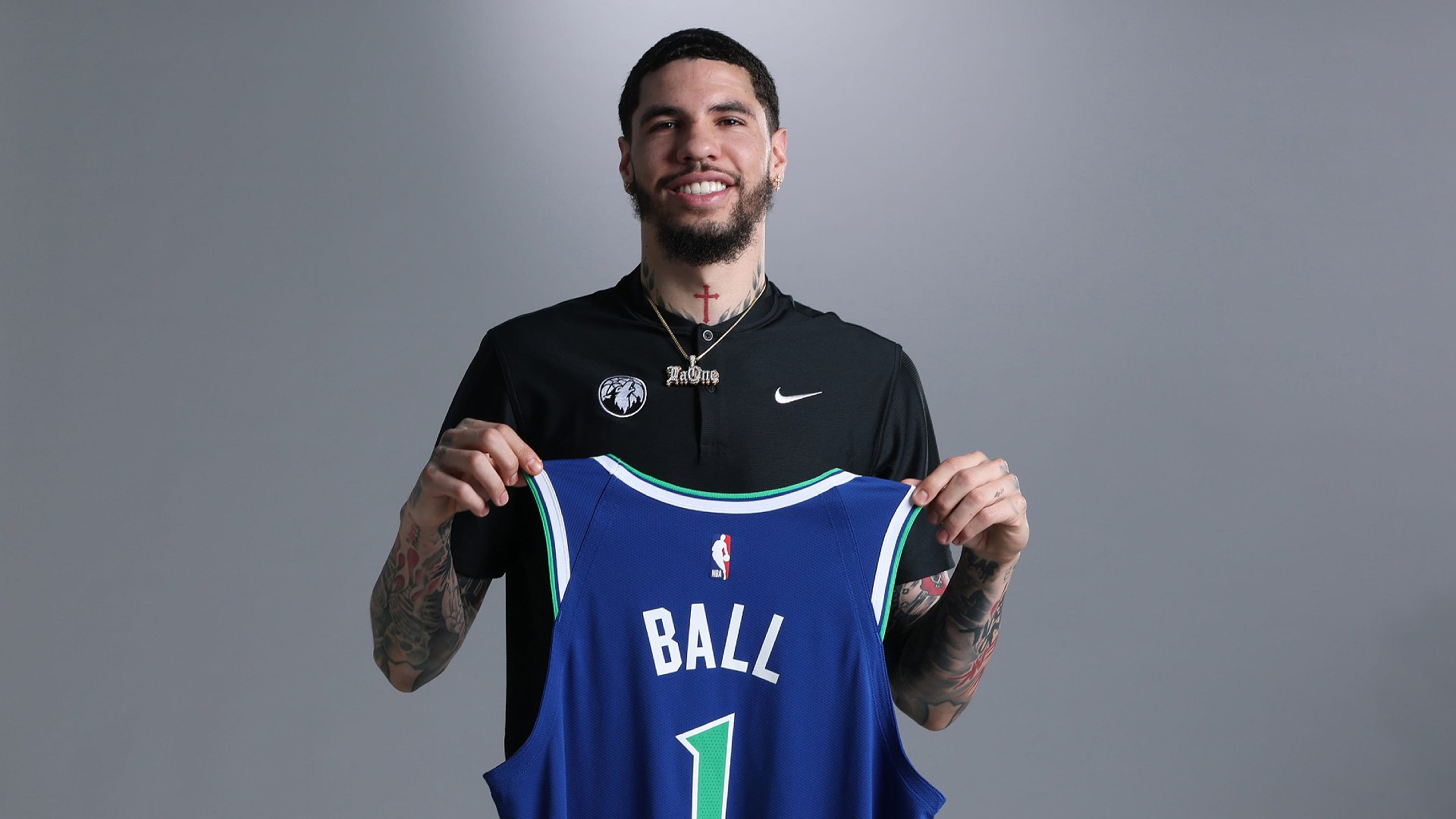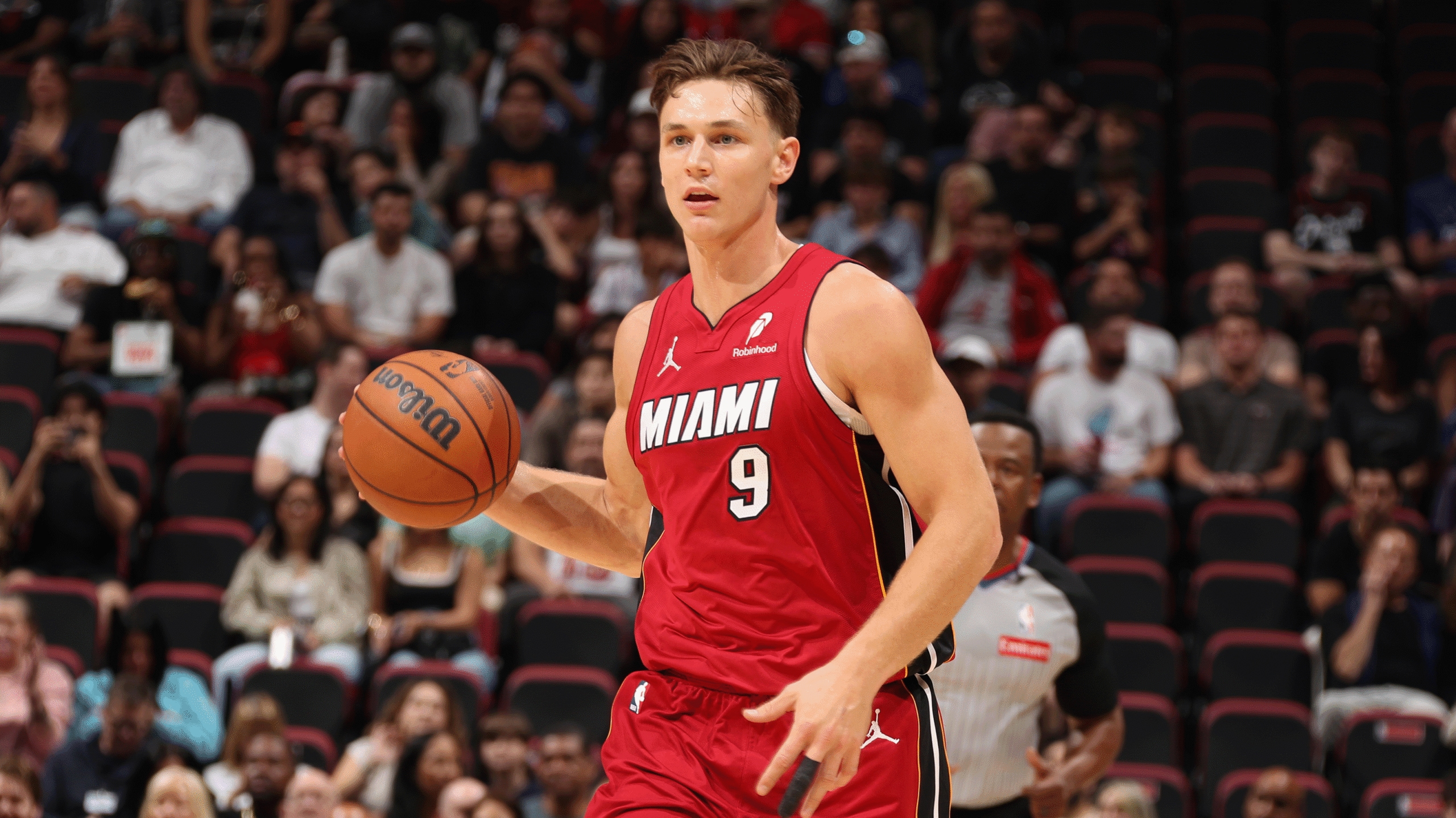
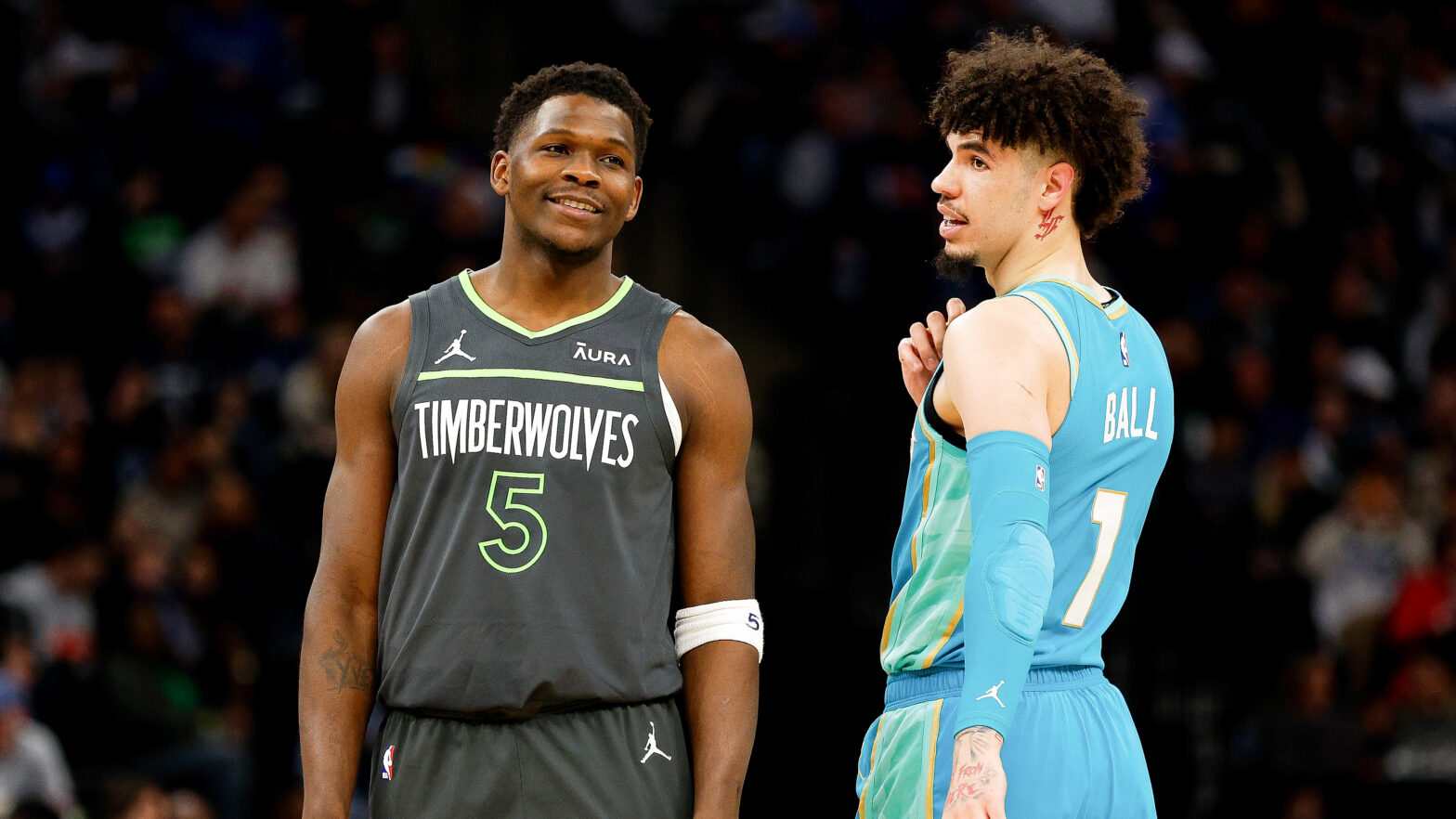
The No. 1 and No. 3 picks, respectively, in the 2020 NBA Draft, Anthony Edwards and LaMelo Ball are now Minnesota teammates.
LAS VEGAS — This Timberwolves guard has one of the biggest personalities in the NBA. Immensely talented, he lets his team’s fans share in the fun. He’s a nightly highlight, a showman who plays with an obvious exuberance and demands constant defensive attention from opponents to guard against the damage he can do.
And now, so does that Timberwolves guard.
As starting backcourts go, it will be difficult to find a more dynamic and exciting one this season than Minnesota’s Anthony Edwards and LaMelo Ball. Tim Connelly, the Wolves’ president of basketball operations, entered the offseason determined to address his team’s need at point guard.
In landing Ball, though, Connelly was like a guy who needed basic transportation to and from the office coming home with a Maserati.
“He’s a real point guard, which is hard to find,” Connelly said at a news conference last week introducing Ball. “He’s been through a lot. But he’s still only 24 years old [25 next month]. He’s a guy that we think is going to help elevate us, and hopefully we can help elevate him as well.”
Connelly has valued Ball ever since scouting him and Edwards when they were 2020 draftmates. The Wolves took Edwards at No. 1, with Ball going to the Charlotte Hornets two picks later.
He’s been the face of the Hornets ever since. Ball beat out Edwards as the 2020-21 Kia Rookie of the Year and, the following season, beat him to an All-Star selection. In his six NBA seasons, Ball has averaged 20.8 points, 7.3 assists and 1.4 steals, while hoisting 10.4 3-pointers per game over the past four seasons.
“When you look at our team, it’s hard not to be excited about what we have,” Connelly said, even as he was imagining other moves in the time left before training camp opens.
Actually, Minnesota as currently configured is both a have and a have-not. To obtain Ball and address that glaring need for a playmaker, Connelly had to strip away strength at another position.
You know that old saying about robbing Peter to pay Paul? The Wolves have robbed from power forward to land their point guard. Both Julius Randle and Naz Reid were the price paid, the two burly scorers sent out in the trade that, by the time it was announced, had grown to four teams.
That’s the difference between a need and a want.
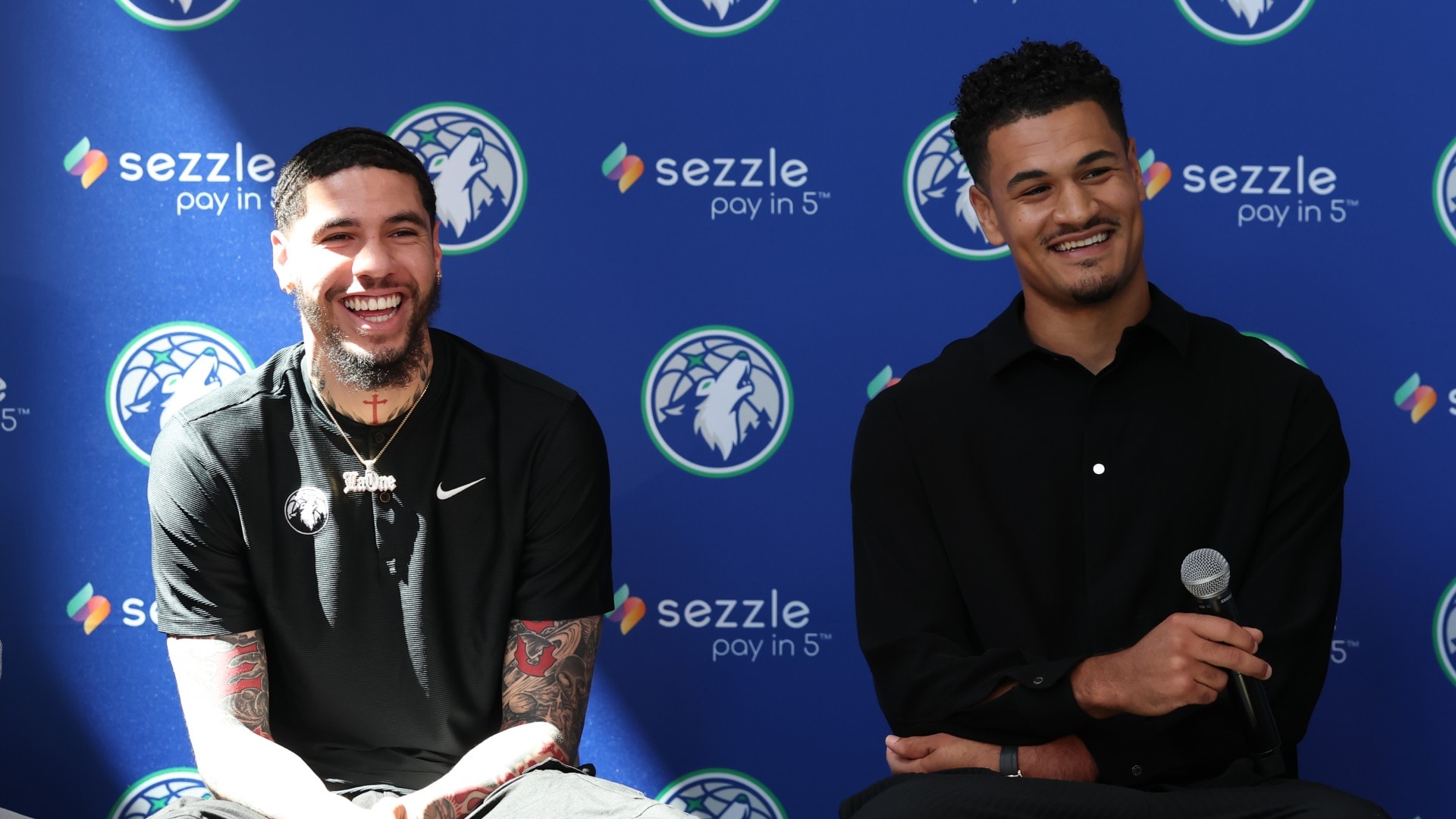
LaMelo Ball and Josh Green address the media at their Minnesota Timberwolves introductory press conference.
Dating to last season, coach Chris Finch still figured to rely on veteran Mike Conley, then 38, to direct Minnesota’s on-court traffic at pivotal times. Meanwhile, the organization hoped that 20-year-old prospect Rob Dillingham could develop in real time as a point guard for a contending team. When neither the old nor the young proved to be the team’s answer, they went for a Goldilocks choice: Finch and Connelly decided to put the ball in Edwards’ hands more than ever. Then they put shooter Donte DiVincenzo next to him.
Edwards had a stellar season as a scorer, posting 28.8 ppg while shooting career bests of 48.9% overall and 39.9% on 3-pointers. His assists dipped (3.7), which was insufficient given his enhanced role and usage rate. Randle (5 apg) led the team in assists, with DiVincenzo (3.8 apg) at No. 2 last season.
It was a little too much to ask of Edwards. After perking up in 2024-25 as the NBA’s No. 8 offense, Minnesota slid back to middle-of-the-pack status. And after two consecutive trips to the Western Conference Finals, they lost in the semifinals to the San Antonio Spurs. Five straight playoff appearances were nice, given the franchise’s modest postseason history. But backward momentum was not.
Room for Ball to grow in Minnesota
Ball gives the Wolves a point-guard lifer who – depending on his shooters – notches 3.7 assists before halftime most nights. Flamboyant both in look and playing style, the brother of Lonzo and LiAngelo is a willing and creative passer – as well as a practitioner of at least one hasty “oh no” deep-three fling almost every game he plays.
The questions about his durability are real – he has played in 303 of a possible 482 games in his six seasons. But Ball was healthy most of last season and deserves a lot of credit for the Hornets’ second-half surge and 44-38 record (after three seasons in which they were a combined 67-179).
Ball embraced the infusion of four promising rookies, led by Kia Rookie of the Year runner-up Kon Knueppel. He upped his playmaking while taking four fewer shots per game than the previous season. Ball’s scoring average dipped from 25.2 to 20.1, but his net rating flipped into the black at +9.1 after seasons of -3.9, -8.4 and -4.7 from 2022-23 through 2024-25.
So why would the Hornets move off Ball now? Well, he’s owed $130 million over the next three seasons. Charlotte, which also traded Miles Bridges this summer, is getting younger and stockpiling draft assets. And the Hornets believe Coby White, acquired in February from the Bulls, can be their starting point guard.
Finch is enthralled with Ball’s offensive capabilities and said he senses a growing seriousness in his game, same as he does with Edwards. Teaming Ball with veterans focused on a long postseason rather than the SoFi Play-In Tournament or a first-round taste may help, too. As for Ball’s inattention to defense in the past, the Wolves coach anticipates improvement there as well.
“He’s never played with anybody like Rudy behind him,” Finch said.
Rudy, of course, is Rudy Gobert, the four-time Kia Defensive Player of the Year who just earned his ninth All-Defensive honor. Now 34, the 7-foot-1 center remains one of the most formidable rim protectors in league annals. But after relying on putbacks and occasional alley-oops for scoring chances the past two seasons, Gobert is a project for the new point guard as Ball tries to unlock more offensive production from him.
Jaden McDaniels is another Timberwolf who lightens teammates’ defensive loads. He routinely shadows opponents’ most potent perimeter scorers with toughness and the wingspan of a train-crossing gate. Connelly and Finch are convinced McDaniels has untapped offense, based upon his scoring average (14.8 last season) and shot totals (11.1) ticking up for the past three seasons.
Lanky and laconic, the 6-foot-9 McDaniels often had to be nudged to assert himself with the ball. The roster, with Randle as the second option and Reid as sixth-man extraordinaire, had much to do with that.
“It was a usage thing with Jaden,” Finch told NBA.com during a halftime chat last week during Minnesota’s Summer League game against Indiana at Cox Pavilion. “Julius needed the ball. Naz needed the ball.”
McDaniels put up his best shooting line yet (51.5/41.2/83.5), but his 18.2 usage rate ranked sixth among Minnesota’s rotation guys. Ayo Dosunmu moved ahead of him (18.6) after he arrived from Chicago. Overall, McDaniels ranked 230th in usage.
Plugging the current hole at power forward is a task for what remains of the offseason. With money tight – Minnesota is reportedly $4.4 million under the second apron “hard cap” and is limited to offering a $3.9 million veteran minimum exception – landing outside help could be tough.
The basketball staff has talked about alternative solutions from within to cover for big fellas. Smaller lineups utilizing Dosunmu, Josh Green (who came to Minnesota with Ball in the trade), Terrence Shannon Jr. and Jaylen Clark will be tested. Having McDaniels log some minutes at power forward – despite his lean 185 pounds – is on the table too.
Adding Ball to the mix could generate new angles and answers. He frees up Edwards to focus on scoring again, and with Ball’s energy and enthusiasm, the Wolves should be fun to watch even as they’re figuring it out.
* * *
Steve Aschburner has written about the NBA since 1980. You can e-mail him here, find his archive here and follow him on X.