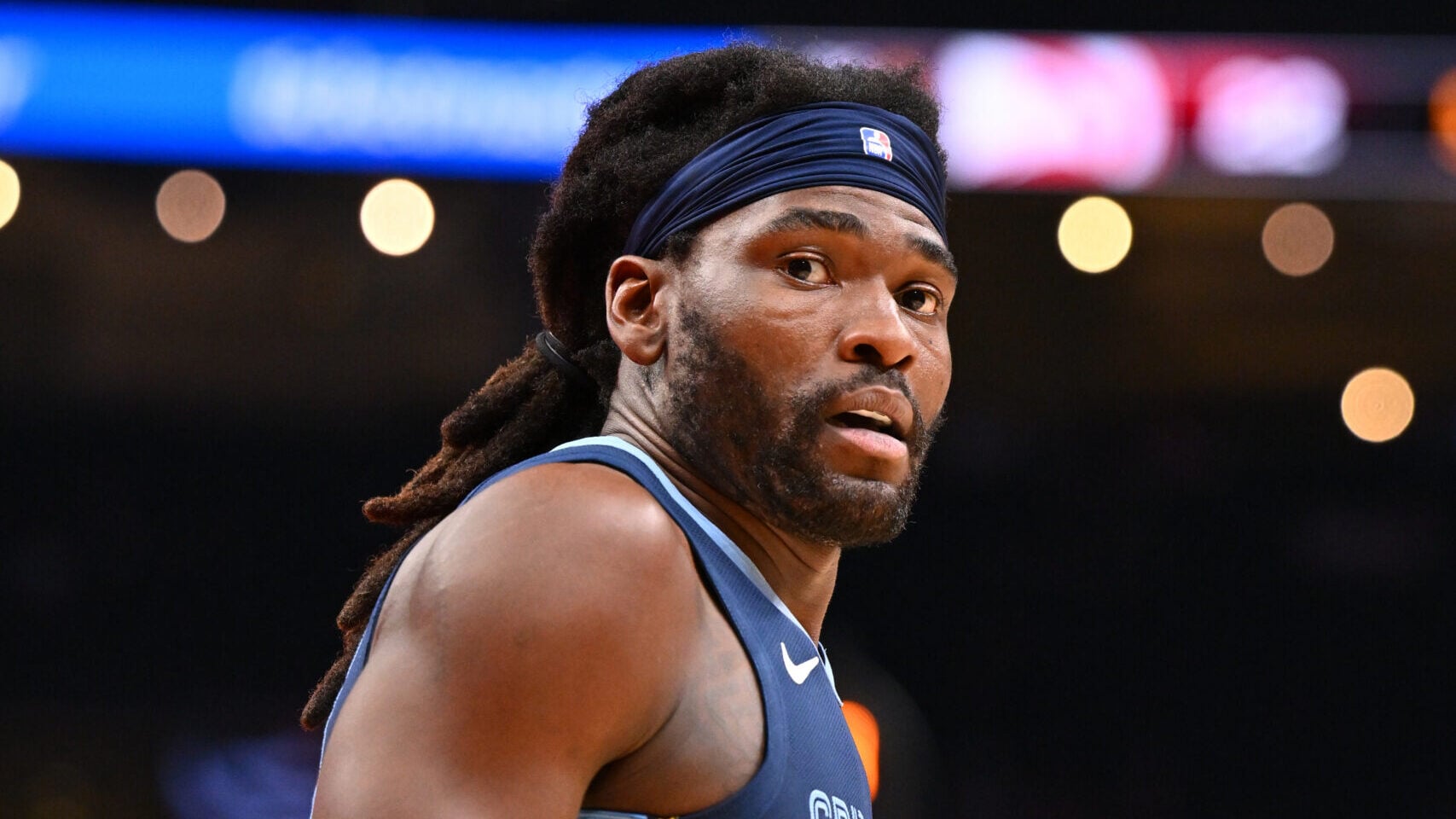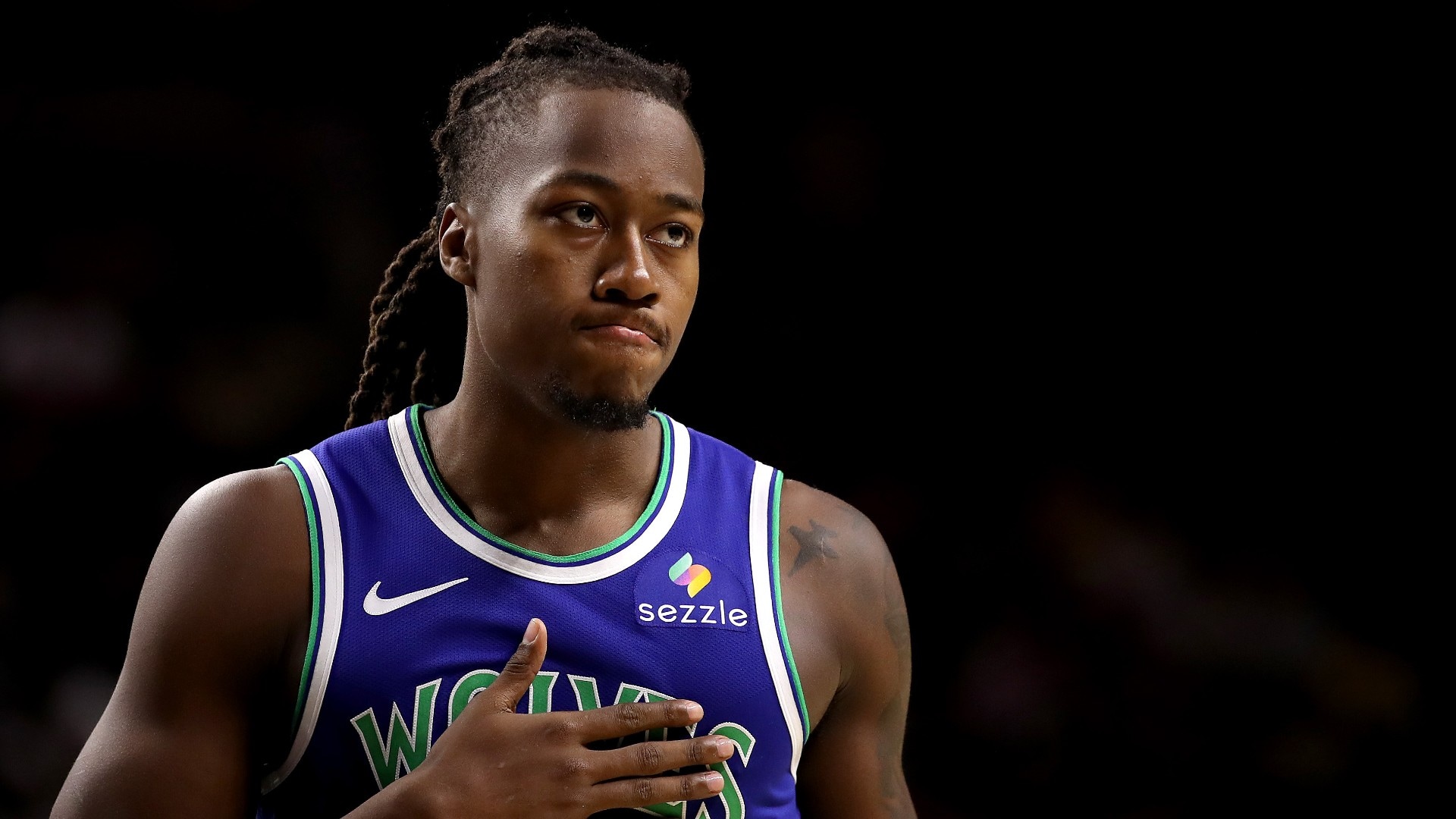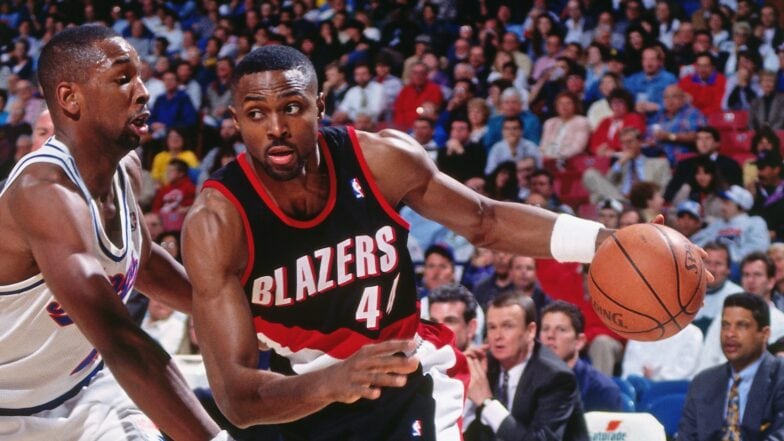
Harvey Grant appeared in 783 career games, splitting time between Washington and the Portland Trail Blazers from 1993–96.
Harvey Grant sees hope on the horizon for his former team, even as they endure a fifth straight season without a spot in the NBA postseason.
Grant, who played for Washington from 1988-93 and again from 1996-98, speaks from experience. He was a part of the 1996-97 team that ended the then-Washington Bullets’ run of eight straight seasons out of the playoffs in the 1990s.
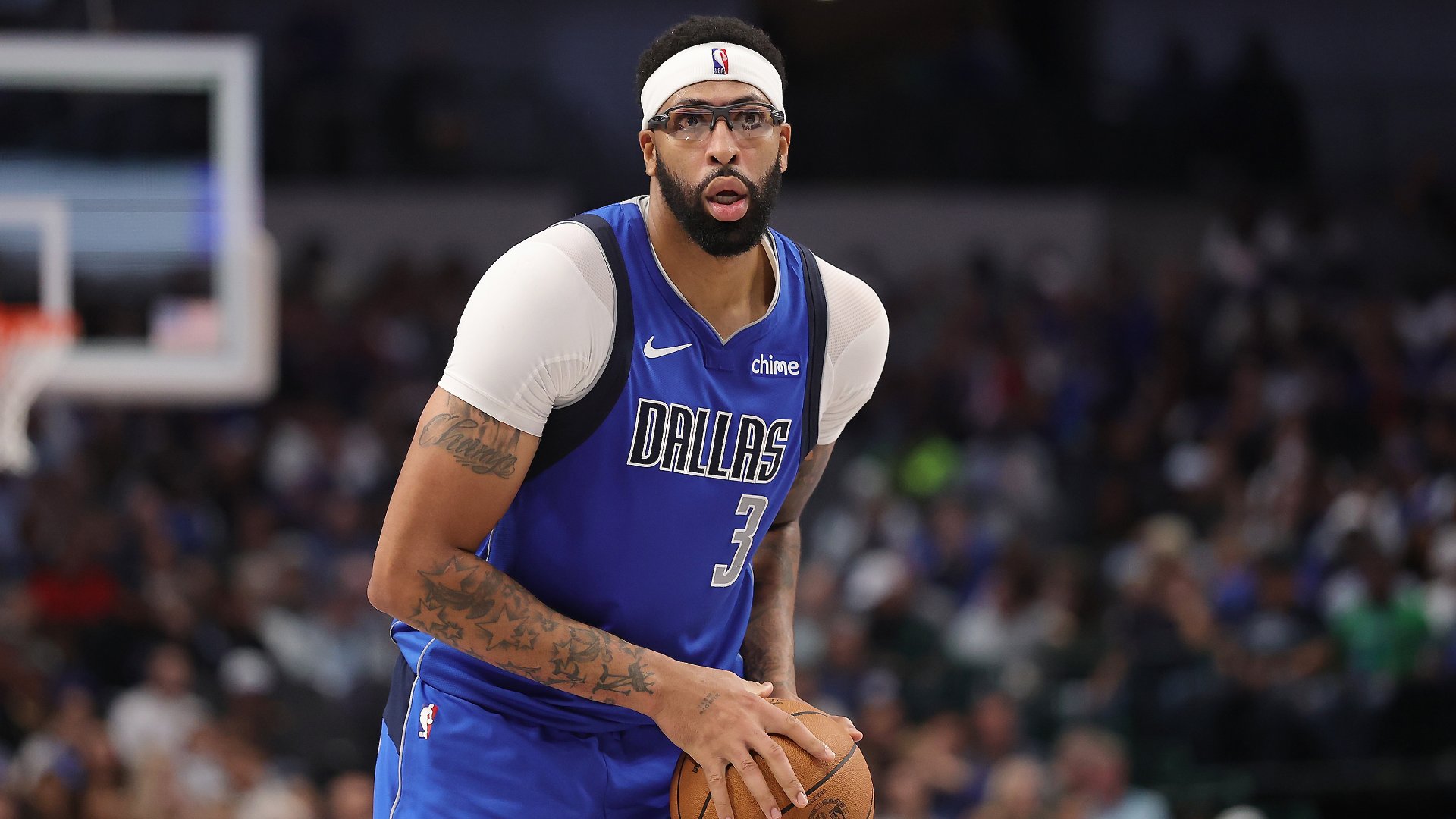
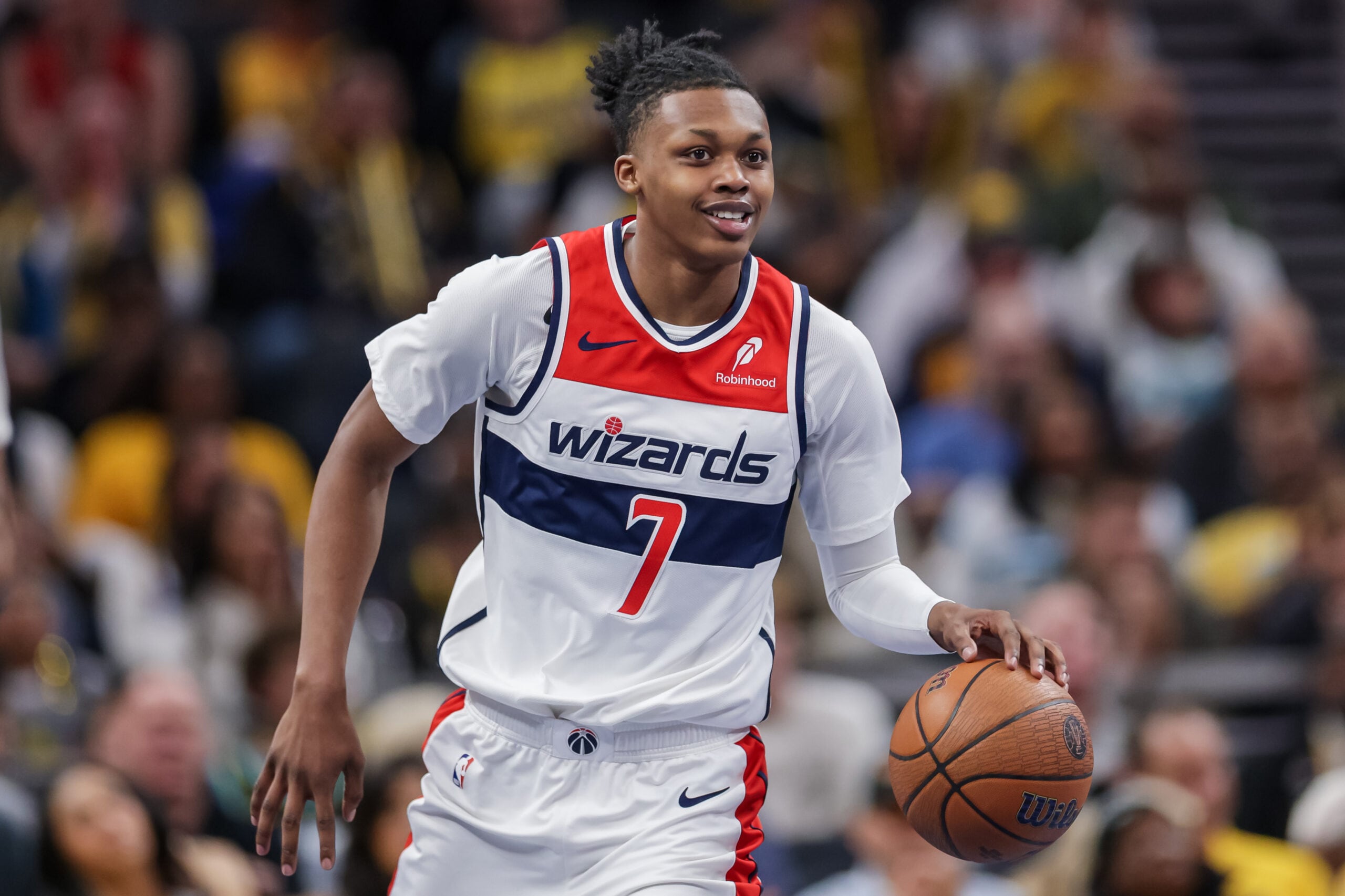
He says, given Washington’s talented core of Alex Sarr, Kyshawn George, Tre Johnson, Bub Carrington and its new additions in (injured) former All-Stars Trae Young and Anthony Davis, the future is bright in D.C.
“I’m hoping with the addition of AD and Trae, if they can stay healthy, I think next year will be that building year that we fans and the guys who stay here are looking for,” Grant said. “I think they have some good building pieces with the young guys. I think with AD and Trae, if they can stay healthy, we can make the playoffs.”
Grant, a former star at Oklahoma, played in 783 career games split between the Bullets/Wizards and the Portland Trail Blazers (1993-96) in an 11-season NBA career and to say hoops are a part of the Grant lineage would be a vast understatement.
Harvey is the twin brother of Horace Grant, who was an integral part of the Chicago Bulls’ championship teams from 1991-93. Two of Harvey Grant’s three sons (Jerian and Jerami) played in the NBA, while his eldest son, Jerai, had a successful pro career overseas.
Jerai Grant (the No. 19 pick in 2015 by the New York Knicks) played for four teams — the Knicks, Chicago Bulls, Orlando Magic and Wizards — from 2015-20. Jerami Grant (the No. 39 pick in 2014), now with the Portland Trail Blazers, has played for five teams in his 12-season career (Philadelphia 76ers, Oklahoma City Thunder, Denver Nuggets, Detroit Pistons and Blazers).
In a chat with NBA.com, Harvey Grant talked about his playing days, the challenges of rebuilding a team, who in the NBA has a game like his and more.
Editor’s Note: The following conversation has been condensed and edited.
NBA.com: The Draft lottery will be held in about a month or so and you were a lottery pick in 1988. What do you remember about the Draft and the Draft lottery process in your era? And what’s something that people may not know about your Draft journey?
Harvey Grant: What I remember about the whole Draft is how I was so blessed to walk across the stage and shake David Stern’s hand. You know, I’ve seen it so many years, but, you know, to actually do it, you know, that was the biggest thing I remember about the Draft. … I worked out for a few teams, about five teams and had some interviews, but it wasn’t anything like they do now. It was an experience that I enjoyed and I was so blessed to play 11 years.
Today the NBA is very guard-driven. At different points in your career, you played with Bernard King, Clyde Drexler and Allen Iverson. Which of those three — you can pick the version you played with or the version of them in their prime — would do best in the NBA today and why?
I think, you know, I played with all three of those Hall of Famers, and by playing with Bernard, I’d have to guard him in practice. I learned so much from him. But I would say Allen Iverson, in his prime. Today — you know, you can’t hand check, you can’t really touch guys now. If Allen played right now, he would average, you know, 35, 37, because he was so quick and fast. Back in my day, you know, you could hand-check him a little bit and slow him up. But now, if he plays, he’s averaging 35 to 37.
In 1992, the Knicks lost to the Bulls in Game 7 of the Eastern Conference Finals. You weren’t on that team, but that summer, you signed an offer sheet with the Knicks as a free agent that was ultimately matched by the Bullets. What drew you to the Knicks? What made that offer sheet appealing to you?
I think back then, when the Bullets matched the offer sheet, the Knicks were looking for a small forward that could play on both ends, offense and defense, and that’s something that they were missing. I talked to my brother, you know, quite a bit — back then and now — and he said ‘we, as the Bulls team, were so glad that the Bullets matched the offer and you didn’t go to New York. Y’all probably would have beat us.’ And I’m like, ‘Man, don’t tell me that.’ (laughs)
When you got traded from Washington to Portland in 1993, what was your reaction to being traded and how did you find out?
I found out through my agent and (then-Bullets GM) John Nash, who was like, ‘we’re going to take you to a real good team out West.’ Being in the league for like five or six years at the time, I knew it was part of the business that you get traded. Going out there and making it to the playoffs and winning 50 games almost every year, that was something I wasn’t used to. Playing with guys like Cliff Robinson, Buck Williams, Clyde, Terry Porter, Rod Strickland … those guys kind of taught me how to win.
What did you think kept you from enjoying the same level of individual success you had in Washington when you went to Portland?
When I was in Washington, I was either the No. 1 or No. 2 guy behind like a Bernard King. When I went out to Portland, you had a Hall of Famer in Clyde Drexler, then you had guys like Cliff Robinson, Jerome Kersey, Terry Porter, Buck Williams — those guys who, I think, the year before, had made it to the Finals against the Bulls. I just had to fit in and do whatever they asked me to do.
When your playing career ended, you worked as a coach, you coached in college and you did some player development in the NBA. What is something that fans or the average person doesn’t know about the work assistant coaches or player development coaches put in?
Being a player, you’re in practice for three hours, but being an assistant coach, you’re there for at least 10 hours. You have to go over game film, you have to stay afterwards if some of the guys want to work out and get some extra shots. It is very time-consuming.
Much like yourself and Horace, you had 2 sons who were in the NBA within years of each other, and yet another who played overseas for years. When did you know or have any idea they could play at the pro level?
After Jerian’s senior year at Notre Dame, when Notre Dame went on that beautiful roll in March Madness, I’m like, he put the work in, so you know, he had the chance. And then, with Jerami, I used to go up and see him play at the Carrier Dome and I remember they were playing Duke. He had like three dunks in a row and he was just a sophomore. After a couple of trips down, I was like, ‘he’s doing this against a team like Duke and you know what? Maybe he has a chance, too.’ And he just put everything together and now he’s been in the league for 12 years.
What do you think is an aspect of your game that fans or other people may have underappreciated about how you played in your day?
I can remember when I got traded back to Washington (in 1996) and they traded for Chris [Webber] and they had Juwan [Howard], Calbert Chaney, Rod Strickland, Tracy Murray and those guys. I had to play center (laughs) and I played it because we couldn’t afford to have Juwan in foul trouble or Chris Webber in foul trouble. I took it upon myself to, you know, to try to guard Patrick Ewing — can’t nobody really guard Patrick Ewing — and some of the other bigger centers on other teams. When I got back, I was like, ‘I’m going to sacrifice my scoring or whatever to help this team win.’ That year, we made it to the playoffs.
You played in 783 games across 10 seasons, scored 7000-plus points and made the playoffs just five times. Why is finding success in the NBA so elusive?
I think the game has changed so much since I played. The rules have changed so much and now, guys or teams don’t concentrate on defense as much as we did when we played. You see games teams are scoring 140, 150 points and I’m like, for me, it’s not good basketball. They talk about get their points and score or whatever, so now, it’s tough for teams to make it to the next round … to the playoffs.
What aspect of being a rebuilding team vs. a playoff team is something maybe people don’t understand about being those two different kinds of teams?
Rebuilding, to me, is you have some talent there — a little talent. I think time has proven you can have talent — you can have three All-Stars on your team — but if they don’t come and gel together, you cannot be a team that’s making the playoffs. I think it’s been proven so much the last five, six years. You have to gel together. I think most playoff teams, they gel together and they have talent. You need both. You just can’t, in my opinion, have talent because if you look at when Phoenix had Bradley [Beal], KD [Kevin Durant] and Booker, they didn’t gel.
Is there anybody you watch in the NBA today and think, ‘this player reminds me of myself?’
Ooh, that’s a tough one. This may sound cliché, but my son, Jerami. He plays both ends, he maybe shoots a little bit better than me but we are similar players and he just kind of reminds me of me.
What makes your era better than the current era? And what makes the current era better than your time when you played?
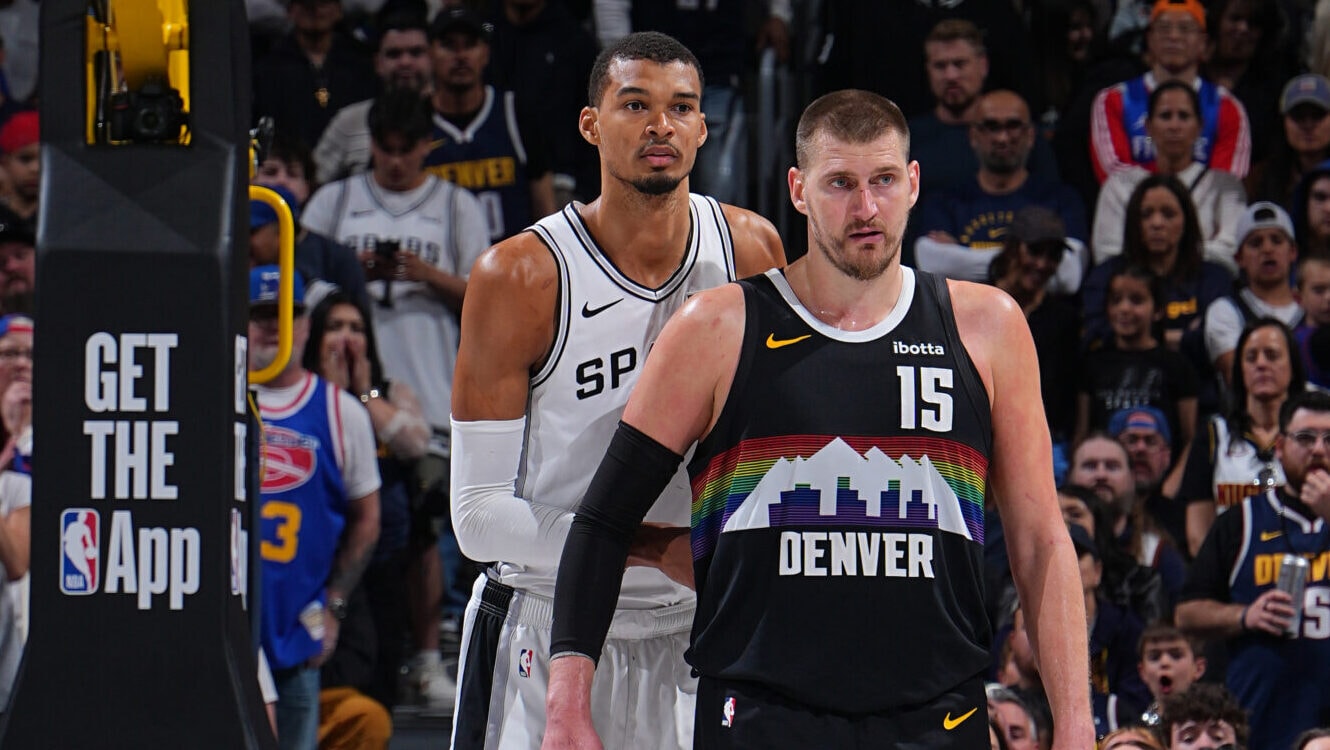
When I played, it was more of a defensive game. You took pride in playing good defense. Somebody who scores like eight points in a row, you were like, ‘you know what? I’m going to shut you down.’ Now, guys are go out and score 20 points in five minutes. When I played it was a more of a defensive game. Guys now — you take the big guy, Wemby [Victor Wembanyama] … never seen anything like it. Never seen anything like it. He’s 7-foot-5, can come down, bring the ball up court, stop on a dime and shoot a 3-pointer. He can take you inside, left hand, right hand and what I really like about him is he plays both ends. Today’s game is more of an up-and-down game. It’s totally different. Like the Joker [Nikola Jokić] out in Denver … those guys, they can come down and shoot the three with ease. Back in my day, we had, maybe, a few guys that could do that. But now, it’s the norm.
What are you most proud of in your NBA career? And also, what is your biggest regret?
The thing I’m most proud of is that I got a chance to get coached by some real good coaches. I got a chance to build relationships with guys that I played with. And just seeing and experiencing places that I probably would have never been and meet people I would have never met before. It has allowed me to have a great life. What I regret is that I didn’t win an NBA championship. My brother’s got four and I regret that I didn’t win an NBA championship.