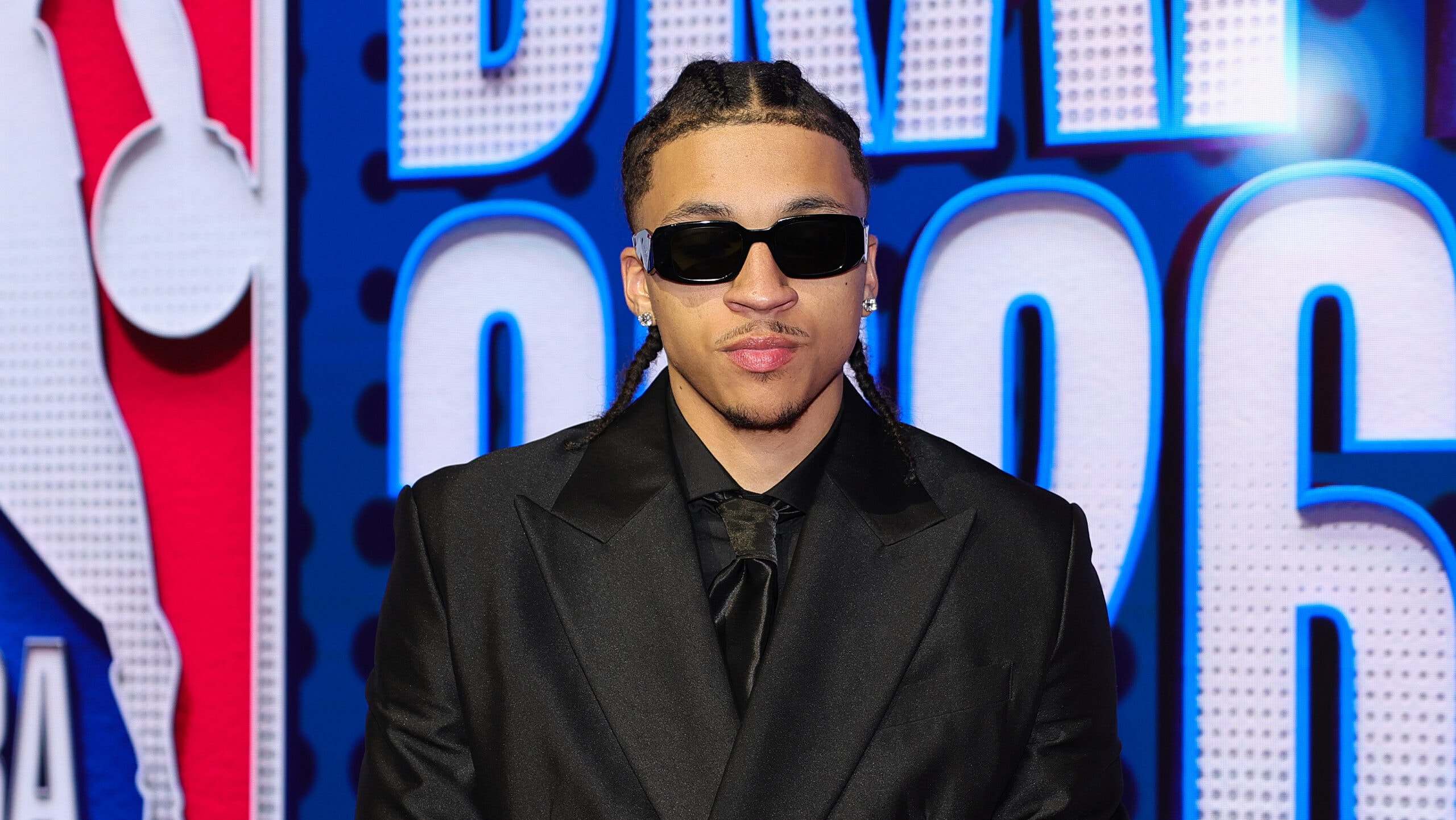
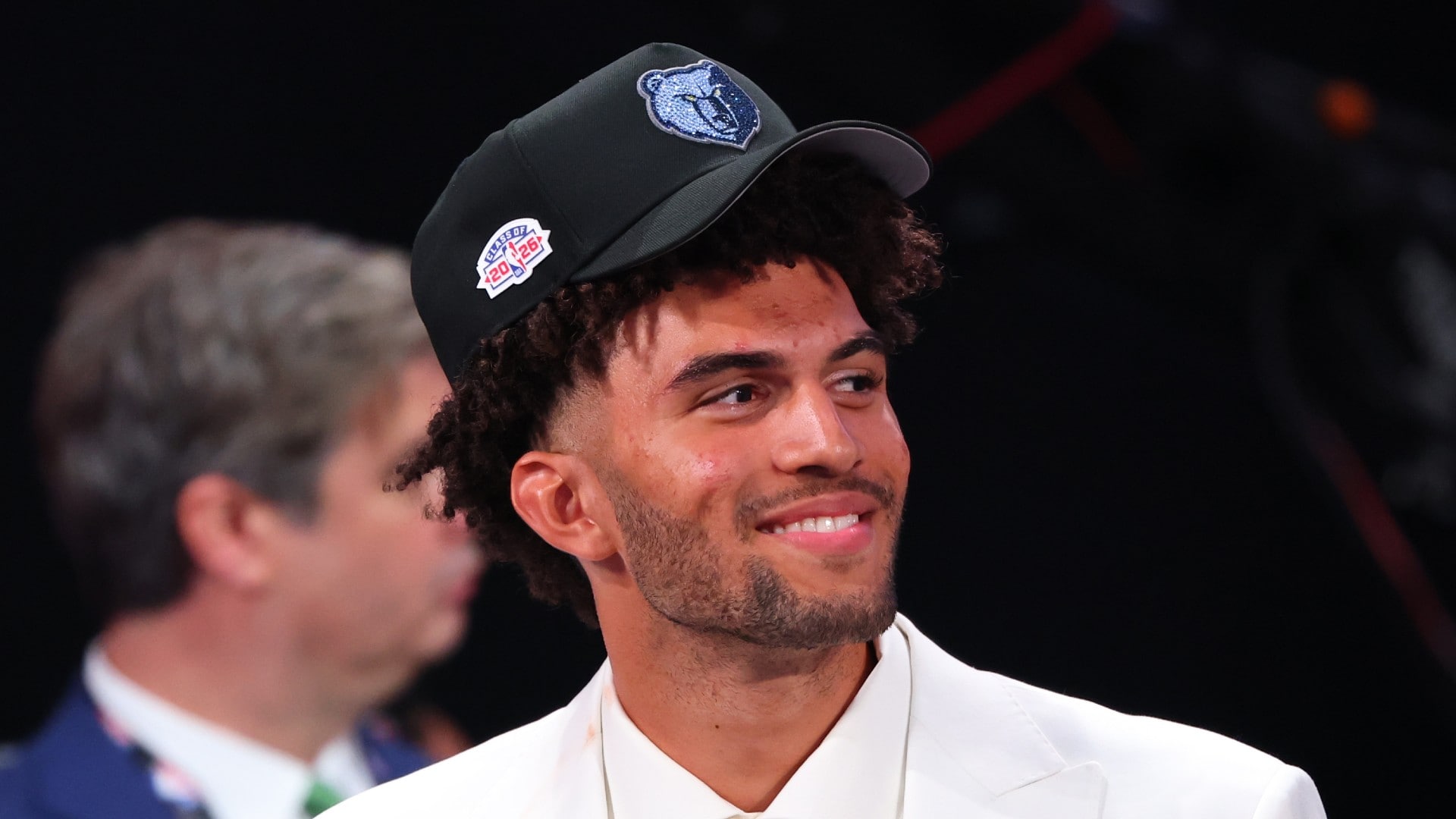
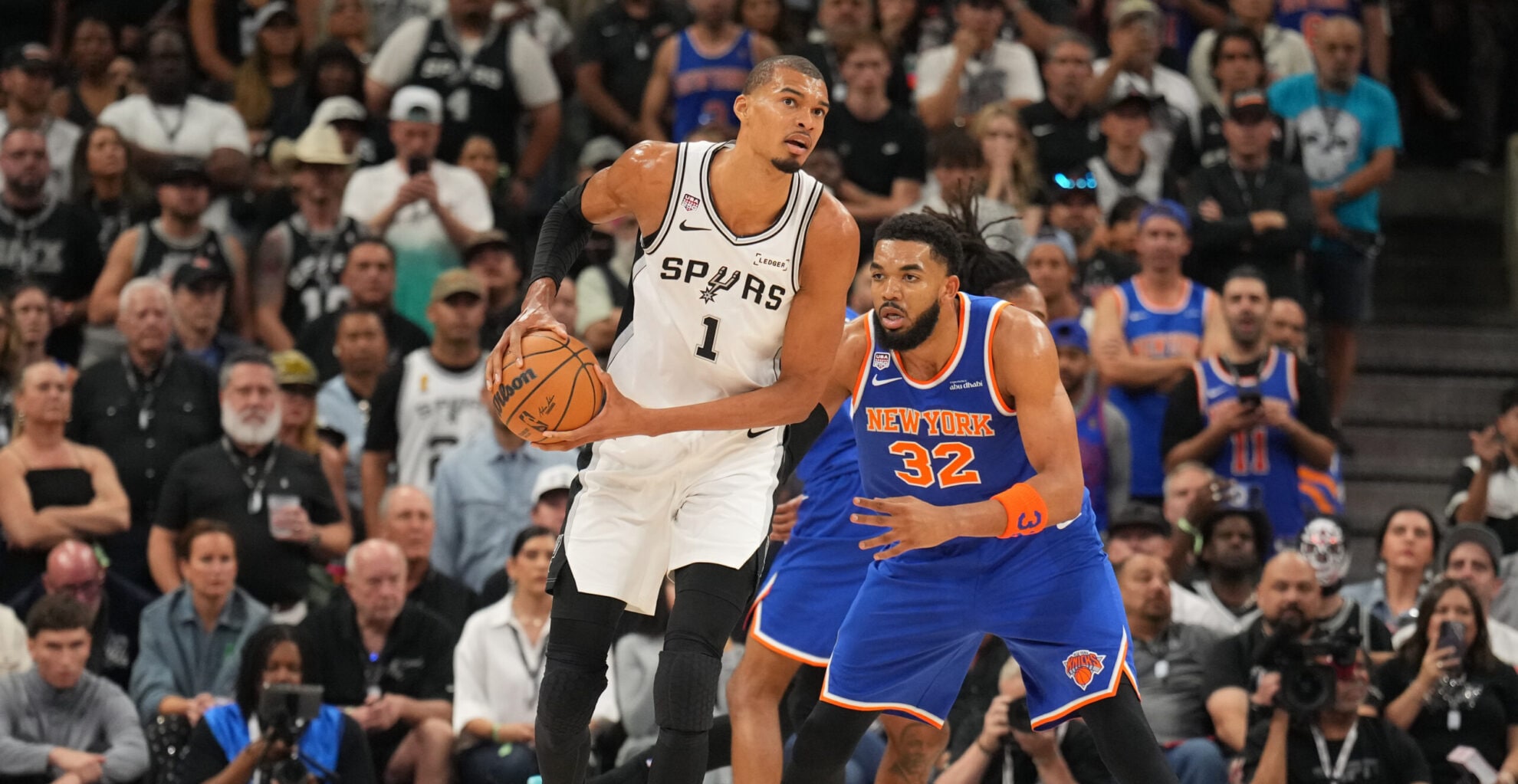
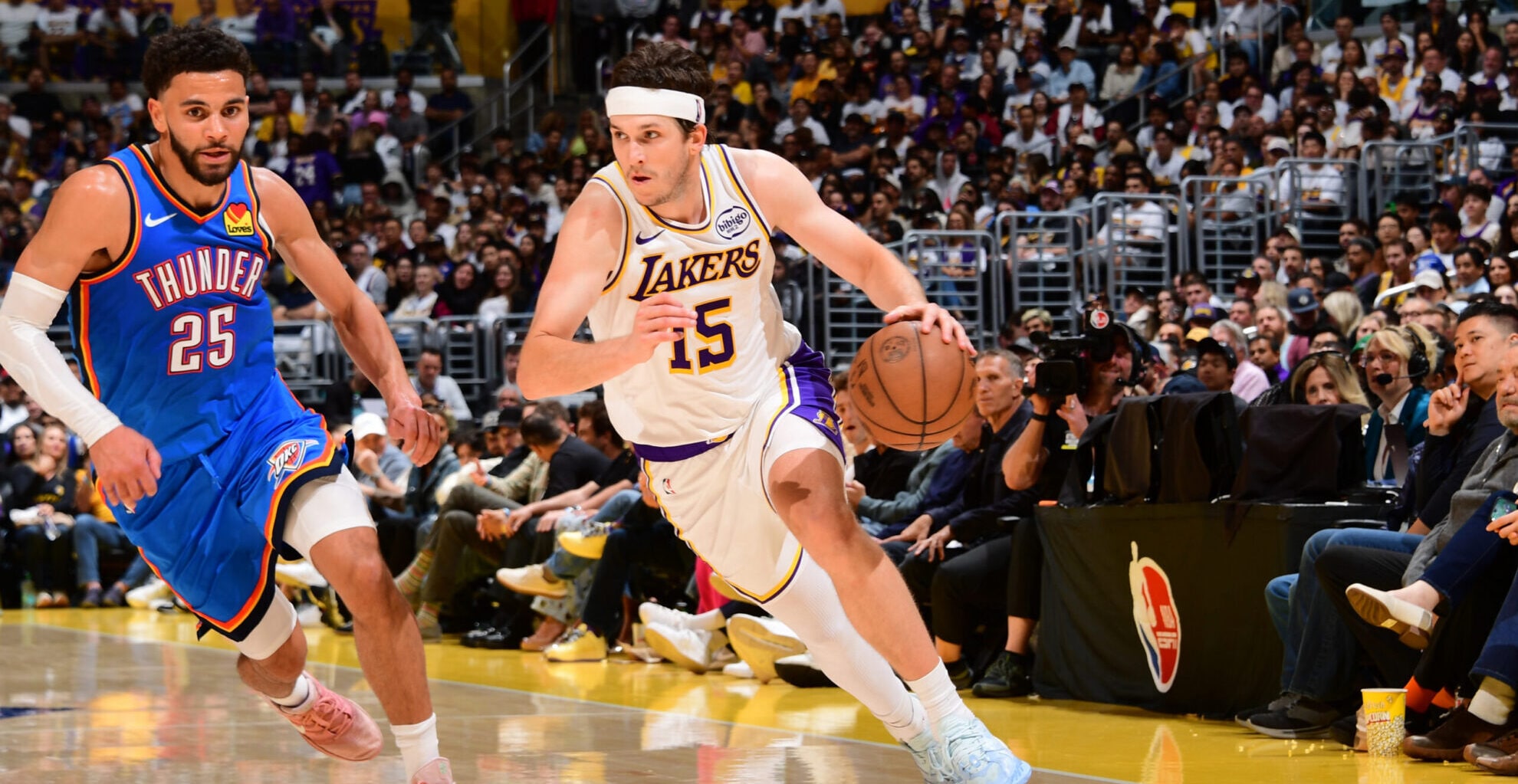
The Utah Jazz select Darryn Peterson (Kansas) as the No. 2 overall pick in the 2026 NBA Draft at Barclays Center.
NEW YORK — He has the distinction and honor of being only the second No. 2 pick in the history of the Utah Jazz, and the soaring expectations to match.
Which is fine by Darryn Peterson. He wouldn’t have it any other way.
“My goal is to win a championship, and as soon as possible,” he said. “We just need a few more pieces.”
That’s the sound of music to a Jazz franchise that has never won a championship. Peterson just raised the bar for Utah and, most importantly, for himself.
There was only mild suspense about his destination on Tuesday at the 2026 NBA Draft.
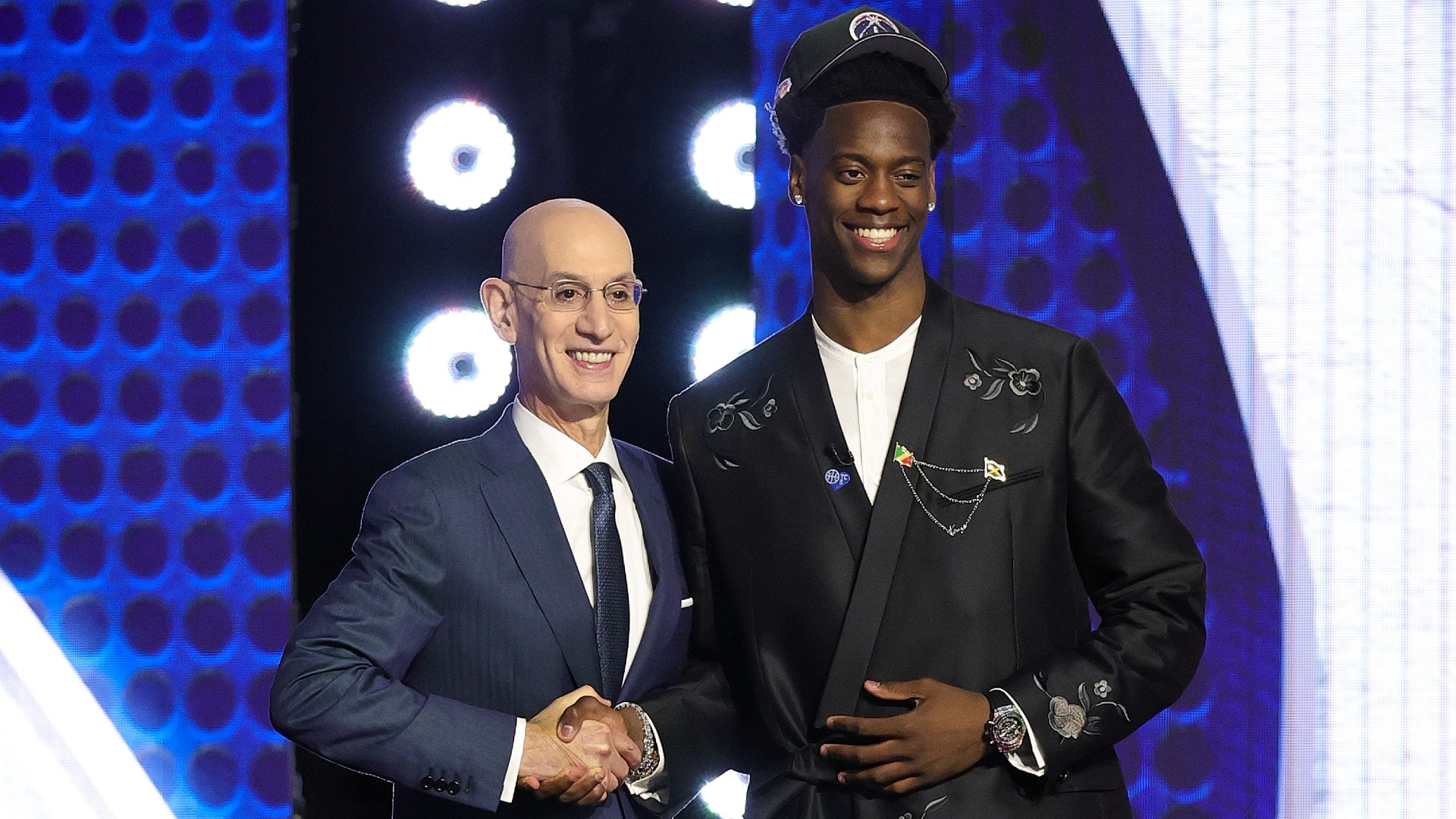
Once the Washington Wizards made AJ Dybantsa the top overall choice as expected, the Jazz didn’t really need to use their allotted five minutes to decide on Peterson, the dynamic guard from Kansas.
“The celebration stops tonight,” Peterson said. “I got drafted today, but tomorrow, I’m an NBA player.”
This franchise is trying to remake itself into a contender in due time, and Peterson could be the necessary cornerstone Utah has been trying to find. At 6-foot-5, he brings good size and has athletic ability. In his lone college season, Peterson was a certified scorer who averaged 20.2 points per game and was all-but certain to go first or second in this draft.
Darryn Peterson addresses the media after being selected No. 2 overall in the 2026 NBA Draft.
Before the start of his freshman season at Kansas, he was projected by some scouts to be the top overall selection in the 2026 NBA Draft.
The only drama with Peterson was his availability in college. He missed 11 of his first 27 games due to cramping issues and subbed out of other games, complaining of the discomfort it caused. The ailment went unexplained for long stretches, leading to public speculation, which Peterson didn’t go to great lengths to squash and clarify, to the dismay of some NBA scouts. There were ankle and hamstring issues as well.
He kept his health under wraps, and only until he left Kansas and approached the NBA combines did he fully explain; he blamed creatine as the main cause of the problems.
“I’m back, period,” he said. “I’ve never felt better, actually. I’m myself again, and I’m super excited. I felt I controlled everything I could control. I got through it.”
The health history, he acknowledged, hung over him heavier and longer than he anticipated.
Such is the case when a player has obvious supreme skills and is slated to go high in the draft. Teams are naturally spooked when it comes to player health, especially when college players without injury or health issues sometimes labor through a rookie season that places demands on them to play 82 games, or close enough.
It’s a gamble for teams that rely on high picks to trigger a franchise turnaround. There’s so much at stake. It certainly came as refreshing news to the Jazz when Peterson listed his primary goal in his rookie season:
“Play all 82 games.”
He added: “People will have opinions because of what I went through. I’ve worked my butt off my entire life and will continue to do that. I’m back to being me.”
And if that’s the case, the Jazz have stumbled upon a player with special promise.
Darryn Peterson sits down to talk after being selected No. 2 overall by the Utah Jazz in the 2026 NBA Draft.
His star potential is so crucial to the future of the Jazz, and he’s just 19. Utah hasn’t made the playoffs since jettisoning Rudy Gobert and Donovan Mitchell in 2022. As a result, the last few years have put the Jazz deep into the draft lottery, though doing so never granted them the first overall choice (something the franchise has never had).
Utah is building mainly organically and curiously spending its high draft capital on swingmen. Ace Bailey was Utah’s first pick last summer (No. 5 overall) and Keyonte George went No. 16 in 2023.
This may seem like a sudden logjam, but it’s a great problem for the Jazz. George had a breakout 2025-26 by posting 23.6 ppg, all while showing the skills that made him a primary option. Bailey started 61 games and improved down the stretch as well.
The Jazz also made a strategic move at the last trade deadline by adding Jaren Jackson Jr. to pair with another veteran frontline player and former All-Star: Lauri Markkanen. Along with Walker Kessler, Utah’s front court was instantly fortified.
Utah was slowly setting the table for a drastic leap in 2026-27, realizing that the draft could add another important piece, and here they are, bringing another guard to balance the rotation.
Curiously, much like Bailey last summer, Peterson didn’t work out for the Jazz before the draft. Once again, it sent strange signals, although Peterson downplayed the decision. He explained:
“I wanted to go No. 1 in the draft, the Wizards had the pick, so that’s who I worked out with. Obviously I wanted to go No. 1 because who doesn’t? But when I met with some of the (Jazz) at the combine I came away impressed. I told my people that I felt I had a great connection with Utah and I wouldn’t be upset if they called me.”
The Jazz also made a point to visit Peterson in his hometown of Canton, Ohio, shortly before the draft. Peterson said that it “meant a lot to me” and made him even more comfortable with the organization, which also laid out its goals.
If Peterson makes a big splash next season, it will have historical connotations for the Jazz. The franchise’s only Rookie of the Year winner was when Darrell Griffith, the team’s last No. 2 overall pick, won it in 1981. By the 1984 Draft and ’85 Draft, respectively, the Jazz added franchise icons John Stockton and Karl Malone. Both have statues near the Delta Center entrance in Salt Lake City.
Neither Griffin nor Stockton arrived with the same level of hope as Peterson, who accepts the challenge of meeting or even beating those projections.
Peterson said: “I’m just blessed to have this opportunity. I’m prepared to go to Utah and go to work. I’m extra motivated, excited to be a part of it and blessed to go into a situation where I think I can win right away. The first thing is to make the playoffs. Then try to get a ring.”
Peterson earned a reputation in college for rising up in big moments and against top competition. He showcased an ability to score almost anywhere on the floor and do so comfortably.
The only hiccup was staying in the lineup, and for those who still harbor questions about that, Peterson brought this message:
“I think they’re going to forget about all the other stuff because of my game. I’m about to show them.”
* * *
Shaun Powell has covered the NBA since 1985. You can e-mail him at spowell@nba.com, find his archive here and follow him on X.