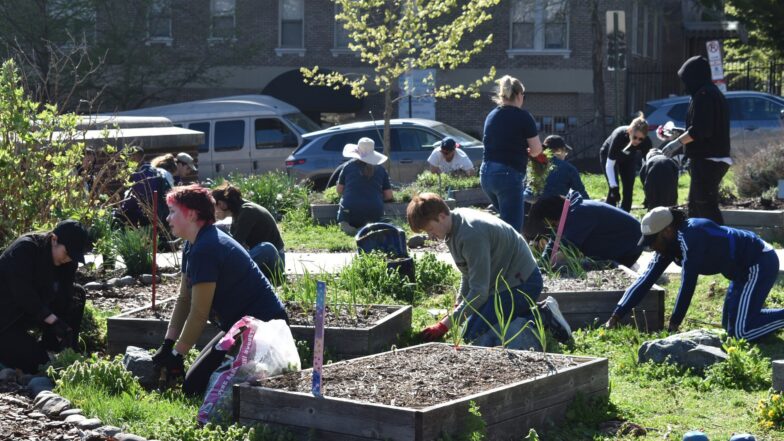
City Blossom participants volunteering at Cardozo High School in Washington, D.C.
In a time when environmental preservation is more urgent than ever, communities are finding ways to balance sustainability with new development. The Saint Paul Parks Conservancy (Minnesota) and City Blossoms (Washington, D.C.) programs are putting young people at the center of redevelopment, giving them the chance to see their impact firsthand.
Both organizations are literally planting seeds in the communities they serve. With Earth Day having taken place this past Wednesday, it not only highlights the guiding principles of these organizations but also reinforces the overarching goals they pursue.
“For us, Earth Day is every day,” said City Blossoms Executive Director Rafael Woldeab.
“Our youth are out in the garden after school, growing food, selling at farmers’ markets, donating produce to their neighbors. That’s not a once-a-year thing, that’s just Tuesday. Earth Day gives us a moment to step back and recognize the significance of what these young people are doing.”
Where Community Meets Conservation
Guided by these overarching goals, both organizations have established themselves as pillars in their communities, committed to ongoing growth and revitalization.
The Conservancy’s mission is to create community vibrancy by making strong parks even better. Recently, the organization has expanded its work along the Mississippi River, as Minnesota is home to the river’s longest stretch of any state.
Volunteers and youth participants are working to reclaim the sections of the riverbank, removing invasive species and reintroducing native plants.
President and Chief Park Champion Michael-Jon Pease said the work along the river is “ongoing,” adding that “it always feels really good when you’ve conquered another patch, reclaiming it for nature.”
Ownership Takes Root
That same sense of ownership is at the core of City Blossoms’ work in Washington, D.C.
During April, the organization broke ground on a brand-new school garden at Noyes Elementary, a Title I school in Ward 5 that serves 293 students. In part, City Blossom partners with local community stakeholders to be a part of the build, so the garden is totally connected to the community from day one.
“There’s something really special about starting from scratch and knowing the people who helped build it will be invested in watching it grow,” said Woldeab.
“The biggest thing is ownership, and I mean that on a few levels,” he continued. “Even with our youngest students, something clicks when a kid plants a seed, tends to it, and actually gets to eat what they grew. That’s not a small thing.”
Powering Youth Programming Through Partnership
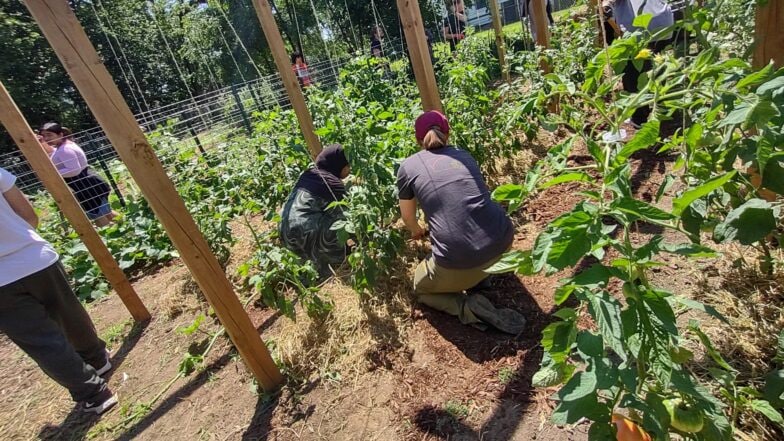
Saint Paul Parks Conservancy and Recreation is motivated to increase access and growth in the near future.
Although still in its early stages, the organization’s partnership with the NBA Foundation has already opened new opportunities for expansion. At a time when many youth initiatives—particularly in environmental and green career spaces—struggle to secure funding, the partnership is expected to increase access and resources.
Through the Conservancy’s Right Track program, the organization aims to support up to 1,000 youth this year after previously serving around 800. Funding from the NBA Foundation has helped expand awareness of the program, reaching young people in underserved communities who may not have otherwise known about the opportunity.
”We are proud to support Saint Paul Parks Conservancy alongside the NBA Foundation,” said Sondra Ciesielski, Senior Director of Community Impact for the Minnesota Timberwolves & Lynx, “Organizations like these help push our community forward by offering opportunities to learn valuable skillsets in diverse fields, that ultimately set young people up for success.”
That level of support is critical, not just for resources, but for consistency—something leaders beleive is essential for youth development.
“This support helps us keep weekly programming running at both partner schools, Eastern High School and Cardozo Education Campus, pay youth for their work, and show up consistently for over 100 young people across the year. Consistency is everything in this work. Youth need to know you’re going to be there,” Woldeab said
As both organizations continue to grow, their impact extends far beyond gardens and riverbanks. By placing young people at the center of their work, they are not only revitalizing communities but also cultivating the next generation of environmental leaders.