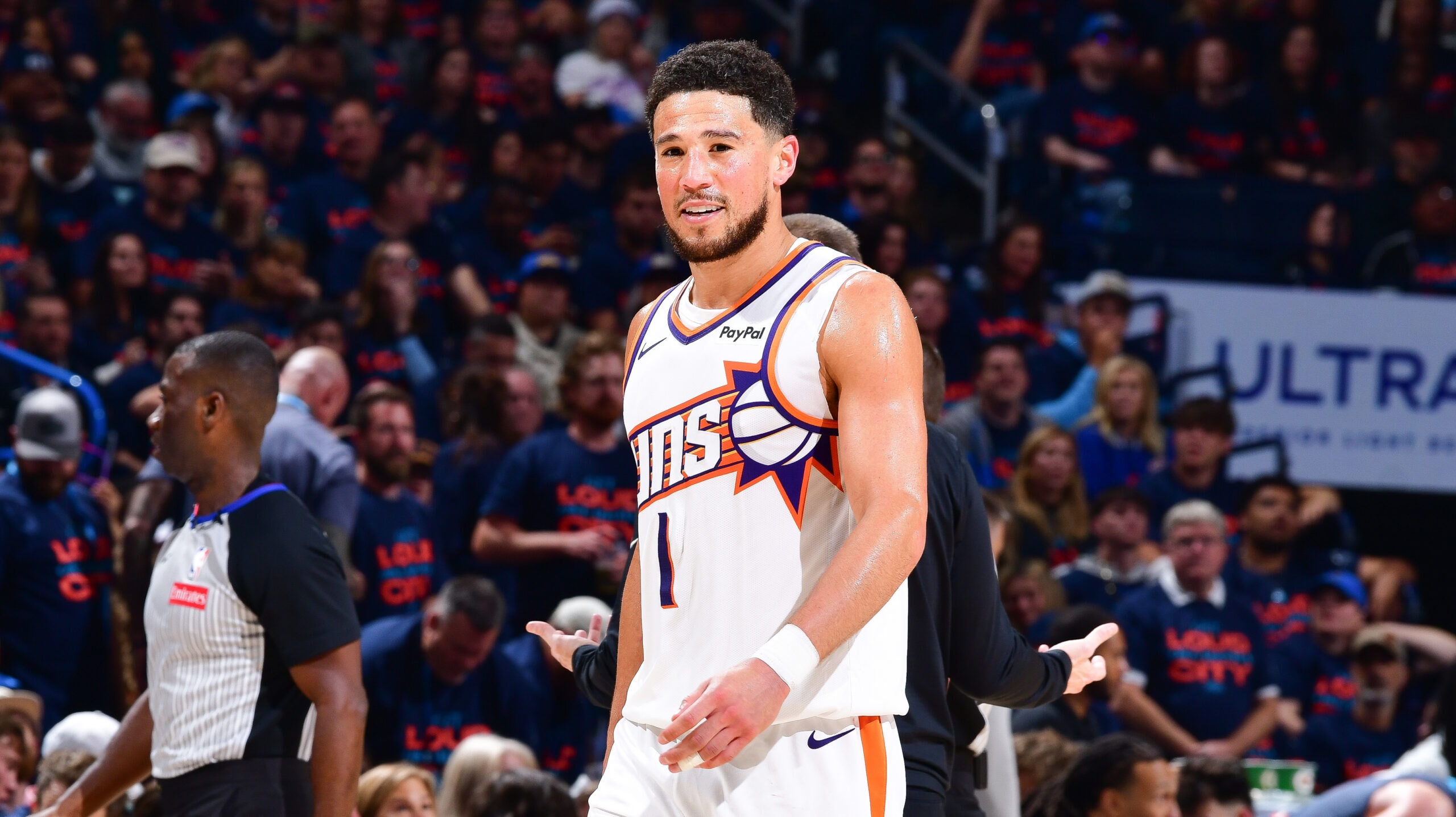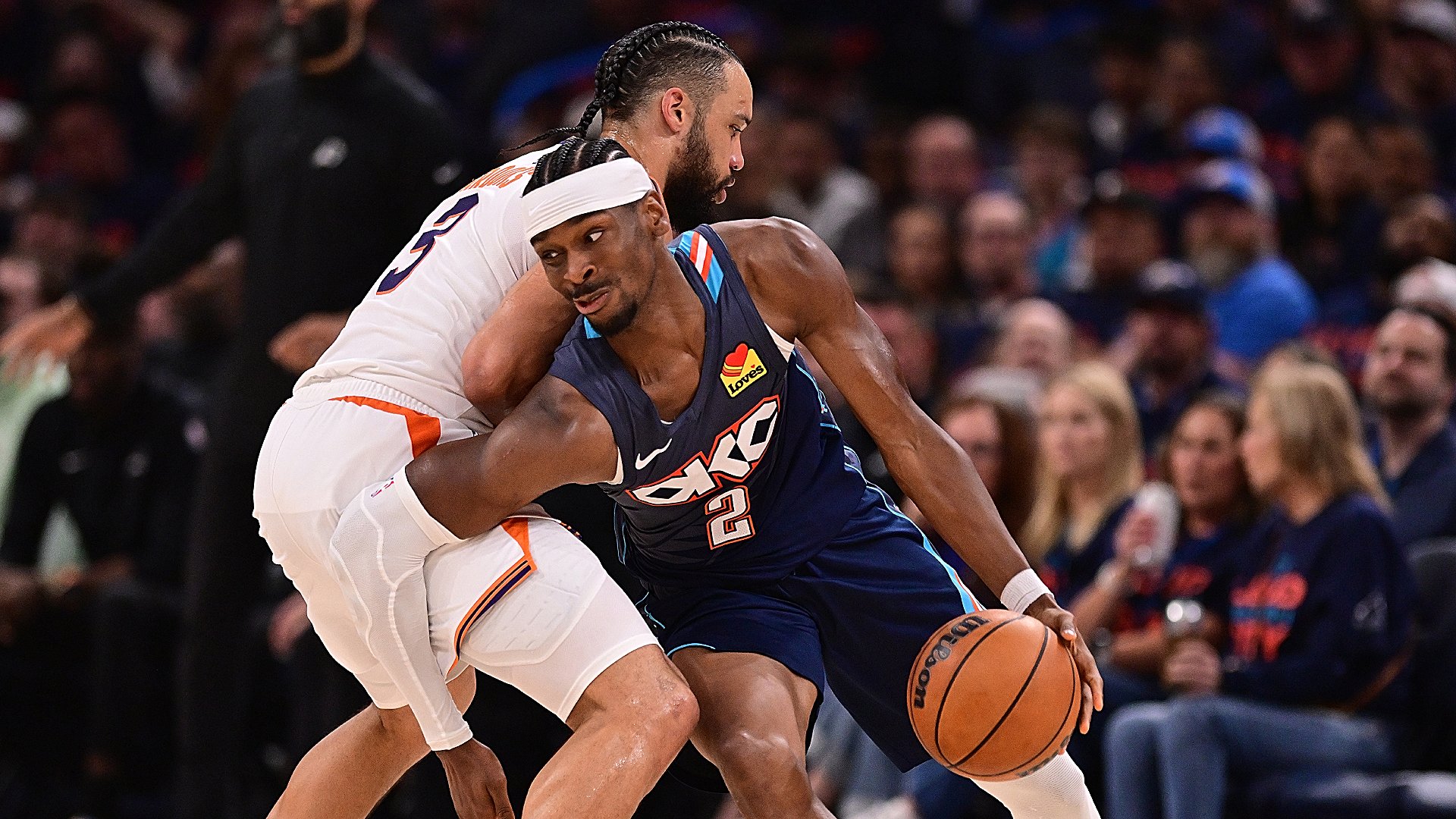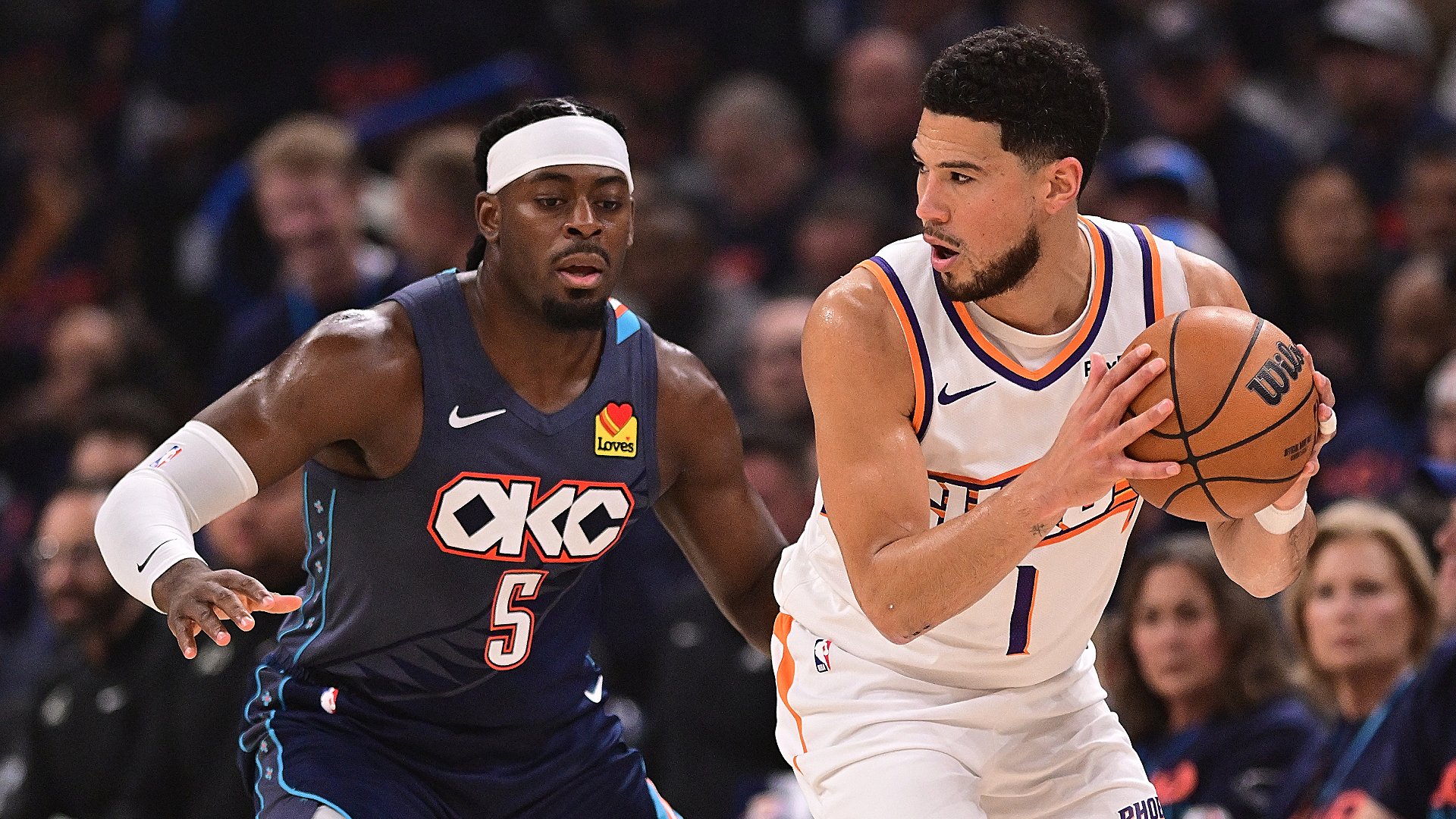
Devin Booker has been kept mostly under wraps in the series by Lu Dort and the Thunder defense.
Unsurprisingly, the Oklahoma City Thunder have been the most dominant team in these playoffs, outscoring the Phoenix Suns in the first two games of their first-round series by 25 points per 100 possessions. Relative to their opponents’ regular-season numbers, the Thunder have had the best offense (by a huge margin) and the third-best defense of the playoffs through Thursday.
But the Thunder’s bid to repeat as champions has hit a bump in the road, with Jalen Williams having suffered a left hamstring injury in the third quarter of Game 2 on Wednesday night. Williams will be re-evaluated on a weekly basis and it’s likely that he’s out for (at least) the remainder of this series.
Maybe that gives the Suns a little hope as the series moves to Phoenix.
Here are three things to watch for in Game 3 on Saturday (3:30 p.m. ET, NBC/Peacock):
1. The Thunder will manage without Williams … again
Williams missed 49 games in the regular season (the Thunder went 39-10 without him). Cason Wallace is the most likely player to start in his place, having started 58 games in the regular season. In fact, the lineup with Wallace in place of Williams was the Thunder’s most-used five-man unit in the regular season, and it outscored opponents by 18.6 points per 100 possessions in its 167 total minutes. The 102.3 per 100 that it allowed was the second-best defensive mark among the 37 lineups that played at least 150 minutes.
But the Thunder just can’t be as good offensively without Williams, who had totaled 41 points in his 52 minutes in this series, shooting 16-for-26 and also dishing out 10 assists (with just two turnovers). Not only do they lose a second off-the-dribble weapon in the starting lineup, but also the player running the offense when Shai Gilgeous-Alexander goes to the bench.
In the regular season, the Thunder scored 11.1 fewer points per 100 possessions with Gilgeous-Alexander off the floor (110.4) than they did with him on the floor (121.5). That was the fourth biggest on-off differential on offense among 263 players who played at least 1,000 minutes for a single team, and that off-the-floor mark was well below the league average.
The good news is that the Thunder are one of the best defensive teams we’ve ever seen. In the regular season, they allowed 8.3 fewer points per 100 possessions than the league average, the second-best differential in the 30 seasons for which we have play-by-play data.
2. Can the Suns free up Booker?
Booker has averaged 22.5 points per game in this series, a solid number, but down from 26.1 in the regular season.
Booker’s true shooting percentage (scoring efficiency) has been the same in the playoffs (58.5%) as it was in the regular season. But his usage rate is down from 30.7% in the regular season to just 25.7% in these two games.
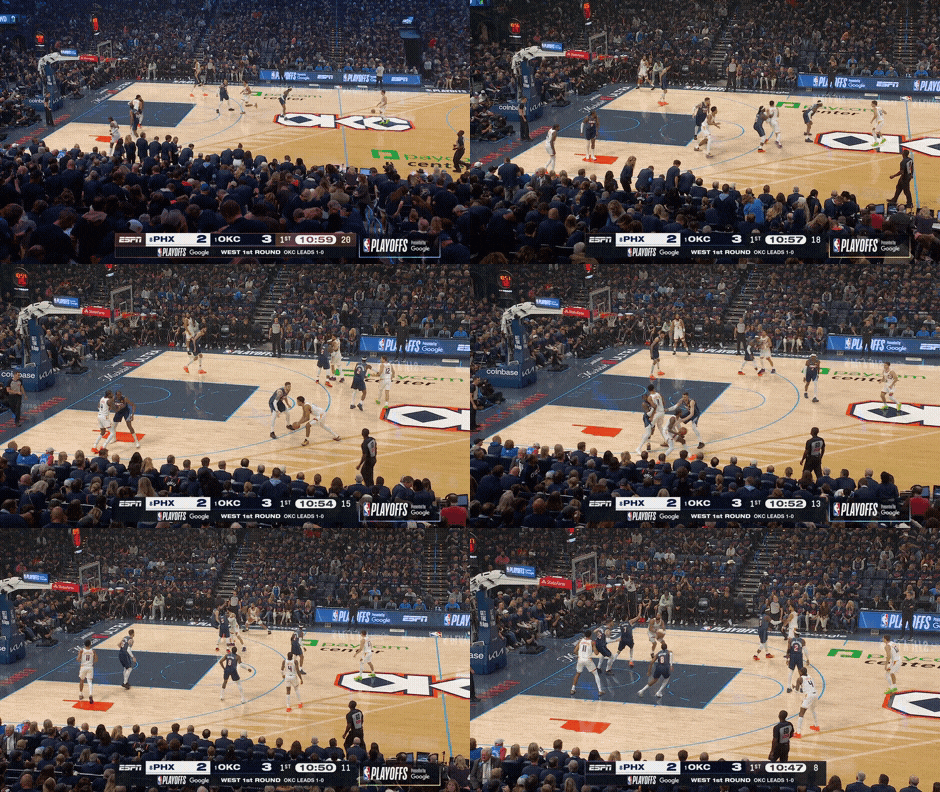
The drop in usage rate is obviously more about the Thunder than Booker’s desire to take shots. Just watch this possession early in Game 2, where Lu Dort stays hugging onto Booker, even when the ball is on the opposite side of the floor and when Dort might be tempted to help on the ball …
Of the Suns’ three leading scorers, Booker is the most efficient by a healthy margin. The Thunder are right, then, to prefer that Dillon Brooks and Jalen Green take more shots. Each of them had a big half in Game 2 on Wednesday, but they’ve combined for a true shooting percentage of just 47.9% in this series.
The Suns can obviously take advantage of the attention on Booker to generate good shots on the other side of the floor …
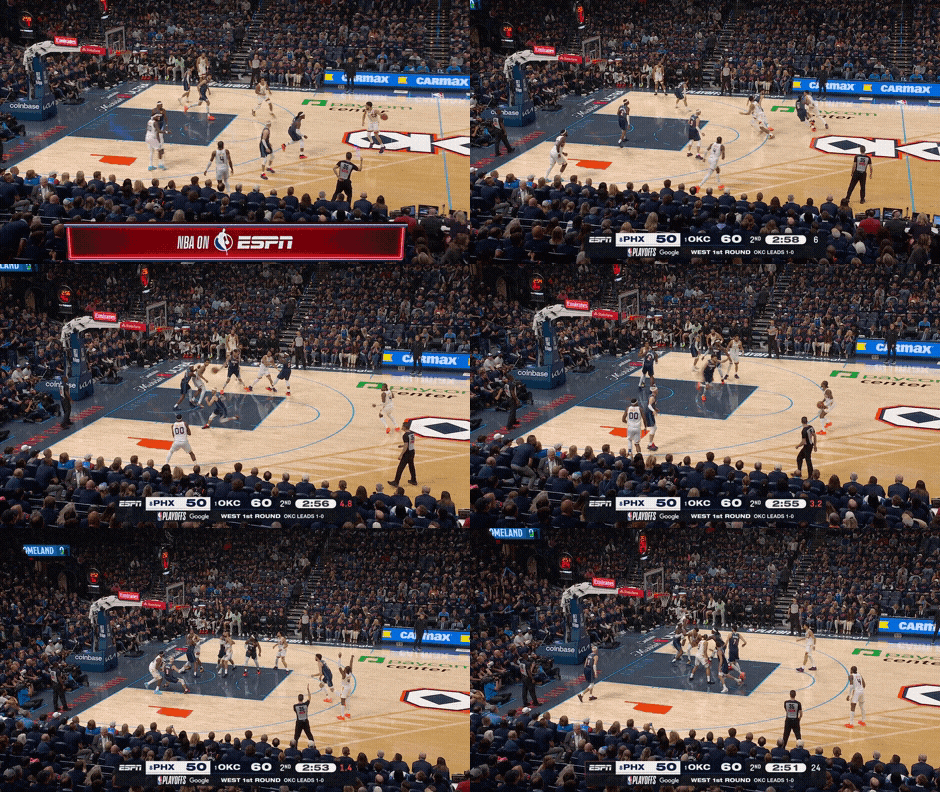
… but they’d also like to get Booker some good shots, too. According to tracking data, he ranked near the bottom of the league in shot quality in the regular season, and that shot quality has been even lower in this series.
Even when he’s seemingly had space to pull up from mid-range, his defender has contested the shot from behind. Sometimes when he’s cut back door against a top-locking defender, another has been there to help.
Placing Booker on the weak side of the floor doesn’t help if his defender remains attached to him, but flare screens can get him some separation in a space where there are fewer help defenders with their eyes on him.
Really, Booker’s best shots have come in transition or after offensive rebounds. Winning the possession game, forcing turnovers and grabbing offensive boards are critical for Phoenix.
3. The turnover differential is historic
The Suns rank third in offensive rebounding percentage (36.5%) in the playoffs, with Oso Ighodaro (15.9%) ranking fourth among individuals. So they’ve given themselves plenty of second chances.
But the leading offensive rebounder in the playoffs has been Isaiah Hartenstein (22.2%), and the Thunder rank fourth in offensive rebounding percentage, just behind the Suns. And the turnover differential has been dramatically in favor of the champs.
In fact, the turnover differential (11.5 per game) would be the biggest in any playoff series in (at least) the last 30 years, topping that of the Thunder’s sweep of the Memphis Grizzlies (8.8 per game) in the first round last year.
The Suns have seen a huge jump in turnover rate and a huge drop in opponent turnover rate from the regular season …
Suns’ own and opponents’ turnovers per 100 possessions
We often focus on how the Oklahoma City defense forces turnovers, but we can’t overlook how good the offense has been at avoiding them. This was the second straight season that the champs had the league’s lowest turnover rate, and they’ve been even better at taking care of the ball in this series, even though forcing turnovers has been the biggest strength of this particular opponent.