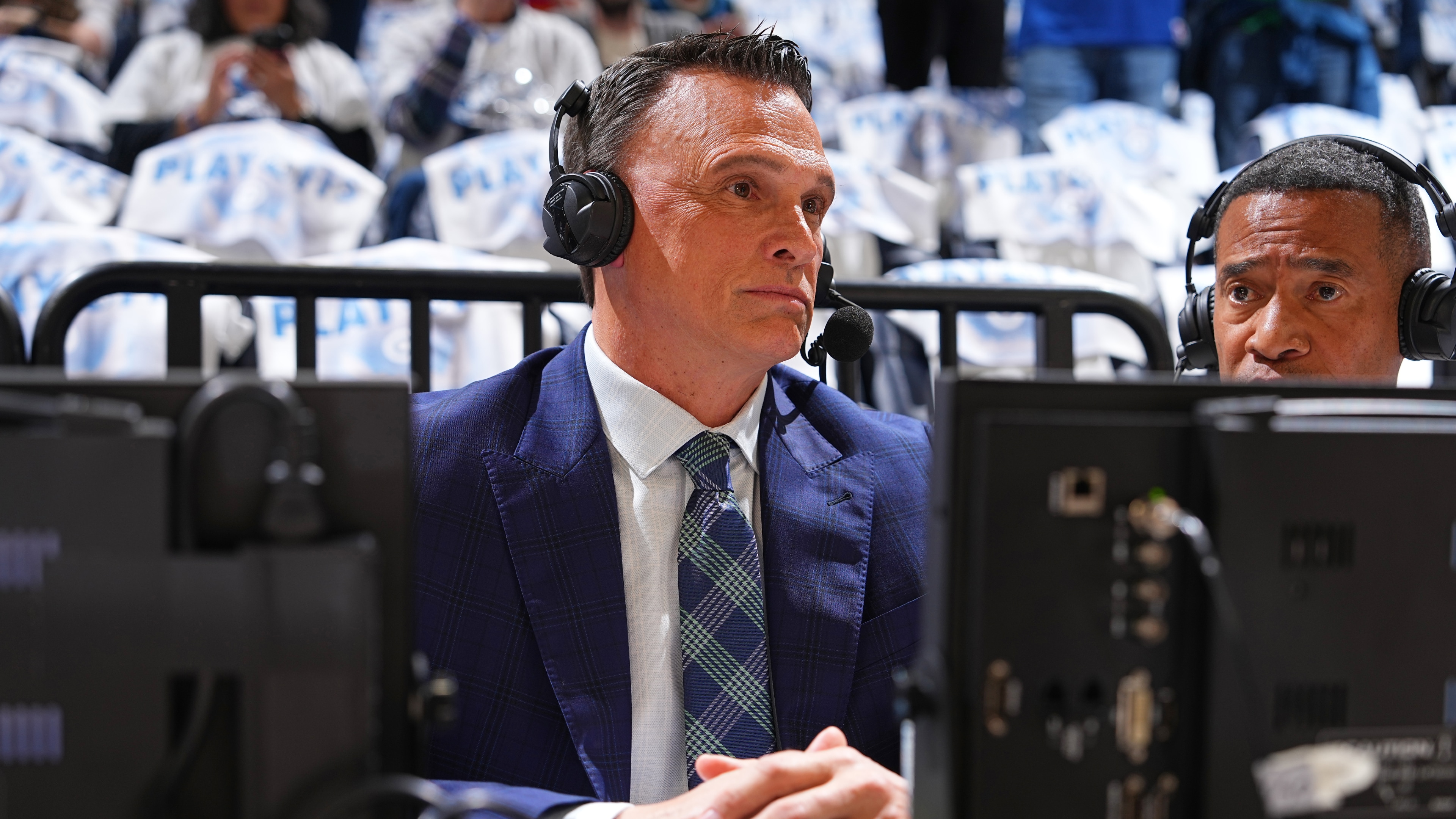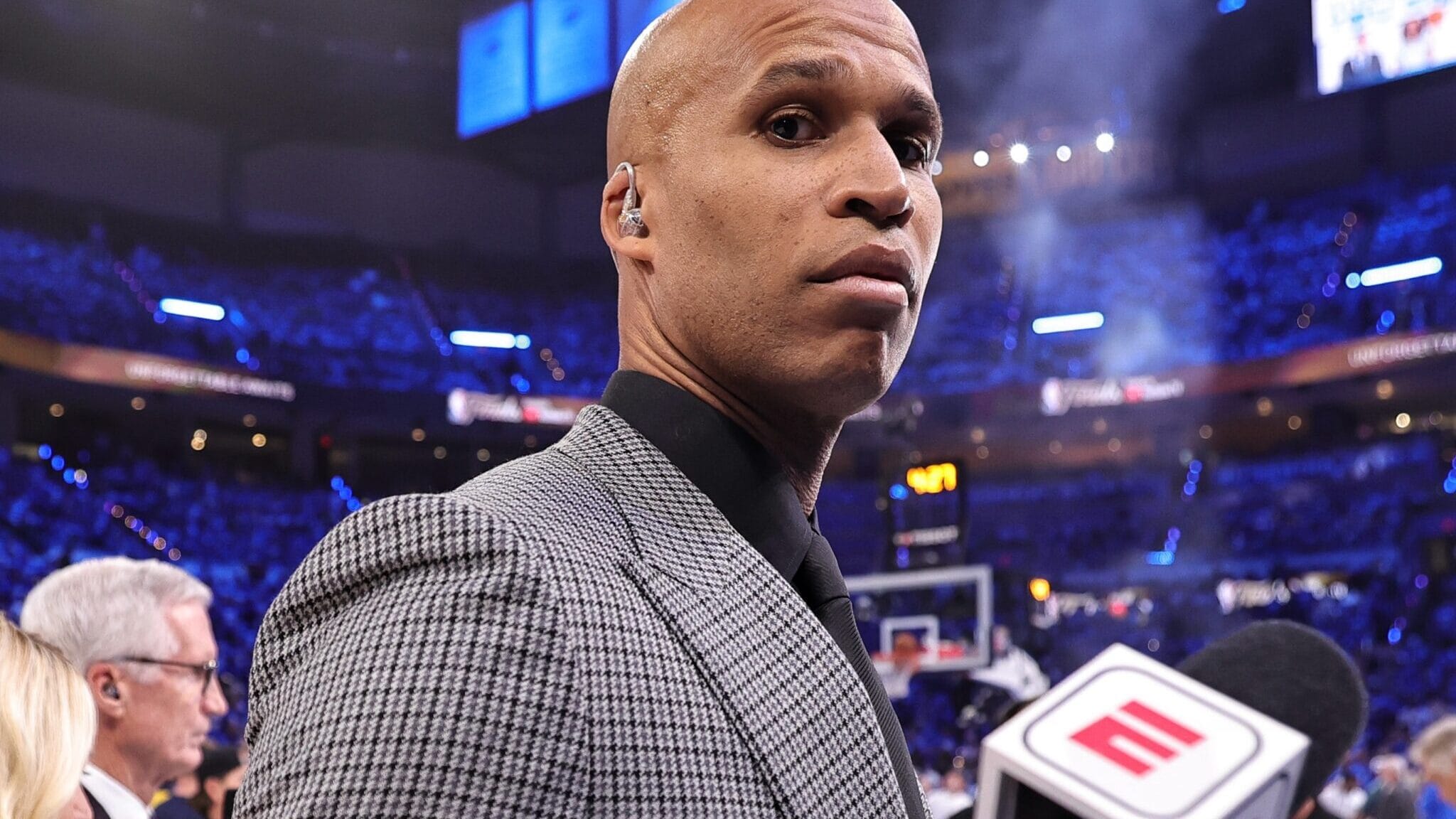
NBA champion Richard Jefferson is bringing his interview program, The Richard Show, to NBA channels.
Richard Jefferson grew up watching NBA telecasts, dreaming of a day he could somehow be part of the game he loved. Now, after making his mark with a distinguished 17-year playing career and a star turn as an NBA analyst, he’s kicking it to another level.
Jefferson’s interview show, “The Richard Show” – where he sits down with NBA players and tries to get them to reveal a more playful side – will be available across all NBA social and digital platforms starting on Christmas Eve. The show will debut on NBA TV, the NBA App, and NBA social platforms Wednesday with an interview with Knicks guard Jalen Brunson, and Jefferson says it is one of the biggest highlights of his professional life.
“My family didn’t really watch basketball,” Jefferson said Monday as part of a wide-ranging interview. “I was the youngest of three boys. I would come home and watch Marv Albert and NBC and Bob Costas.
“I would do that all weekend. The NBA was my life as a kid. So not only did I get to play in it, that was a dream, but now to be the person that gets to give fun inside stuff type content to that next generation, that to me is what’s most exciting.”
Jefferson, who played for eight teams and won a championship with the 2016 Cleveland Cavaliers, is no stranger to social media viewers. He’s been named as Creator of the Year on both TikTok and Snapchat, and his “Road Trippin’ Show” podcast with Channing Frye, Kendrick Perkins and Allie Clifton has more than 133,000 subscribers on YouTube.
“The Richard Show,” though, presents him in a slightly different light. On “Road Trippin’,” he’s part of an ensemble discussing the biggest stories in the game. “The Richard Show” features him as the central figure, where he says he’s free to have a little more fun and ask the players questions they may not hear in any other setting.
On one recent episode (an interview with Pacers star Tyrese Haliburton), Jefferson subverted a popular sports question. He asked Haliburton whether he would start or sit his mom and his fiancé over WNBA phenomenon Caitlin Clark. Haliburton laughed but ensured domestic tranquility by saying that he would start both of his loved ones.
“That’s what makes it fun,” Jefferson said. “We want to show them videos that are going to make them laugh. We want to get reactionary stuff. But ultimately, the goal is just to have fun and put them in that environment.”
Years ago, when Jefferson was getting ready to retire, he said he found himself at a crossroads. Some of his best friends, including Jamahl Mosley, JB Bickerstaff and Luke Walton, were joining the NBA coaching ranks. But coaching just looked miserable, Jefferson said.
So, he set out in another direction. Jefferson said he was interested in getting into the media sphere, and he enrolled in improv classes at Upright Citizens Brigade in Los Angeles.
He said he knew then he wanted to be an NBA analyst, but he also knew he wanted to have the skill to be relaxed and use his sense of humor on live television.
The COVID-19 pandemic interrupted his improv education, but Jefferson has ‘stayed busy.
He started the “Road Trippin’” podcast nine years ago and was one of several athletes at the forefront of athlete-to-fan communication. But even then, he said he sensed a void in the market. The players – his teammates, and even his former opponents – are funnier than they usually let on.
“I think players inherently like to make fun of each other,” Jefferson said. “They like to make fun of each other and still be friends. You see guys that beat up on each other and then be teammates the next year.
“There’s a level of respect that goes with it. I think for me, all of the players know that I just crack a lot of jokes and talk trash even to my own teammates.”
That certainly came in handy when he interviewed former teammate Tim Duncan for the debut episode of “The Richard Show,” but how does it play with younger players who didn’t play against him? That varies from interview to interview, he said.
Sometimes, they only know him from his work calling the games they play in. And sometimes, he said, his longtime reputation in the league works in his favor.
“I was always a goofball. Let’s start with that,” Jefferson said. “All of my teammates knew that, and all the teams I was fortunate enough to have played on in my 17-year career, if you were in the locker room with me, we liked to have fun.”
On broadcasts, Jefferson employs a bit of a self-deprecating touch. His home page on YouTube is dubbed as “the weirdest NBA channel,” and he frequently revels in the awkward conversational moment pioneered by comedians such as Stephen Colbert.
For his part, Jefferson says he admires the comedic work of Keenan Thompson and Chris Farley from “Saturday Night Live,” and he references Zack Galifianakis and “Between Two Ferns” as an entertainment model of what he’s doing with sports.
Sometimes, he says, he barely glances at the questions before his guests join him to make it feel more casual, and if his guests don’t like a question, he tosses it and moves on to the next one.
But a key aspect of his show, he said, is that the athletes are in on the joke all the way.
“We do not talk off camera until they walk in,” Jefferson said. “We do tell them the questions. But really, we only ask them for 30 minutes, so when they walk in the door they get miked up, we start recording and then they sit down. So there is no conversation. … But what makes it hilarious is that players are aware.”
Jefferson’s interview with Jalen Brunson will air as part of NBA TV’s new “Basketcast” programming on December 24, and future episodes will feature interviews with Draymond Green, Robert Horry, T.J. McConnell and other NBA personalities.
Jefferson said his long-term vision for the show is for it to be a library of interviews with players. He plans on conducting another round of interviews for the show at the NBA All-Star Game, and those episodes will be ready to air throughout the 2026 NBA Playoffs.
Back in his day, Jefferson said, the players sat down with interviewers because it helped them grow their names and their popularity. Now, though, the pendulum has swung, and the players can directly communicate with the fans themselves.
Jefferson says that’s why “The Richard Show” has its own relevance. He said he wants it to be like a late-night show host for players: have them on his set, get to know them via interviews and help point fans to their off-court endeavors.
“All of a sudden, social media comes and now athletes have bigger followings than the media companies,” he said. “Why do they have to sit down? What’s the purpose? If you’re talking about asking a person like Stephen Curry to sit down with you and he’s got 100 million social followers? He’s doing ESPN the favor, but it used to be vice versa.”