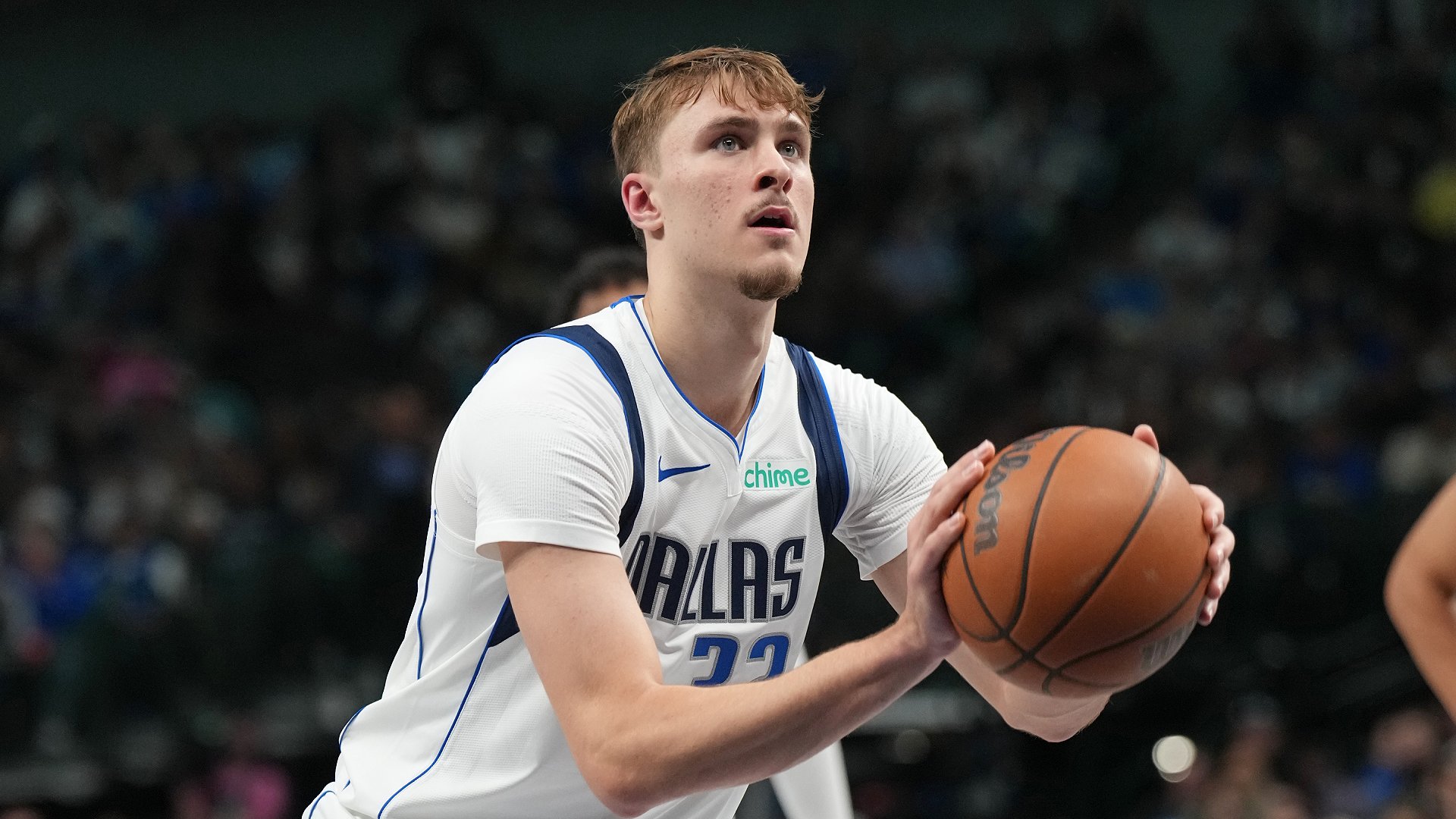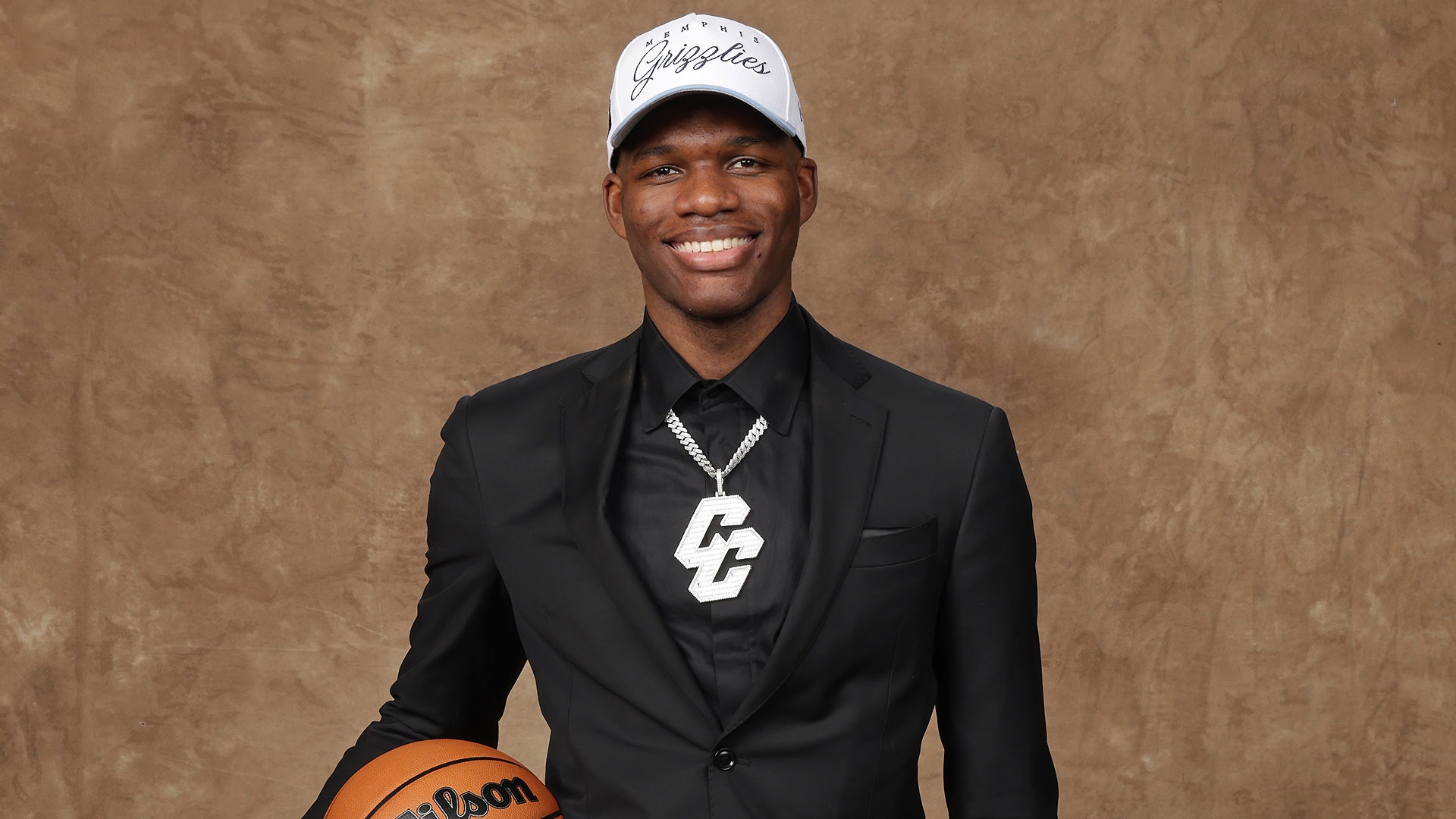
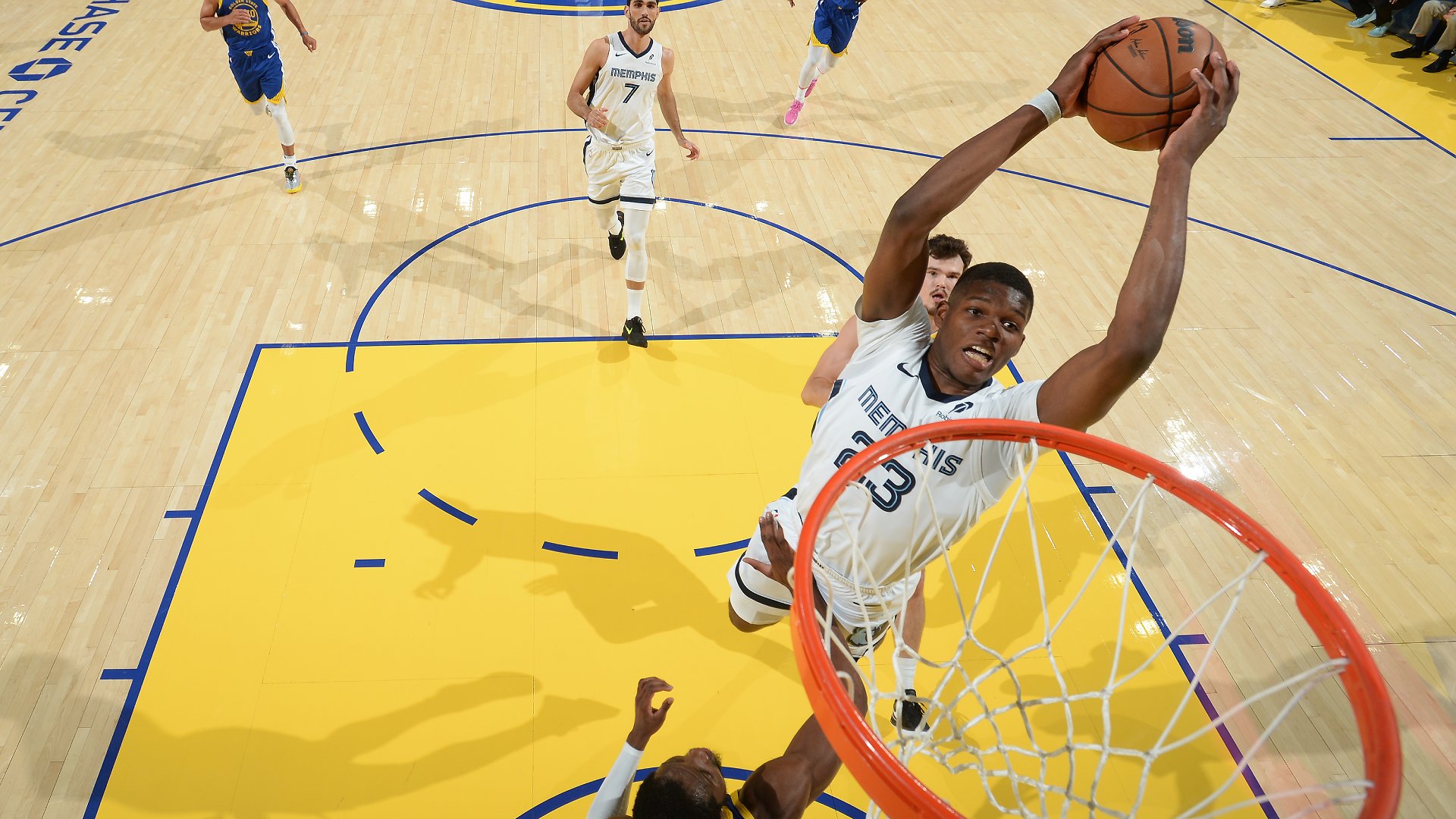
Grizzlies rookie Cedric Coward is averaging 13.8 points and 5.8 rebounds per game this season.
Cedric Coward’s path to the NBA was neither traditional nor for the faint of heart. Raised in Fresno, Calif., by his parents, Shanel and Willie Moore Jr., he played basketball at Central High there but to no great fanfare.
No national publicity, no recruiters in the stands for his games, at least not to see him. His best option? Willamette University in Salem, Ore., a private Division III school that on its website boasts “Welcome to Your New Quirky Home.”
One season with the Bearcats earned him two with Eastern Washington, best known in NBA circles for delivering Rodney Stuckey to the Pistons and the Pacers for a 10-year career. Under coach David Riley, Coward and his teammates posted a two-season mark of 31-5 in the Big Sky conference, opening another opportunity for the coach and his best players.
It was on to Washington State, where Coward was forging his reputation as a 3-and-D wing when his 2024-25 season ended after just six games with a left shoulder injury. Initially heartbroken, he threw himself into rehabilitation and flirted with transferring to Duke for 2025-26 until he got enough promising feedback and aced some spring workouts to take his chances in the NBA Draft.
He was picked by Portland at No. 11, then traded immediately to Memphis for No. 16 selection Yang Hansen and future considerations. Seven weeks into the Grizzlies’ season, Coward — 6-foot-5, 206 pounds, with a 7-foot-2 wingspan — has averaged 13.8 points, is shooting 38.4% on 3-pointers, has earned a starting role, is holding strong among the Top 5 of the Kia Rookie Ladder, and has gone far to replace his predecessor at shooting guard, Desmond Bane.
Coward spoke this week with NBA.com about his unusual trek to the league, his rookie experiences and more:
NBA.com: Tell me about your introduction to the NBA. Does it seem like a lot is coming at you, or have you been able to have fun with it?
Cedric Coward: My teammates have done a really good job helping me. And I have good people around me and good agents who kind of prepared me. I’m rolling with the punches these days, go along. But at the same time, for me, it’s my coaches and my teammates that make it so much easier.
What are the odds that a team in Memphis, Tenn., would start two players from Washington State?
I’m assuming it’s low, but at the same time, I think it’s a blessing that me and Jaylen [Wells], the Grizzlies’ second-year guard, are able to play and make an impact on the team. Being from the same school, I guess that’s a coincidence.
Did you know each other in college?
Yeah, at Eastern Washington the year before [2023-24], we played Washington State. They had a really good season the year he was there. I was keeping track of them.
Did the Grizzlies’ interest in and scouting of Jaylen bleed into their interest in you? Any connections there?
I have no idea, but if it did, then thank you to Jaylen.
Is it true you had zero scholarship offers coming out of high school?
Yes, sir. No offers, no recruiting days at all.
Given that, how did you manage to keep the dream alive? Did you even have this dream? You’re looking for a place to get a foot in the door … Willamette certainly is not the big time, and the world of college basketball is moving fast.
I would be lying to you if I said the dream was as clear as it was a year ago. But at the same time, I think we all believe in crazy things every now and then. If not, the dream would have died. Like I said, it was a little more faded back then. But as I began to build momentum and just, you know, stayed believing and kept having faith in the Lord, it would lead me to this spot.
You really got traction with David Riley. Then you followed him to Washington State. Did you have a special bond with him? Or did he just know he had a good player and didn’t want to lose you?
I mean, both ways. From the day he recruited me, I felt like he had a plan. But honestly, before he got [the job at Washington State], I was hearing rumors, so I was talking to him about it before anything was serious. … Then he wanted me to go with him and I realized how much success I had with him.
Any concern that any holdover Washington State players might resent you being the new coach’s favorite?
He brought four guys from Eastern Washington, and then we had two guys who stayed from the team before. Everybody else was either an independent freshman or a transfer.
Six games into the season, you get hurt [torn labrum, left shoulder]. That was another chance for the dream to die. Did that come close to happening?
The day I got hurt. And when I learned I couldn’t play the rest of the year. The first thing I went to was just really not being able to be with my teammates. Right after that, my biggest concern was probably the NBA. Like, how is this gonna work out? But as I said, I had really good people in my corner.
My agent told me not to leave and we’ll be fine and things will work out. ‘You may not see it yet.’ I was like, man, how do you know? That’s how you have to have faith blindly. I think an advantage of mine was going through what I went through before, the D-III, and stuff like that, allowed me to build confidence, even when it may not look like it’s working out.
Cedric Coward addresses the media after being selected No. 11 overall.
There had been some precedents, players whose college seasons had been nearly wiped out but still became top picks. Like Kyrie Irving or James Wiseman.
And I got injured at a good time. Earlier in the year, so I could rehab and do everything I needed to do before [the pre-Draft process].
I heard that you used that rehab time to transform your body in ways you might not have had you played all season.
Yeah, the biggest thing was my like using the weight room like transforming my legs. When you’re playing, you’re always on your feet, running down the court, 35 minutes. When I was doing that, I wasn’t lifting so hard. But with a shoulder injury, you can’t really do much upper body, so I did a lot of lower body, to where I could lift heavy and then still [be quick] on the court. Explosive.
Let’s fast-forward to now. What were your early impressions of the league? Surprised by anything you’ve been able to accomplish?
I would say no, nothing really surprised me. I mean, I grew up my whole life watching the NBA. My expectation was that I’m playing with the best players in the world. The speed. The physicality. All that is new, adjusting from the college game. One of my teammates told me he still sees college habits I have and need to get rid of. I agree with him.
My expectation has always been the same: to go out and play as well as possible. But I think I had a really bad preseason because I was trying to be too perfect. I guess, be too robotic and try to do everything right. I just let go of that and you know what? It’s OK to make a mistake. You want to play as well and be as perfect as possible, but it’s OK to make a mistake. It’s OK to miss a shot because it’s a part of the game. So now whenever I go out there, I’m not really nervous, you know? I’ve been playing at least since I was three or four years old.
Some scouting reports before the Draft mentioned NBA players such as Michael Redd and Khris Middleton. Then Draymond Green recently dropped Kawhi Leonard on you. What’s your reaction to that?
It’s really cool to understand that I’m being compared to these great players, especially like Kawhi, a [future] Hall of Famer. So that’s incredible. Since I’m just trying to be the best I can be, I look up to Kawhi. And KD [Kevin Durant], Shai [Gilgeous-Alexander]. Kobe [Bryant], Michael Jordan. All kinds of different players that I wanna take bits and pieces from. … [But] not to be compared to really anybody. My main job is to work harder than anybody else and perform the best I can.
What do you make of this 2025 Draft class of rookies?
We are killing it. I love to see my fellow Draft-mates being super, super successful, whatever they do, honestly. I mean, Kon [Knueppel] is killing the game, Coop [Flagg] yesterday. Collin [Murray-Boyles] for the Raptors. Dylan Harper, obviously, before the injury. VJ [Edgecombe], you know, and there’s so many more down the line. I mean, you got Kobe Sanders now starting for the Clippers, you got Derik Queen and Jeremiah Fears on the Pelicans. I mean, there’s so many great outcomes. And then for the ones that haven’t had the greatest start to their careers, they’re gonna pick it up when they get their opportunity.
I want everybody to be as successful as possible. Cool by me, I love you, man. But y’know, [if we’re facing you], have a bad game tonight and then a good game the next.
Just a few more here. Serious stuff: I read somewhere that you bake cookies.
It’s a skill of mine. I like it when my girlfriend and her mom bake, so I did it and I realized it’s kind of therapeutic. You’re making this delicious end product. My favorite? Red velvet.
Your family name: Coward. We know how kids can be. Did you take any grief for that name growing up?
Of course. But I didn’t care. It’s my name. Can’t really do anything about it. But I’m not the definition of the word coward. I’m nowhere close to it. … When people make fun of you, it’s like they have insecurities in themselves. I actually think it’s pretty cool, you know, to have this kind of last name, and then the actual person is nothing like that.
Except in Tyler Herro’s case. What would you say is the best advice you’ve ever gotten?
I’d say, ‘Nobody is going to do the work for you.’ I just take that every day with my approach to life. You’re going to have to get things done yourself in some way, shape, or form. Even if it’s asking somebody else to do something for you, you’ve gotta take initiative to ask.
How good do you want to be? You’re the determining factor. Because the margin between the great players and the OK players is not that big.
Who is your GOAT?
I vote Kobe. I’m a little biased. I grew up a Laker fan, and that was my guy. My argument is, a lot of people say Michael and that Kobe was a carbon copy. So you’re the closest thing to No. 1 – but you’re doing it when people have already had learned how to guard you from dealing with Michael.
How would you use a time machine?
I wouldn’t want to go forward because if I did and figured out what happens, I wouldn’t want to risk making a small change that changes it all. I probably go back to when I was a kid or when my mom was a kid. I think that would be cool to see just the way they grew up, and my grandfather [Olympic sprinter Maxie Parks], his work ethic and how he got to the top of his track level, stuff like that.
Why did your grandfather draft you one summer when you were in high school to help him build a house?
Well, I wasn’t playing basketball. My parents were saying, ‘All right, you’re not just gonna sit around and play video games all day. So you’re gonna work with your grandpa.’ So OK, cool. I like hanging out with my grandpa; he’s like my best friend.
You were how old?
Like 15, 16. That taught me a lot of lessons about patience, timing, and hard work. It taught me about doing things right. And the main thing it taught me is I love basketball so much that I can deal with whatever is going on on the court, to stay away from building houses. It rekindled my love for the game.
I know you’re all about the work. But describe your perfect day off.
Wake up around 7, then go back to sleep. You get up around 10, eat a good breakfast and then go fishing. I’m really big into fishing and I haven’t met yet [in Memphis] because our schedule is kind of hectic. Since it’s my perfect day, it would be Saturday or Sunday, so I’d go back home and watch football and relax.
* * *
Steve Aschburner has written about the NBA since 1980. You can e-mail him here, find his archive here and follow him on X.