After trailing by as many as 24 points, the Pistons rally to defeat the Magic, 93-79, and force Game 7.
Just as one man’s ceiling can be another man’s floor, one team’s comeback generally is another team’s collapse.
The biggest difference between what Orlando did to the Pistons in the first half of Game 6 at the Kia Center Friday and what Detroit did to the Magic in the second was the chronology.
The home team’s dominant second quarter, 35-12, cracked open the game but left 24 minutes on the clock for the Pistons to claw back and, frankly, for the Magic to get careless and its evil twin, overly cautious. Which was exactly what happened.
Detroit did fire back to win the third quarter, then owned the fourth. Taken together, the Pistons outscored Orlando 55-19 in that second half, flipping what looked to be a sure rout against them into a decisive 93-79 victory that evened the first-round Eastern Conference series at 3-3.
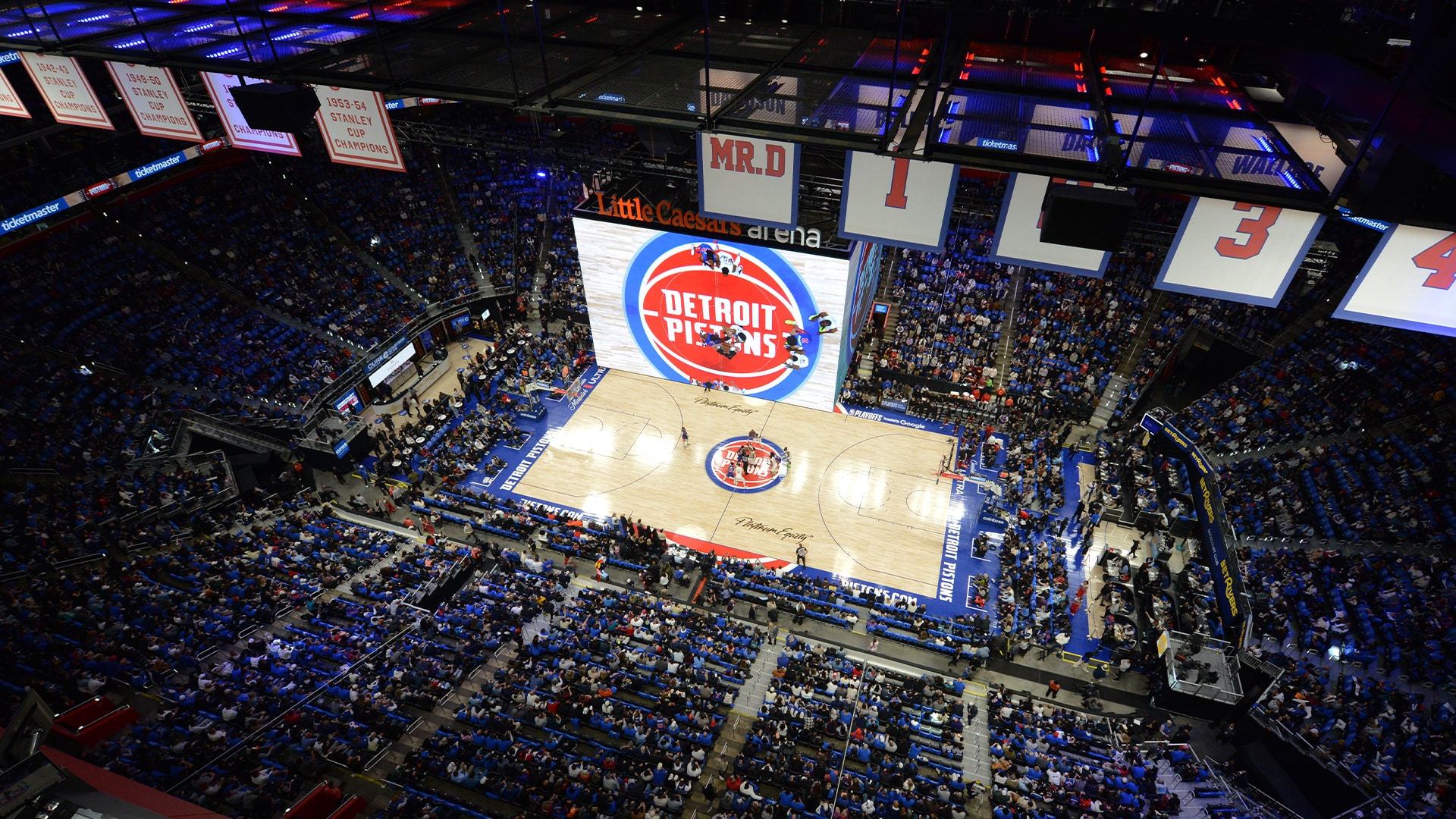
That leaves 48 more minutes in Game 7 Sunday at Detroit’s Little Caesars Arena (3:30 ET, ABC) to determine which bit of playoff history will apply: Detroit becoming only the 14th team to advance after trailing 3-1 or Orlando joining just six other No. 8 seeds to upset the No. 1 in the first round.
Here are four takeaways from Detroit’s stunning turnaround:
1. Exhale, then away possession-by-possession
The Detroit Pistons trail by as many as 24 points in the third quarter (62-38) and rally on the road.
That’s how the Pistons picked themselves up from the mat in the second half and methodically walked down the Magic. When they headed underneath the stands for the intermission, they surely could hear and probably could feel the Orlando fans’ premature celebration.
“It was quiet for a little bit,” Cade Cunningham said. “J.B. [Bickerstaff, coach] and Stew [teammate Isaiah Stewart] talking to us, that we’re going to keep fighting, go down swinging, all that stuff. But we still believed we could get back in the game and win [it]. It was going to be by chipping away at it, cutting it from to 22, cutting it down to six, then taking the lead. All that stuff can happen fast in the game.”
No kidding. The Magic scored first in the third quarter for its maximum lead of the night, 62-38. By the end of the period, though, Detroit had whittled 15 off that. Five minutes into the fourth, the gap was gone and Tobias Harris’ free throws moved the Pistons in front 74-72.
That was a 36-12 disparity, bigger by a point than the Magic’s second quarter. And the Pistons kept going, their defense extended and fully activated, pestering and shading Orlando to take low percentage shots. Tobias Harris’ free throw with 2:34 left got Detroit its biggest lead, 89-75, representing a 38-point turnaround.
Actually, it was Orlando’s absence of points that transformed the game. Remember, the Pistons threw a similar wet blanket on the Magic after halftime in Game 2 a 30-3 reckoning.
“It’s our defense,” Cunningham said. “When we’re guarding the way that we’re supposed to be, it’s really hard for them to score on us. That was the mentality at halftime – if we lock in, they’re not going to be able to score on us very much.”
2. Flip side of comeback: Orlando’s scatter-shooting
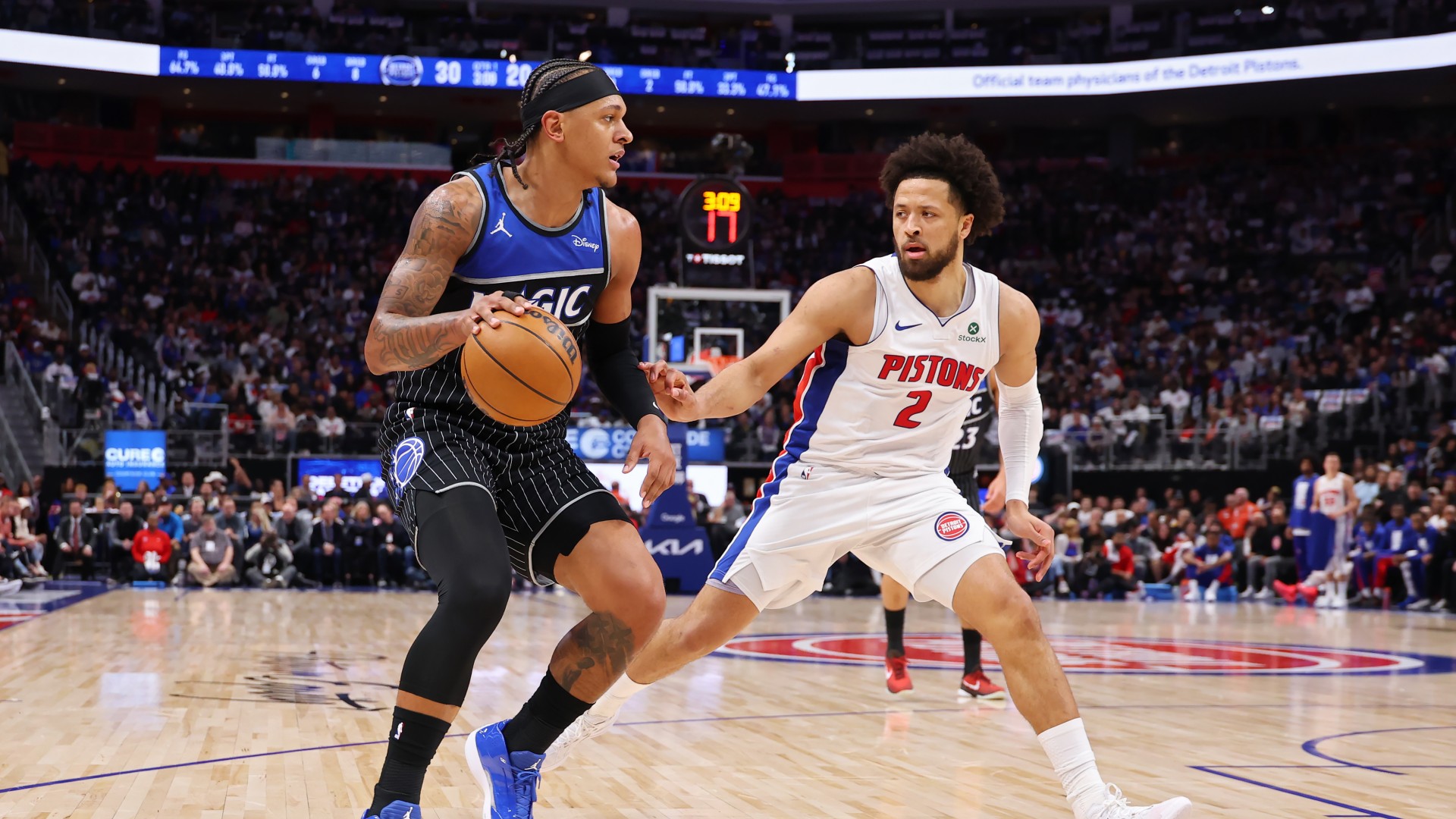
Magic players kept shooting but the ball kept refusing to cooperate. Eventually Orlando’s cold spell reached 0-for-23, with 13 consecutive failed 3-pointers. When Paolo Banchero finally drove for a dunk with 2:24 remaining, nearly 14 minutes had passed between field goals for the Magic.
It ended a 50-15 Detroit run, by which time the Magic learned exactly how the Hawks felt a day earlier in their blowout loss to New York.
“Give them credit for turning up the intensity, picking up full-court, turning us over a couple of times,” said Magic coach Jamahl Mosley. “Then they were able to get some easy baskets. A lot of shots didn’t fall for us. We had some good looks, they didn’t drop and some of those long balls led to leak-outs.”
Orlando’s horrible numbers after halftime – 4-for-37 shooting, 2-for-18 from the arc, just two offensive rebounds in a long stretch of one-and-done possessions – did raise the question of why its offense didn’t force some success. Maybe drive more assertively into the paint or jam the ball into the post for simpler scoring?
“We kind of slowed the game down, and that’s not what was really working in the first half,” Desmond Bane said. We started matchup hunting and that put a lot of pressure on our guys to make plays.”
3. Cunningham does it again
Cade Cunningham becomes the 1st Pistons player since Isiah Thomas to record at least 30 points and 10 rebounds in an elimination game.
The guy who saved Detroit’s season in Game 5 did it again in Game 6. Following up on a 45-point performance Wednesday, Cunningham finished with 32 and 10 rebounds. No playoff game scoring record this time, but everything the Pistons needed and just in time.
The point guard scored 24 of his points in the second half, 19 in the final quarter. He led Detroit’s relentless pushback, never allowing a lull for the Magic players to gather themselves.
“It’s been a lot of adversity so far in the series,” Cunningham said. “I think we’ve learned a lot about who we are as a team and individually, you know, what we’re made of.”
Banchero, Cunningham’s 45-point counterpart in Game 5, couldn’t keep pace this time. The Magic forward missed 16 of his 20 shots, including all nine of his 3-pointers, to finish with 17 points.
4. The two greatest words in sports are …
Game 7. The Magic wanted nothing to do with a flight back to Detroit for Sunday’s series clincher. The Pistons were heading that way regardless, and get a chance now to save face after dropping Games 3 and 4 on their home court.
One team wants to pick up where it left off Friday, using that strong second half for momentum. The other will try to replicate it start of Game 6 and leave behind in central Florida what unspooled from there.
“It’s the playoffs and this series has been a slugfest,” Banchero said. “Series ain’t over. They’ve clawed their way to tie it at 3-3. You don’t have time to hang your head about this. Obviously, it was a bad loss. Got to chalk it up. There’s nothing we can do about it at this point.”
Said Cunningham: “These two games have given us a lot of life and brought us back to how we played all season. Which is through our defense, getting up and down the floor and making it tough on guys.”
* * *
Steve Aschburner has written about the NBA since 1980. You can e-mail him here, find his archive here and follow him on X.