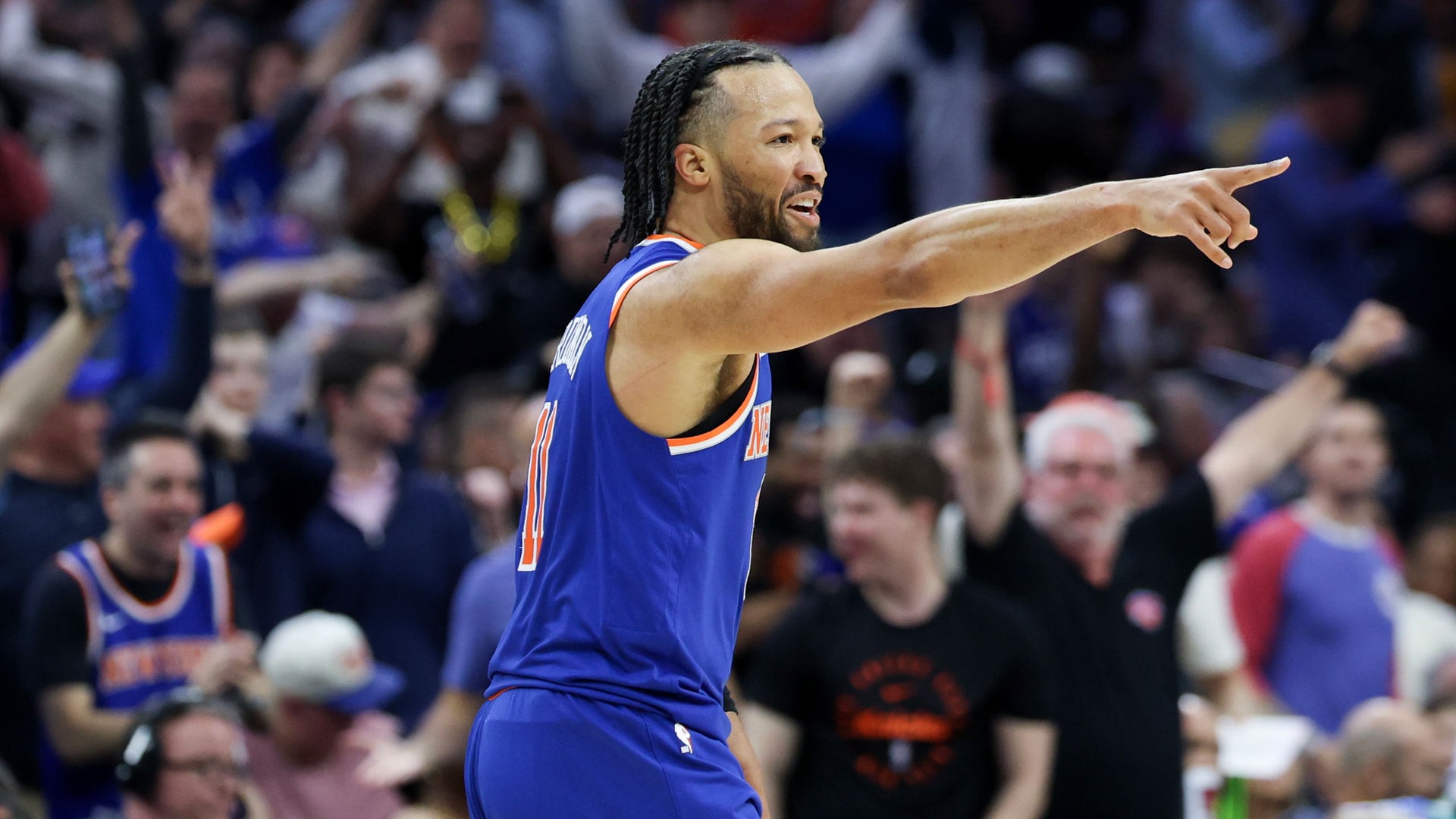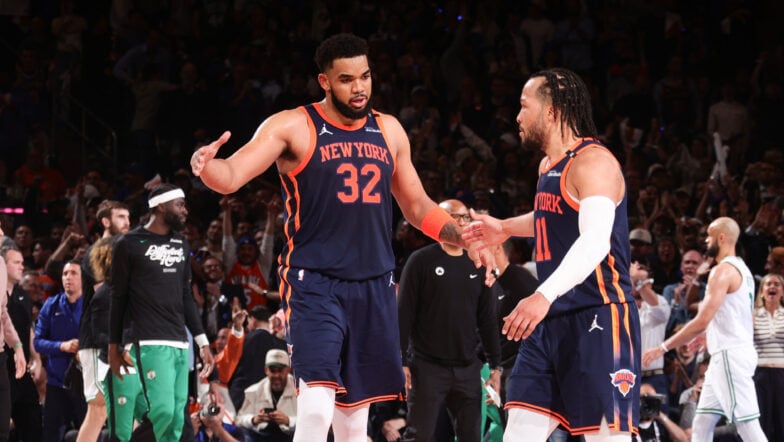
Karl-Anthony Towns, Jalen Brunson and the Knicks reigned supreme in the East — and the NBA overall — last season.
• Download the NBA App
• 2026 Free Agent Tracker
• Every reported deal for all 30 teams
The Eastern Conference has been the lesser conference (with a losing record against the West) in 24 of the last 27 seasons, and the West has also won 17 of the 27 championships over that stretch.
But the reigning champs reside in the East, which also had more teams (10) with winning records than the West (nine) last season. The West had the regular-season edge overall, but the East’s winning percentage in interconference games (220-232, .487) was its fourth-best mark over those 27 years.
And given the way the offseason has gone, the East may be in position to have its best season since Michael Jordan was still with the Chicago Bulls.
A quick recap, with the offseason movement having slowed down …
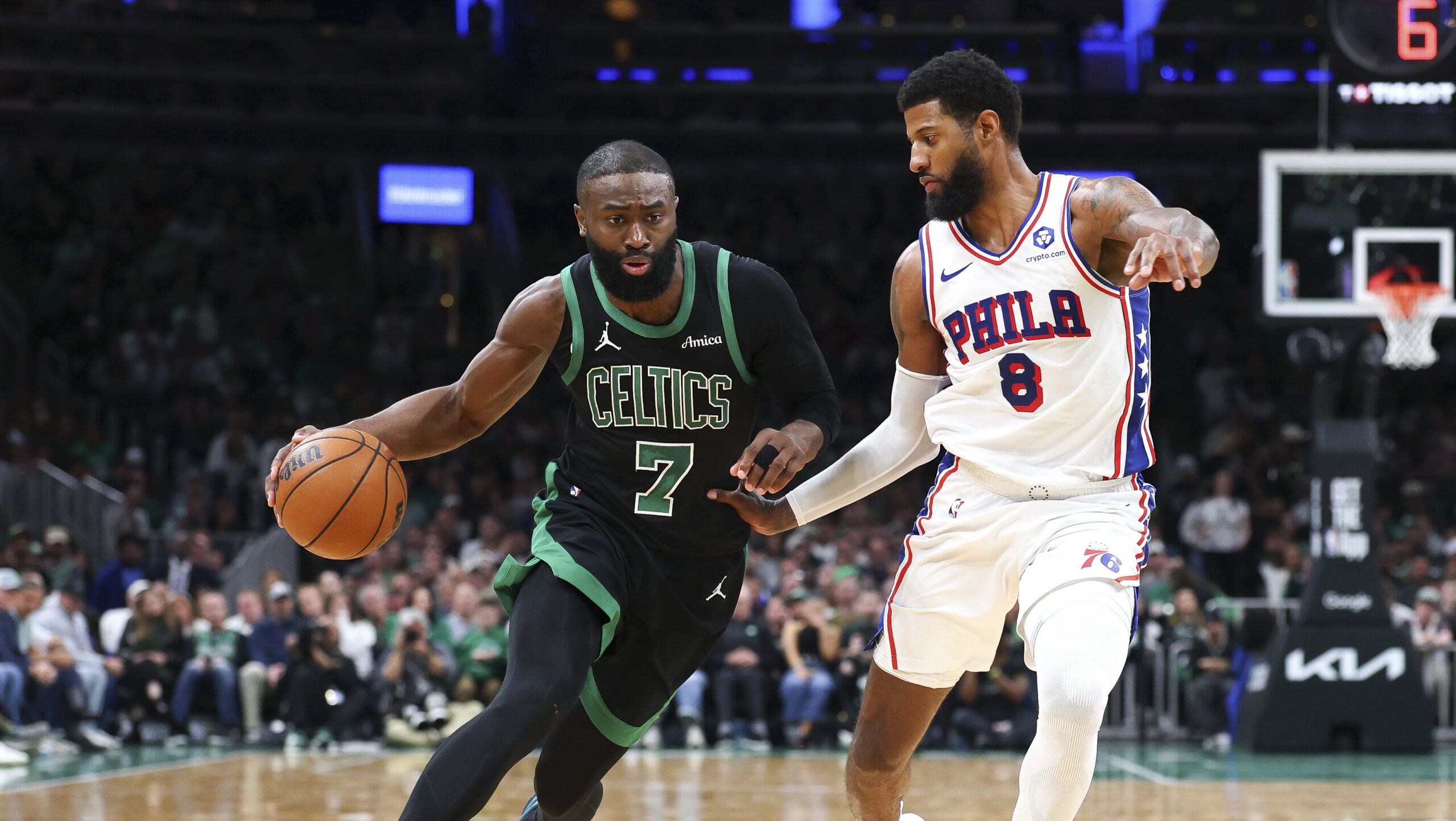
- Jaylen Brown and LeBron James are joining forces with Tyrese Maxey and Joel Embiid in Philadelphia.
- Tyrese Haliburton is healthy and set to return to the team that won the East 14 months ago.
Last season’s eight playoff teams should all be good or even better. The Heat lost in the SoFi Play-In Tournament, but were 43-39 and added the conference’s best player. The Hornets retooled, but should remain competitive, and the Pacers should be back in the mix after a gap year.
That gives us at least 11 teams looking to make the playoffs, with Washington still a bit of a wildcard. How they all stack up is anybody’s guess, but below is a preliminary guess as we head into August.
Note: For these offseason rankings, we’re looking at each conference separately. We’ll have Western Conference rankings next Monday. All stats refer to the 2025-26 regular season unless otherwise noted. “Last week’s rank” is based on how teams finished in the playoffs, Play-In and regular season.
Previously…
OffRtg: Points scored per 100 possessions (League Rank)
DefRtg: Points allowed per 100 possessions (League Rank)
NetRtg: Point differential per 100 possessions (League Rank)
The league averaged 114.8 points scored per 100 possessions and 100.2 possessions (per team) per 48 minutes last season.
NBA.com’s Power Rankings, released every Monday during the season, are just one man’s opinion. If you have an issue with the rankings, or have a question or comment for John Schuhmann, contact him via Bluesky.
Last Week:12025-26 record: 53-29
OffRtg: 118.7 (4) DefRtg: 112.3 (7) NetRtg: +6.4 (5)
Key addition: Andre Drummond
Key departure: Mitchell Robinson
Three numbers to know …
- They were the best fourth-quarter team in the 30 seasons for which we have play-by-play data, outscoring opponents by 11.7 points per 100 possessions in fourth quarters.
- They made 5 corner 3-pointers per game, the most for any team in the 30 seasons of shot-location data. OG Anunoby led all players in total corner 3-pointers in both the regular season (88) and the playoffs (25).
- They were 6-2 in playoff games they trailed by double digits. That was the best such playoff record for any team in the 30 years of play-by-play data, and the NBA Finals were the second best-of-seven series in that time where a team trailed by double digits in all four of its wins. (The other time was the Knicks’ first-round series against Philadelphia in 2024.)
Key question: How much of the title run was sustainable?
The Knicks were the only team that scored more efficiently in the 2026 playoffs than in the regular season. The defense was also improved and, statistically, they were the best playoff team in NBA history, outscoring their opponents by 14.9 points per game over their 19 postseason games. They can’t play that well over a full season, but they could surely carry over some level of chemistry and execution to improve upon their third-place finish in the East.
Only six of the last 22 champions were better statistically in the regular season following their title than they were the year they won. But maybe Anunoby is an All-Star, having made a huge leap (both literally and figuratively) in the playoffs, when he averaged 20.1 points on a true shooting percentage of 72.1%, up from 16.7 on 62% in the regular season. Robinson will be missed, especially on defense, and there’s now greater importance on Karl-Anthony Towns’ availability, defense and rebounding.
Last Week:4↑2025-26 record: 45-37
OffRtg: 114.3 (16) DefRtg: 114.4 (17) NetRtg: -0.1 (18)
Key additions: Jaylen Brown, LeBron James, Anfernee Simons, Dean Wade
Key departures: Andre Drummond, Paul George, Quentin Grimes, Kelly Oubre Jr.
Three numbers to know …
- The Sixers had the league’s biggest differential between their record against the 11 teams that finished below .500 (27-4) and their record against the 19 teams that finished above .500 (18-33).
- Tyrese Maxey has led the league in miles traveled per game in each of the last three seasons.
- Among 128 players who played at least 100 playoff minutes, the top two in usage rate were Joel Embiid (32.5%) and Jaylen Brown (32.5%).
Key question: Can all this talent create better shots for each other?
The Sixers ranked 29th in shot quality last season, and Brown takes some tough shots himself. Among 182 players with at least 500 field goal attempts, Embiid, Tyrese Maxey and Brown had the 12th, 15th and 26th lowest shot-quality scores, respectively. An upgrade in talent should lead to better looks for everybody, but the Sixers will need a little more shot discipline and a little more movement than those guys have played with in the past. James is one of the best passers in the league and may be just what they needed to keep them organized.
It’s going to be fascinating to see how it works offensively, but the other end of the floor will likely be the bigger concern. Embiid’s presence has usually meant a lot defensively. Still, teams know they can take advantage of him in space, and last season he posted the worst rim-protection mark of his career, with opponents shooting 61.6% at the basket when he was there.
Last Week:2↓2025-26 record: 52-30
OffRtg: 118.3 (6) DefRtg: 114.1 (15) NetRtg: +4.1 (9)
Key addition: Mario Hezonja
Key departure: Dean Wade
Notable free agent: James Harden
Three numbers to know …
- The Cavs outscored their opponents by just 0.4 ppg from 3-point range last season, a differential that ranked 15th and was down from plus-7.3 per game (second) in 2024-25. They saw the league’s biggest drop in 3-point percentage, its seventh biggest jump in opponent 3-point percentage, and its fourth biggest jump in the percentage of their opponents’ shots that came from beyond the arc.
- After James Harden’s arrival — and including the playoffs — the Cavs were a little more efficient offensively with only one of Harden and Donovan Mitchell on the floor (116.4 points scored per 100 possessions) than they were with the two on the floor together (115.8 points scored per 100).
- In the conference finals, the Cavs scored just 100.3 points per 100 possessions, the worst mark for any team in any series in the 2026 playoffs. Harden’s effective field goal percentage of 43.5% was his second-worst mark in the 28 playoff series in which he’s had at least 50 field goal attempts.
Key question: Will continuity matter?
In the regular season, the Cavs’ most-used lineup played just 89 total minutes, the fewest for any team’s most-used lineup. They had two lineups play more than that in the playoffs, but this is still a core that could benefit from a full training camp and more time together.
There might also be an intangible ingredient missing. There were some quarters or halves where we saw the best the Cavs could be on both ends of the floor, but too often, they didn’t turn up the intensity until they were in a desperate situation. Both in the regular season and the playoffs, they were much better after halftime than they were before it. But double-digit deficits aren’t as easy to overcome as the Knicks made it look in May and June, and the Cavs trailed in 12 of their 18 playoff games by at least 10 points.
Last Week:6↑2025-26 record: 46-36
OffRtg: 115.0 (15) DefRtg: 112.1 (5) NetRtg: +2.9 (11)
Key additions: TBD …
Key departure: Sandro Mamukelashvili
Pending trade: Brandon Ingram, Gradey Dick and picks for Kawhi Leonard
Three numbers to know …
- The Raptors were the league’s third-most improved team last season, 7 points per 100 possessions better than they were in 2024-25. They were one of the league’s four most improved teams regarding their effective field goal percentage, turnover rate, opponent free throw rate and opponent turnover rate.
- They outscored their opponents by 6.4 fast-break points per game, the biggest differential for any team in the last seven seasons.
- They led the league in the percentage of their 3-point attempts (85%) that were off the catch and in the percentage (63%) that were wide open.
Key question: Can a smaller frontline hold up on the glass?
Amazingly, Jakob Poeltl has four years left on his contract. But Collin Murray-Boyles (191) played a lot more minutes than Poeltl (134) in the playoffs, and the Raptors’ best lineup would seemingly have Leonard, Scottie Barnes and Murray-Boyles on the frontline. That’s a strong, switchable group, but those three guys are 6-foot-6, 6-foot-8 and 6-foot-7, respectively. That means rebounding could be an issue for a team that ranked 13th in rebounding percentage in the first round, getting outscored by 28 points (45-17) on second chances over the last two games.
Offensively, Leonard should be just what the Raptors need: a player who can close possessions and games so they’re not as dependent on transition opportunities. No team got a greater percentage of their points from fast breaks and only the Pacers shot less effectively in the last six seconds of the shot clock last season.
Of course, the task of keeping Leonard healthy and fresh for the postseason will be tougher than it was eight years ago, and the Raptors’ depth took a hit with the departure of Mamukelashvili.
Last Week:3↓2025-26 record: 60-22
OffRtg: 117.3 (9) DefRtg: 108.9 (2) NetRtg: +8.4 (2)
Key additions: John Collins, Isaiah Joe
Key departures: Tobias Harris, Caris LeVert, Isaiah Stewart
Notable free agent: Jalen Duren
Three numbers to know …
- In the regular season, the Pistons had the best record (16-7) in games played between the top 10 teams in the league.
- They outscored their opponents by 14.2 points in the paint per game, the second biggest differential for any team in the 30 seasons for which points in the paint have been tracked. And 29.7% of their points, the league’s highest rate, came from fast breaks or second chances.
- They averaged 3.8 more shot opportunities per game than their opponents, the league’s best differential by a healthy margin. Their 10.4 steals per 100 possessions were the most for any team in the last 20 seasons.
Key question: Is the load any lighter for Cade Cunningham?
Getting Joe for two second-round picks was a good deal for the Pistons, who now have two of the three players (Javonte Green is another) who shot 50% or better on at least 100 corner 3-point attempts last season. Collins gives them another vertical threat who can also space the floor and shoot from the corners. But in terms of secondary playmaking, they may have taken a step backward with the departure of Harris, who they could go to in the post a few times a game, even on some big possessions.
Ausar Thompson could certainly take a step forward, but he and Duren (assuming he signs the offer sheet or a new deal) could remain a clunky offensive fit if neither can improve their shooting. Cunningham certainly hasn’t reached his ceiling either, and he was more prolific and efficient offensively in the playoffs (28.1 points per game on a true shooting percentage of 57.2%) than he was in the regular season (23.9 on 56.4%). But he’ll continue to carry a heavy load on that end of the floor and, given the improvements elsewhere in the East, it may be hard for the Pistons to remain in the top two or three in the conference.
Last Week:5↓2025-26 record: 56-26
OffRtg: 120.0 (2) DefRtg: 1117 (4) NetRtg: +8.3 (4)
Key additions: Paul George, Mitchell Robinson
Key departure: Jaylen Brown
Three numbers to know …
- The Celtics have ranked in the top five on both ends of the floor in each of the last four seasons. Since the league started counting turnovers in 1977, no other team has ranked in the top five on both ends more than two years in a row.
- Over the 30 years of play-by-play data, there have been 14 games where a team scored more than 150 points per 100 possessions. Last season’s Celtics accounted for four of the 14.
- They’ve ranked last in the percentage of their shots that have come in the paint in each of the last three seasons. They’ve also ranked last in free throw rate in each of the last two.
Key question: Can Derrick White rediscover his shot?
Among 123 players with at least 500 field goal attempts in each of the last two seasons, White saw the biggest drop in effective field goal percentage from 2024-25 (58%) to ’25-26 (48.9%), and it was even lower (41.4%) as the Celtics lost to the Sixers in the first round of the playoffs. The drop-off was significant both from 3-point range and in the paint.
Somehow, the Celtics still had the league’s second-ranked offense last season. Repeating that feat will be tough if White doesn’t shoot better and if they don’t find a way to get to the basket (and to the free-throw line) more often. The talent level is lower given Brown’s departure, but the offense could flow a little better without him. Robinson will also give them more second-chance opportunities.
Last Week:14↑2025-26 record: 19-63
OffRtg: 110.1 (28) DefRtg: 117.9 (24) NetRtg: -7.8 (26)
Key addition: Kelly Oubre Jr.
Key departures: N/A
Key return: Tyrese Haliburton
Three numbers to know …
- The Pacers have ranked in the top five in both ball and player movement in each of the last six seasons. No other team has ranked in the top five in both more than twice over that stretch.
- Last season, they were outscored by 9.6 points in the paint per game, the biggest discrepancy for any team in the last seven seasons. Only 37.6% of their opponents’ shots, the league’s lowest opponent rate, came from 3-point range.
- Among 260 players with at least 200 field goal attempts in each of the last two seasons, Aaron Nesmith (from 61.7% to 51.7%), Jay Huff (from 64.8% to 57.4%) and Jarace Walker (from 57.6% to 51%) saw the third, 10th and 15th biggest drops, respectively, in effective field goal percentage.
Key question: How well does Zubac fit in?
Ivica Zubac played just 118 minutes with the Pacers last season, none alongside Pascal Siakam and none alongside Haliburton. He’s an upgrade over the other centers they had last season, but he’s not used to playing in an offense like this one. While the Pacers have consistently ranked near the top of the league in ball and player movement, the Clippers have ranked in the bottom three in both in each of the last three seasons.
Defense matters, too. The Pacers have ranked 26th defensively over the last three years (combined), but they should be able to defend at a pretty high level when Andrew Nembhard, Nesmith, Siakam and Zubac are on the floor together. Myles Turner has blocked more shots, but overall, Zubac has been the better rim protector over the last three years than the Pacers’ former center.
Last Week:10↑2025-26 record: 43-39
OffRtg: 115.8 (12) DefRtg: 113.6 (14) NetRtg: +2.1 (13)
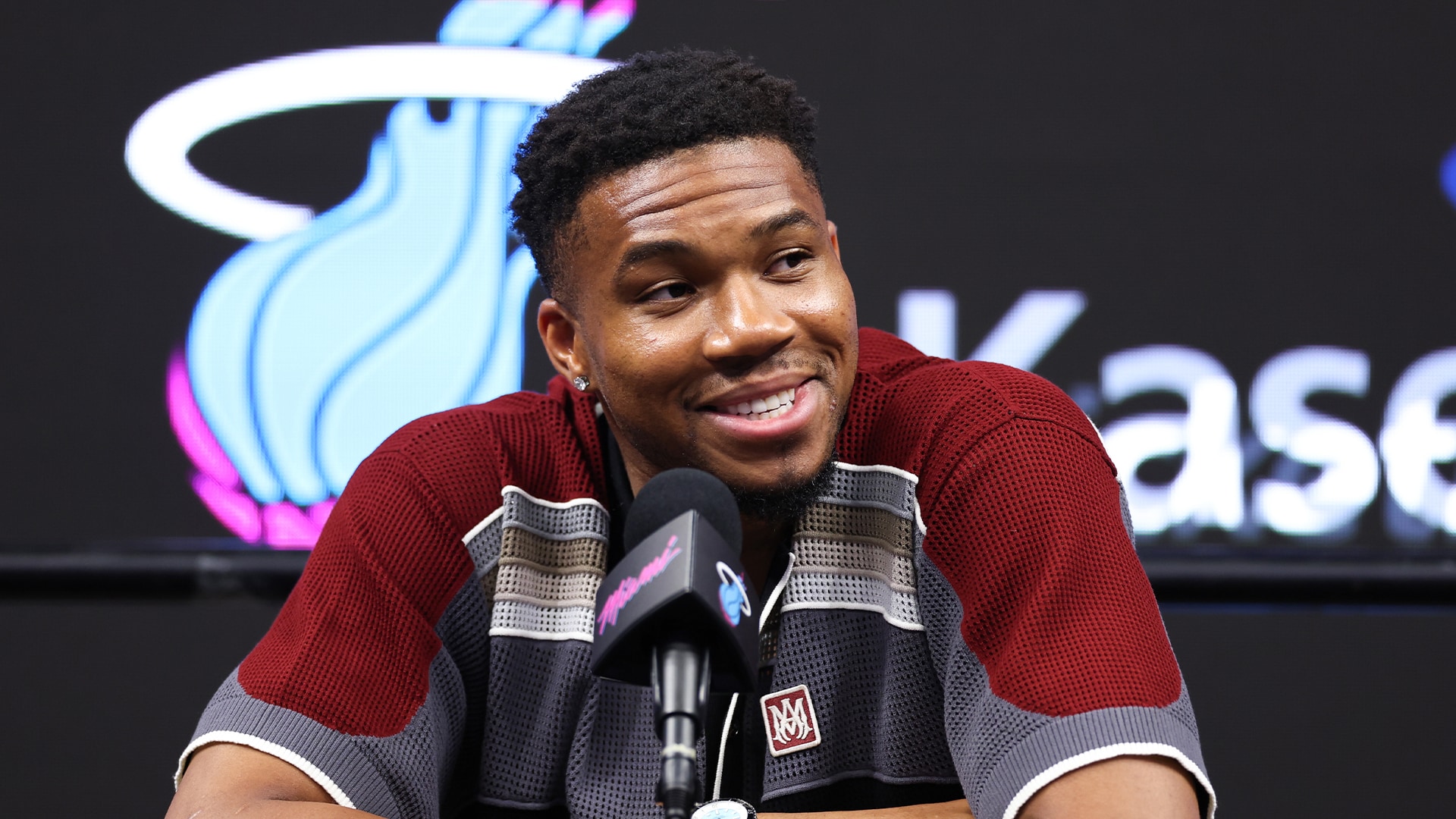
Key additions: Giannis Antetokounmpo, Tim Hardaway Jr., Bobby Portis
Key departures: Tyler Herro, Kasparas Jakučionis, Jaime Jaquez Jr., Norman Powell, Kel’el Ware
Three numbers to know …
- The Heat averaged 104.2 possessions per 48 minutes, the fastest pace for any team in the last five seasons. And 24.9% of their possessions were in transition, the highest rate for any team in Synergy’s 22 seasons of tracking.
- Only 44% of their opponents’ 3-point attempts, the league’s lowest opponent rate, were wide open. But they still ranked 14th defensively, their lowest ranking in the last 11 seasons.
- They’ve led the league in the percentage of their defensive possessions on which they’ve played zone in each of the last four seasons. Their 16.3% last season was the second-highest rate for any team in the 22 years of Synergy tracking.
Key question: Do they have enough in the backcourt?
Antetokounmpo and Bam Adebayo will be a dominant defensive frontcourt, and the Heat can stagger their minutes so that one of the two is always on the floor and the offensive fit issues are minimized. Portis can play alongside either one and Andrew Wiggins can play some minutes at the four. If Nikola Jović can recover from a rough season, Miami will have a deep and versatile frontline.
But as things stand, the backcourt is pretty thin, with Dru Smith and Pelle Larsson (combined 31% from 3-point range last season) seemingly set to back up Davion Mitchell and Hardaway. The Heat will surely continue to run, and nobody’s better in transition than Antetokounmpo. But the half-court offense could struggle with their guards lacking the requisite shooting and quickness to complement the frontcourt stars.
With only 11 of their 15 (non-two-way) roster spots filled, the Heat still have some offseason roster work to do.
Last Week:7↓2025-26 record: 46-36
OffRtg: 115.0 (14) DefRtg: 112.9 (10) NetRtg: +2.2 (12)
Key additions: Lu Dort, Kingston Flemings, Aaron Wiggins
Key departure: Zaccharie Risacher
Notable free agent: Jonathan Kuminga
Three numbers to know …
- The Hawks were 11 points per 100 possessions better after the All-Star break (plus-9.7, fourth) than they were before the break (minus-1.3, 19th). That was the biggest post-break improvement for any team in the last 27 years.
- The lineup of CJ McCollum, Nickeil Alexander-Walker, Dyson Daniels, Jalen Johnson and Onyeka Okongwu outscored opponents by 20.3 points per 100 possessions in its 391 regular-season minutes. That was the second-best mark among the 19 lineups (best among those that are still together) that played at least 200 minutes. But it was outscored by 14.4 per 100 in its 82 minutes in the playoffs.
- Daniels shot 21-for-111 (18.9%) on wide-open 3-pointers, the worst mark (by a healthy margin) for any player with at least 100 wide-open attempts in the 13 seasons of tracking data. Alexander-Walker’s 111-for-226 (49.1%) was the fifth best mark for a player with at least 200 wide-open attempts over those 13 seasons.
Key question: What is Johnson’s ceiling?
The Hawks have added some depth behind that successful starting lineup, allowing them to keep McCollum (who’ll turn 35 in September) fresh. But Johnson should be the primary ball-handler again, having led the team in time of possession (both in the regular season and the playoffs) after Trae Young was traded. He’s made strides as a playmaker, and if he can do the same as an off-the-dribble shooter, look out. His effective field goal percentage of 43.8% on pull-up jumpers last season ranked 50th among 65 players who attempted at least 250.
Daniels, Johnson and Okongwu are still just 23, 24 and 25 years old, respectively. That means there’s room for internal improvement along with whatever the new additions bring to the table.
Last Week:8↓2025-26 record: 45-37
OffRtg: 114.2 (18) DefRtg: 113.6 (13) NetRtg: +0.6 (17)
Key addition: Nikola Vučević
Key departure: Mo Wagner
Coaching change: Jamahl Mosley out, Sean Sweeney in
Three numbers to know …
- The Magic were the league’s third most improved offensive team last season, scoring 5.3 more points per 100 possessions than they did in 2024-25. But it was still the 14th straight season in which they had a worse-than-average offense.
- They ranked third in the percentage of their 3-point attempts (60%) that were wide open, but 28th in wide-open 3-point percentage (36.5%). Overall, they were 23-7 when they shot the league average (36%) or better from 3-point range, but those 30 games were tied (with the Kings) for the fewest in the league.
- They were tied for the league lead in wins (they were 18-31) after trailing by double-digits and wins (7-23) after trailing by 15 points or more.
Key question: What will be the Sweeney effect?
The Magic are, basically, running it back, currently third in the percentage of last season’s minutes under contract for ’26-27. That means their new coach must make an impact.
Sweeney ran the league’s third-ranked defense in San Antonio. Objective No. 1 should be getting the Magic back into the top 10 on that end of the floor after a big drop-off last season. Orlando allowed 4.5 more points per 100 possessions than they did in 2024-25, having seen the league’s biggest drop in opponent turnover rate and its fourth-biggest jump in opponent field goal percentage in the paint.
On offense, he might want to get the Magic moving a little more. They saw significant jumps in ball and player movement last season, but were still in the middle of the pack in both, and Paolo Banchero ranked fifth with 14.8 isolations per 100 possessions. The Magic scored just 0.88 points per chance when a Banchero iso led directly to a shot, turnover or trip to the line. That rate ranked 48th among 53 players with at least 200 direct isolations.
Last Week:9↓2025-26 record: 44-38
OffRtg: 118.4 (5) DefRtg: 113.5 (11) NetRtg: +4.9 (8)
Key additions: Grayson Allen, Royce O’Neale, Naz Reid
Key departures: LaMelo Ball, Miles Bridges
Three numbers to know …
- The Hornets were 14 points per 100 possessions better than they were in 2024-25 (minus-9.1, 27th). That marked the second-biggest season-to-season improvement in the 30 years for which we have play-by-play data. They were the first team in that time to go from the bottom five to the top five in offensive efficiency, ranking fifth after ranking 29th in ’24-25.
- They were 44-38 with the point differential (plus-4.8 per game, eighth best) of a team that was 55-27. That per-game differential was the second-best mark in NBA history for a team that missed the playoffs.
- They scored 12.6 more points per 100 possessions with Ball on the floor (123.2) than they did with him off the floor (110.6). That was the third biggest on-off differential on offense among 263 players who played at least 1,000 minutes for a single team.
Key question: Is there enough playmaking?
Ball had a big on-off differential and his passes created the Hornets’ highest-quality shots, per tracking data. But he took the lowest-quality shots and the Hornets scored an efficient 120.3 points per 100 possessions in 332 total minutes (regular season + Play-In) with Coby White on the floor without Ball. White isn’t the passer that Ball is, but both Allen and Kon Knueppel can provide some secondary playmaking from the wings.
Turnovers could be an issue as the Hornets committed far more turnovers per possession with Ball off the floor last season. But they can still win the possession battle. They ranked second in both offensive and defensive rebounding percentage last season and a frontline of Reid, Moussa Diabaté and Ryan Kalkbrenner should remain strong on the glass.
Last Week:15↑2025-26 record: 17-65
OffRtg: 109.7 (29) DefRtg: 121.5 (30) NetRtg: -11.8 (30)
Key addition: AJ Dybantsa
Key departures: N/A
Key return: Anthony Davis
Three numbers to know …
- The Wizards have ranked in the bottom 10 in each of the four factors on offense and defense in each of the last two seasons. No other team has ranked in the bottom 10 in all eight in any one season over the 30 years for which we have play-by-play data.
- They were outscored by 8.6 points per game in the restricted area and by 5.1 points per game on free throws. Those were both the worst discrepancies for any team in the last 10 seasons.
- They led the league in the percentage of their minutes (55%) that came from rookies or second-year players.
Key question: Can the young guys keep developing?
The Wizards were the worst team in the league last season, but there were some individual signs of progress with their young core …
- Kyshawn George saw the third biggest jump in points + rebounds + assists per 36 minutes among 290 players that played at least 500 minutes in each of the last two seasons.
- Alex Sarr, George and Bub Carrington saw the second, eighth and 11th biggest jumps, respectively, in effective field goal percentage among 123 players with at least 500 field goal attempts in each of the last two seasons.
Trae Young should help those players get better shots. The Wizards ranked 26th in shot quality last season, but their shot-quality score was much higher (top-five level) off of Young’s passes in the five games he played. However, the offense was still bad (106.6 points scored per 100 possessions) in his 104 minutes on the floor. The young guards will also have to adjust to getting far fewer touches, and it remains to be seen if Sarr and Davis can fit together offensively.
Dybantsa is the future, but there’s a decent team here if the returners can find their way in what may be a very different offense from what we’ve seen over the last few seasons.
Last Week:12↓2025-26 record: 31-51
OffRtg: 112.1 (25) DefRtg: 117.4 (22) NetRtg: -5.3 (23)
Key additions: Nic Claxton, Norman Powell, Caleb Wilson
Key departures: Collin Sexton, Anfernee Simons
Coaching change: Billy Donovan out, Tiago Splitter in
Three numbers to know …
- The Bulls ranked second in ball movement, second in player movement, second in drives per 100 possessions, second in the percentage of their 3-point attempts that were off the catch and second in the percentage of their shots that came in the first six seconds of the shot clock last season.
- They were the first team in the 30 seasons of shot-location data to take less than 5% of their shots from mid-range (between the paint and the 3-point line).
- Powell scored 1.19 points per possession on isolations, the sixth-best mark for a player with at least 100 isolation possessions in the 22 years of Synergy tracking. The Bulls ranked 27th with just 15.1 isolations per 100 possessions last season.
Key question: Is there any depth?
The Bulls’ (assumed) starting lineup of Josh Giddey, Powell, Wilson, Matas Buzelis and Claxton should be pretty entertaining, and may be pretty good. Jalen Smith is solid and actually had the league’s sixth biggest on-off differential last year, when the Bulls were 11.9 points per 100 possessions better with him on the floor (plus-3.4) than they were with him off the floor (minus-8.5). There are a lot of questions beyond that, though this season will be a huge opportunity for third-year guard Rob Dillingham and second-year forward Noa Essengue to prove that they belong in the league.
Splitter might bring more changes on defense than on offense. The Blazers were much less aggressive on that end of the floor, ranking last in the percentage of ball-screens (6%) they defended with “blitz” or “show” coverage.
Last Week:13↓2025-26 record: 20-62
OffRtg: 108.2 (30) DefRtg: 118.2 (25) NetRtg: -10.0 (29)
Key additions: Mikel Brown Jr., Keon Ellis, Julius Randle, Mo Wagner
Key departure: Nic Claxton
Three numbers to know …
- Last season was the 10th time in the 30 years of play-by-play data that the Nets ranked in the bottom 10 on both ends of the floor. That’s the most for any franchise over that stretch.
- They were the only team to rank in the bottom five in field goal percentage in the paint (55.3%, 30th), mid-range field goal percentage (37.1%, 28th) and 3-point percentage (34%, 30th).
- Over the last three seasons, the Nets have been 9.4 points per 100 possessions better with Day’Ron Sharpe on the floor (plus-0.4) than they have with him off the floor (minus-9.0). Most of that differential has come on defense (109.2 vs. 117.1 allowed per 100).
Key question: How good is Egor Dëmin?
Randle should raise the floor for the Nets, especially offensively, where they scored 1.5 fewer points per 100 possessions than any other team last season. And it will be interesting to see if their (relative) success with Sharpe on the floor continues if he plays more minutes, presumably as the starting center. Michael Porter Jr. is still here and Brooklyn outscored opponents by 3.9 points per 100 possessions in his 373 minutes alongside Sharpe.
But how good the Nets are in 2026-27 is not as important as how good they can be a few seasons from now, so it’s important that they hit on their Lottery picks from the last two drafts. Dëmin and Mikel Brown Jr. combined to take 51 (60%) of their 85 Summer League shots from 3-point range, probably too high a rate given the former’s size and the latter’s explosiveness. Brown will need some time to find his way, but the time is now for Dëmin to take a big step forward and show that there’s a brighter future for this franchise.
Last Week:11↓2025-26 record: 32-50
OffRtg: 112.2 (24) DefRtg: 118.3 (26) NetRtg: -6.1 (25)
Key additions: Nate Ament, Brayden Burries, Tyler Herro, Kasparas Jakučionis, Jaime Jaquez Jr., Kel’el Ware
Key departures: Giannis Antetokounmpo, Bobby Portis
Coaching change: Doc Rivers out, Taylor Jenkins in
Three numbers to know …
- The Bucks were one of two teams (the Hornets were the other) that ranked in the top five in both 3-point percentage (38.7%, second) and the percentage of their shots that came from 3-point range (45.7%, fifth).
- They averaged 4.5 fewer shot opportunities than their opponents, the league’s worst discrepancy. They ranked in the bottom 10 in turnover rate (25th), opponent turnover rate (23rd) and offensive rebounding percentage (30th).
- They were 14.1 points per 100 possessions better with Antetokounmpo on the floor (plus-4.4) than they were with him off the floor (minus-9.7). That was the second biggest on-off differential among 263 players who played at least 1,000 minutes for a single team.
Key question: Who’s here long term?
The post-Antetokounmpo era in Milwaukee will probably get off to a rough start, but the seeds of future success have been planted. Last season, the Bucks got just 318 minutes from first- or second-year players, while every other team got more than 1,300. They now have six players who were selected in the top 20 in the last five drafts.
Burries (No. 10 this year) was the highest of those picks and should have the ball in his hands as much as any rookie. He got a lot of pick-and-roll reps in Summer League and had 18 assists with just three turnovers.
The Bucks have some interesting questions to answer before the season starts, with both Herro and Jaquez Jr. eligible for contract extensions that would keep them from being free agents in 2027. The phone lines are likely open regarding some of the veterans that remain from last season’s roster.