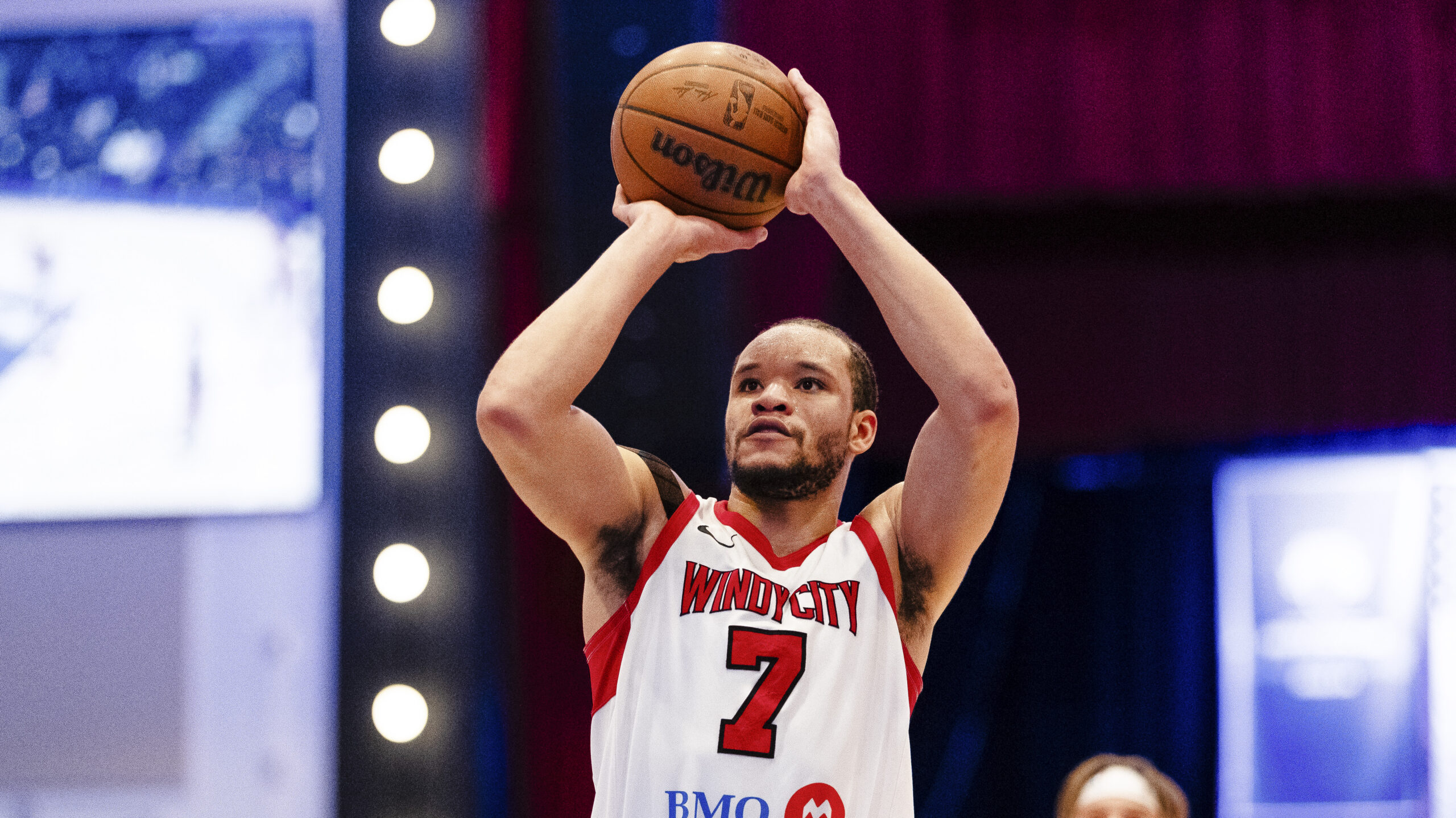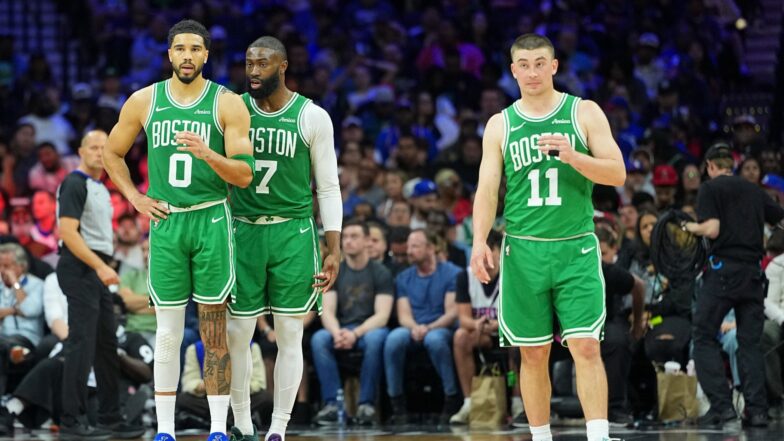
Payton Pritchard’s playoff career-high 32 points helped the Celtics take a 3-1 series lead over the Sixers.
Editor’s Note: Read more NBA coverage from The Athletic here. The views on this page do not necessarily reflect the views of the NBA or its teams.
***
PHILADELPHIA — The goals Payton Pritchard writes down for himself might seem a little unusual to anyone driven by results. He doesn’t jot down the accolades he hopes to win or the statistics he intends to produce. In some ways, at least, he believes such accomplishments are out of his control.
Instead, Pritchard’s goals focus on his own input. Details he can sharpen daily to improve himself. Habits he can add to his routine to eventually make a difference. Entering this season, he focused on maximizing his sleep.
“You hear about Tom Brady and the great players, they emphasize certain lifestyles,” Pritchard told The Athletic earlier this season. “And people want to stay up at times and it could be fun, but getting a couple extra hours of sleep, not drinking, eating right. Those are sacrifices you’ve got to make daily. So it sounds lame almost like, ‘Oh, that’s what the difference is,’ but it really is.”
When Pritchard had a quiet game early in the Celtics’ first-round series against the Philadelphia 76ers, he took a similar mental approach. He didn’t necessarily think about how many points he needed to score over the rest of the series, but the mindset he needed to carry into the next game. He told himself he wouldn’t be flat again. He vowed to come out with more pop and aggression. If he carried himself the right way on the court, he believed the results would come.
Throughout a 128-96 Game 4 win in Philadelphia on Sunday night, Pritchard attacked like Derrick Henry in the hole or Kendrick Lamar on the mic. On his way to a playoff career-high 32 points, Pritchard spun around after big shots to chirp NBC announcer Reggie Miller. He strutted around the court with a snarl on his face. He ended one quarter with a one-legged 3-pointer and finished another by drawing a foul even though the 76ers were hellbent on preventing him from scoring at the buzzer like he so often does.
As usual, Pritchard’s success started with what he could control.
“It’s just more playing with that aggression,” Pritchard said. “Playing with that spark.”
Jaylen Brown didn’t score until the second quarter. Jayson Tatum missed seven of his first eight shots before halftime. The Celtics were winning almost solely because of their defense when Pritchard checked in for the first time midway through the first quarter. He quickly got on the board with a put-back layup, then splashed home a stepback 3-pointer over Andre Drummond one minute later. After a Boston stop, Tatum found Pritchard all alone in transition. He swished a jumper from about seven feet behind the 3-point arc.
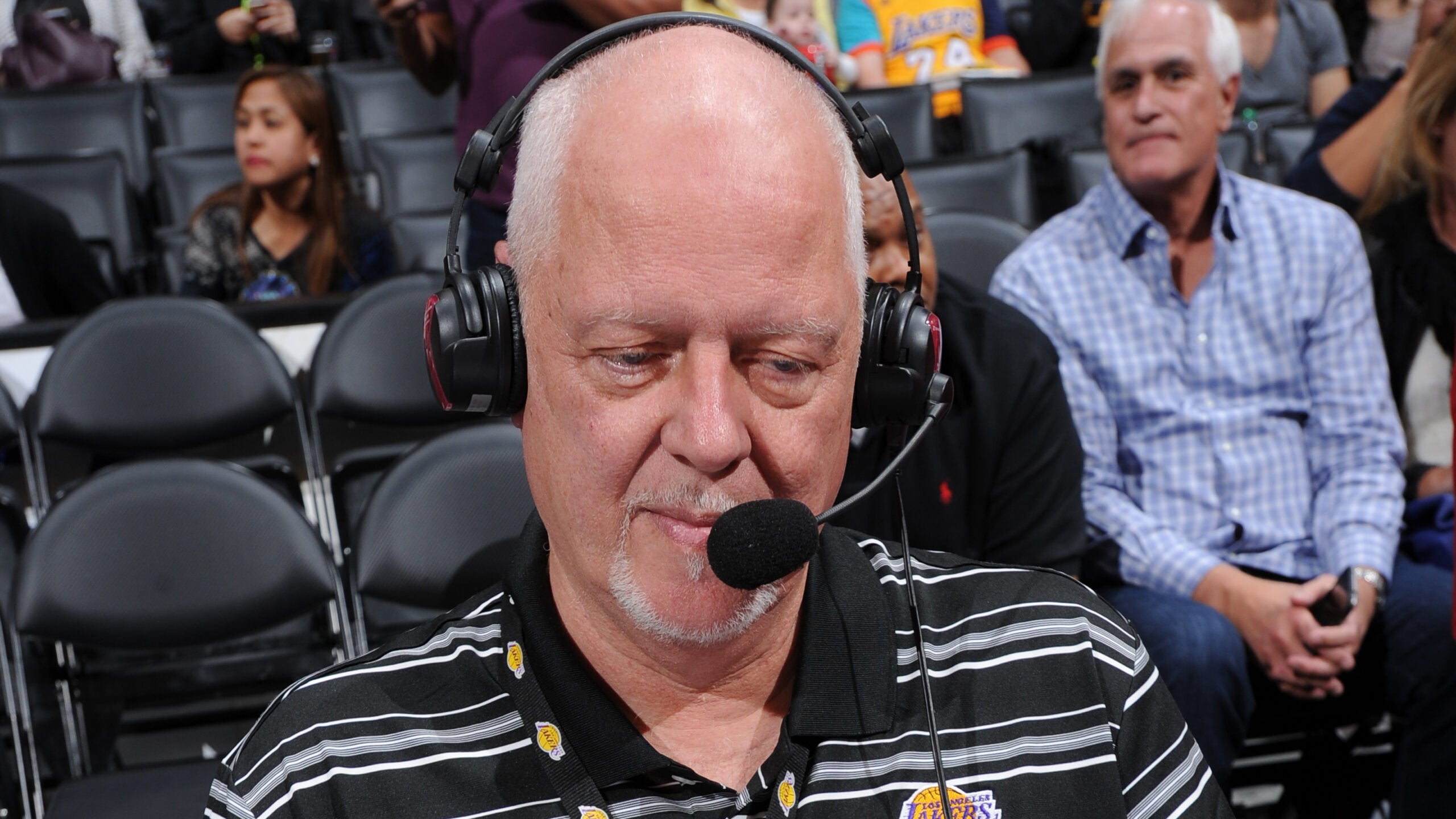
By then, Pritchard was in what he called a “flow state.” He turned to yell at Miller, who was calling the game courtside. Though Pritchard said he and Miller have love for each other — “That’s my guy,” Pritchard said — it doesn’t always look that way on the court. Pritchard enjoys screaming at Miller after impressive baskets, but said, “It’s not an angry thing.”
“It’s just a friendly banter,” Pritchard said. “I get going off that, and I probably use it to my advantage to get going even more. I don’t even know. I black out in those moments, so I don’t really know what I say at times. But it helps.”
Pritchard continued to hunt his own offense after that. With Dominic Barlow defending him, Pritchard drove into the paint, stopped abruptly, used an up fake to create space and popped in a short jumper. Then, with the Celtics beginning to pull away, Pritchard added to the momentum by ending the first quarter with one of his patented buzzer beaters. Even by his standards, it was a difficult one. After escaping Joel Embiid near midcourt, Pritchard jumped off one leg to barely release the ball from 29 feet away before Barlow arrived with a contest. The long 3-pointer gave the Celtics a 34-18 lead after one quarter.
On the Boston bench, Brown celebrated by hollering into the crowd.
“It’s amazing,” Brown said. “Just the work ethic speaks for itself. When you see someone put in the work behind the scenes, moments like this feel all the better.”
Others only see Pritchard’s steady growth on the court. Teammates understand it all starts with diligence and consistency that few players are willing to sustain. Pritchard said he has studied how the all-time greats maximized themselves. He is willing to commit to a lifestyle of dedication as they did.
“I feel like obviously there’s genetic freaks,” Pritchard said. “I’m not one of them. But, like, LeBron (James) is a perfect example, too. He takes great care of his body daily. He makes little sacrifices. He’s talked about his sleep habits, his eating and all that. But even guys like Al Horford and Jrue Holiday, they’re able to play so long because of the habits they created.”
In that spirit, Pritchard hired a personal chef at the end of last season. He does whatever he can to treat his body well. He has added exercises to a stretching routine that he prides himself on doing, no matter what’s going on in his life. He has cut out drinking alcohol and limited how much bread he eats. Despite a sweet tooth, he has dropped cookies and milkshakes from his diet. Sometimes he will eat strawberries with a little bit of whipped cream instead.
“That’s a better alternative,” Pritchard said. “Those differences over time build up.”
Pritchard said changing his sleep habits worked. He tweaked his routine after games. He put away his electronics before bedtime, focused more on his hydration and at times used magnesium drinks. He believes it helped him play 79 games and gave him more energy throughout the regular season.
“It’s stuff that everybody talks about,” Pritchard said. “But it’s like, can I do it?”
Not everybody can. On the court, Pritchard’s habits give him an edge over others who aren’t willing to go as far in their preparation. He has put in enough work throughout the years to carry an unshakable belief in himself. Even after a rough game or two, he trusts in his game.
“P is a gym rat,” Tatum said. “That’s one thing that’s consistent and constant about him always. He’s always gonna be in the gym, working on his game, working on his craft, trying to get better. It shows in moments like tonight because he’s just relentless in how hard he works.”
After a Game 2 dud, Pritchard’s confidence mattered. He was deeply disappointed in his performance. He believed he hurt his team. He told himself he wouldn’t perform like that again. Though he didn’t think he played great in Game 3, either, he told coaches afterward he felt like it was a step in the right direction. For him, working through a challenge was nothing new.
“He’s been on a journey since he’s gotten into the NBA,” said Celtics head coach Joe Mazzulla. “He’s started. He’s not started. He’s (been) passed up, come off the bench, but throughout it, he’s kept a level of professionalism, consistency, but like, mental toughness.”
In Game 4, Pritchard sent Boston to the verge of the second round. After scoring 18 first-half points, he poured in another 14 over the final four minutes of the third quarter while making five straight shot attempts, including a pair of 3-pointers. While the Celtics took a 3-1 first-round lead, their fans took over Xfinity Mobile Arena, chanting “We want Boston” to mock the 76ers fans who were eager for the matchup before the series.
Pritchard was as dominant as he had ever been in the playoffs. For him, though, the results are never the focus.
“What do you add to your routine every year to just maximize yourself?” Pritchard said. “And that’s what I pride myself on. Every year, adding one or two new things that could help.”
***
Jay King is a staff writer for The Athletic covering the Boston Celtics. He previously covered the team for MassLive for five years. He also co-hosts the “Anything Is Poddable” podcast.