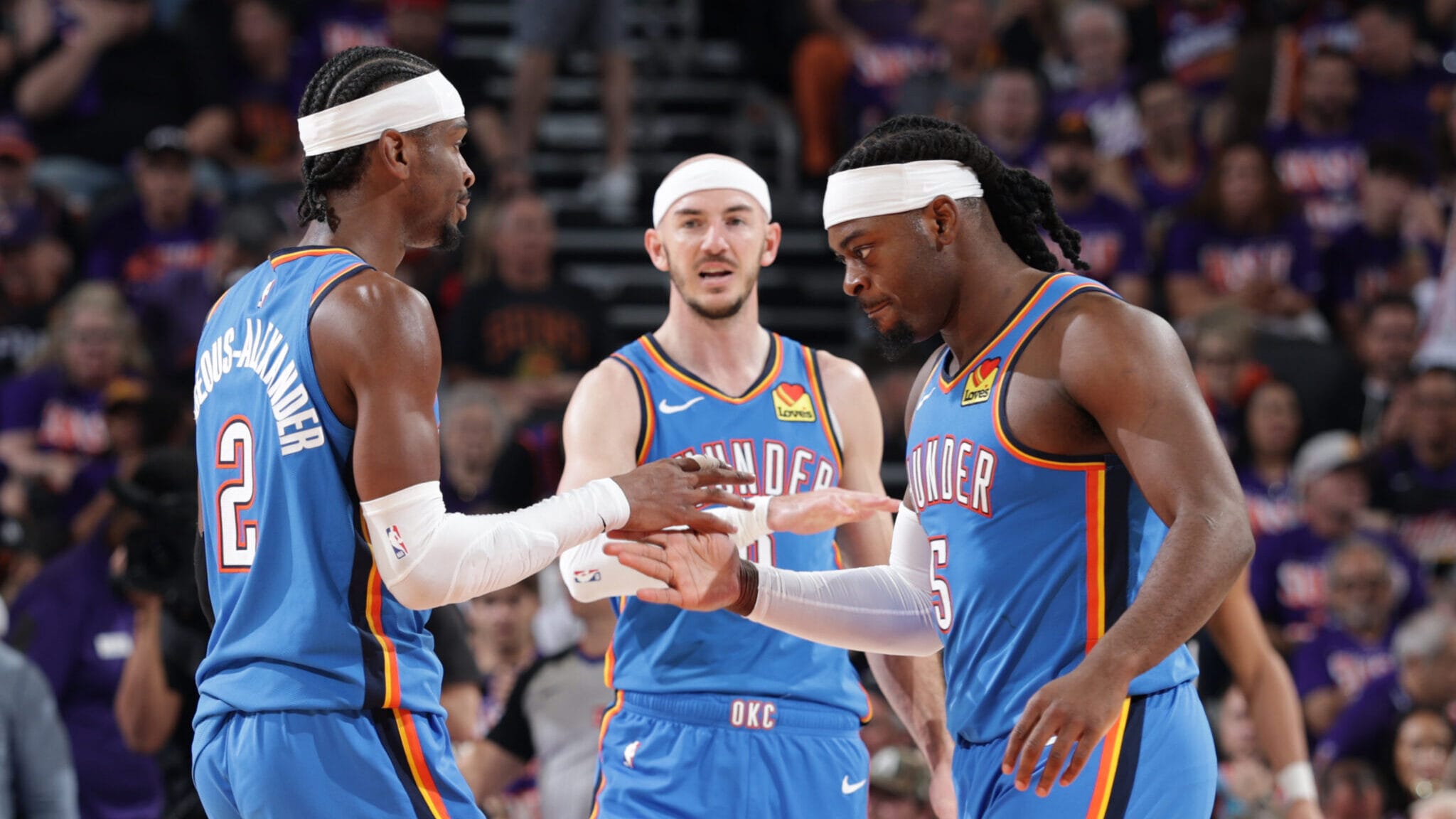
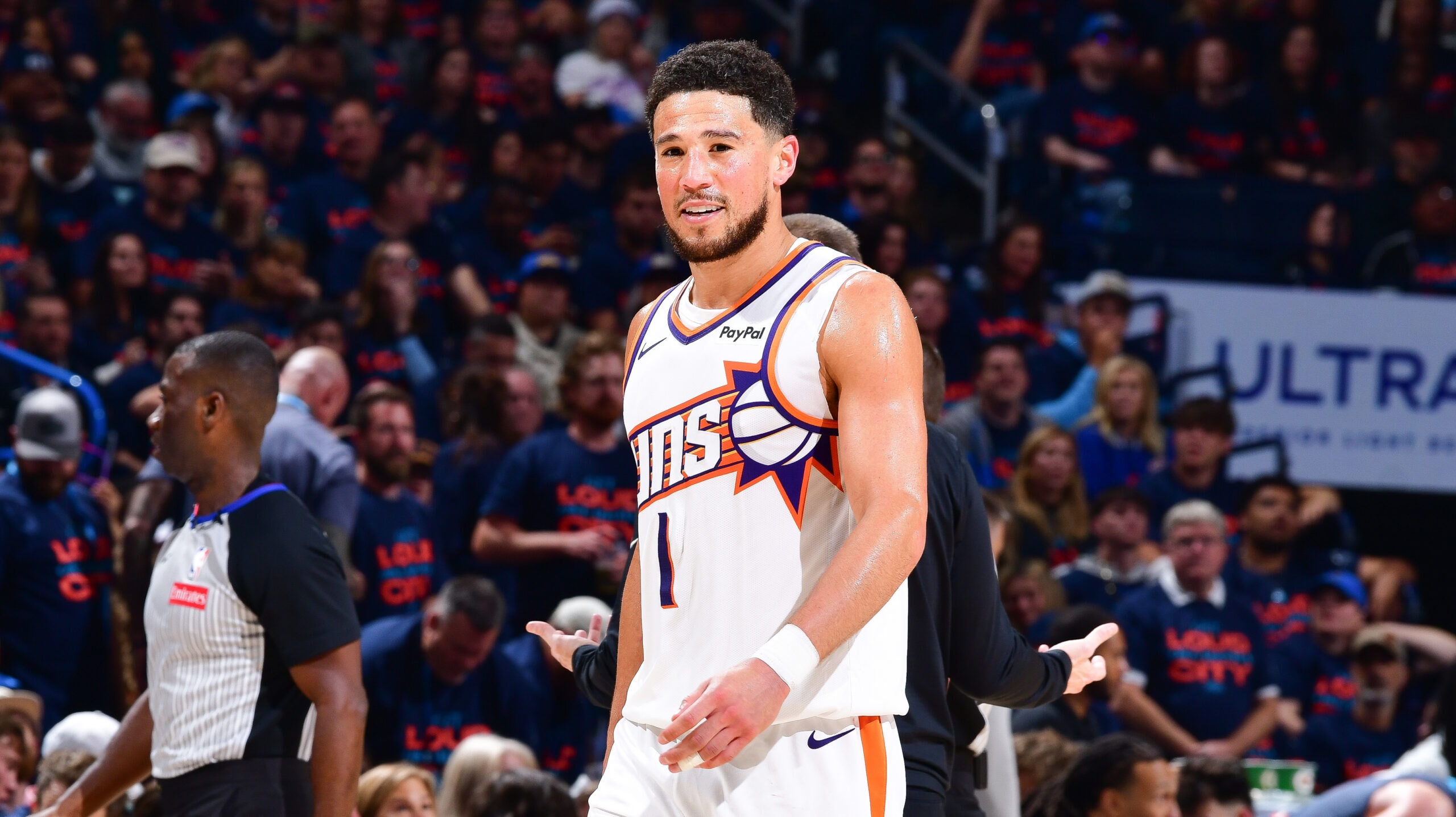
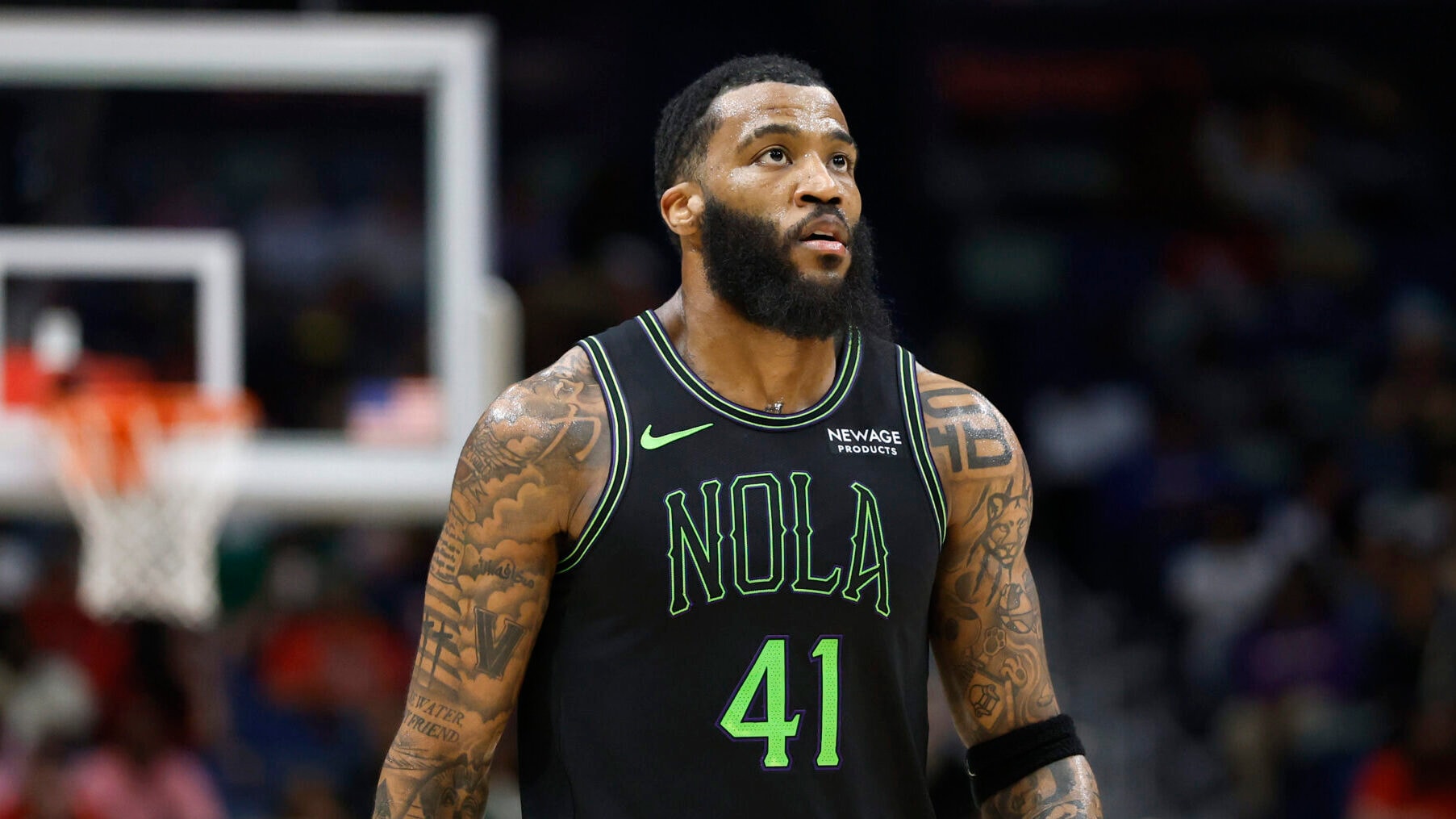
The Oklahoma City Thunder defeat the Phoenix Suns, 121-109, to take a 3-0 series lead.
The Oklahoma City Thunder are lapping the field.
They’re the only team with a double-digit average scoring margin in the first round, and they’ve won their three games by an average of 20 points. Through Saturday, they have both the No. 1 offense and the No. 1 defense in the playoffs and, though the Phoenix Suns are the No. 8 seed, they’re certainly not the weakest team in the field.
But the Suns are facing an early elimination in their first-round series with the champs, having struggled on both ends of the floor.
Here are three things to watch as the Thunder go for the sweep in Monday’s Game 4 (9:30 ET, Peacock/NBC Sports):
1. To double or not
Shai Gilgeous-Alexander torched the Suns in Game 3, scoring a career-playoff-high 42 points on 15-for-18 shooting from the field and 11-for-12 at the free throw line.
He put multiple defenders through the wringer, whether they were the player initially guarding him on a possession or the player who switched after a screen.
We can’t expect similar efficiency on Monday, but the Suns’ defensive game plan has to start with slowing down the reigning MVP. They’ve struggled to defend Gilgeous-Alexander 1-on-1, and they haven’t had much success when sending a double-team, either.
Through the first three games, Gilgeous-Alexander has been double-teamed on 28% of his touches, the highest rate among 123 players with at least 50 total touches through Saturday. The Suns have increasingly doubled Gilgeous-Alexander in this series, and the Thunder did their best against the doubles in Game 3, scoring 30 points on 21 chances when he drew multiple defenders to the ball.
Sometimes, Gilgeous-Alexander handled the double-teams himself, slicing past defenders that didn’t do a good enough job of cutting off his path to the basket. But when he was forced to get rid of the ball, his teammates made some plays:
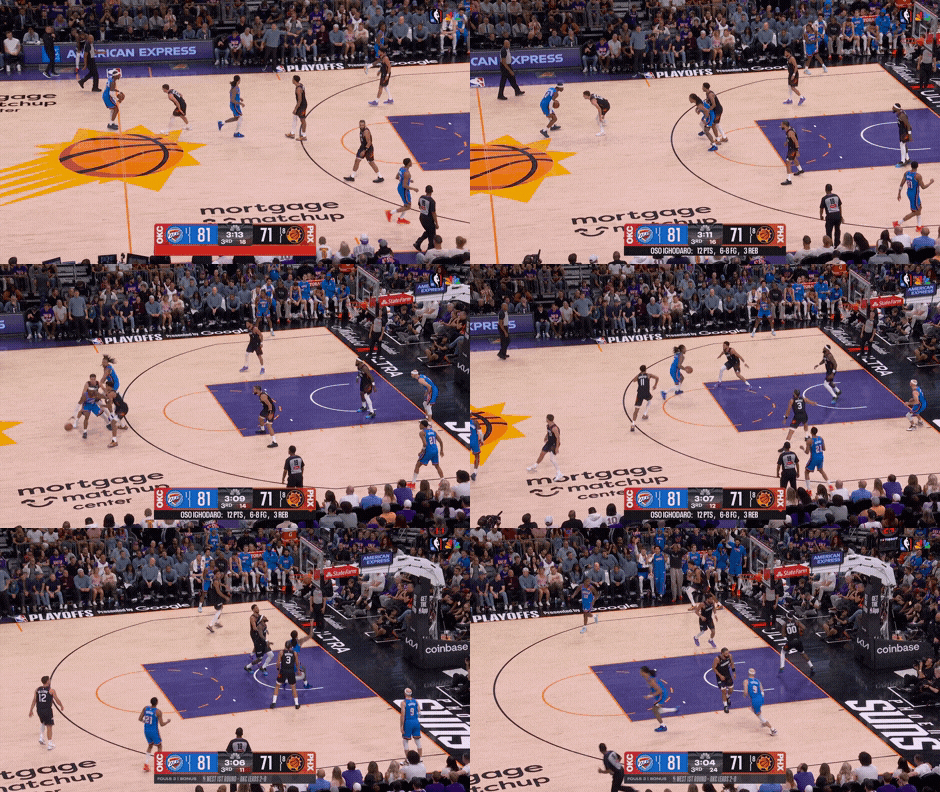
The Suns can be better by being even more aggressive with their double-teams. The primary objective of the double is to get the ball out of Gilgeous-Alexander’s hands.
But secondarily, it’s important to make the pass out of the double as difficult as possible. When the double-teamer brings more pressure, he’s more likely to deflect the pass or, at least, make it go backwards and give the defense some time to scramble back into a no-advantage situation.
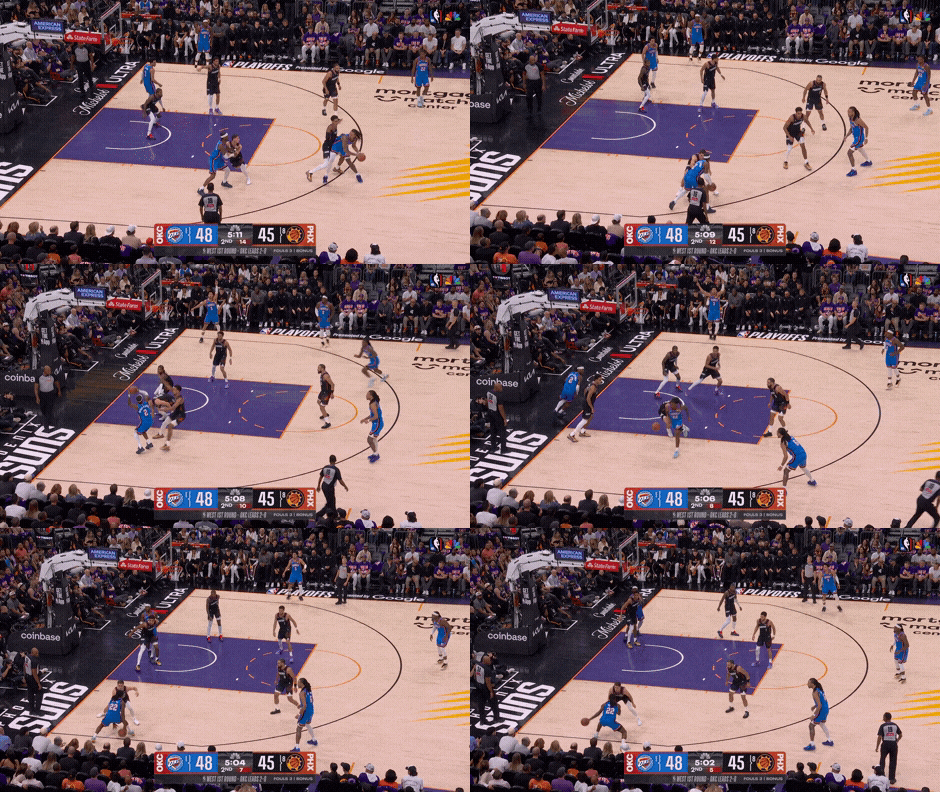
Midway through the second quarter on Saturday, Oso Ighodaro came with a strong double against Gilgeous-Alexander in the post. It helped that the baseline acted as a third defender, but the pressure kept the MVP from getting off a strong pass. He almost turned it over and the Thunder lost their advantage:
There’s no right answer for the Suns here, and they’ll likely mix things up against Gilgeous-Alexander in Game 4.
2. Who’s the second scorer?
The Suns’ level of success when double-teaming Gilgeous-Alexander depends in part on the ability of his teammates to make plays. And there’s obviously more doubt in that regard with Jalen Williams on the shelf, nursing the hamstring injury he suffered in Game 2.
The Thunder started Ajay Mitchell in place of Williams in Game 3, and Mitchell had his least-efficient scoring game of the season among the 56 in which he’s attempted at least five shots. His 15 points came on 5-for-20 shooting from the field and 4-for-4 at the line, and his ability to act as a secondary playmaker will be under the spotlight going forward.
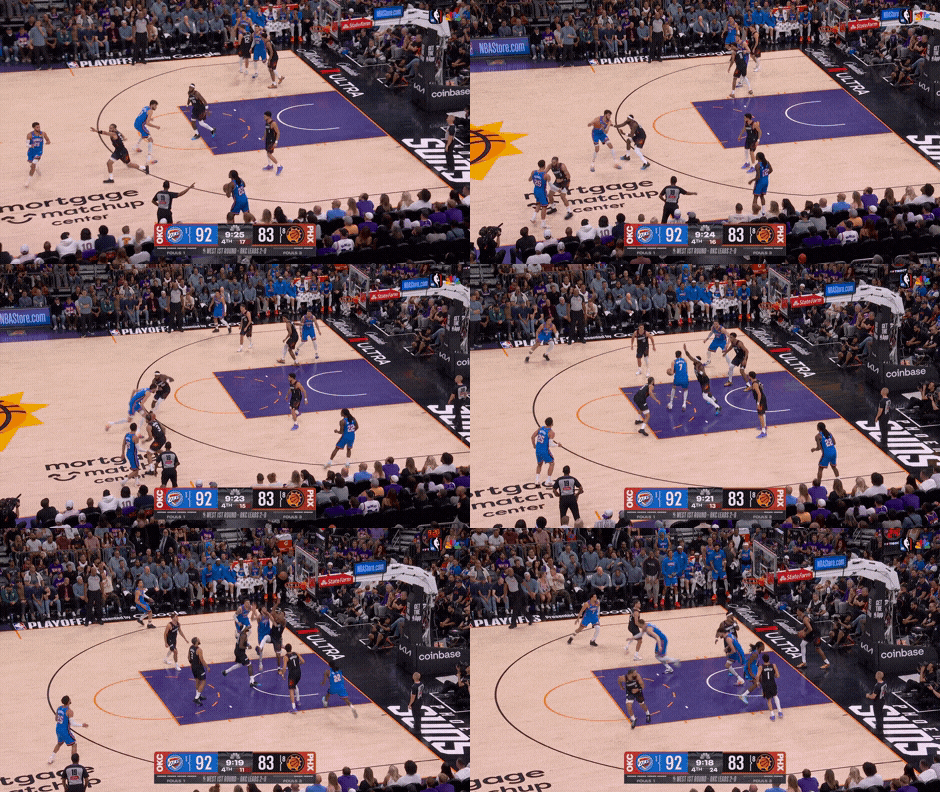
There’s an opportunity for Chet Holmgren to play a bigger role offensively, and while he scored just 10 points in Game 3, he was efficient and created three of his five buckets out of no-advantage situations.
Most impressive was his drive against Royce O’Neale and finish over Ighodaro early in the fourth quarter, when Gilgeous-Alexander was off the floor:
Both Mitchell and Holmgren were on the floor for the entirety of Gilgeous-Alexander’s 10 minutes on the bench on Saturday, and we can expect that to be the case for as long as Williams is out. The Thunder scored just 20 points on 19 offensive possessions (105 per 100) in those minutes and may need to be better against better competition in future rounds.
3. Can the Suns generate more 3s?
It’s not good for the Suns that they’ve attempted nine more mid-range shots than the Thunder in this series. They’ve shot relatively well (21-for-43, 48.8%) on those shots, but unless you’re shooting from mid-range at Gilgeous-Alexander’s level (55% this season), the math isn’t going to work out well for you.
And as a heavy underdog, the Suns probably need to be shooting as many 3s as possible to increase the variance in these games.
Royce O’Neale shot 54% on corner 3s in the regular season and is 3-for-3 from the corners in this series, but three attempts in three games isn’t enough.
In a series where they should be generating and shooting as many 3s as possible, the Suns have taken a lower percentage of their shots from beyond the arc (43.5%) than they did in the regular season (45.3%).
* * *
John Schuhmann has covered the NBA for more than 20 years. You can e-mail him here, find his archive here and follow him on Bluesky.