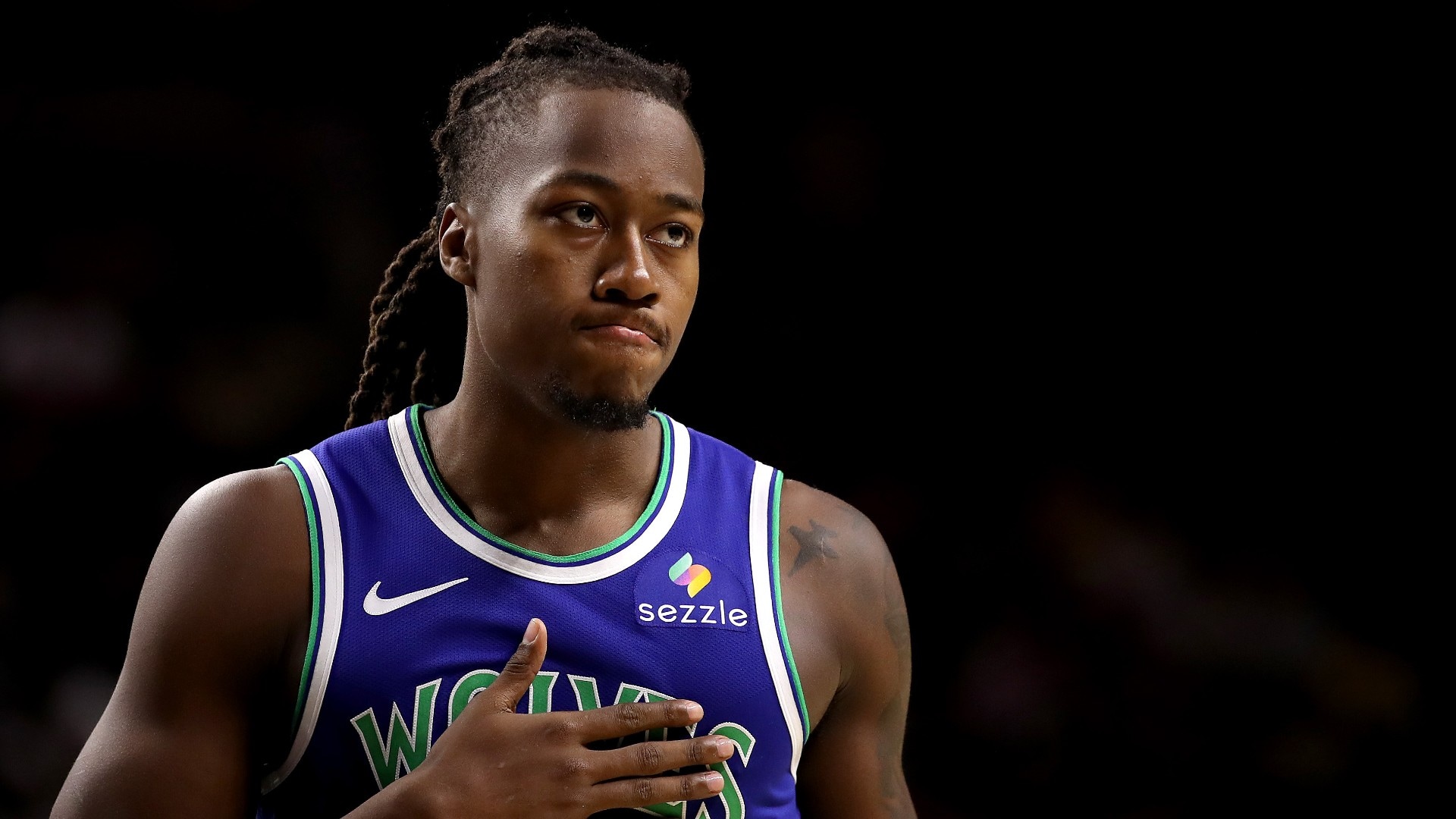
Game Recap: Knicks 130, Cavaliers 93
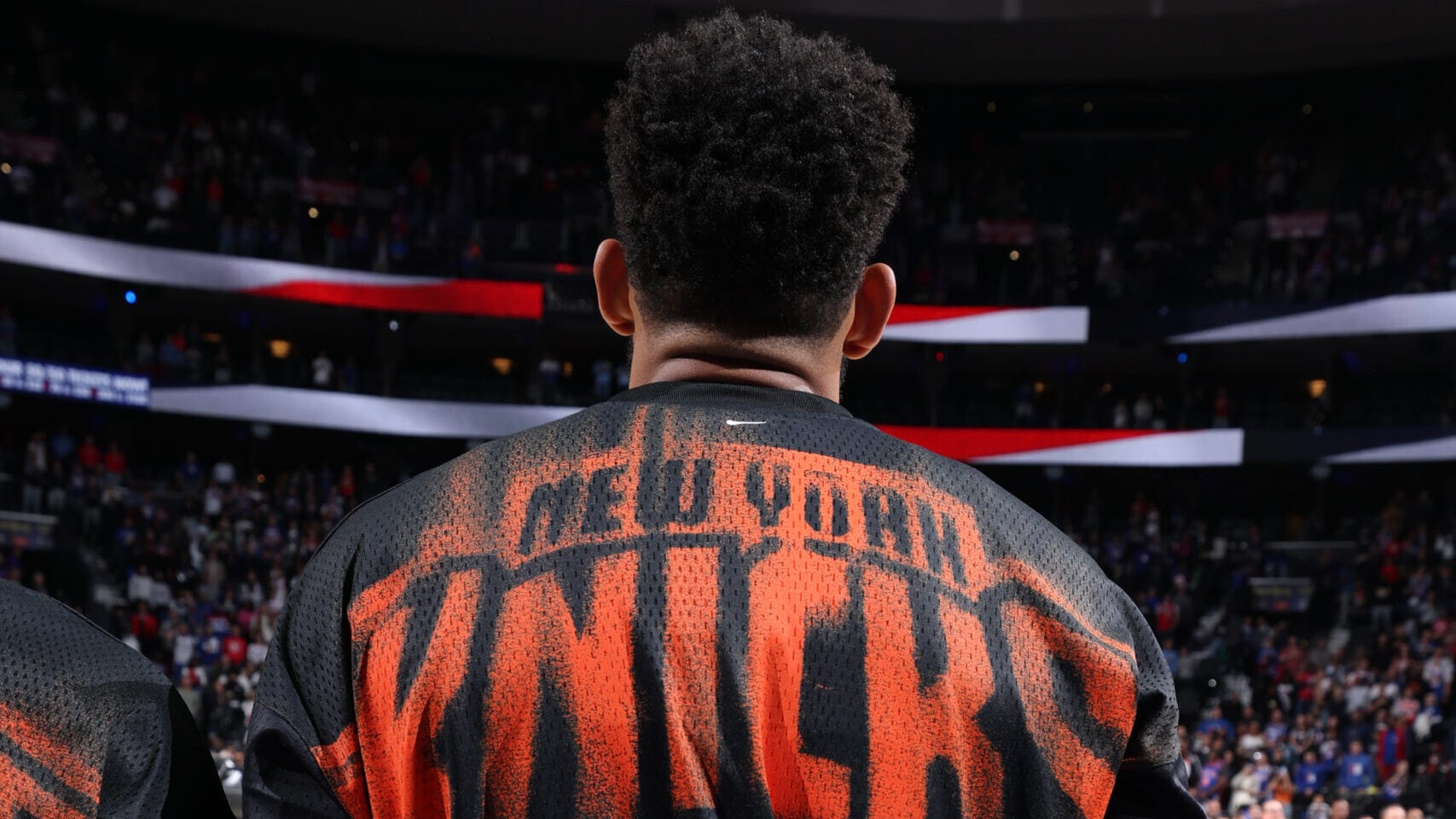
The New York Knicks defeat the Cleveland Cavaliers, 130-93, to complete the series sweep, 4-0.
CLEVELAND — The New York Knicks are going back to the Finals, and there was never any doubt.
The Knicks’ 11th straight playoff win was another blowout, a 130-93 victory over the Cleveland Cavaliers in Game 4 of the Eastern Conference Finals on Monday. The Knicks have had three chances to close out series in these playoffs, all three came on the road, and in all three, they led by at least 20 points in the first 14 minutes.
The Cavs led this game, 17-16, midway through the first quarter. But the Knicks then scored 36 points on their next 18 offensive possessions to go up by 24. Cleveland managed to avoid the 51-point margin of defeat that befell the Atlanta Hawks in the first round, but this game never got remotely interesting after the Knicks took control.
Donovan Mitchell had his highest-scoring game of the series, tallying 31 points on 9-for-18 shooting. But he didn’t get much help, while the Knicks had six players in double-figures, led by Karl-Anthony Towns with 19.
Jalen Brunson was awarded the Larry Bird Trophy as Eastern Conference Finals MVP. He led the Knicks’ comeback from 22 points down in the fourth quarter of Game 1 and averaged 25.5 points on 49% shooting over the course of the sweep.
Here are some notes, quotes, numbers and film as the Knicks earned themselves another extended break before the Finals begin (in Oklahoma City or San Antonio) on June 3:
1. Dominance on offense …
Over their 14 playoff games, the Knicks have outscored their opponents by 19.4 points per game, what would be the best point differential in NBA playoff history by a huge margin, topping the 1970-71 Milwaukee Bucks’ mark of plus-14.5 per game.
You don’t get that kind of dominance without elite play on both ends of the floor.
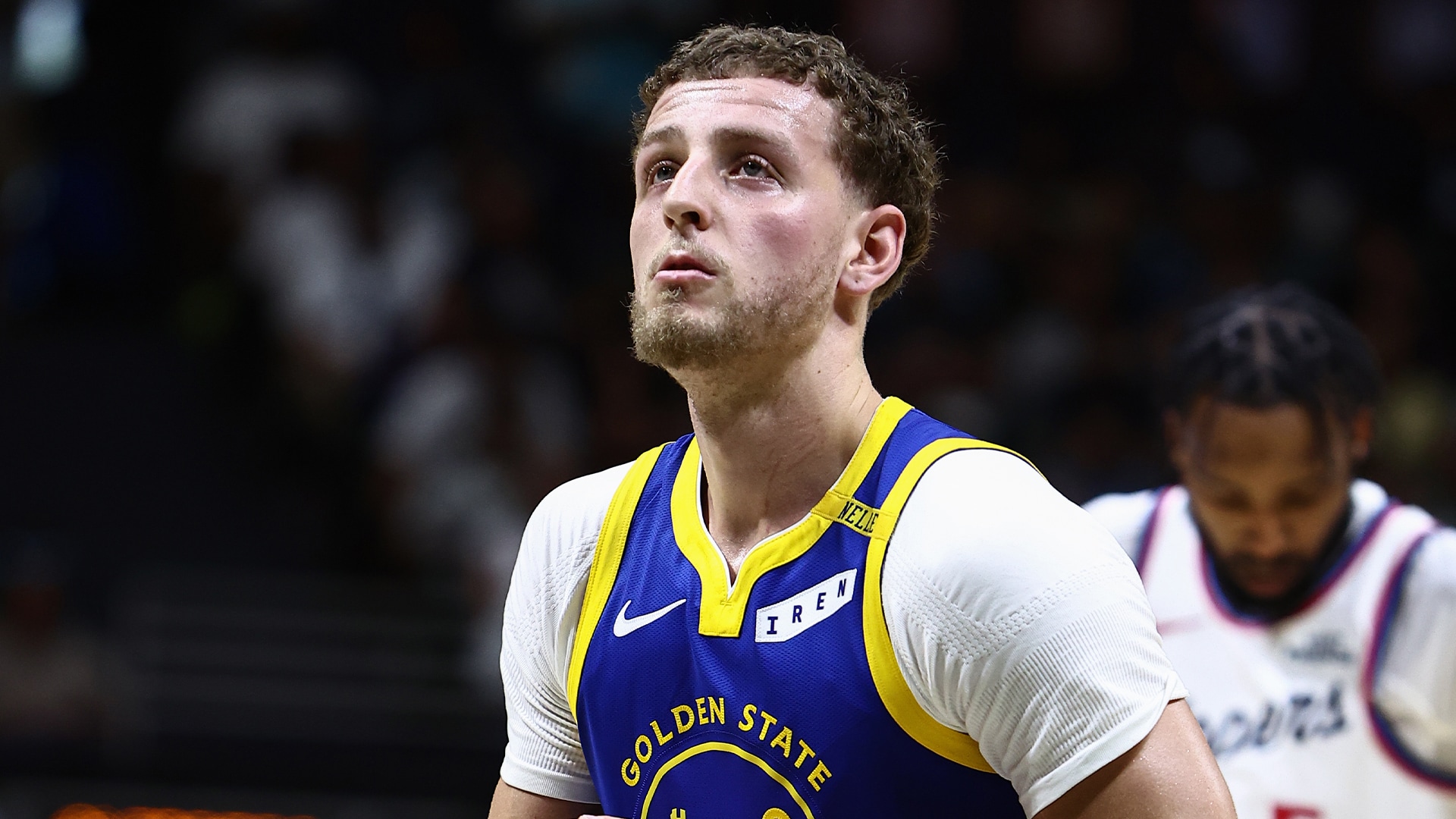
On offense, the Knicks have an effective field goal percentage of 59.2%, what would be the best mark in NBA history. Among 94 players with at least 50 field goal attempts in the playoffs, OG Anunoby, Towns and Mikal Bridges have seen the second, third and eighth biggest jumps from the regular season. Landry Shamet has taken only 45 shots in the playoffs, but is an amazing 21-for-35 (60%) from 3-point range.
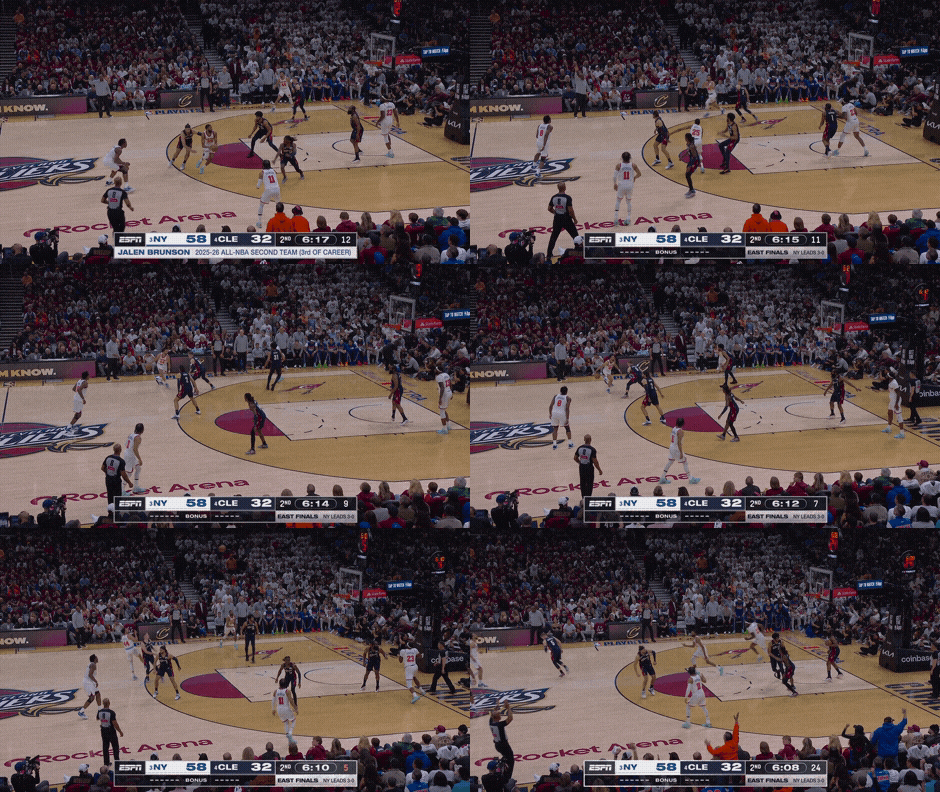
There were two buckets in the second quarter on Monday that exemplified the shooting in this series and the playoffs as a whole. First, Shamet isolated against Sam Merrill, dribbled through his legs a few times and then drained a contested, pull-up 3-pointer:
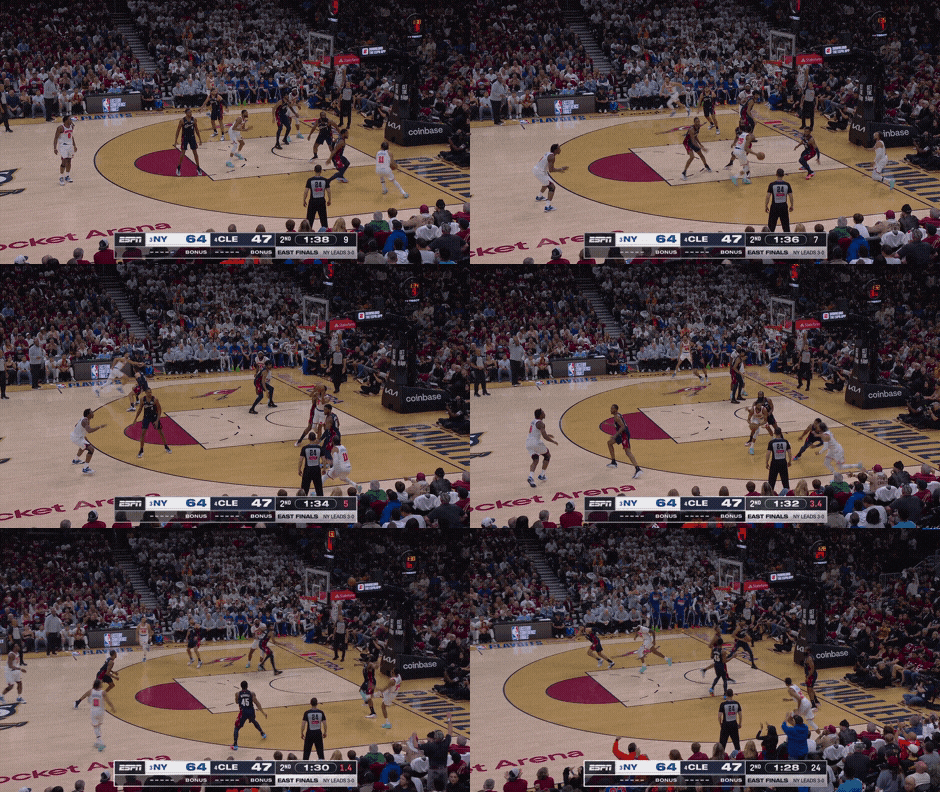
A few minutes later, the Knicks’ couldn’t find anything against the Cavs’ zone. Bridges was stuck on the baseline after picking up his dribble, being pressured by James Harden as the shot clock wound down. And at the last possible second, Bridges pivoted into a desperation, highly-contested turnaround jumper that somehow went in:
But the offensive dominance hasn’t been about just shot-making. There’s shooting well and there’s playing well, and the Knicks are doing both.
It obviously starts with Brunson, who leads the playoffs in time of possession. He picked on the Cavs’ start guards throughout this series, either getting buckets for himself or creating quality looks for his teammates.
But everybody else has played their roles. In addition to the great shooting, Towns has played as an offensive hub, averaging more assists (5.9) than he ever has in any postseason or regular season. Bridges has been a blur in transition, while also finding holes in the opponents’ defense when they load up to Brunson. Hart has made defenses pay for ignoring him on the perimeter, Anunoby has done a lot of everything, and the reserves have all contributed.
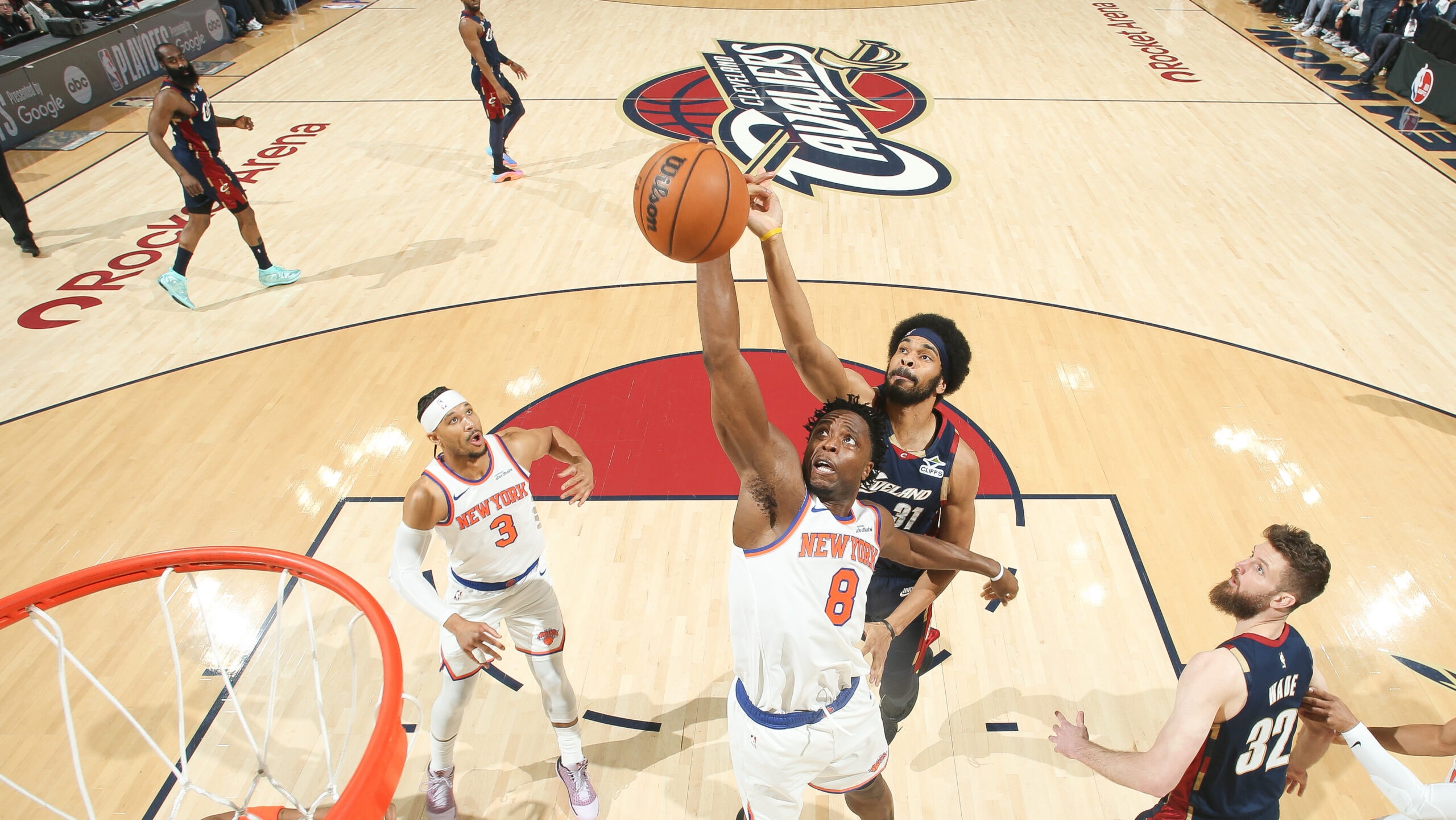
Once they got past a slow start in Game 1, the Knicks’ half-court offense was terrific throughout the conference finals. Their transition game took off in Game 3, and they added dominance on the offensive glass in Game 4, when they somehow outscored the Cavs by 24 points on the break (33-9) and by 27 on second chances (32-5).
“I don’t know that I’ve ever seen that,” Knicks coach Mike Brown said afterward, “at this point in the year.”
2. … and dominance on defense
The Knicks held the Cavs’ offense, led by two of the best offensive guards in the league, to just 100.3 points per 100 possessions over the four games of this series. That was 18.0 per 100 fewer than Cleveland scored in the regular season and 13.3 per 100 fewer than it had scored through the first two rounds … against two teams that ranked in the top five defensively.
It was the Cavs’ worst four-game stretch of offense all season.
The Cavs shot poorly. But they also had a free throw rate of just 29.0 attempts per 100 shots from the field, down from 35.3 per 100 through the first two rounds. And they grabbed just 26.5% of available offensive rebounds, down from 35.6% (best in the playoffs) against Toronto and Detroit.
“Our coaching staff came up with a fantastic game plan,” Brown said. “And our players went out there and executed.”
3. A heater at the right time
“They’re on a heater,” Cavs head coach Kenny Atkinson said of the Knicks after they eliminated his team. “They’re in a groove. You just gotta give them a ton of credit.”
It may just be the best heater in NBA history. The Knicks never reached this level in the regular season, even though they were playing plenty of games against teams that won fewer than 25 games. But at the most important time of year and against very good competition, they’ve played the best basketball of their lives.
It’s been rather stunning, and some of the shots and sequences have obviously elicited head-shaking from neutral observers.
Check out the best plays from the New York Knicks in the Eastern Conference Finals, a four-game sweep of the Cavaliers.
But knowing that his team has been, statistically, the best playoff team (and best-shooting playoff team) of all-time, Towns is not taken aback.
“No, because we put the work in,” he said. “We see each other putting that work in every single day, countless hours, the hours that don’t get documented.
“It shows in this run we’ve had, the culmination of all the hours dedicated to our crafts that have led us to be in this moment.”
And there simply has been no let-up.
“Obviously, we’ve been playing hard,” Brunson said, regarding his team’s ability to dominate its closeout games, “mixed in with a little luck as well. I think, most importantly, we’ve been coming in focused, just focusing on one possession at a time, just playing hard for that possession and worrying about the future later. We’ve been locked in on the moment, and I think we need to continue to do that.”
4. Cavs have questions for the offseason
Though they played two seven-game series, the Cavs’ core of James Harden, Donovan Mitchell, Evan Mobley and Jarrett Allen has played just 25 total games together (seven in the regular season, 18 in the playoffs) since Harden arrived in February. Before this series began, Atkinson said his team was “still a work in progress, in terms of getting on the same page offensively and defensively.”
Despite the lack of reps with Harden, the Cavs advanced further in the playoffs than they did in the last three years; Mitchell, Mobley and Allen all reached the conference finals for the first time. And they definitely suffered from shooting variance in this series, shooting just 24-for-75 (32%) on wide-open 3s while Shamet couldn’t miss. Fatigue could certainly have been a factor, with Harden having played 177 more minutes than Brunson prior to this series.
But if you don’t want fatigue to be a factor in the conference finals, you have to be better in the first two rounds. Atkinson lamented his team’s two losses when they had to close out both of their previous series in Game 6. Winning either of those games would have kept them from playing every other day for the last 14 games (27 days).
But the Cavs just never played at an elite level with any consistency.
They had the league’s most expensive roster, and they sped up their timeline by trading the 26-year-old Darius Garland for the 36-year-old Harden. Given their No. 1 finish in the East last year and the Achilles injuries that held back a pair of other Eastern Conference contenders, this is still a disappointing finish. No matter the round, getting swept is cause for concern, especially when you blow a 22-point lead in Game 1 and lose Game 4 by 37 points on your home floor. One has to wonder if there’s a missing element on this roster, maybe the Cavs’ own version of Josh Hart.
With little financial flexibility and one of the league’s most talented cores, the Cavs could certainly try to run it back next season. Given the timing of Harden’s arrival, this should be a two-year project. Of course, part of that decision is in the hands of Harden, who has a $42 million player option for next year. He’s had some short stays on other expensive rosters, but this would be the shortest.
Maybe this team will be better with a full year of core chemistry and/or a little more luck in regard to makes and misses. Or maybe there’s a flaw with that core that needs to be fixed. The Cavs will be one of the more fascinating teams to watch in the offseason.
* * *
John Schuhmann has covered the NBA for more than 20 years. You can e-mail him here, find his archive here and follow him on Bluesky.