Editor’s Note: Read more NBA coverage from The Athletic here. The views on this page do not necessarily reflect the views of the NBA or its teams.
***
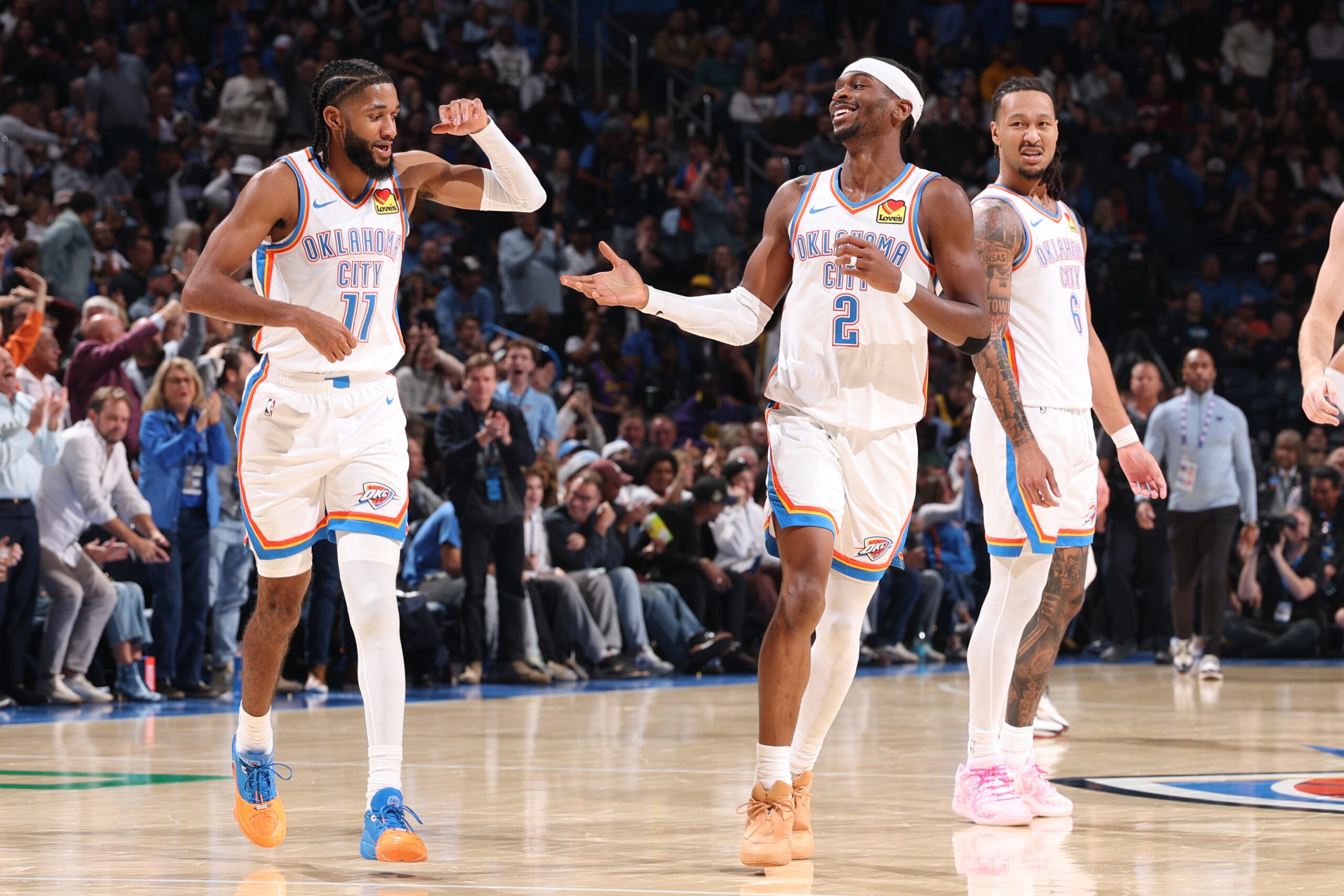
The Oklahoma City Thunder won the NBA championship in June. But what if they didn’t?
Oklahoma City won a league-high and franchise-record 68 games last season. As dominant as the Thunder were, they showed vulnerability. There were moments of doubt in every series the Thunder played, including a double-digit deficit in Game 7 against the Denver Nuggets in the conference semifinals and the all-time what-if moment that was Tyrese Haliburton’s injury in Game 7 of the NBA Finals.
Ultimately, the Thunder survived, and won. But those close calls were essential to what is happening this year.
“We tried to look at this season as like, if we lost in the second round, if we lost Game 7 against Denver, how would we be approaching this, rather than allowing the fact that we won it to bias us coming in?” Thunder coach Mark Daigneault said last month. “It was kind of more, if we didn’t win it, and we fell short, how would we have been looking at this? So we’re pushing ourselves to evolve.”
The Thunder have evolved into one of the best defensive teams of all time. They are 23-1 this season and off to the second-best start to a defending champion’s season ever, behind only the 2016 Golden State Warriors, who started 24-0 and won an NBA-record 73 games before losing to the Cleveland Cavaliers in the finals.
According to NBA Advanced Stats, the mean defensive efficiency rating heading into this week is 113.7 points allowed per 100 possessions. The Thunder are at 104.1, 6.6 points per 100 possessions better than the second-place Houston Rockets. That gap is as big as the difference between the Rockets’ defense and the 23rd-ranked Chicago Bulls.
In the previous 29 seasons, the top-ranked defense has never been more than 2.6 points per 100 possessions better than the second-best defense; that was how much better the top-ranked San Antonio Spurs defense was in 2015-16 compared to the second-best Atlanta Hawks defense. Last season’s Thunder allowed 2.5 fewer points per 100 possessions than the second-ranked Orlando Magic.
The nature of the NBA should allow for this. The NBA champions generally get each opponent’s best shot, so the Thunder don’t get many of the half-focused efforts that dot most teams’ regular seasons. No team has repeated since the 2018 Golden State Warriors. No team has had the best defense in a row since the Milwaukee Bucks in 2018-19 and 2019-20.
How, then, is this happening?
Thunder 2025-26 defense
| THUNDER DEFENSE THROUGH WEEK 7 | AVERAGE | RANK |
|
Defensive efficiency
|
104.1
|
1st
|
|
Opp. 3s
|
14.4
|
24th
|
|
Opp. 3%
|
36.9
|
22nd
|
|
Opp. midrange FGs
|
3.5
|
14th
|
|
Opp. midrange FG%
|
36.2
|
3rd
|
|
Opp. FTAr
|
0.269
|
10th
|
|
Opp. Paint
|
38.8
|
1st
|
|
Rim Protection %
|
57
|
1st
|
|
opp. oREB%
|
28.7
|
6th
|
|
Opp. TO%
|
17.3
|
2nd
|
|
Steals
|
10
|
2nd
|
|
Opp. Fast break points
|
10.6
|
1st
|
In many ways, they are excellent at the things that established them as the NBA’s best defense last season. In 2024-25, Oklahoma City forced the most turnovers; allowed the fewest points in the paint; gave up the lowest field-goal percentage; and yielded the fewest fast-break points.
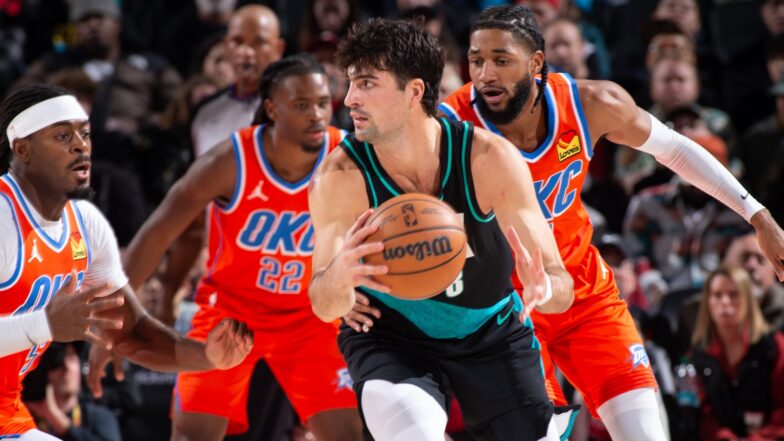
A typical Thunder game now has many of the same tenets: pressure that extends into the backcourt with a variety of point-of-attack defenders, physicality in the half court, opportunistic and disruptive off-ball activity and sturdy rim protection if a team does manage to break the shell.
Last year, Oklahoma City forced the most turnovers, allowed the fewest points in the paint, gave up the lowest field goal percentage and yielded the fewest fast-break points. The formula this year hasn’t changed dramatically. There is pressure that extends into the backcourt with a variety of point-of-attack defenders, physicality in the half court, opportunistic and disruptive off-ball activity and sturdy rim protection if a team manages to break that shell.
“It’s just recognizing patterns, understanding different scenarios that are going to come up from the offense, whether it’s a pindown, a ball screen, a dribble-handoff, a skip pass,” Thunder guard Alex Caruso said. “Different things where it’s like, once you realize the ball is under control, that’s when you kind of be aggressive in those areas. And a lot of times with our team, the guys who handle the action take care of it, because we’re a good defensive team. So, it allows the other guys off the ball to kind of be aggressive.”
While offenses shot the lowest 3-point percentage in the league against the Thunder last season, teams are finding more success this year, as the Thunder rank 22nd in 3-point percentage allowed and 24th in 3-pointers allowed per game. Being more comfortable with allowing shots outside the paint rather than inside the paint has long been a part of Oklahoma City’s defensive strategy.
The Thunder are also better this season at defending without fouling (going from ranking 26th in opponent free-throw attempt rate last season to 10th) and rebounding (going from 19th in defensive rebounding percentage last season to sixth). In short, as other teams attempt to emulate the Thunder, Oklahoma City has gotten even better at previous areas of weakness.
“We just try to stay on our stuff and maximize our team,” Daigneault said. “And if there’s stuff we’re doing that other teams can maximize their team with, then they should do it. And we take from other teams all the time. That’s how you get ideas. The ultimate pursuit is trying to get better yourself, and that’s what we’re focused on.”
The draft has bolstered Oklahoma City’s defensive personnel. Power forward Chet Holmgren is healthy this season after missing 50 games last season, mostly because of a right iliac wing (pelvic) fracture. Holmgren, who was taken second in the 2022 NBA Draft, is up to a career-best 8.1 rebounds per game (6.6 defensive) while blocking a team-high 1.5 shots per game.
“You add a player of Chet’s caliber to any team, it’s going to help you,” Caruso said.
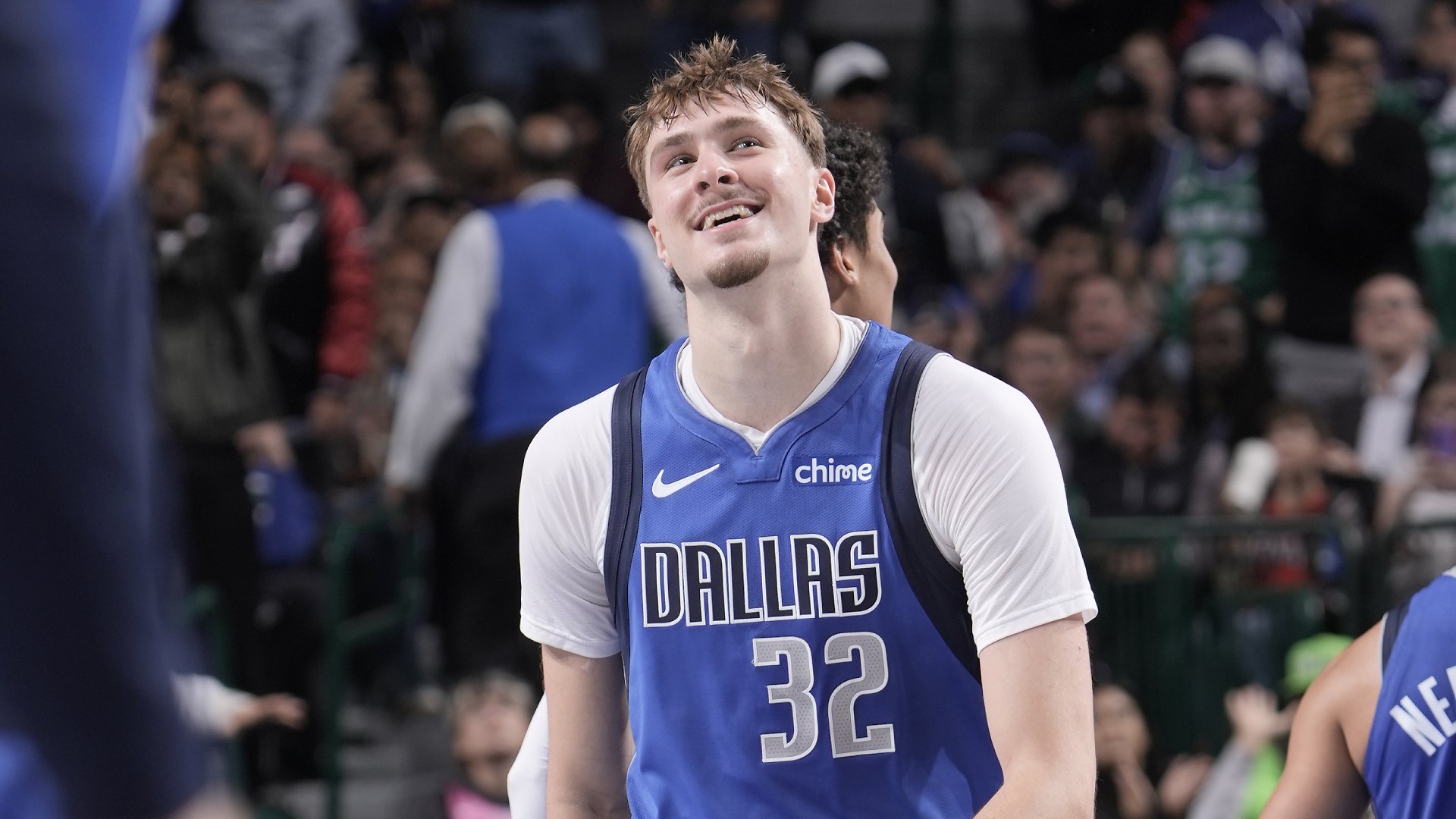
Holmgren has also played next to fellow 2022 draft pick Jaylin Williams more. Last season, Williams played only 59 minutes next to Holmgren. This season, the Thunder have allowed only 95.5 points per 100 possessions in the 122 minutes that Holmgren and Williams shared the floor. Dallas Mavericks star Anthony Davis had only two points on 1-of-9 shooting when he faced Holmgren and Williams last week.
Playing with more size has allowed the Thunder to go from 28th in second-chance points allowed in 2023-24 and 24th in 2024-25 to first in that category this season. Daigneault said it gives the Thunder more paths to defensive success.
Small forward Jalen Williams, who was drafted 12th in 2022 NBA Draft, returned from offseason wrist surgery two weeks ago, giving Oklahoma City an All-NBA performer and an All-Defensive team selection due to his ability to defend every position.
Shooting guard Luguentz Dort was undrafted in 2019 and was a first-team All-Defense selection for the first time last season. Injuries to Jalen Williams and Dort have allowed 2023 lottery pick Cason Wallace (6-foot-3, 195 pounds) to start all 23 games he has appeared in. Wallace leads all qualifiers in the NBA with 2.3 steals per game. Ajay Mitchell (6-foot-4, 190 pounds), who was drafted 38th overall in 2025, has provided the Thunder with another ballhawk who averages 1.5 steals per game.
The Thunder aren’t known for making significant splashes in free agency, but the three-year contract they signed center Isaiah Hartenstein to in the 2024 offseason was critical. Hartenstein is currently out with a right soleus strain, but no starting center allows a lower percentage at the rim than he does (46.6 percent on 3.8 contests at the rim per game, per NBA Advanced Stats). Among 75 players who have played at least 10 games and contest at least 3.5 field goals attempts at the rim per game, Hartenstein allows the third-lowest percentage while Holmgren (50.5 on 4.8 attempts) allows the eighth-lowest. The Thunder are the only team in the league with two top-10 rim protectors.
The Josh Giddey trade during the 2024 offseason helped Oklahoma City land a proven postseason-ready defender in Alex Caruso. The Thunder used Caruso for 19.3 minutes per game last season, and his minutes are down to 18.8 so far this season, but he is still averaging 1.6 steals per game while defending at every position.
“He can guard everybody,” Daigneault says of Caruso. “We’ve got a couple guys like that. The range of who he can guard, the range of who Chet can guard. Chet can guard down. The range of who Dort can guard … Cason can guard much bigger guys. AC and Dub (Jalen Williams), obviously.”
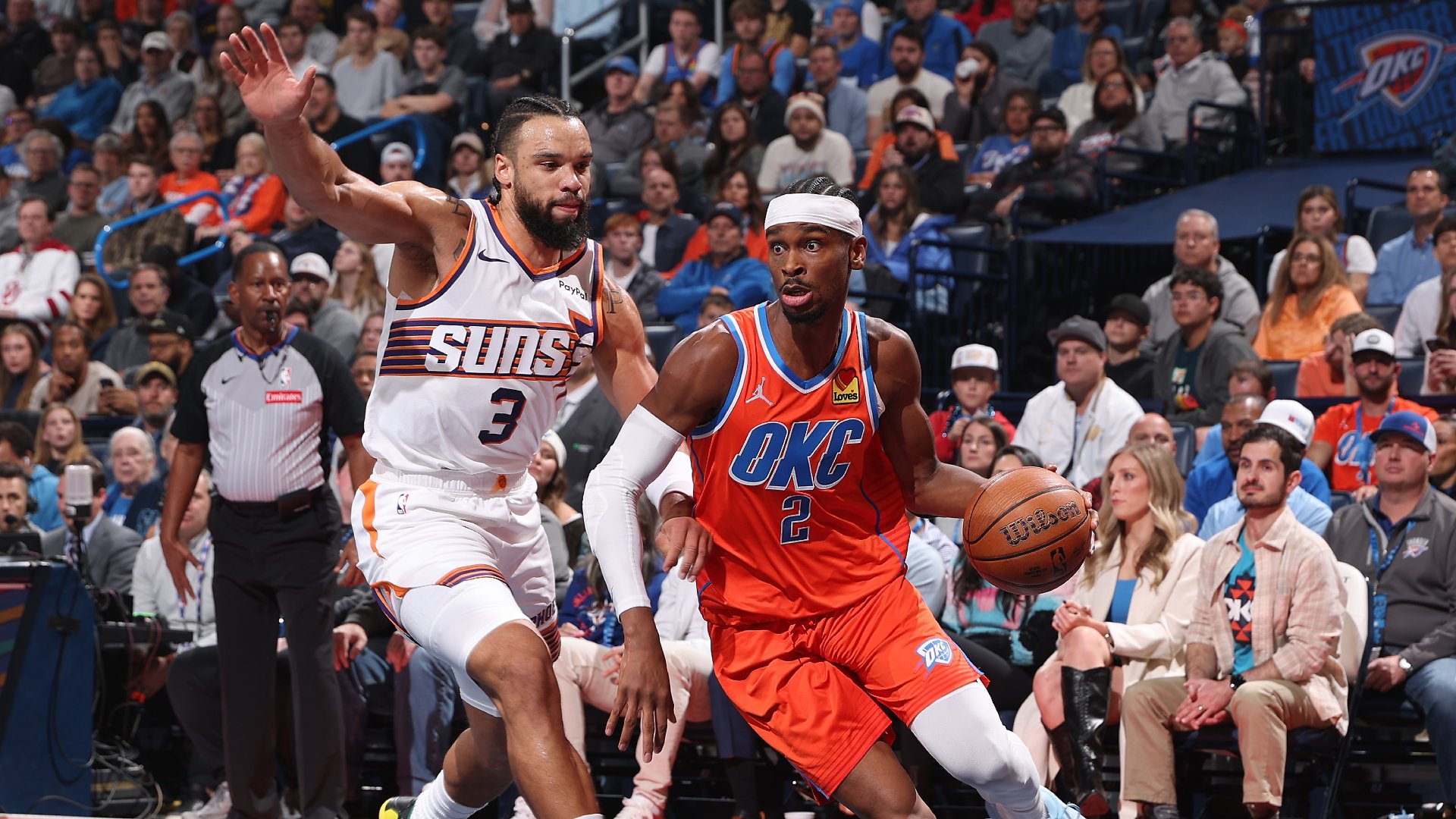
Then there’s the reigning MVP, scoring champion and NBA Finals MVP Shai Gilgeous-Alexander. Gilgeous-Alexander affects both ends of the floor for the Thunder defensively: He guards perimeter players who aren’t tasked with heavy shot creation. He is still an active participant defensively, ranking fourth on the team with 1.4 steals per game and 4.3 defensive rebounds per game.
The Thunder have an isolation-heavy offense that passes the ball fewer times per game than every team in the league except for the Los Angeles Lakers. That works when the player Oklahoma City plays through is Gilgeous-Alexander, who attempts the second-most free throws in the NBA and is on track to be the first 30-point scorer in NBA history to average fewer than 2.0 turnovers per game. Gilgeous-Alexander is averaging a career-low 1.7 turnovers per game, and the only team that averages fewer turnovers than Oklahoma City is Boston. The lack of turnovers, along with Oklahoma City’s refusal to crash the offensive glass (29th in offensive rebound percentage), play a large role in the Thunder allowing the fewest fast-break points in the league. The more any defense, let alone Oklahoma City’s, can set up, the more effective it will be.
“The versatility, Shai — the versatility of these guys is what allows us to be really, really, broad in what we do,” Daigneault said. “And we try to take advantage of that. We try not to be very rigid. So, we’re learning all those things, remaining unpredictable.”
The Thunder have a long way to go towards maintaining this impressive start defensively, but there are reasons to believe Oklahoma City’s defensive success can become even more historic. The Thunder could become the first post-ABA merger team (since 1976-77) to be 10 points per 100 possessions better defensively than the league average. Per Basketball Reference, the NBA leaguewide offensive efficiency rating is 115.8 points per 100 possessions, 0.5 points higher than the record-high set in the 2023-24 season.
Best relative def. eff. (since 1976-77)
| TEAM | SEASON | RELATIVE DEFENSIVE EFFIECIENCY | POSTSEASON? |
|
2026
|
-10.4
|
TBD
|
|
|
2004
|
-8.8
|
Lost West semis
|
|
|
2008
|
-8.6
|
Won NBA Finals
|
|
|
1993
|
-8.3
|
Lost ECF
|
|
|
1994
|
-8.1
|
Lost NBA Finals
|
 Oklahoma City Thunder
 San Antonio Spurs
 Boston Celtics
 New York Knicks
The road to repeat as champions continues this week, as the Thunder look to win the NBA Cup after losing to the Milwaukee Bucks in the Cup final last December. Oklahoma City has yet to play a game with its ideal starting lineup of Gilgeous-Alexander, Jalen Williams, Holmgren, Dort and Hartenstein. Teams could cool down from 3, the only area defensively where the Thunder have been vulnerable, as the season progresses.
Every team will give the Thunder their best shot, trying to chip away at their all-time greatness. It hasn’t mattered yet.
***
Law Murray is a staff writer for The Athletic covering the NBA, based in Los Angeles. Law joined The Athletic in 2021 as a Clippers beat writer. Prior to joining The Athletic, he was an NBA editor at ESPN, a researcher at NFL Media and a contributor to DrewLeague.com and ClipperBlog. Law is from Philadelphia, Pa., and is a graduate of California University of Pennsylvania and the University of Southern California. When not playing basketball, Law is probably discussing the next Saturday Night Live episode. Follow Law on Twitter @LawMurrayTheNU