Editor’s Note: Read more NBA coverage from The Athletic here. The views on this page do not necessarily reflect the views of the NBA or its teams.
***
The Los Angeles Lakers began the third quarter of their season Tuesday with one of their better wins: a 16-point comeback win against the Denver Nuggets to open their annual Grammy trip. The eight-game road swing takes them away from downtown Los Angeles and straight toward the NBA’s trade deadline.
That win in Denver also marked the end of a difficult stretch.
Before that game, the Lakers were coming off a dreaded five-games-in-seven-days stretch, going 2-3 to clinch a losing record for the second quarter of the season. After a 15-5 start, Los Angeles went only 10-11 over its next 21 games.
“This is a very tough time of year for everybody in the NBA right now,” Lakers coach JJ Redick said after a win Sunday in Toronto. “There are a number of teams that have rotation players, starter-level players, All-Star-level players like us that are out of the lineup or in and out of the lineup. It can make an already difficult stretch of the season even more difficult. And the guys have done a great job of just getting through the stretch, fighting.”
From Dec. 2 through Jan. 18, the Lakers were outscored by 3.8 points per game, ranking 23rd in the NBA. That was a sharp decline from the plus-3.2 point differential in the first quarter (which ranked 14th). The Lakers’ offense fell from sixth in the NBA in the first quarter to 14th, while the defense dropped from 18th to 29th. Only the Utah Jazz allowed more than the 119.5 points per 100 possessions than the Lakers allowed, and Utah is not a team that has the same championship expectations as the Lakers.
But as bad as the Lakers played at times, there’s reason to believe the arrow is pointing up.
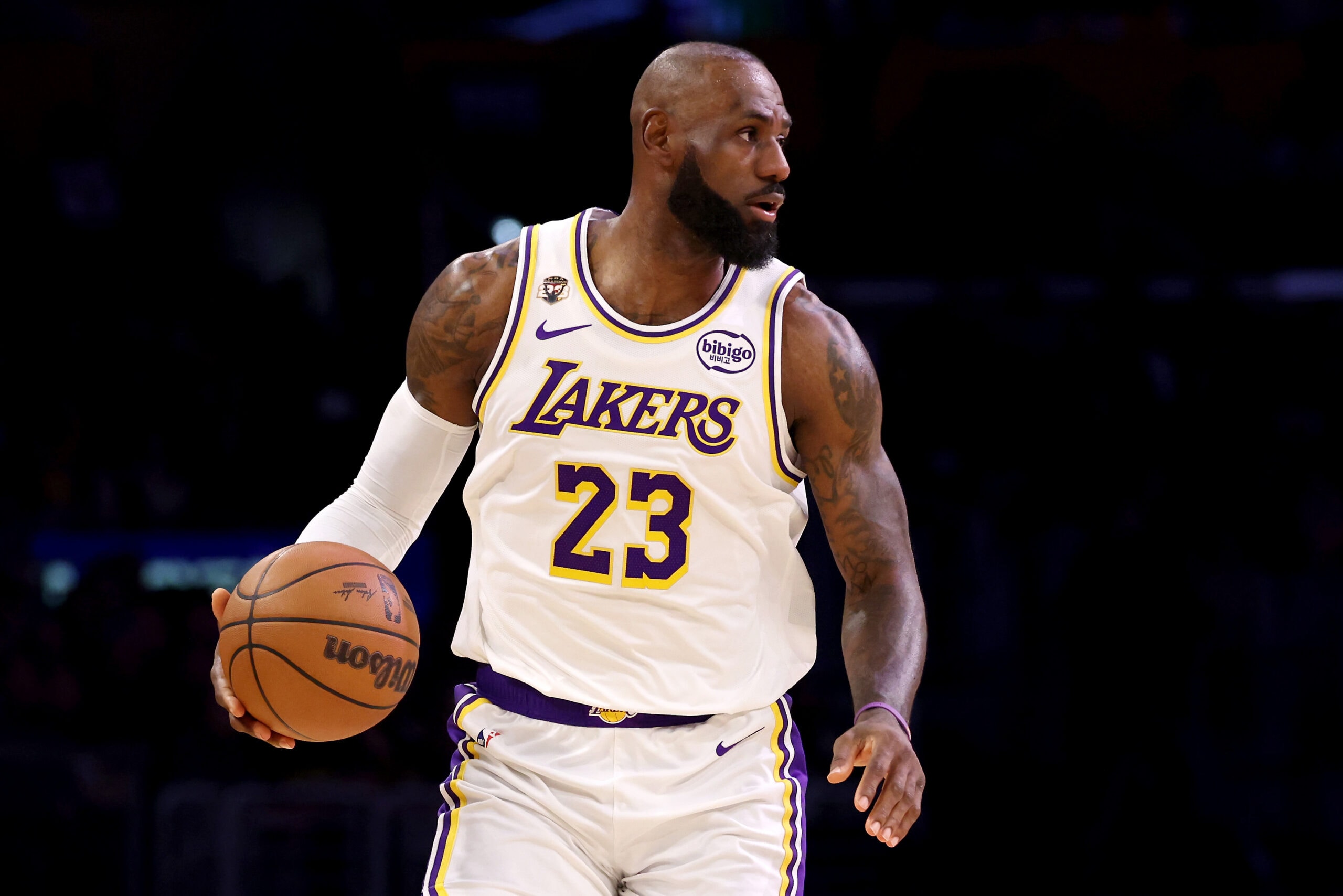
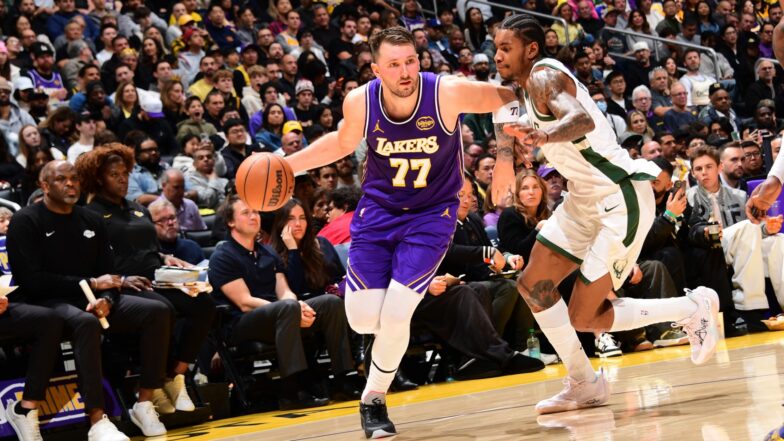
Luka Dončić is an All-Star starter and the league’s leading scorer. LeBron James is fully settled into the season, missing just three games since Nov. 18 and playing in each game of the Lakers’ five-and-seven stretch despite being 41 years old. Before the Denver win, Redick said Austin Reaves is nearing a return from a calf injury that has limited Reaves to just two games since Dec. 10.
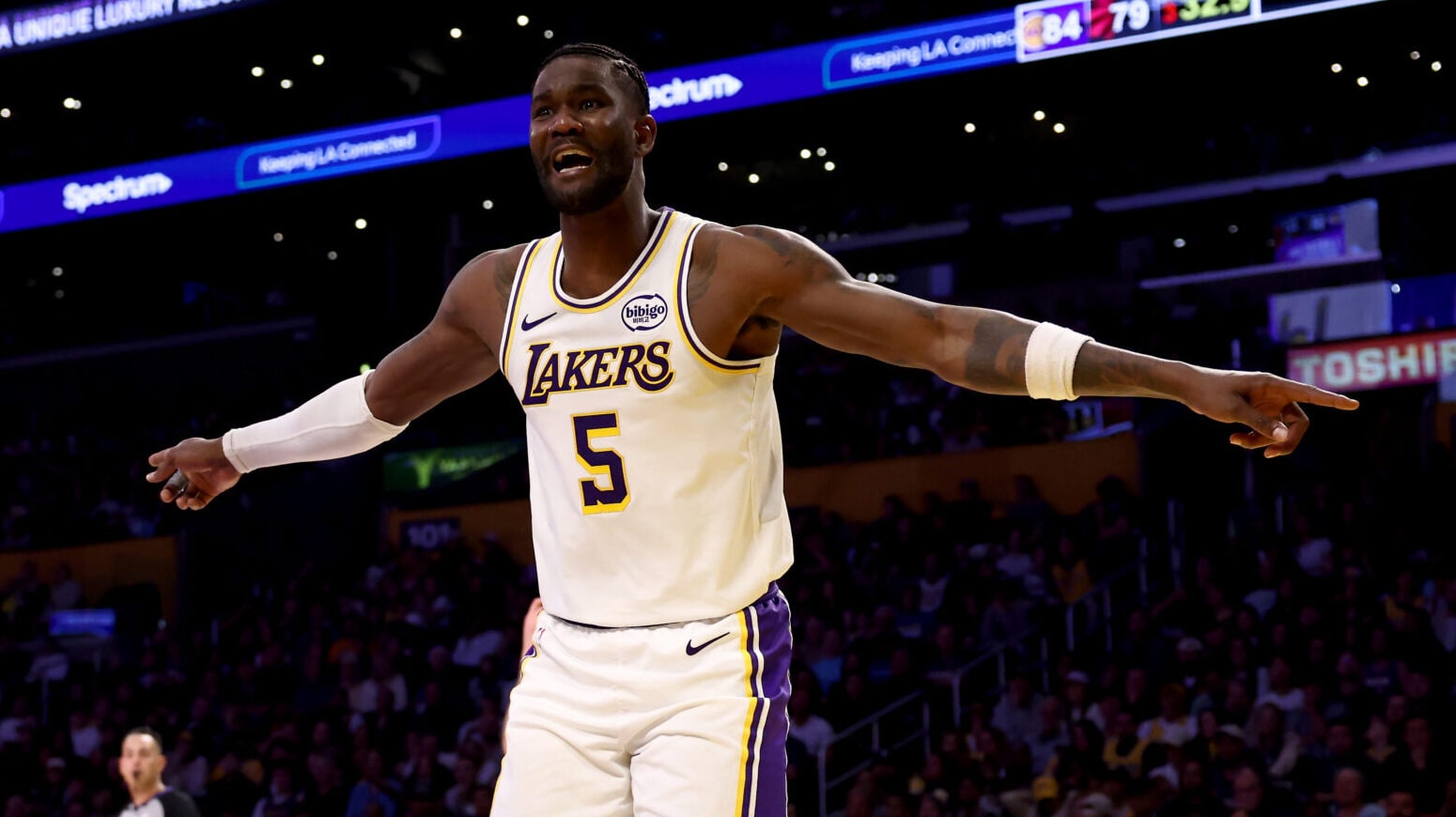
The Lakers have also gone through some big changes in their lineup. Reaves’ injury opened up starts for Marcus Smart. Rui Hachimura missed more than two weeks with a calf injury of his own, and by the time he returned, Jake LaRavia assumed the starting forward spot alongside James and center Deandre Ayton in the frontcourt.
The third quarter of the season takes the Lakers through this eight-game road trip, the trade deadline and the All-Star break. When they return to Denver on March 5, they will have 20 games left in the regular season.
Here’s a closer look at what went right and what didn’t for the Lakers in the second quarter of the season.
Perimeter offense
The Lakers have a clear strength offensively: their ability to draw fouls. Dončić averaged 11.0 free-throw attempts per game in the second quarter of the season as part of his 31.5-point scoring average, while James averaged 6.3. Reaves got to the line 7.2 times per game but only played in six games after Dec. 2. Still, no team had a higher free-throw attempt rate in the second quarter of the season than the Lakers.
That has helped offset the Lakers’ inconsistent shooting. After a hot start in the midrange, the Lakers’ accuracy has plummeted from second in the NBA to 26th.
The 3s haven’t been there for the Lakers either. Los Angeles remained near the bottom in makes and accuracy, with Dončić and James converting nearly 33 percent of their attempts. Hachimura was the best 3-point shooter at 38 percent while making 1.6 per game, while Jarred Vanderbilt only made 31.6 percent of his 2.1 attempts.
Interior offense
The Lakers led the NBA in field goal percentage through the first quarter of the season. That figure dropped from 51.3 percent down to 48.1 percent (seventh in the NBA) in the second quarter. Still good, just not as good.
Dončić’s high-volume shooting — he made 45.1 percent of his team-high 22.2 field goal attempts per game — dragged the numbers down. James remained a strong finisher, making 51.8 percent of his 17.3 field goal attempts per game. Ayton and Jaxson Hayes converted at a high rate around the rim, with Ayton at 66.2 percent and Hayes at 78.2 percent. Hachimura dropped off in a big way, though, making only 45.3 percent of his field goals in the second quarter of the season. The Lakers slipped to the middle of the pack in paint points (49.8).
The Lakers struggled in other areas, too. They ranked 19th in offensive rebounding percentage in the first and second quarters and in the bottom third in second-chance points. LaRavia averaged 2.0 offensive rebounds per game in the second quarter of the season and earned praise from Redick for consistently making an effort to crash the offensive glass. That’s in sharp contrast to Hachimura, who averaged only 0.6 offensive rebounds per game in similar minutes.
Control
The Lakers improved their turnover issues in the second quarter of the season, climbing from dead last in turnover percentage to 18th. The bad news is that the stars have not been at their best when it comes to playmaking. The Lakers went from 25.7 assists per game through 20 games (20th in NBA) to 24.3 assists (25th in NBA), while Dončić averaged a ghastly 4.6 turnovers per game. Reaves also averaged less than two assists per turnover before being sidelined, compiling 5.3 assists and 3.2 turnovers in his six games since Dec. 2. James also averaged 2.8 turnovers but was up to 6.8 assists.
There is a lack of ballhandling depth on the roster. The only other Laker with more than 2.1 assists per game in the second quarter was Smart at 2.9. Both Ayton and Hayes had more turnovers than assists as well.
Pressure
The best thing the Lakers do defensively is force turnovers. After ranking 12th in opponent turnover percentage through 20 games, the Lakers ranked 10th in the second quarter.
But it’s not necessarily steals that get the Lakers to kill possessions, as they ranked 19th in the NBA in steals per game since Dec. 2. Dončić, Smart, James and LaRavia averaged between 1.1 and 1.5 steals per game in the second quarter of the season, so the relative lack of steals comes from the lack of defensive playmaking from the bench. Playing the Lakers means watching out for speed bumps, and the Lakers draw more charges than any other team in basketball, with Smart leading the way.
Marcus Smart absorbed his league-leading 14th charge of the season (per NBA Stats)
Asked him about the one he drew on Peyton Watson tonight pic.twitter.com/pPp2vNvGYA
— Law Murray 🐐 (@LawMurrayTheNU) January 21, 2026
Interior defense
This is the area where the Lakers’ defense declined the most. The Lakers allowed teams to make 49.2 percent of shots from the field in the second quarter, ranking 27th in the NBA. While the Lakers ranked 13th in paint points (49.7) allowed through 20 games, that figure ballooned to 52.0 per game over the next 21 games, ranking 21st in the NBA.
The Lakers also allowed opponents to finish efficiently at the rim; the only team with worse rim protection is Utah. Low-man presence has been poor most of the season, and neither Ayton nor Hayes is a consistent shot blocker. Dončić, who defended more shots at the rim than any Laker besides Ayton, also struggled in those situations.
Rebounding has also fallen off. After ranking seventh in defensive rebounding percentage through 20 games, the Lakers dropped to 20th over the next 21 games, allowing more second-chance points. The power forward-type players on the Lakers are simply poor defensive rebounders. James is good for a small forward at 6.4 rebounds per game, but he’s not what he used to be. LaRavia hits the offensive glass but averages only 4.6 rebounds. Hachimura averaged 3.1 rebounds per game in the second quarter of the season, which isn’t even good enough for a guard, let alone a 27-year-old 6-foot-8, 230-pound forward. Vanderbilt is similar to LaRavia; better on the offensive glass than on the defensive boards.
Perimeter defense
The Lakers continue to give up too many 3s, as they rank 24th in 3-point percentage allowed and 18th in 3s allowed this season. While teams have been missing more attempts in the midrange against them, fouling has become a new issue. Through 20 games, the Lakers ranked third in opponent free-throw attempt rate. In the following 21 games, the Lakers rank 18th. The player who has fouled the most is Dončić, who most notably fouled out after trying to contest a Kevin Porter Jr. 3 against the Bucks earlier this month.
It will be interesting to see how the Lakers defend with James, Dončić and Reaves on the floor together. In 140 minutes since Dec. 2, the Lakers have allowed 115.1 points per 100 possessions with that trio sharing the floor.
Special teams
The Lakers were not impressive in transition in the second quarter of the season, ranking 20th in fast-break points and 18th in fast-break points allowed. They were outscored by an average of 2.3 points per game on fast breaks in the second quarter, compared to being outscored by 2.0 points per game on fast breaks in the first quarter.
Even though the Lakers get to the free-throw line at a high rate, the accuracy once they get there has fallen off. The Lakers made only 76.1 percent from the line, ranking 25th, and their centers barely converted over 60 percent.
***
Law Murray is a staff writer for The Athletic covering the NBA, based in Los Angeles. Law joined The Athletic in 2021 as a Clippers beat writer. Prior to joining The Athletic, he was an NBA editor at ESPN, a researcher at NFL Media and a contributor to DrewLeague.com and ClipperBlog. Law is from Philadelphia, Pa., and is a graduate of California University of Pennsylvania and the University of Southern California. When not playing basketball, Law is probably discussing the next Saturday Night Live episode. Follow Law on Twitter @LawMurrayTheNU