Editor’s Note: Read more NBA coverage from The Athletic here. The views on this page do not necessarily reflect the views of the NBA or its teams.
***
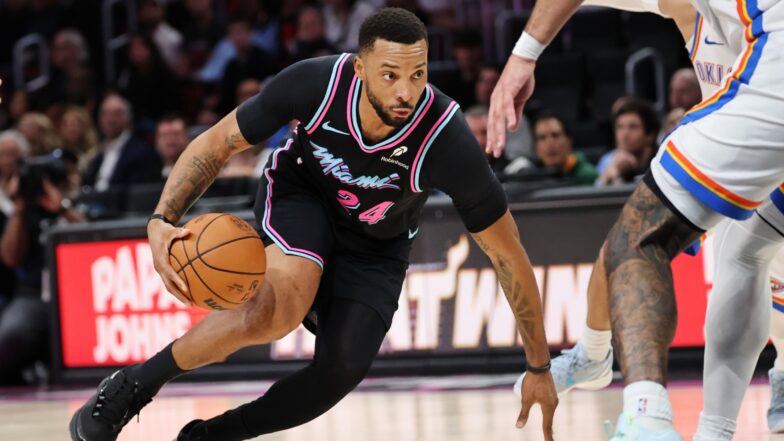
MIAMI — Norman Powell’s knees never touch.
He stands upright, back straight, tibia curved, both big toes touching, each heel connected with half a foot of daylight between his legs. Powell is bowlegged to the extreme, and proud of it. He smiles, showing off all his teeth, as if his parents instructed him to look his cheeriest on class picture day, waiting for a reaction to the absurdity of two legs shaped, as his teammate Bam Adebayo puts it, “like parentheses.”
Adebayo noticed the abnormality back in his rookie season, the first time he met Powell. He called his mother, a fellow bowlegger, right away.
“Mom,” Adebayo told her. “I met someone that’s more bowlegged than you.”
She must see Powell at the conventions.
Now, in their first year together with the Miami Heat, Adebayo has nicknamed Powell “Wishbone.” Earlier in the season, a teammate threw Powell an errant pass that zipped through his wickets. At the next stoppage, Adebayo told him that he wasn’t surprised about the turnover, because Powell was the only person in existence who could close his legs and still fit a basketball through them.
“You know Norm’s gonna read this and be like, ‘Damn, he was talking s— about me!’” Adebayo chuckled.
But Powell loves the jokes — and not just because he and Adebayo have grown close this season or because he yearns to show off his banana legs. On the court, the quirk has likely helped Powell, who is in the midst of his second consecutive career season.
Shortly after Powell entered the NBA, longtime Toronto Raptors physiotherapist Alex McKechnie told him his legs being curved outward “probably prevented me from a lot of serious knee injuries,” Powell said in a recent conversation with The Athletic. Doctors, since he was little, have told him that bowlegs can absorb and produce more force.
Powell might take the longest stride on step-back jumpers of any player in the NBA, a move he ripped off from All-Star point guard Jrue Holiday. It’s a wonder how Powell doesn’t pull a groin each time he tries it.
“It’s just my anatomy,” he said.
Long before he had ever touched a basketball, Powell’s body was adapting to the game. And now, 11 years into his professional career, he’s become the poster child for adaptability in ways that have nothing to do with legs that look like question marks.
Powell was averaging a career-best 23.7 points heading into Tuesday night’s action. It’s his second straight season averaging at least 20 a game after failing to do so during any of his first nine years in the league. He’s getting to the free-throw line more. His efficiency has never been higher — and the spike has come with him shooting more than ever.
But more notable than the production is the manner in which his peak scoring has arrived. Last year, Powell dove into a new style of basketball. And this season, he’s reshaped himself once again.
An opportunity presented itself in summer 2024, when Paul George signed with the Philadelphia 76ers, leaving Powell’s LA Clippers. Someone would have to pick up the slack. It wasn’t until autumn that Powell, an off-the-bench scorer the season prior, realized filling in for George would mean more than just replacing his points.
At the start of training camp, Clippers head coach Ty Lue approached the veteran guard.
“How good are you (at) running around a bunch of screens?” he asked.
George wasn’t just a perennial All-Star. He was also the off-ball fiend Lue’s offense required. The title-winning coach prefers at least one scrambler of the defense, someone who can bounce around pick after pick, causing commotion away from dribblers. With George out, the Clippers needed a new guy to fill the role.
Powell told Lue he could do it, especially if it meant getting more shots.
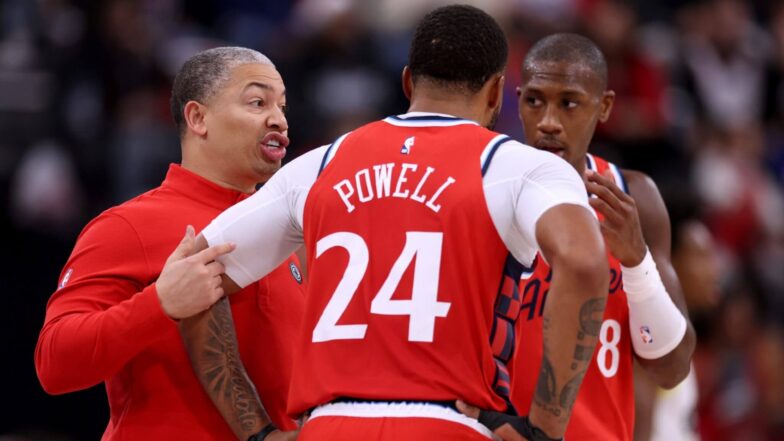
Norman Powell, here with Clippers coach Ty Lue, has become a basketball chameleon, changing his game at various points in his career.
With two-time NBA Finals MVP Kawhi Leonard injured to begin the schedule, 11-time All-Star James Harden carried facilitating duties with Powell swerving every which way around him. The latter had navigated screens before but never with such variety: pindowns, flares, from the right side, from the left, from the corner, from the elbow.
By the time Leonard returned Jan. 4 for his first game of the season, Powell was draining more 3s than ever and scoring more than ever, all while running around more than 28 off-ball screens per 100 possessions, which led the NBA, according to Second Spectrum. For the rest of the season, when Leonard sat, Powell dizzied defenses. When Leonard played, Powell’s movement lessened, though his production maintained.
Now, Powell is used to change.
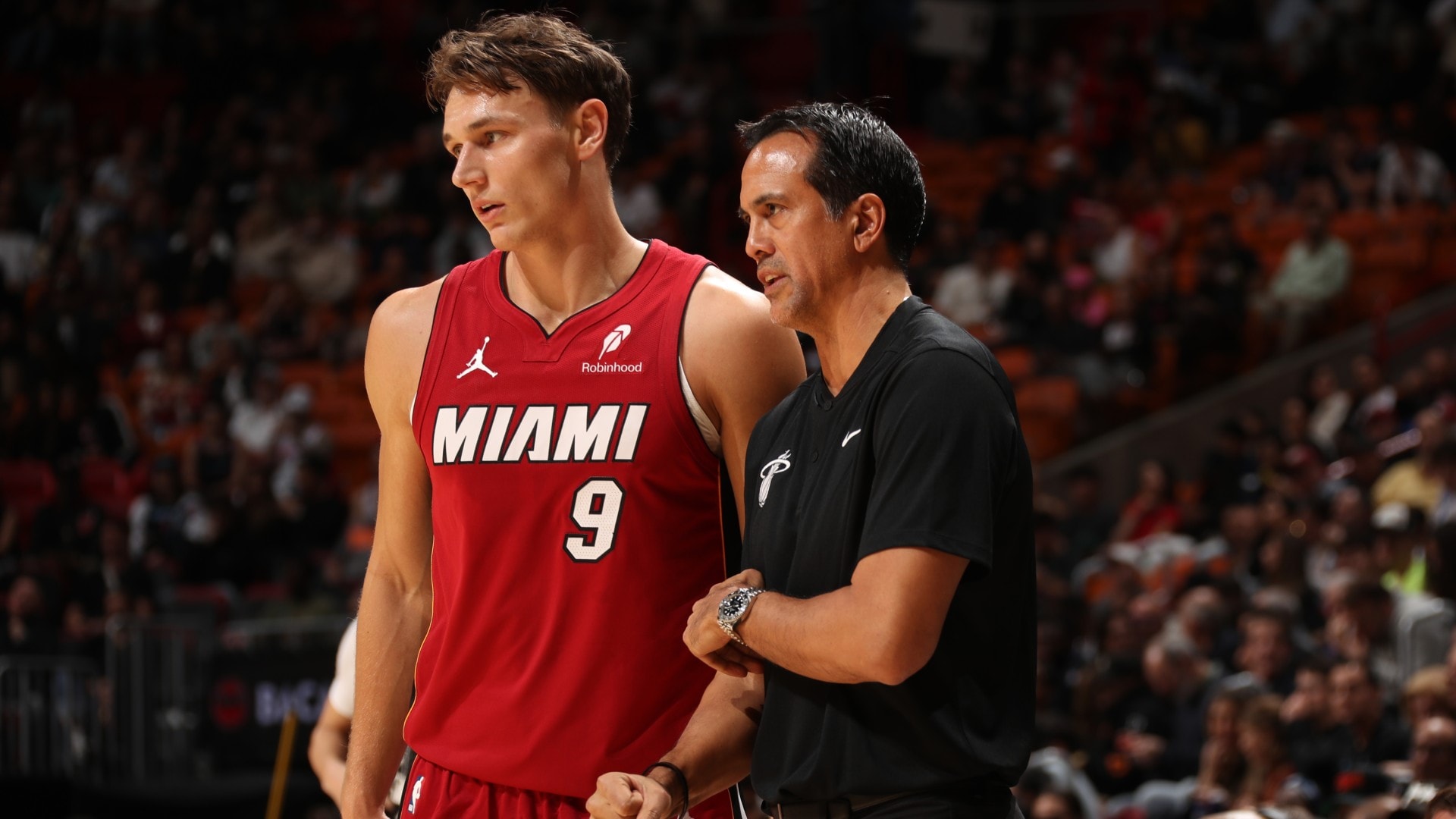
Not long into his time with the Heat, who traded for him this past summer, head coach Erik Spoelstra wanted to check in on his new player.
Miami’s coach had called out Powell in front of the team more than once at the start of the season. He sent him a text message with a graphic of Heat legend Dwyane Wade that included Wade’s weight, 222 pounds, and body fat, 6.2 percent. Powell was at 235 and 12 percent, respectively. Accompanied was a not-so-subtle message: “Something to think about.”
But the two didn’t yet know each other well, and the coach needed to make sure Powell could take the heat.
“Is this OK?” Spoelstra asked him privately.
“You can call me out every single day,” Powell responded.
The Heat were teaching a new offense, a method unlike others Powell had played. The team doesn’t set many screens, though it has added more throughout this season, especially since the beginning of January. Still, the attack is predicated on drives, kickouts, swings around the perimeter, cuts and replacing those cutters.
“Everything is (about) really quick decisions,” Powell said.
More than halfway into the season, Powell has become one of its centerpieces, once again in a new fashion.
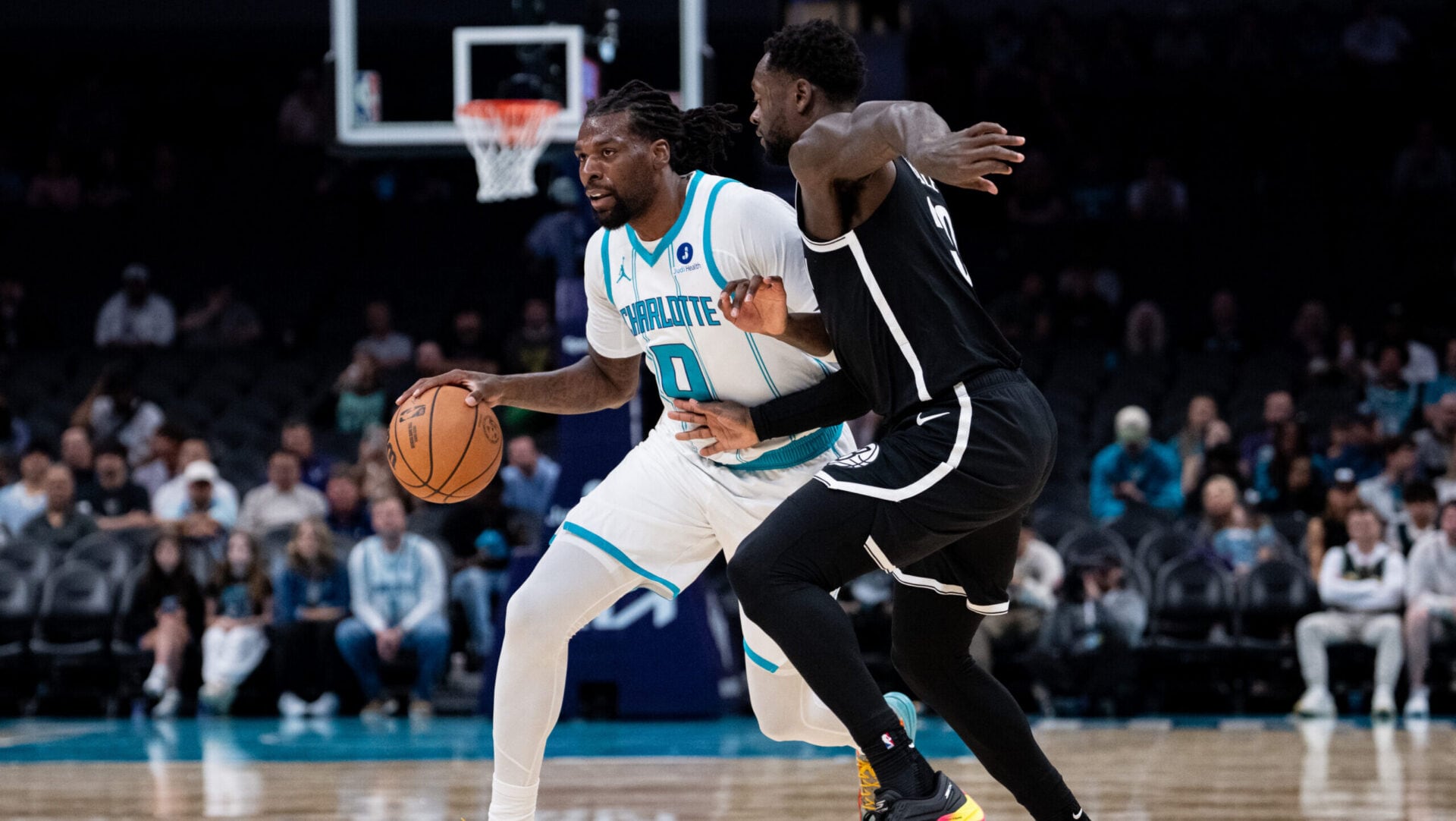
Rarely does he race around off-ball screens anymore, as he did with the Leonard-less Clippers. Instead, on a team in need of his off-the-dribble creation, he’s become obsessed with opponents’ footwork on closeouts.
He receives passes and looks first to his defender’s top leg. He reads which direction to drive from there. After more than a decade in the league, Powell’s thought process has never been so granular.
“Say, I’m trying to get a 3 off. So, when I’m pulling behind (a dribbler and at) the 3-point arc, following the ball, if the (defender) is below the free-throw line, I know it’s a catch-and-shoot,” Powell said, lost in a web of jargon. “Now, if he’s playing in between, and he’s trying to catch up, I know with my angle, the angle that he’s gonna take is more horizontal.”
That means Powell can then pump-fake and attack the middle.
After his greatest off-ball season has come Powell’s greatest on-ball one — in part because of his movement before receiving the basketball, in part because of his 41 percent 3-point shooting, in part because of his attention to detail and in part because of his wide-legged stepback or feathery floater.
Powell is now a one-on-one savant, retrieving the basketball on the run and attacking from there, even if it takes only a few dribbles.
The Heat score 127.2 points per 100 possessions on passes, shots, turnovers and fouls out of his isolations, which doesn’t just lead the league in 2025-26; it would also be the highest number in a single-season (minimum 200 isos) since Second Spectrum began tracking the stat in 2013.
This year’s evolution is even more drastic than the one before it. For reference, Powell has never even run enough isolations in a season to qualify for the league leaders. He’s on pace to more than double his previous career high.
“He has that chip on his shoulder and willingness to play a role of who he used to be but (also) an ambition to try to do more and be more,” Spoelstra said.
The question is now whether he will earn more, too.
LA traded Powell this past summer after choosing not to extend his contract. In January, he became eligible for an extension again. If he fails to sign one, he will hit free agency this summer.
The Heat are treading around .500 and wedged into the middle of the Play-In Tournament. Would they want to attach long-term money to their books, given their standing in the East on top of their desire for cap space in 2027? If they hold onto Powell through the upcoming trade deadline, might they find extending him advantageous, since, at a friendly enough price, it would give them a moveable salary in a possible chase for a star this offseason? Or could he sign with someone else this summer?
If he does, at least he’ll be used to new situations.
***
Fred Katz is a senior NBA writer for The Athletic. Follow Fred on Twitter @FredKatz