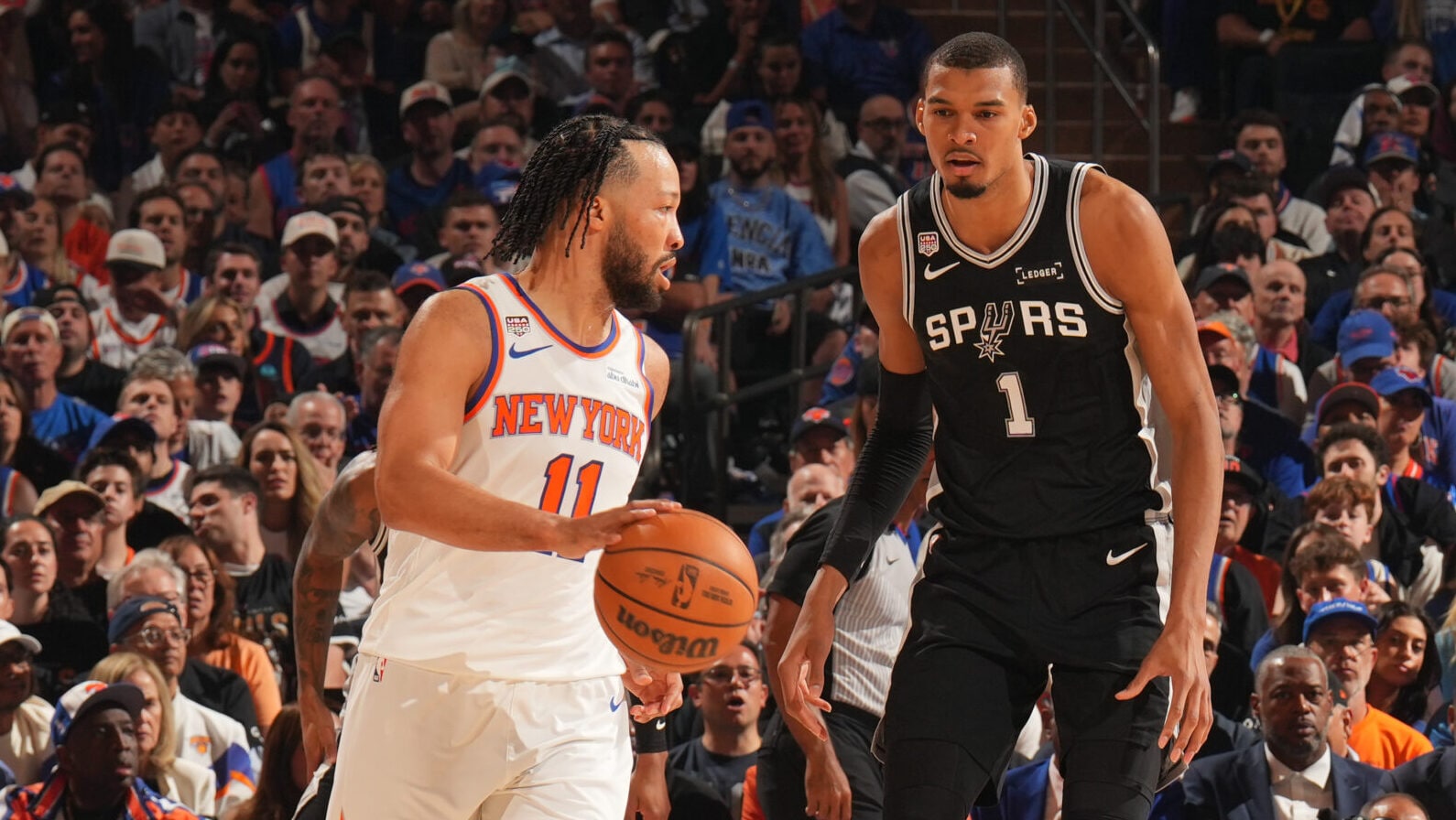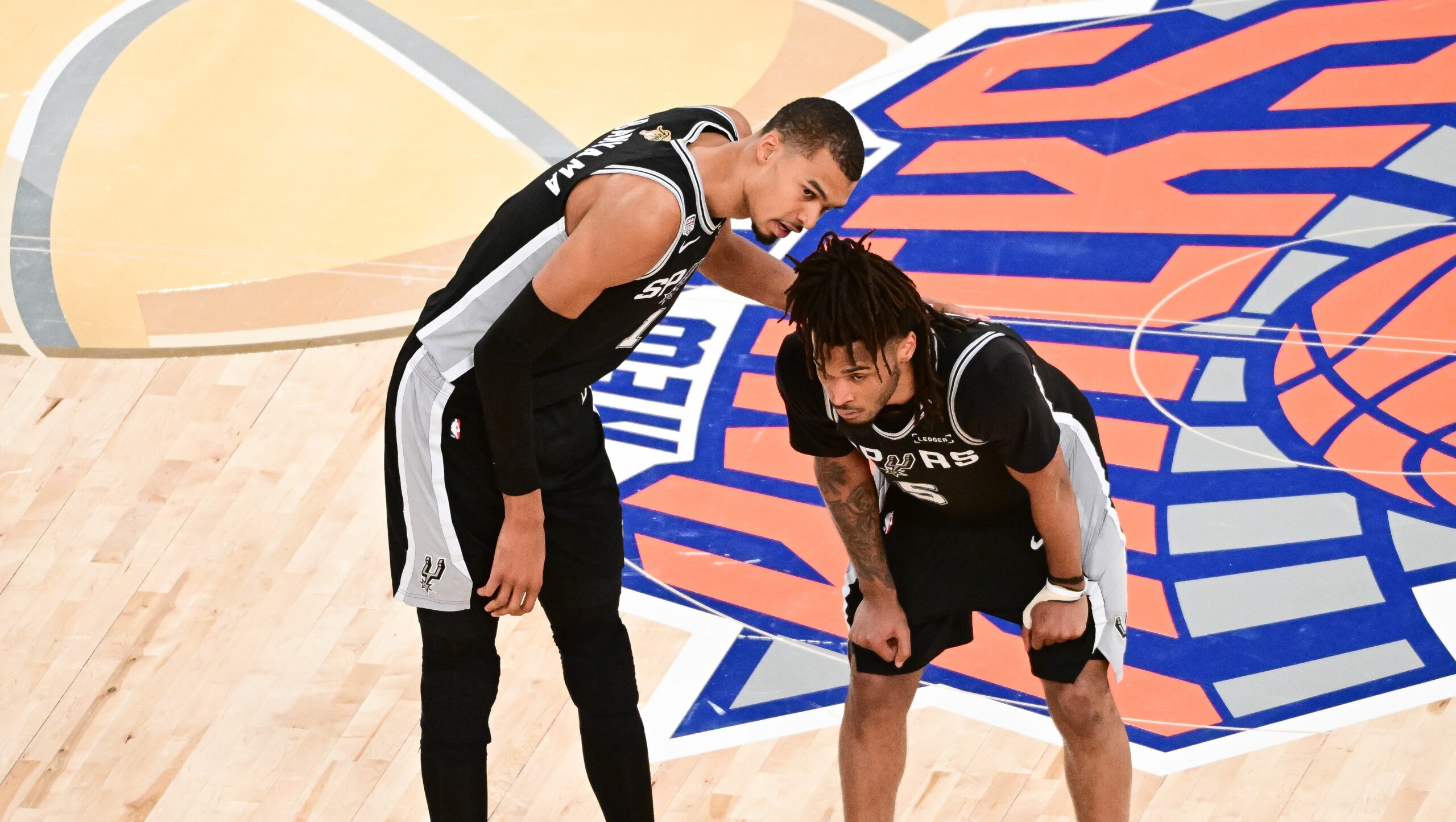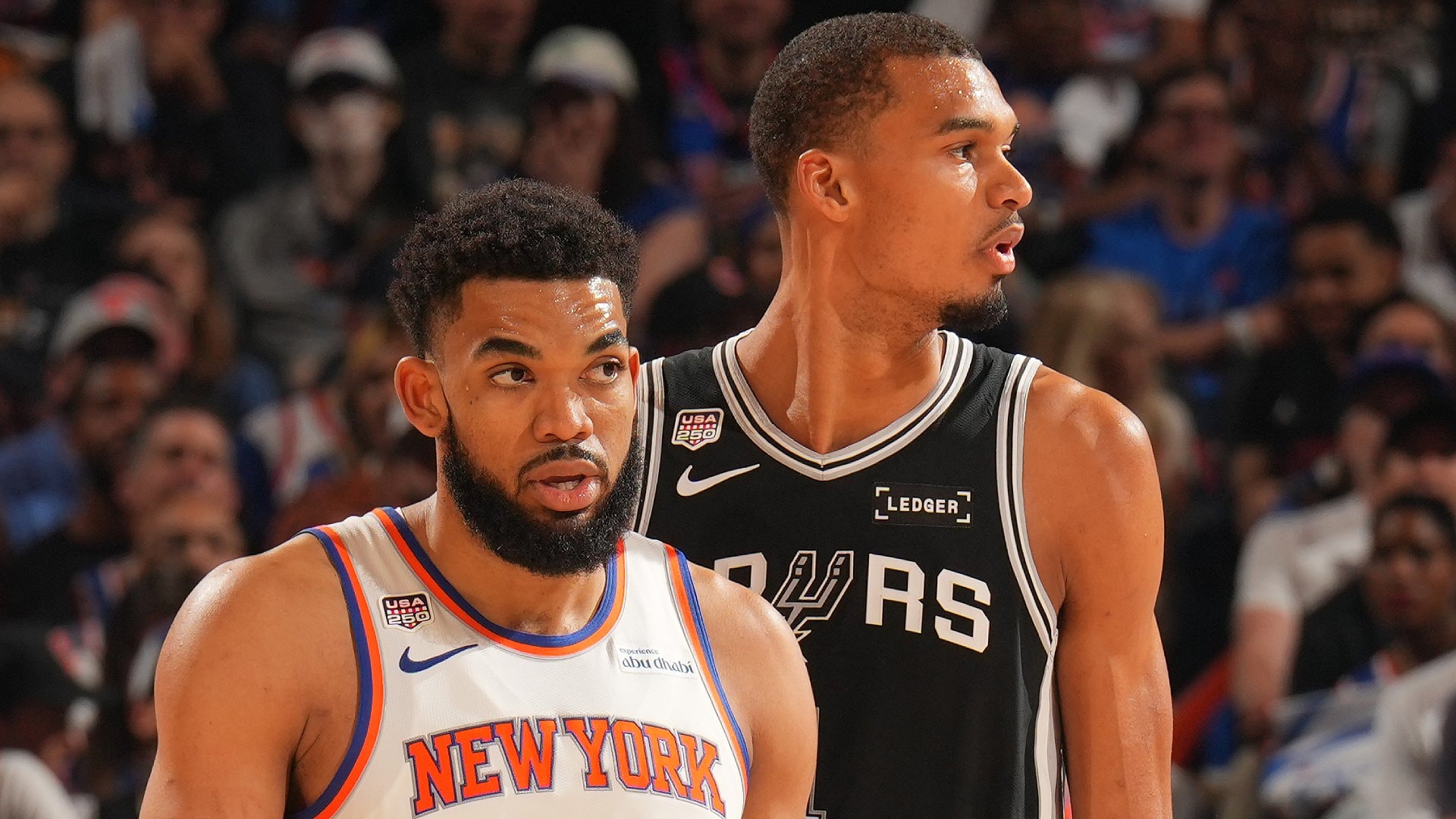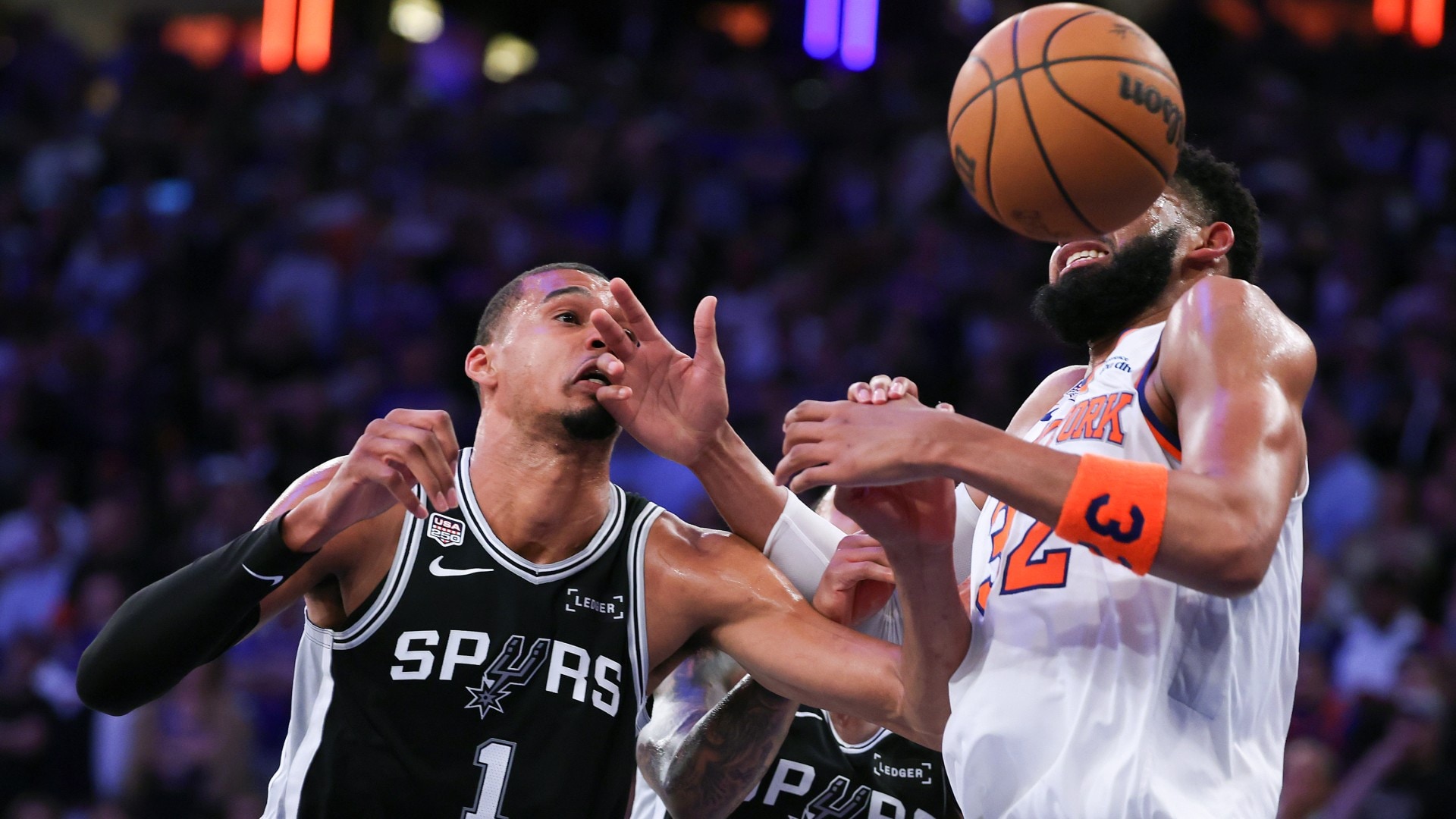
Victor Wembanyama has been a terror on the defensive end during the first 3 games of the NBA Finals.
• Download the NBA App
• Complete coverage: 2026 NBA Finals
NEW YORK — The Finals have turned into a race.
A race to four wins, of course. But also a race between the New York Knicks’ ball movement and the San Antonio Spurs’ rotations.
That race has produced some of the best sequences of the series.
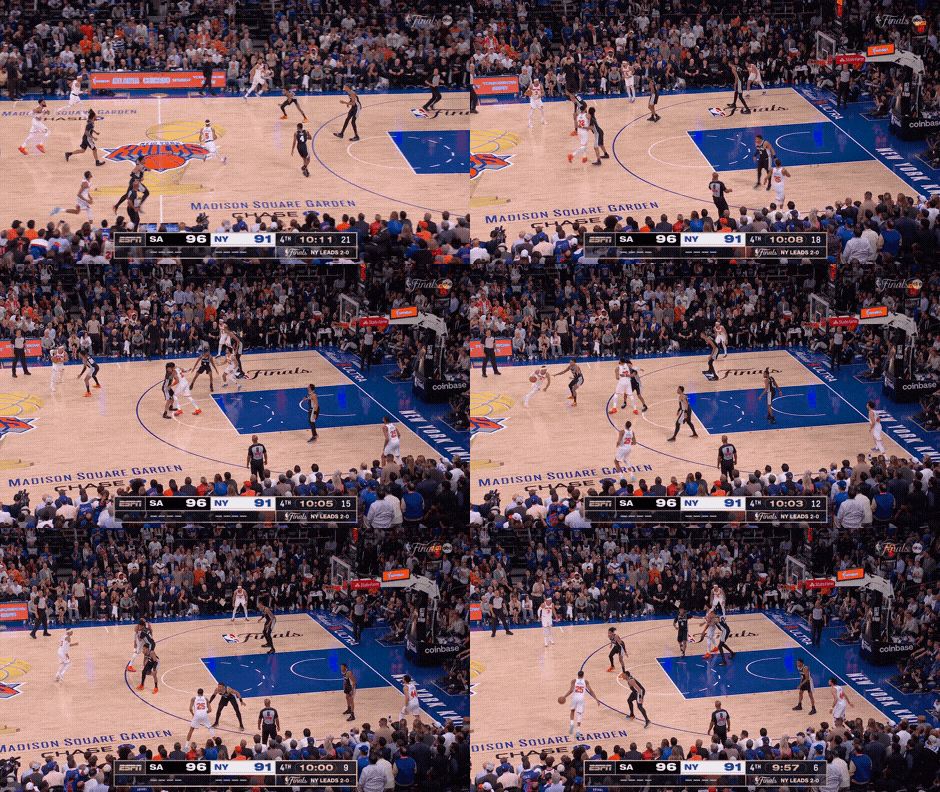
In Game 2, the Knicks had a “beautiful game” possession, five passes and four paint touches that resulted in a wide open Mikal Bridges corner 3-pointer at the shot-clock buzzer …
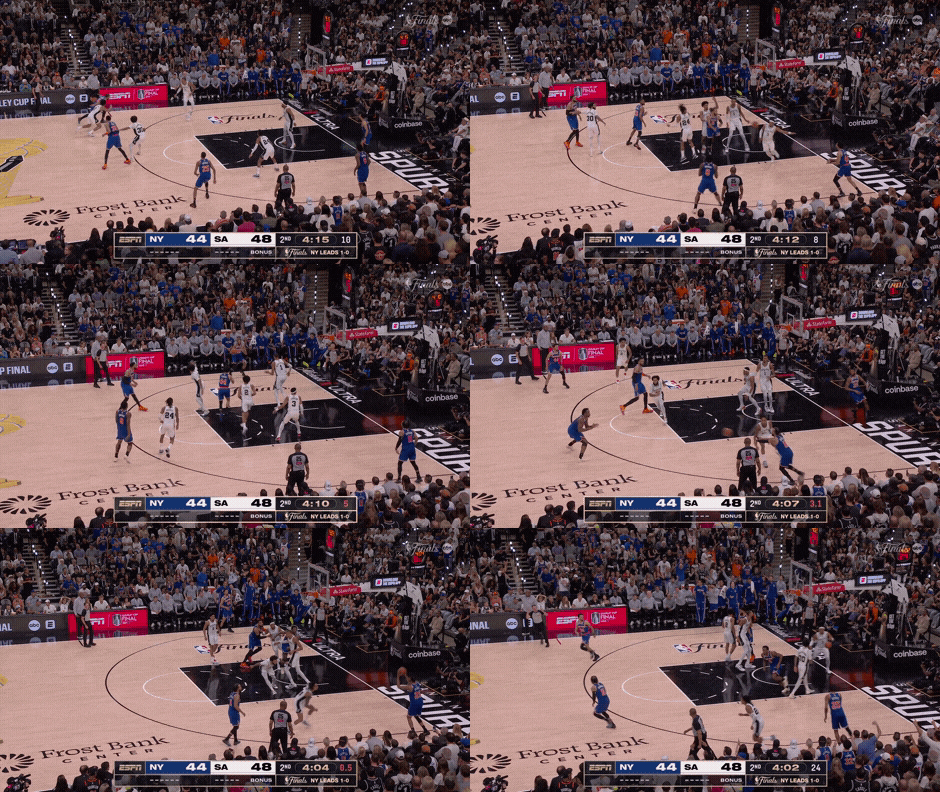
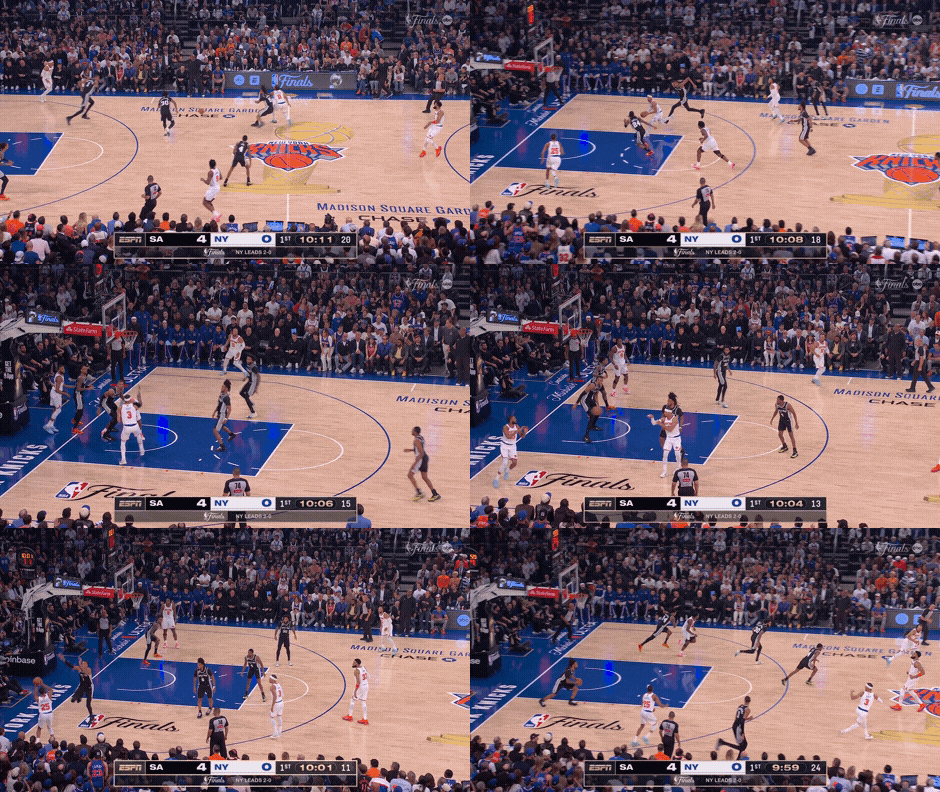
In Game 3, there were two possessions where Spurs seemingly had everything covered for all or most of the clock. Early in the first quarter, Victor Wembanyama had a loose ball roll through his legs, but he recovered to scare Josh Hart off a layup from behind. Then he kept OG Anunoby from scoring at the rim, forced Hart out of the paint, rotated to Bridges in the corner, and then blocked his step-back 3-point attempt …
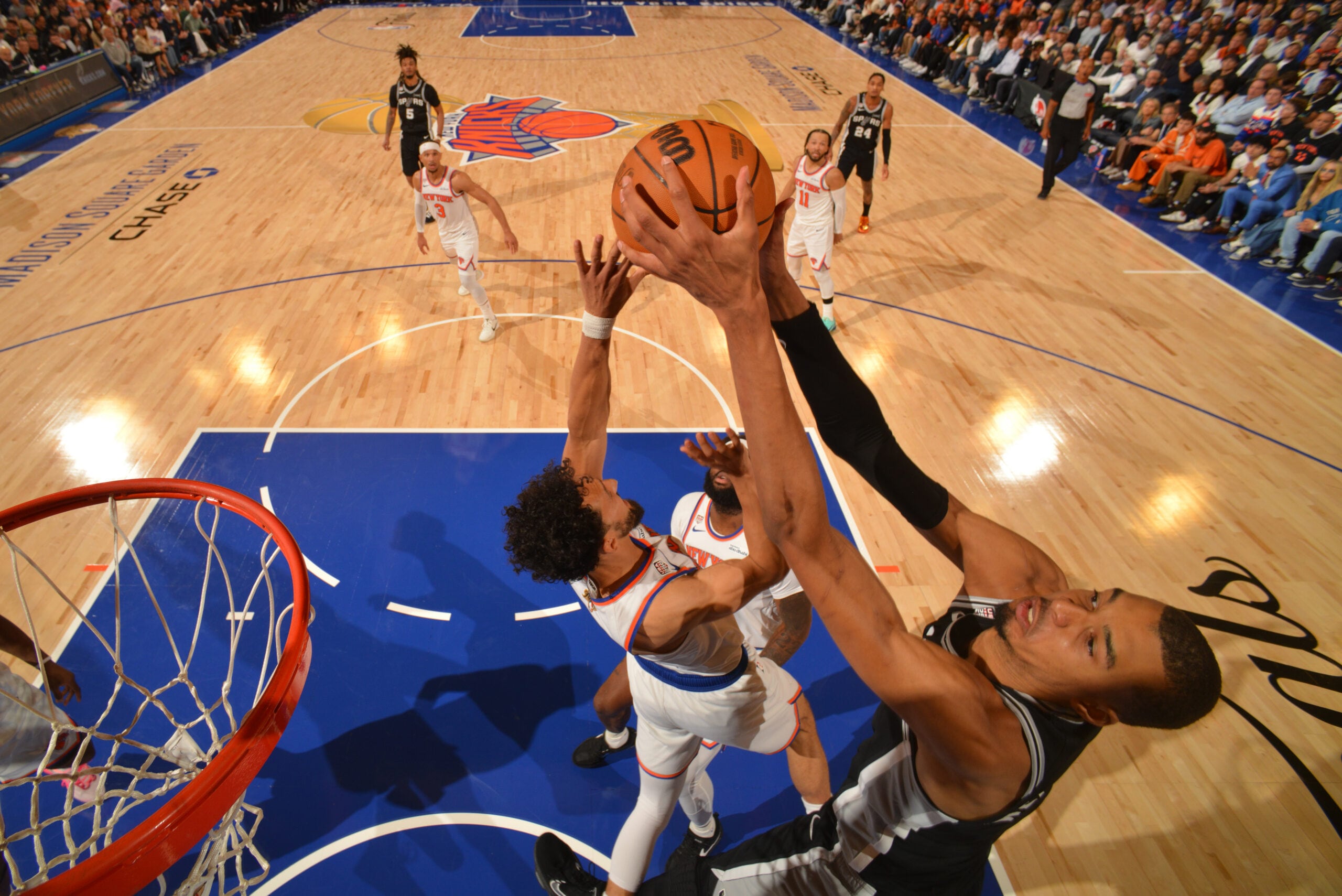
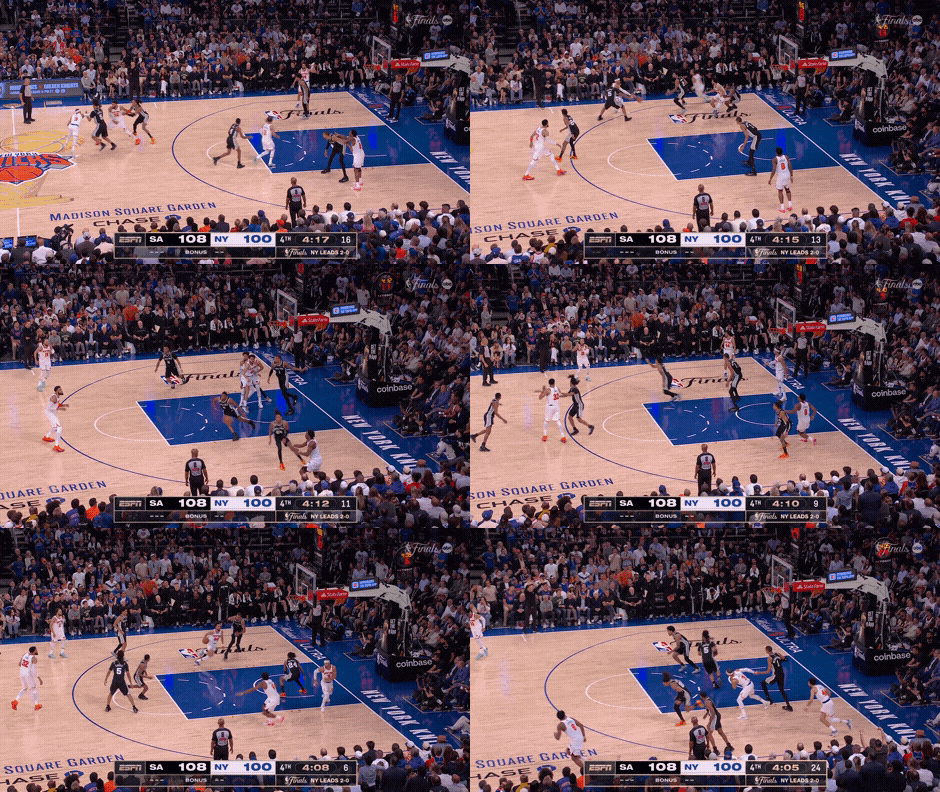
Late in the fourth quarter, the Knicks had another possession like that one in Game 2, except that the Spurs won the race. Landry Shamet slipped to the rim after setting a screen, only to be met by Wembanyama helping from the weak side. The Knicks moved the ball, all five Spurs were in rotation, Shamet tried to beat Wembanyama’s close-out, and Wembanyama swatted his layup off the backboard …
1. The Knicks continue to work late
This race between the Spurs’ rotations and the Knicks’ ball movement doesn’t often end quickly. The Knicks are, in general, a team that often plays late into the shot clock. But they’re playing late into the clock more than ever … and much more than the Spurs.
Through three games, the Knicks have taken 93 shots in the last seven seconds of the shot clock, more than they took in the conference semifinals against Philadelphia (68 over four games) or in the conference finals vs. Cleveland (90 over four games).
On the other end of the floor, the Spurs have taken just 35 shots in the last seven seconds of the clock.
The Knicks took 35 late-clock shots in Game 3 alone. That was tied for the third most shots in the last seven seconds of the shot clock for any team in any game this season.
While the Knicks are probably the team most comfortable playing late in the clock, you don’t want to be doing it nearly as often as they have in this series, because late-clock shots are, generally, tougher shots than those that come earlier.
The Knicks’ late-clock shots on Monday were tougher than usual. According to tracking data, their shot quality on those 35 late-clock shots in Game 3 was the third lowest in the 670 instances where a team took at least 20 shots in the last seven seconds this season.
2. Knicks want quicker reads
Even with Wembanyama’s ability to cover multiple players and multiple spots, the offense should have the advantage when the defense is in rotation. The ball should move quicker than the bodies.
But Knicks coach Mike Brown believes that his team was a little too slow with its decision-making in Game 3.
“There were a lot of times where the decisions weren’t made quick last night,” he said Tuesday. “One guy caught, held, held, held, held, held. Now the defense settles in. Now you’re in trouble.”
Through the first two games of the Finals, the Knicks averaged 304 passes per 24 minutes of possession, up from 293 through the first three rounds of the playoffs. But they passed the ball just 282 times per 24 minutes of possession in Game 3. So indeed, the ball was moving less.
3. Spurs want connectivity
Typically, defenses don’t want to be in rotation as much as the Spurs have been. But the Spurs want to keep Wembanyama near the basket and they want to funnel shots toward Hart and Jose Alvarado.
San Antonio is willing to work on defense, knowing that they’re making the Knicks work on offense.
“If you’re playing 21, 22 seconds of great defense, they make a shot, tap ’em on the butt, good job,” De’Aaron Fox said after Game 3. “That’s where we want to live. We want to live in the area of them trying to take tough shots at the end of the shot clock. If they’re making them, so be it. Usually the numbers are in our favor if we’re getting them to play that deep into the shot clock.”
It’s just a matter of everybody being on the same page and having each other’s back.
When they’re not on the same page and communicating, they can give up good shots to good shooters. But when it’s working, it’s a thing of beauty …
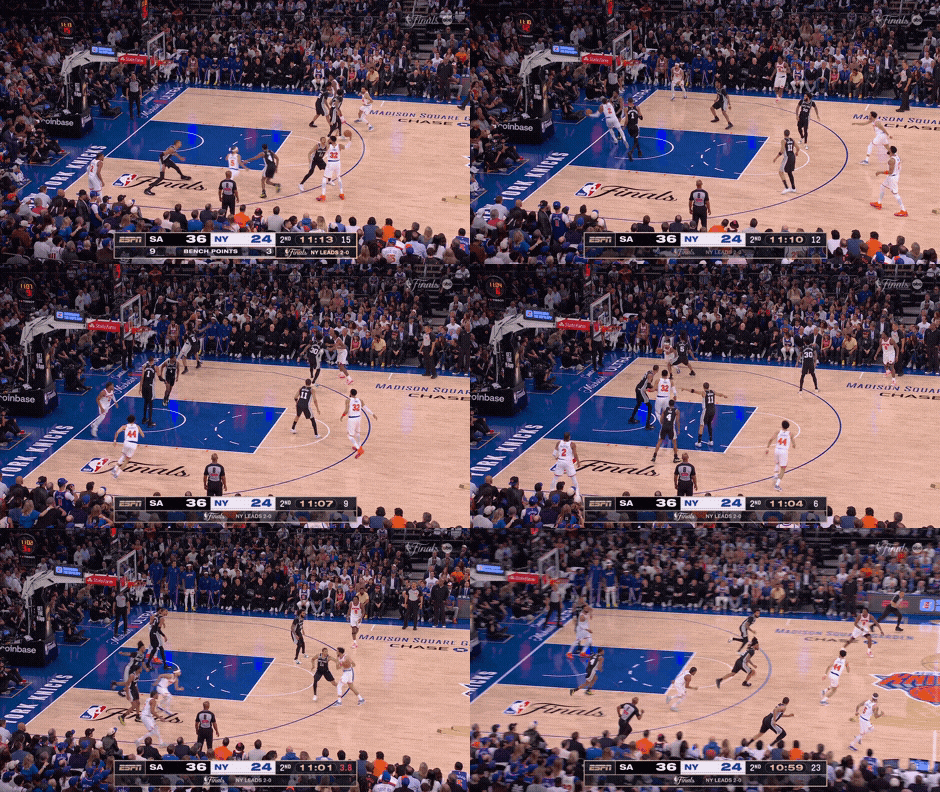
“I think we’ve had some really good moments of being connected in those rotations and taking certain things away,” Spurs head coach Mitch Johnson said Tuesday, “forcing the ball to certain spots or individuals in certain situations.
“We’ve forced them to take a lot of shots at the end of clock. They’ve made a lot of those shots. There’s some give and take there. I think we’ve shown that we can be impactful when we’re connected and doing it the right way.”
Defending like this is hard work. If the Spurs are going to win this series, it’s going to be a long one, with their stars playing heavy minutes and moving more on defense than they have previously.
Through three games, Wembanyama has averaged 39.0 minutes per game and 1.32 miles traveled on defense per 36 minutes on the floor, up from 32.5 and 1.25 per 36 through the first three rounds.
“[The Knicks] have shown they do a great job moving the ball and making the basketball find the open man,” Johnson said. “I think it will be a little bit of tug-of-war until this thing’s over.”
Game 4 is Wednesday (8:30 p.m. ET, ABC).
* * *
John Schuhmann has covered the NBA for more than 20 years. You can e-mail him here, find his archive here and follow him on Bluesky.