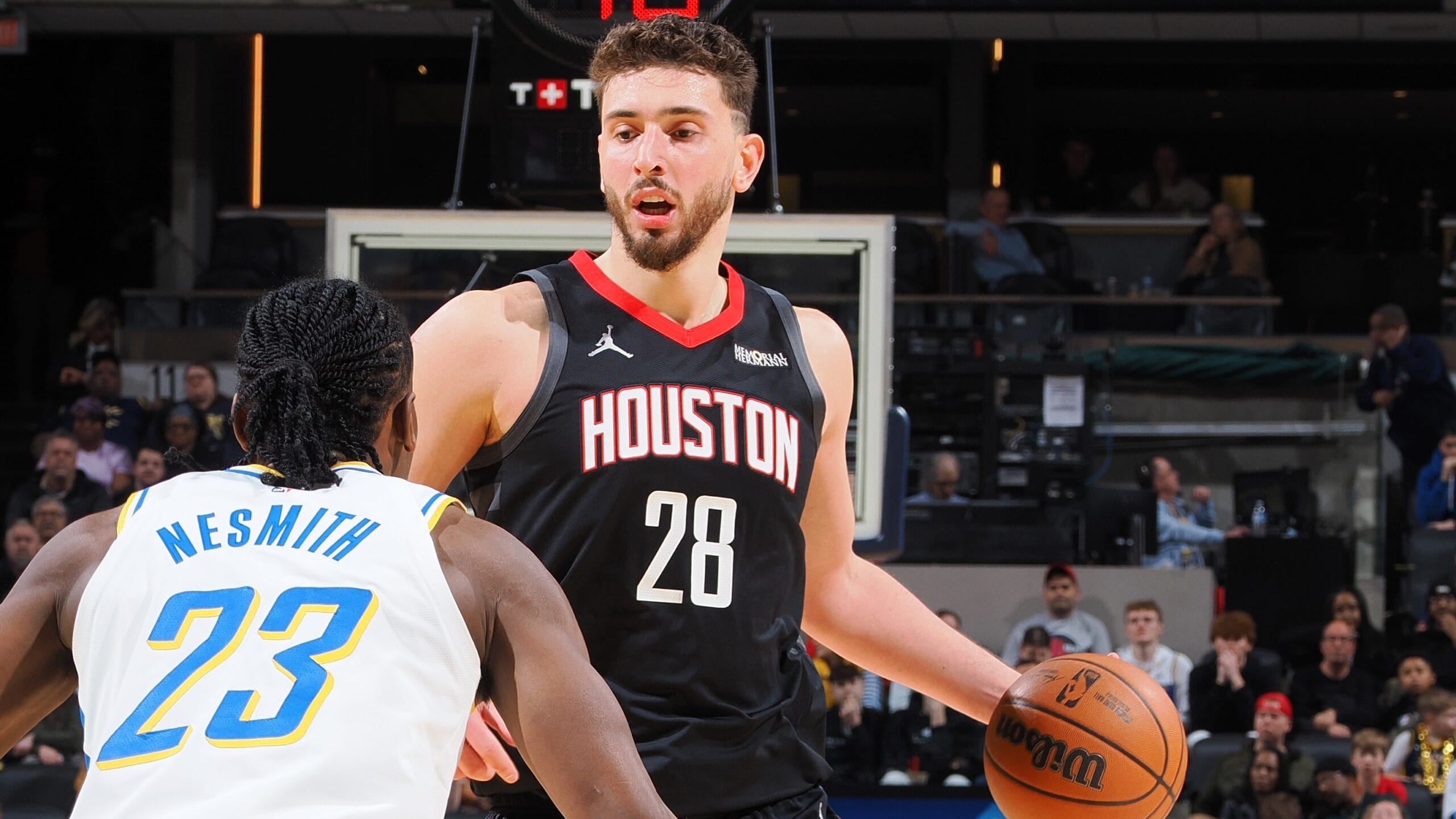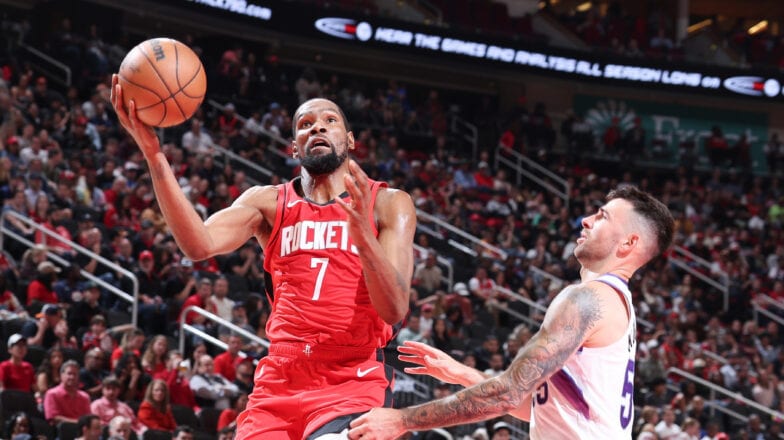
Kevin Durant #7 of the Houston Rockets drives to the basket during the game against the Utah Jazz on April 3, 2026 at the Toyota Center.
“(Amen) airballed the layup,” Kevin Durant added during his postgame scrum when asked about the streak.
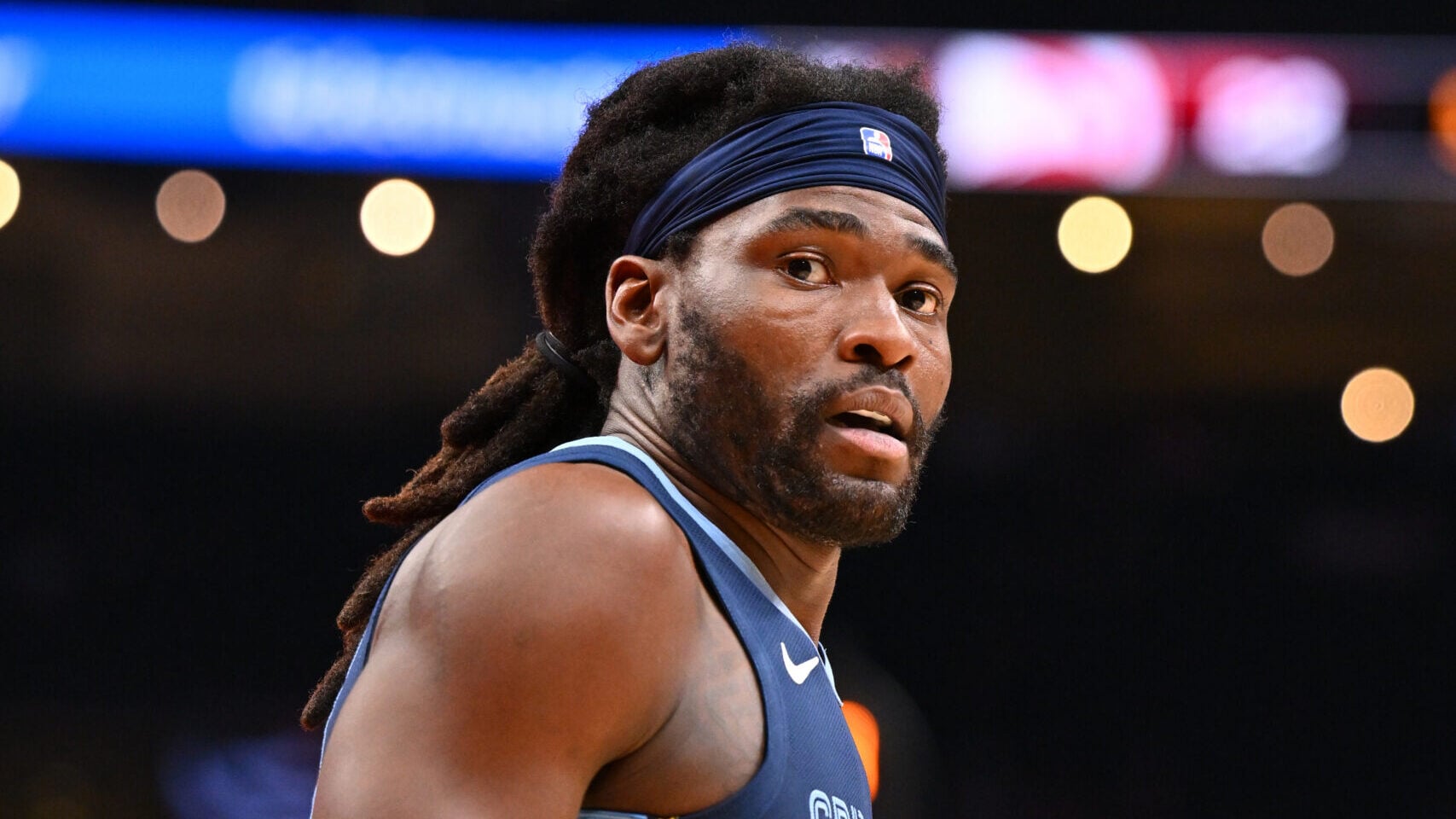
Thompson did, in fact, flub a wide-open alley-oop with less than seven minutes in the fourth quarter after misjudging how close he was to the basket. But he can sleep well because, in the end, his mistake didn’t ruin the streak after all.
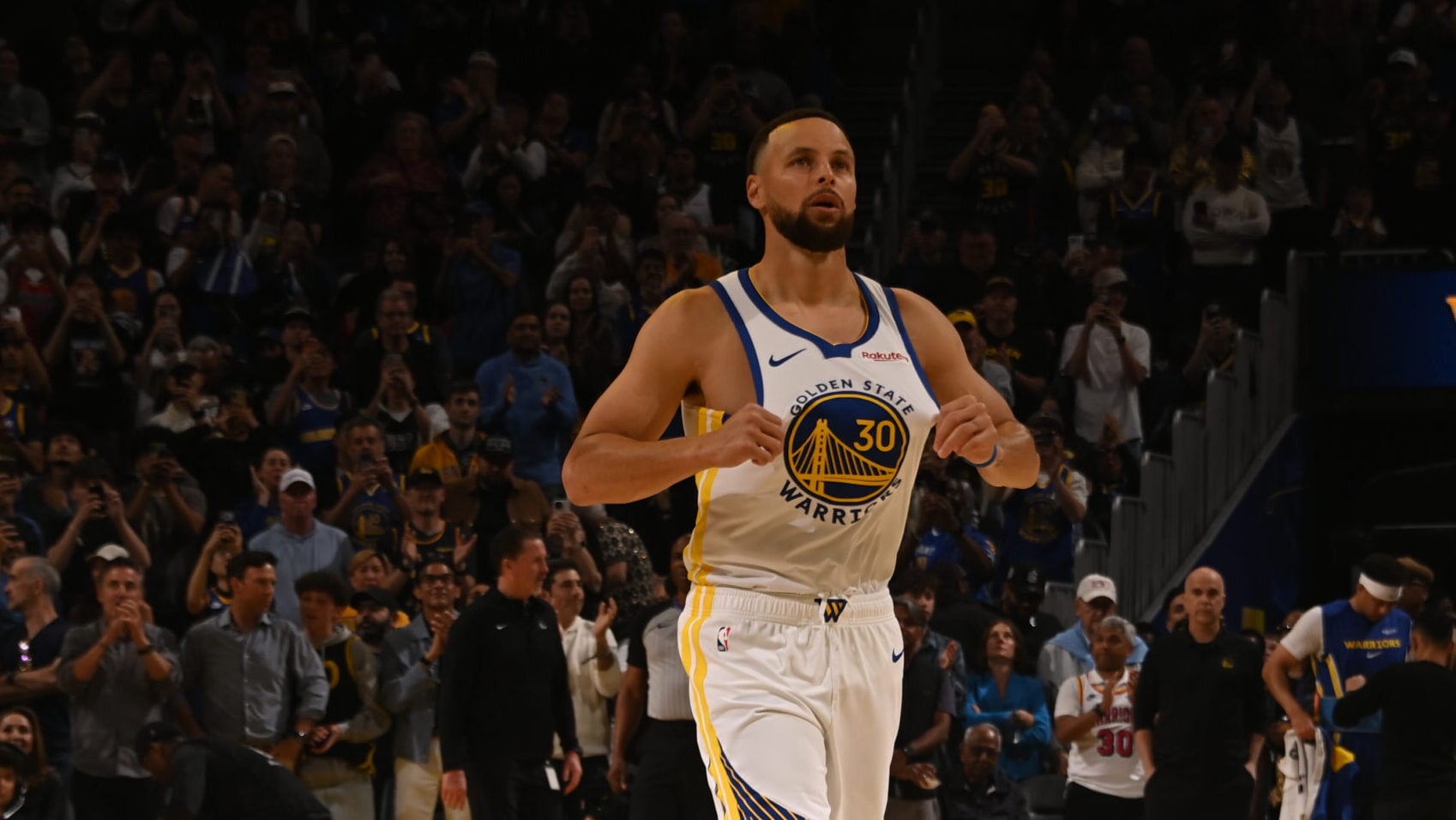
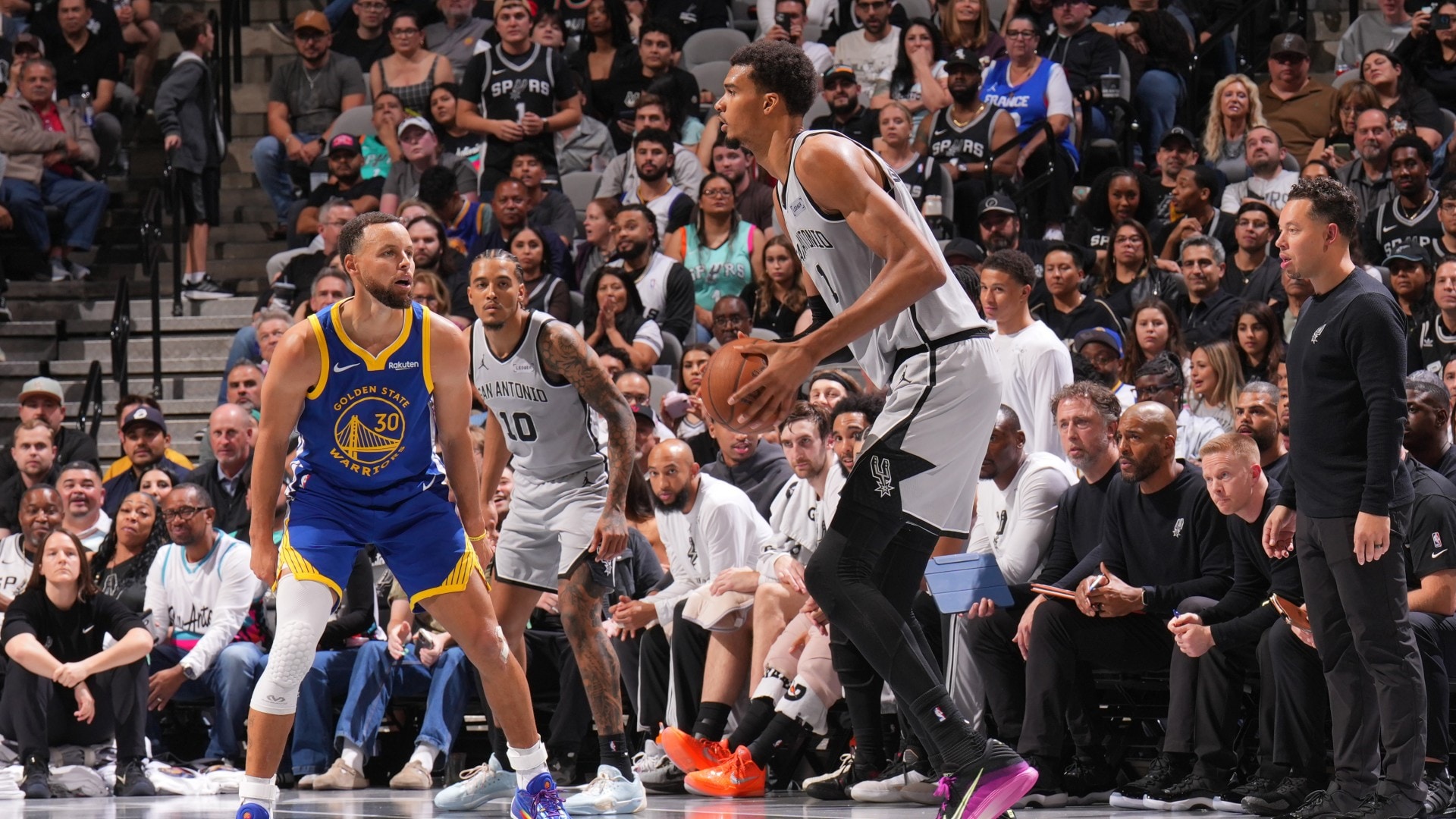
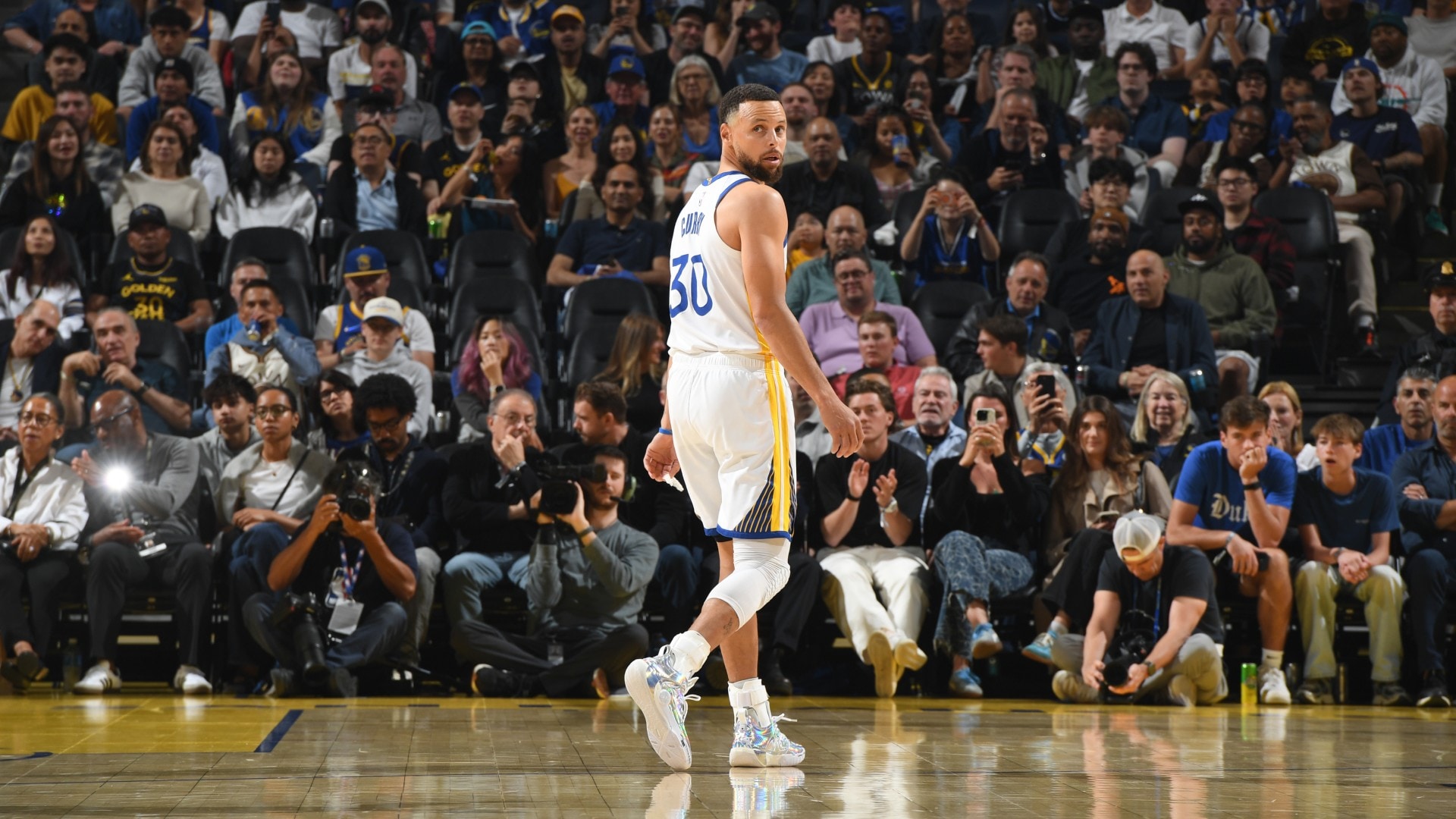
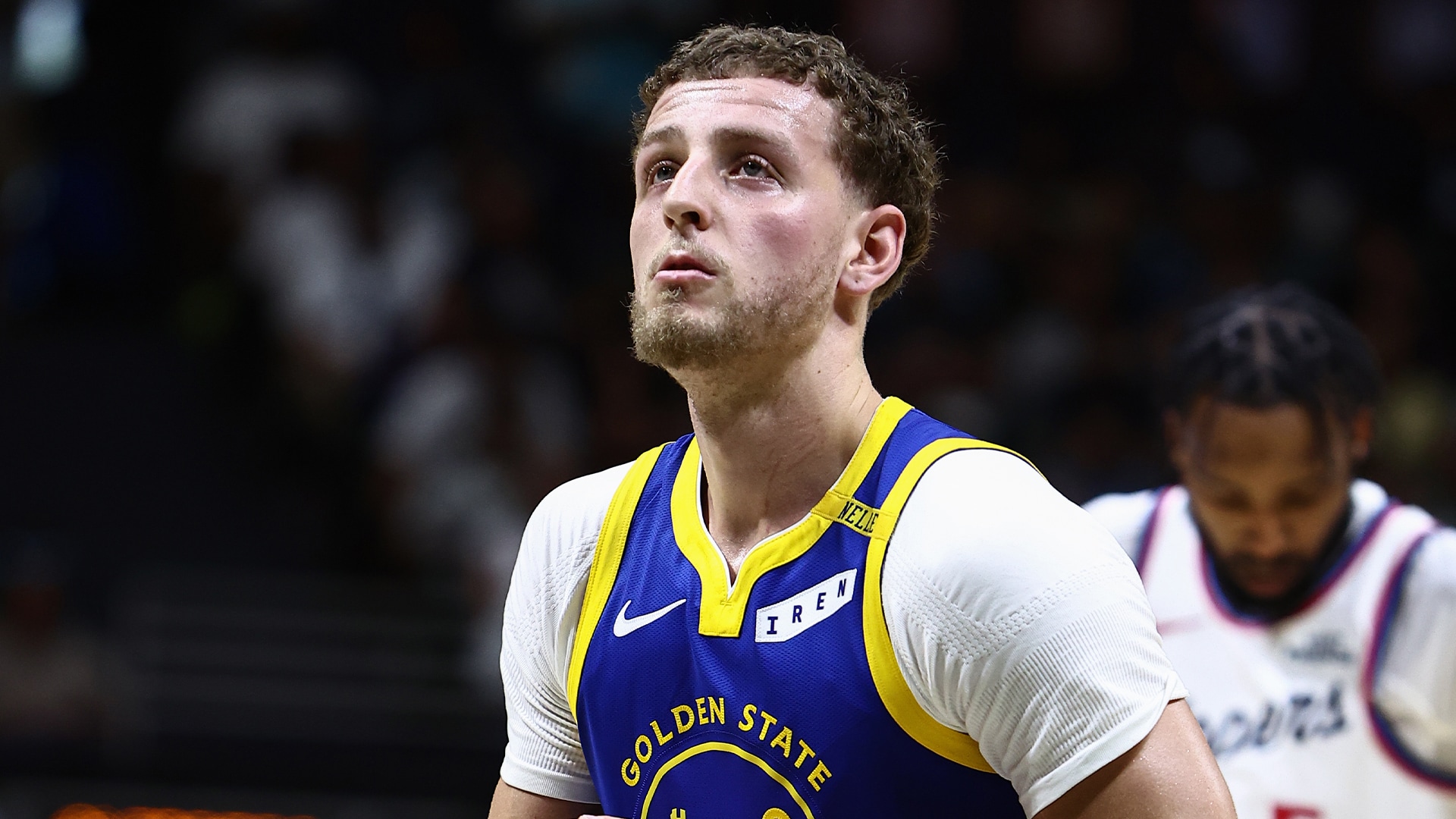
Once the NBA updated the box score, the Rockets had, indeed, finished with exactly 30 assists in a hard-fought 117-116 victory over a Golden State Warriors team that was energized by the return of Stephen Curry following a 27-game absence.
But fittingly, the Rockets drew up a gorgeous play on their final possession that ended with Durant passing to Alperen Şengün under the basket for a 4-foot floater that handed Houston its sixth straight win — all with 30 or more assists.
“These last couple weeks, we’ve been playing a solid brand of ball, so we wanted to build on that,” Durant said. “I like how we weathered the storm. … I like that we stayed poised and we were able to make great plays down the stretch.”
Houston’s 30-assist streak is tied for its longest since 1986. These Rockets are also one game away from tying their longest streak in franchise history, which was set in 1979.
It’s no coincidence that this streak coincides with Houston’s longest winning streak of the season. The Rockets (49-29) changed some things up on offense and suddenly found a spark that has them playing their best basketball.
They’re playing fast. They’re playing with physicality. They’re playing with confidence. And, most importantly, they’re playing together.
For most of the season, the Rockets were known for how slow they were in half-court sets and how dependent they were on Durant and Şengün to win in isolation situations just to create good looks. That overreliance on one-on-one basketball played a huge part in the Rockets becoming notorious for how easily they’d fold late in games once teams forced the ball away from Durant.
As recently as their losses to the Los Angeles Lakers on March 16 and the Minnesota Timberwolves on March 25, the Rockets were still floundering late in games, incapable of finding the right counters when teams trapped Durant. After the coaching staff made a few tweaks to the offense and put a greater emphasis on off-ball movement and spacing, Houston is suddenly carving teams up.
The increased confidence on offense couldn’t have come at a better time, with the start of the playoffs less than two weeks away.
“We kind of changed the offense a little bit,” Şengün said. “We move the ball more. Playing with the flash actions and all that, it helps everybody. The ball touches everybody’s hands, and that’s why I think we’re winning lately. Playing good basketball. We’re already a good defensive team. When we solve the problems with the offense, I think we’re really a great team.”
It was also fitting that the final play in Sunday’s win involved Durant and Şengün playing off each other in a crucial moment. Their unselfish play has fueled the offensive resurgence, and they’re well aware that for this team to make noise in the playoffs, they have to be the driving force.
Durant had 31 points, eight rebounds and eight assists against the Warriors. Şengün had 24 points, six rebounds and seven assists. It was the eighth time this season that Durant and Şengün each accounted for at least seven assists in the same game.
As Şengün has gotten healthier and Durant has settled more into his facilitating role, the Rockets have found the identity on offense that’s eluded them all year. It also helps that players like Jabari Smith, Reed Sheppard and a few others have been hitting shots at a high rate lately.
But those shots aren’t just going in by coincidence. Role players make shots at a higher rate when they’re involved in the offense and when there’s a certain flow dictating how the ball is being moved around. Those guys aren’t just standing around watching Durant and Şengün anymore, and it’s made life easier for them and for the stars.
Houston will have to keep this up in closing out the regular season to make it seem more like a paradigm shift rather than a trend. But based on the way the Rockets are talking and how much they’re enjoying this recent success, it’s becoming easier to believe that they have evolved at the perfect time.
“I think we’re playing faster, especially when we’ve got Reed and Amen in together. Our off-ball (movement) has continued to work well for us,” Udoka said. “The turnovers are the things that hamper us. … That’s the thing we’ve got to take care of.”
The play Udoka drew up for the game-winning bucket also offered a glimpse into the coaching staff’s evolution in using Durant in big moments — and the lessons learned from some of the failures he experienced earlier in the season.
For much of the season, the Rockets’ solution late in games was to give Durant the ball at the top of the key against a favorable matchup and let him figure it out. With a scorer as talented as Durant, that strategy tends to yield positive results more times than not.
But teams reacted by sending hard double-teams at Durant, which forced him to look elsewhere. The stagnant response from everyone else in the offense usually left him on an island. There were also times when Durant rushed to get rid of the ball before the double-teams arrived, resulting in turnovers or passes that left his teammates in spots where they couldn’t create an advantage.
On Houston’s final possession against the Warriors, Durant started at half court and got a running start before he received the dribble-handoff from Şengün. That made it difficult for Golden State to get multiple bodies in front of Durant before he got his momentum going toward the basket. Once Draymond Green fully committed to double-teaming Durant, Şengün was wide open in front of the rim.
While Durant and Şengün are clearly learning as they get more reps together, Udoka seems to be learning as well.
“I just get a reaction out of everybody when I’m out there, especially when I’m coming downhill like that. I definitely wanted to pull up, but seeing Draymond (Green) there, he kind of sold out to get a contest, to get a stop,” Durant said. “I trust Alpi in that situation.”
That trust has been the key to Houston’s recent success. Durant, in particular, has to keep showing trust in Şengün and his other teammates.
Suddenly, all the chatter about “vibes” and “body language” during some of this team’s lowest moments has gone quiet. It’s been all smiles lately.
Udoka, who usually moves with a stoic demeanor, couldn’t help but crack a smile himself once Şengün informed him in the locker room postgame that the 30-assist streak was not over.
Then, he thought again.
“Should’ve had 31,” Udoka cracked before leaving the room.
The Rockets coach is always hungry for more. And it seems his team is starting to feel the same way.
***
Will Guillory is a staff writer for The Athletic, covering the Houston Rockets and the New Orleans Pelicans. Before joining The Athletic, he was a writer at The Times-Picayune/NOLA Media Group, and he’s been on the Pelicans beat since 2016. He is a New Orleans native. Follow Will on X @WillGuillory.