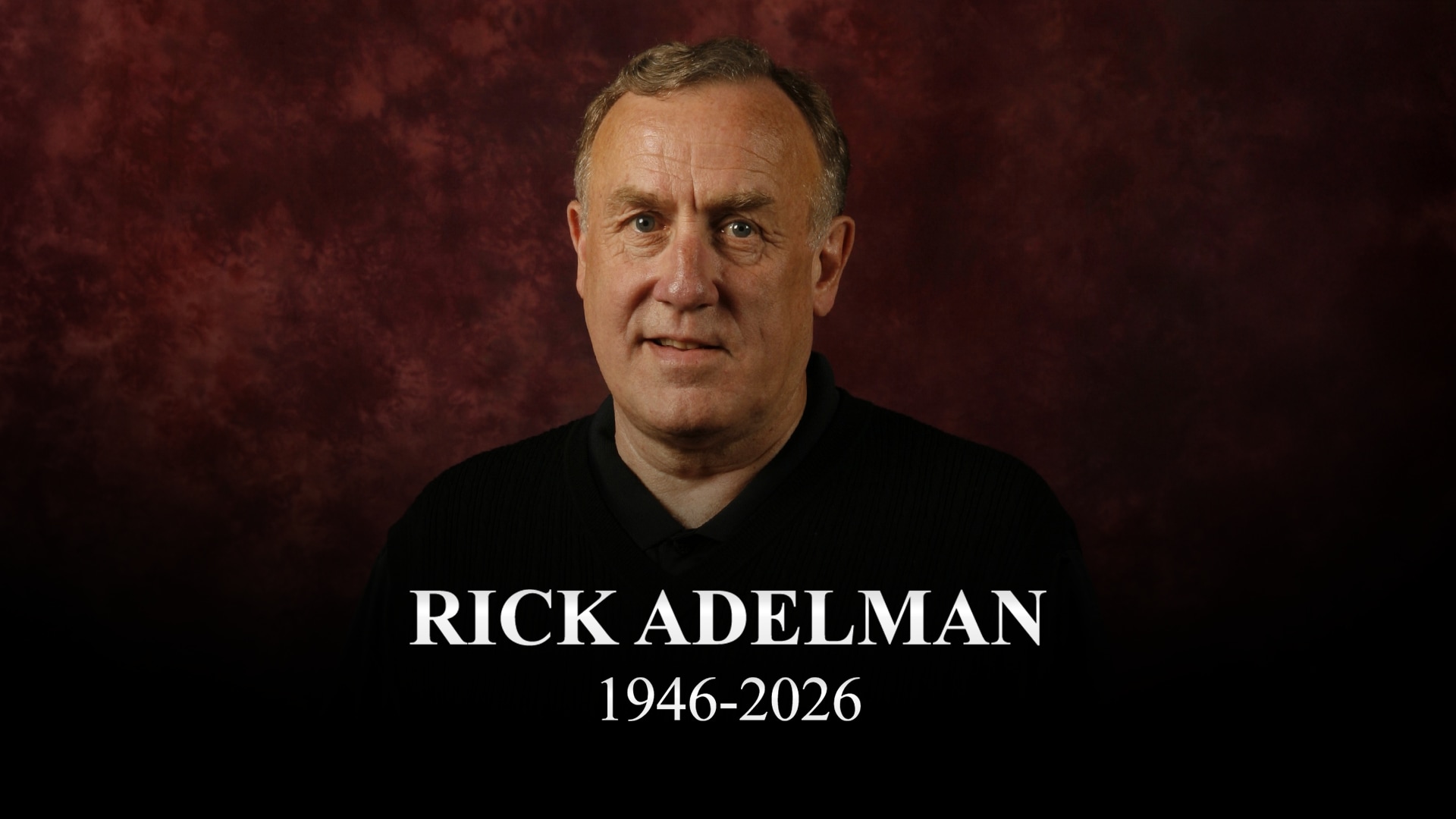
Rick Adelman valued player communication over his Hall of Fame career as an NBA coach.
Editor’s Note: Read more NBA coverage from The Athletic here. The views on this page do not necessarily reflect the views of the NBA or its teams.
***
PORTLAND, Ore. — It was last May, at his home in Portland, when I asked Rick Adelman what he believed was the secret to being a successful NBA coach.
He chuckled, paused, then started answering before stopping himself. He paused again. Then, the Hall of Fame coach spun this pearl:
“NBA coaching is about dealing with people,” Adelman said. “You have to understand every player is different, and you have to treat every player different.”
The walls of his home office were crammed with photos, jerseys and plaques from his 22-plus years as an NBA head coach, with stops in Portland, Sacramento, Golden State, Houston and Minnesota. Clyde Drexler. Vlade Divac. Chris Webber. Yao Ming. Kevin Love. Oh, the stories he told.
Notably, none of his stories included conflict or friction. Why?
“You have to be able to communicate with players,” Adelman said. “I never once called out a player individually in a huddle, locker room or film session. To me, it was always a teaching matter.”
He would pull players aside. Explain what he wanted. What he saw. What he believed they could do. But always to the side, and never with a raised voice.
“I did that with Clyde a lot, you know, because he liked that — he didn’t mind you just talking to him,” Adelman said. “Chris Webber was that way, too. I figured that out, that communication is a big thing. But so, too, was figuring out what was not only best for the individual, but for the team.”
On Monday, Adelman died. He was 79.
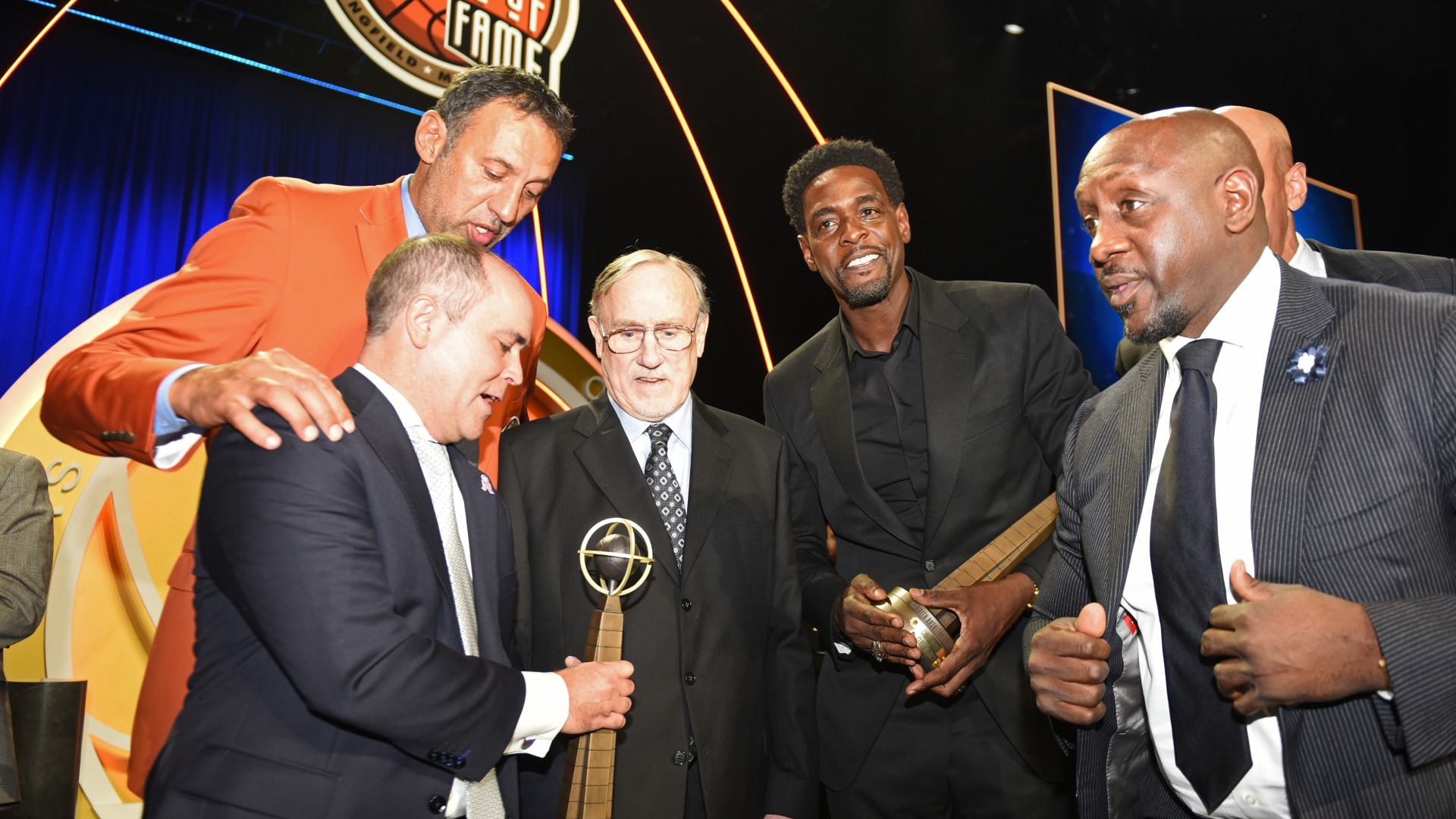
He was known as an innovative offensive mind — his corner offense is still used by today’s NBA teams — and he will be remembered as the best coach in Sacramento Kings history and the only coach in Portland Trail Blazers history to reach two NBA Finals. But for all his wins — he ranks 10th all-time with 1,042 — Adelman’s legacy will be his decency.
For Danny Ainge, it was moments into his first training camp when he understood what made Adelman a Hall of Fame coach.
It was 1990, and the powerhouse Blazers were scrimmaging in training camp when Ainge — traded from Sacramento in the offseason — took a pass from Terry Porter in transition. Ainge was open for a 3-pointer, but he pump-faked, took a couple dribbles and passed inside to Jerome Kersey.
A whistle blew, and play stopped.
The man who blew the whistle didn’t shout, didn’t cuss and didn’t make a scene. He merely motioned for a player to replace Ainge, and for Ainge to come stand beside him.
Adelman told Ainge he had to shoot the open 3-pointer.
“He goes, ‘Do you know why?’” Ainge remembered. “Then, he goes, ‘There’s two reasons: You can make it. And if you don’t, there’s a good chance Jerome or Buck (Williams) will get it.’”
It was Ainge’s first practice as a Blazer, and with one subtle play, he absorbed the nuance of what made Adelman such a beloved coach by players: He showed Ainge respect by not showing him up in front of the team. He gave Ainge empowerment to do what he does best — shoot. And Adelman showed his keen vision of what would make each team click.
“You found with Rick, there was a method to everything,” Ainge said. “A very smart coach.”
He is known for his corner offense, which featured two big men at each side of the free throw line, an offense that would spread the floor and allow guards and wings to cut and flow to the corners. From there, the big men would find them for corner 3s or backdoor cuts.
He started it in Sacramento to capitalize on the passing skill of big men Divac and Webber.
“Vlade to the right elbow, Chris to the left … and fortunately, we had (Mike) Bibby, Doug Christie and Peja (Stojaković) — smart guys who could cut and really shoot it,” Adelman said.
Under his system, the Kings became must-see basketball. They diced apart defenses and ran up scores. In 2002, the Kings went 61-21 before losing to the Los Angeles Lakers in a controversial Game 7 of the Western Conference finals.
“I will always remember that team,” Adelman said. “And I will remember them because they were a smart team. People used to say we didn’t defend at all in the regular season, and they were probably right because we outscored everybody. But during the playoffs, they would lock in and they knew exactly what they had to do and how to communicate with each other.”
Those Kings, Adelman said, would have won the title in 2002 had it not been for that Game 7 against the Lakers.
“The refs,” Adelman said. “Unbelievable.”
Later, he featured his corner offense in Minnesota with Kevin Love and Nikola Peković.
In Houston? He ran it … but didn’t feature it.
“I mean, I’m not stupid,” Adelman said last May. “We posted Yao Ming.”
Of all the players he coached, Adelman said Yao held a special place within him.
“One of my favorite players,” Adelman said. “So coachable. So talented. And he figured out a way to be effective in that offense.”
The corner offense was in stark contrast to what worked in Portland. Loaded with young, athletic and powerful players, Adelman stressed transition with the Blazers, pushing Porter, Drexler and Kersey to run, then letting Williams, Clifford Robinson and Kevin Duckworth use their physicality to mop up underneath.
That Ainge story from the 1990 training camp? The one where he implored Ainge to shoot if open, because he believed in Ainge’s ability, but also because he knew the strength of that team would be rebounding? It turned out to be the Blazers’ identifying trait.
“That year in particular, and later with the (1992) finals team, you would hear, ‘Their shot selection is not good’ … but he knew it gave us our best chance to win,” Ainge said. “So, there was a method to it.”
Geoff Petrie, one of Adelman’s closest friends, put it more succinctly.
“Wherever Rick went to coach, winning followed,” Petrie said.
Before he was a coach, Adelman was a quick, pass-first guard who played seven seasons in the NBA.
He fell in love with basketball after his dad put up a hoop over the garage in the backyard of their Downey, Calif., home. His older brother and sister would challenge him to games, and his competitive fire was born.
Even at a young age, he was drawn to the concept of how five players needed to blend as one.
“I thought the unique thing about basketball was you could be an individual, but you still had to be part of a team,” Adelman said. “In other words, you could be special in certain areas, but the team was most important.”
He played collegiately at Loyola University in Los Angeles and was drafted in the seventh round by the San Diego Rockets, where he played for two seasons. In 1970, he was taken in the expansion draft by the Blazers and became teammates and roommates with Petrie.
His playing years in Portland were marred by ankle injuries and losses in gin rummy to Petrie. Back then, per diem was $19 a day (today it is more than $100), and players paired up in rooms. After games, Petrie said he and Adelman would have dinner and a couple of beers, then return to their room.
“Around 3 a.m., the light would come on, and I would look over and Rick would say ‘Deal em!’” Petrie said. “I would be like, ‘Rick, I’m tired.’ And he would say his feet hurt … so we would sit there and play gin rummy.”
Adelman played in 462 games with San Diego, Portland, Chicago, New Orleans and Kansas City, averaging 7.7 points and 3.5 assists per game. As a coach, Adelman retired in 2014 in Minnesota, and his final years were met with triumph and tragedy.
In February of 2018, his son, RJ, was killed after being hit by a car in downtown Houston. Back in May, Adelman said his son’s death weighed heavily with each passing year.
“It gets harder every year,” Adelman said. “When you are retired like I am now, you think about it more and more … about how much talent he had, all the things he could have done. I don’t know, maybe it’s because I had tried to block it out for so long.”
Last spring, his son, David, was named interim coach of the Denver Nuggets three games before the end of the season. He coached the Nuggets to a playoff victory against the LA Clippers before losing in Game 7 to the eventual champion Oklahoma City Thunder.
Adelman watched each game from his Portland home, often turning down the volume to mute the announcers, much to the chagrin of his wife, Mary Kay.
“I get more nervous for his games than I did for mine,” Adelman said. “I’m in there talking all the time at the TV, driving my wife crazy.”
David was named head coach of the Nuggets last May, and he coached Denver to a 54-win season this year.
Petrie said Adelman was in and out of the hospital three or four times over the last couple of years. But in March of 2025, Adelman attended a Blazers game that featured a halftime reunion honoring the 1990 and 1992 teams. There were hugs and laughs and stories.
And just like back in the day, everybody loved being around Adelman.
“I don’t ever remember anybody having a beef with Rick,” Ainge said. “I mean, of course, guys wanted more playing time, but everybody respected him. Everybody.”
***
Jason Quick is a senior writer for The Athletic. Based in Portland, he writes about personalties and trends of the NBA, with a focus on human connections. He has been named Oregon sportswriter of the year four times and has won awards from APSE, SPJ, and Pro Basketball Writers Association. You can follow Jason on X @jwquick.