2026 NBA Playoffs

Playoff Power Rankings: Where all 16 teams stand at top of first round

With Game 1s in the books, John Schuhmann makes the case for — and against — each of the playoff teams to win the 2026 NBA title.

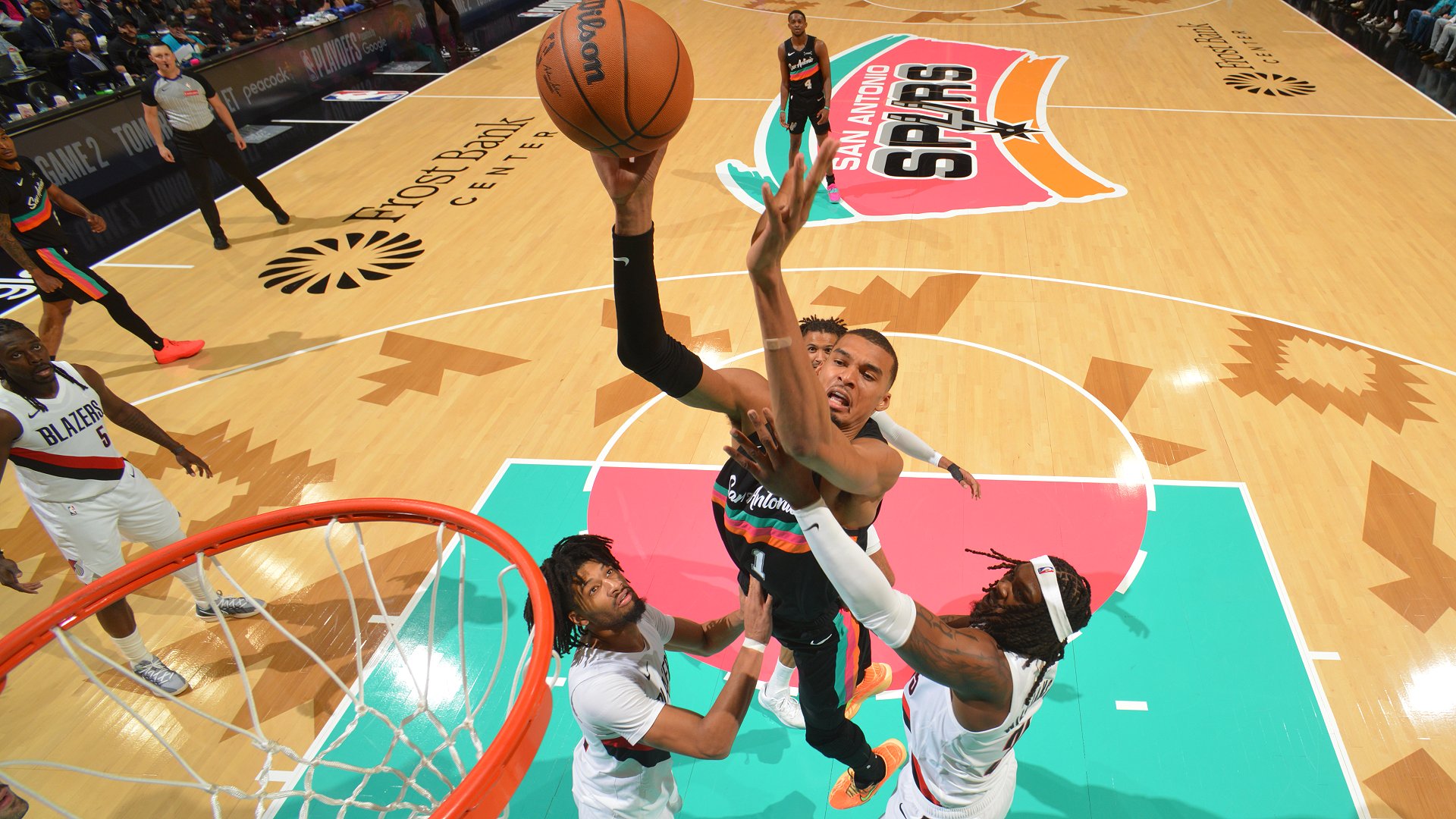
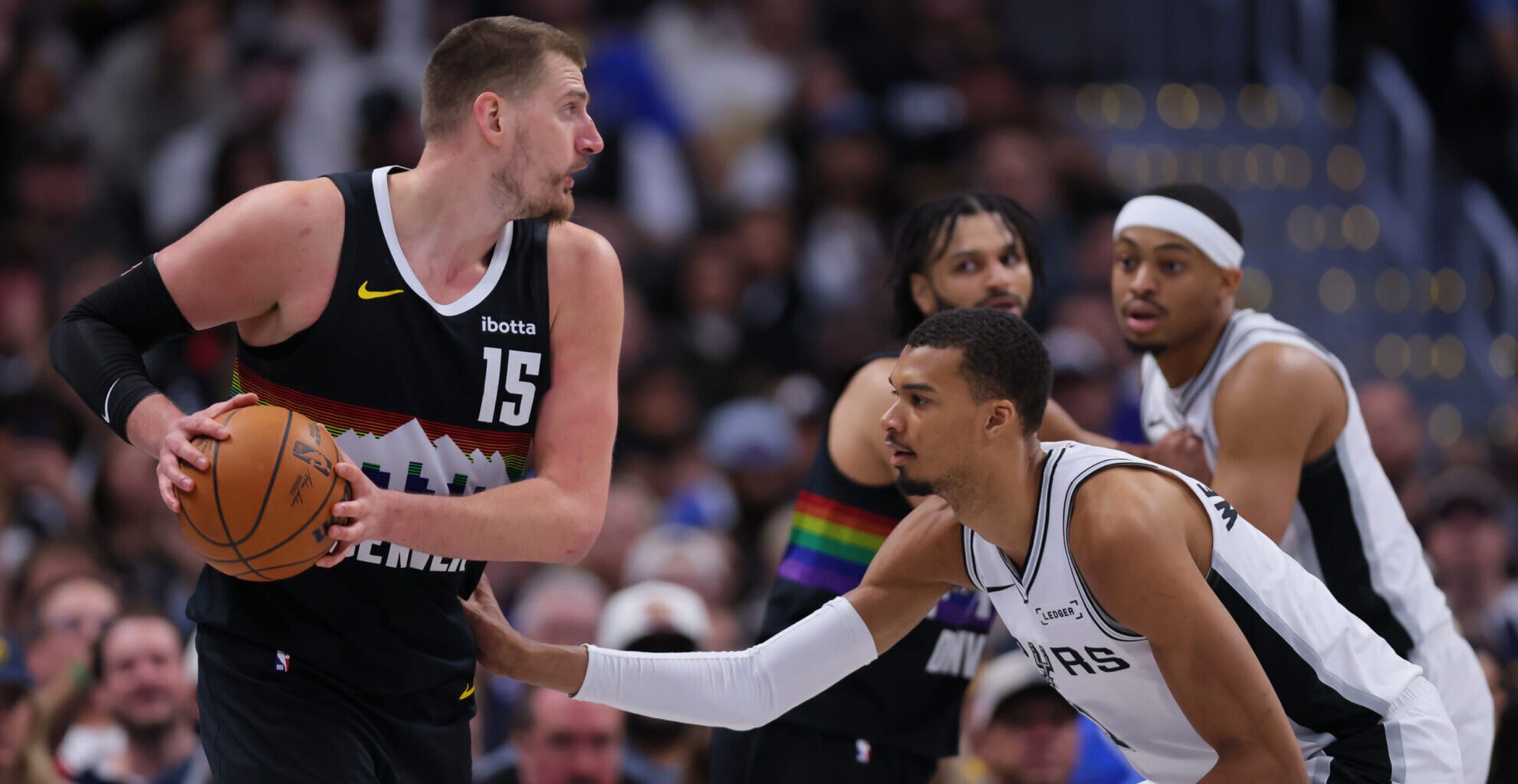
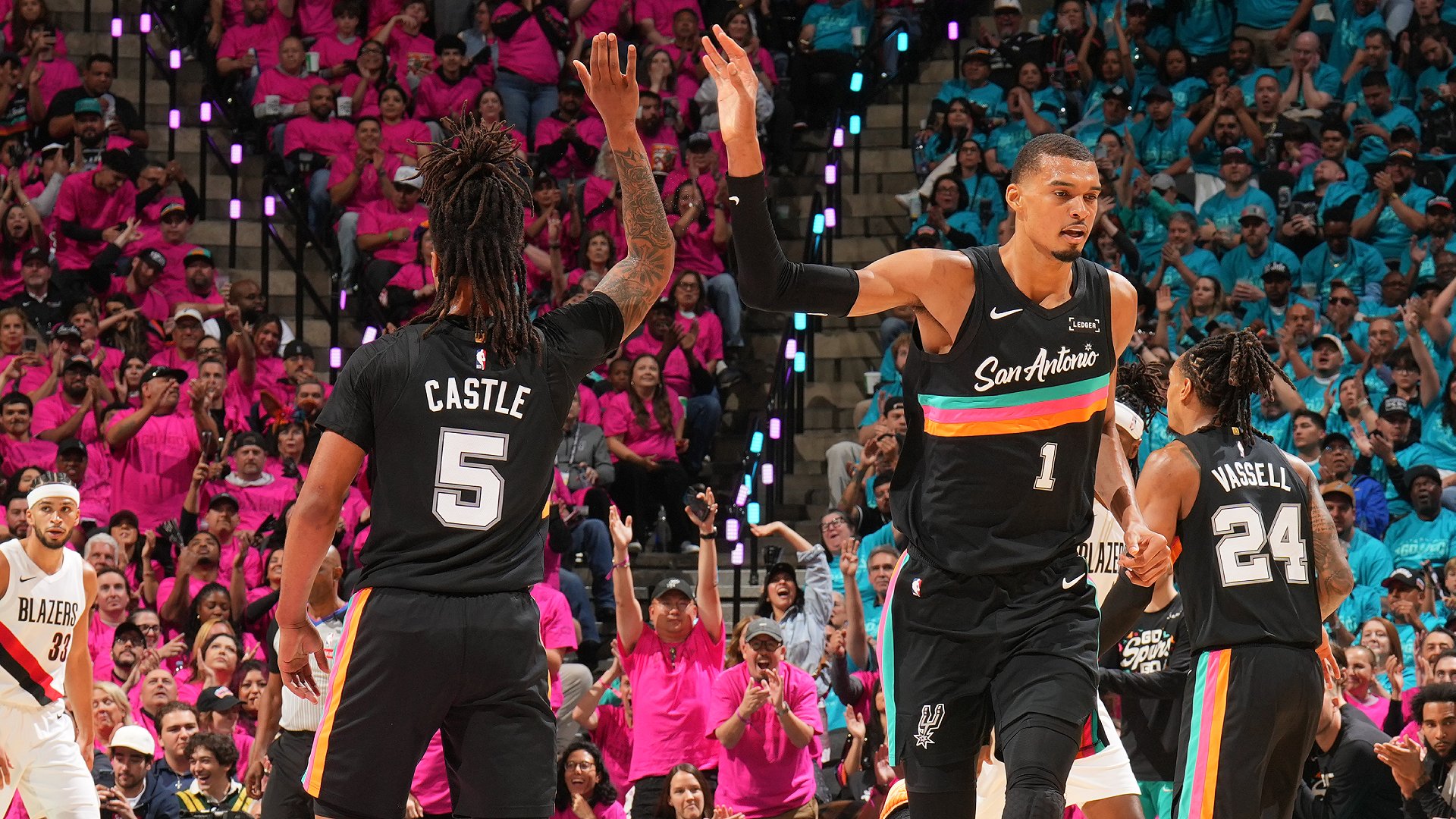
Behind Victor Wembanyama and their outstanding depth, the Spurs looked sharp to open the 2026 NBA Playoffs.

It looked like we were heading to the sixth 8-0 start for home teams in the 43-year history of the 16-team playoff format. But then the Orlando Magic stunned the Detroit Pistons in the seventh game of the weekend.

Only one of the eight games (Nuggets-Wolves) was within five points in the last five minutes, and that was only in “clutch time” for three total possessions, with Denver still winning by double-digits.

Maybe we’ll get all chalk in the first round, but maybe things will be much different in Game 2s over the next three days. There’s certainly a ton of pressure on the Pistons, as well as the Houston Rockets, who had a disappointing road result given the absences of Luka Dončić and Austin Reaves for the Lakers.


Movement in the Rankings

  • High jumps of the last two weeks: Orlando (+6), Portland (+4), Cleveland (+3)
  • Free fall of the last two weeks: Detroit (-3)

* * *

Previously…


OffRtg: Points scored per 100 possessions (League Rank)
DefRtg: Points allowed per 100 possessions (League Rank)
NetRtg: Point differential per 100 possessions (League Rank)
Pace: Possessions per 48 minutes (League Rank)

The league averaged 114.8 points scored per 100 possessions and 100.2 possessions (per team) per 48 minutes in the regular season.


NBA.com’s Power Rankings, released every Monday during the season, are just one man’s opinion. If you have an issue with the rankings, or have a question or comment for John Schuhmann, contact him via Bluesky.


Last Week:1

Regular season record: 64-18

OffRtg: 117.6 (7) DefRtg: 106.5 (1) NetRtg: +11.1 (1) Pace: 100.4 (16)

First round series: Up 1-0 vs. Phoenix

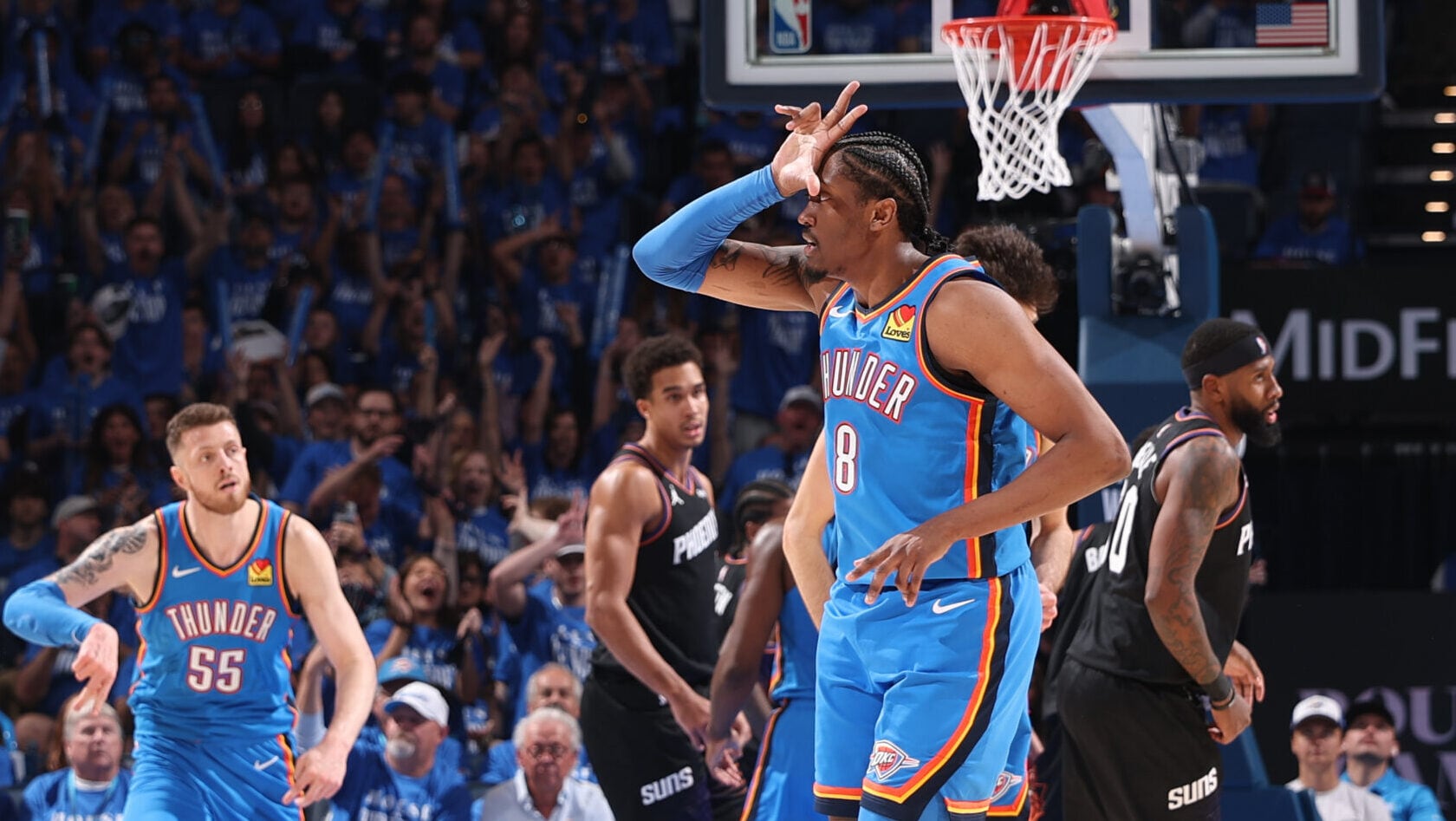
A year ago, the Thunder won Game 1 of the first round by 51 points. This time, they only won by 35, beginning their title defense by holding the Suns to just 84 points on 93 possessions, their fourth-worst offensive performance of the season.

The case for the Thunder: There have been seven teams in NBA history that outscored their opponents by at least 11 points per game in the regular season. Six of them went on to win the championship, while the seventh (the 1971-72 Bucks, +11.2 per game) lost in the conference finals to a team (the Lakers, +12.3) above them on the list. The Thunder outscored their opponents by 11.1 points per game, not quite as good as last season (12.9), but still remarkable given the absence of Jalen Williams for 49 games.

The Thunder defense allowed 8.3 fewer points per 100 possessions than the league average, the second-best differential in the 30 seasons for which we have play-by-play data. The most efficient shots come at the basket, and no team protected the basket better than the champs. They ranked first (by a wide margin) in opponent field goal percentage in the restricted area (60.7%) and second in the (lowest) percentage of opponent shots that came in the restricted area (24%).

The case against the Thunder: Jalen Williams hasn’t been the same player that he was a year ago, especially regarding perimeter shooting. The Thunder also saw a big drop in transition opportunities this season. So there’s a greater burden on Shai Gilgeous-Alexander to create in the half-court, and their offense hasn’t been nearly as good (2.8 points per 100 possessions better than league average) as it was last season (5.6 per 100 better).

Something to watch in Game 2: Gilgeous-Alexander finding his jumper. While Williams shot 9-for-15 on Sunday, the reigning MVP was just 5-for-18, including 0-for-8 from outside the paint. This was both the best mid-range shooting season (54.9%) and the second-best 3-point shooting season (38.7%) of his career.

Next game: Wed. vs. PHX, 9:30 p.m. ET, ESPN

Last Week:2

Regular season record: 62-20

OffRtg: 118.7 (3) DefRtg: 110.4 (3) NetRtg: +8.4 (3) Pace: 100.7 (12)

First round series: Up 1-0 vs. Portland

Victor Wembanyama made his playoff debut on Sunday and scored 35 points in less than 33 minutes as the Spurs took care of business against Portland. They’re now 31-4 (14-4 against playoff teams) since Feb. 1.

The case for the Spurs: They were one of two teams that ranked in the top five on both ends of the floor, and their defense was dominant inside, ranking fourth in opponent field goal percentage in the paint (54.4%), first in opponent free throw rate (22.8 attempts per 100 shots from the field) and first in defensive rebounding percentage (72.4%). And with Wembanyama patrolling the baseline, his teammates are better able to defend the perimeter.

The Spurs outscored their opponents by an incredible 23.4 points per 100 possessions in Wembanyama’s 881 regular-season minutes with Wembanyama on the floor since Feb. 1. They have three capable guards who can handle the ball and make plays, and 3-point shooting was much less of an issue with Stephon Castle and Dylan Harper in March and April (combined 47.6%) than it was prior (27.7%).

The case against the Spurs: The lack of playoff experience is the top storyline, but there could also be legit questions about the Spurs’ offense. Getting Wembanyama shots near the basket is easier said than done, and opponents will stay and play off Castle and Harper on the perimeter, cramping the spacing.

While the Spurs were ridiculously good with Wembanyama on the floor, their minutes with him off the floor were just average (plus-0.7 per 100 since Feb. 1), and playoff opponents will have better benches than the league as a whole. It’s not clear how many minutes he can play, especially when the postseason gets to the point where teams are playing every other day. He’s played more than 36 minutes in only eight of his 66 games, and while there were only 53 seconds of garbage time on Sunday, Wembanyama logged just 32:50.

Something to watch in Game 2: Castle and Harper’s 3-point shooting. After their improvement in March and April, the young guards were just 1-for-7 from beyond the arc on Sunday, not deterring the Blazers from assigning Donovan Clingan to Castle and leaving both guards alone out there.

Next game: Tue. vs. POR, 8 p.m. ET, NBC/Peacock

Last Week:3

Regular season record: 56-26

OffRtg: 120.0 (2) DefRtg: 111.7 (4) NetRtg: +8.3 (4) Pace: 95.6 (30)

First round series: Up 1-0 vs. Philadelphia

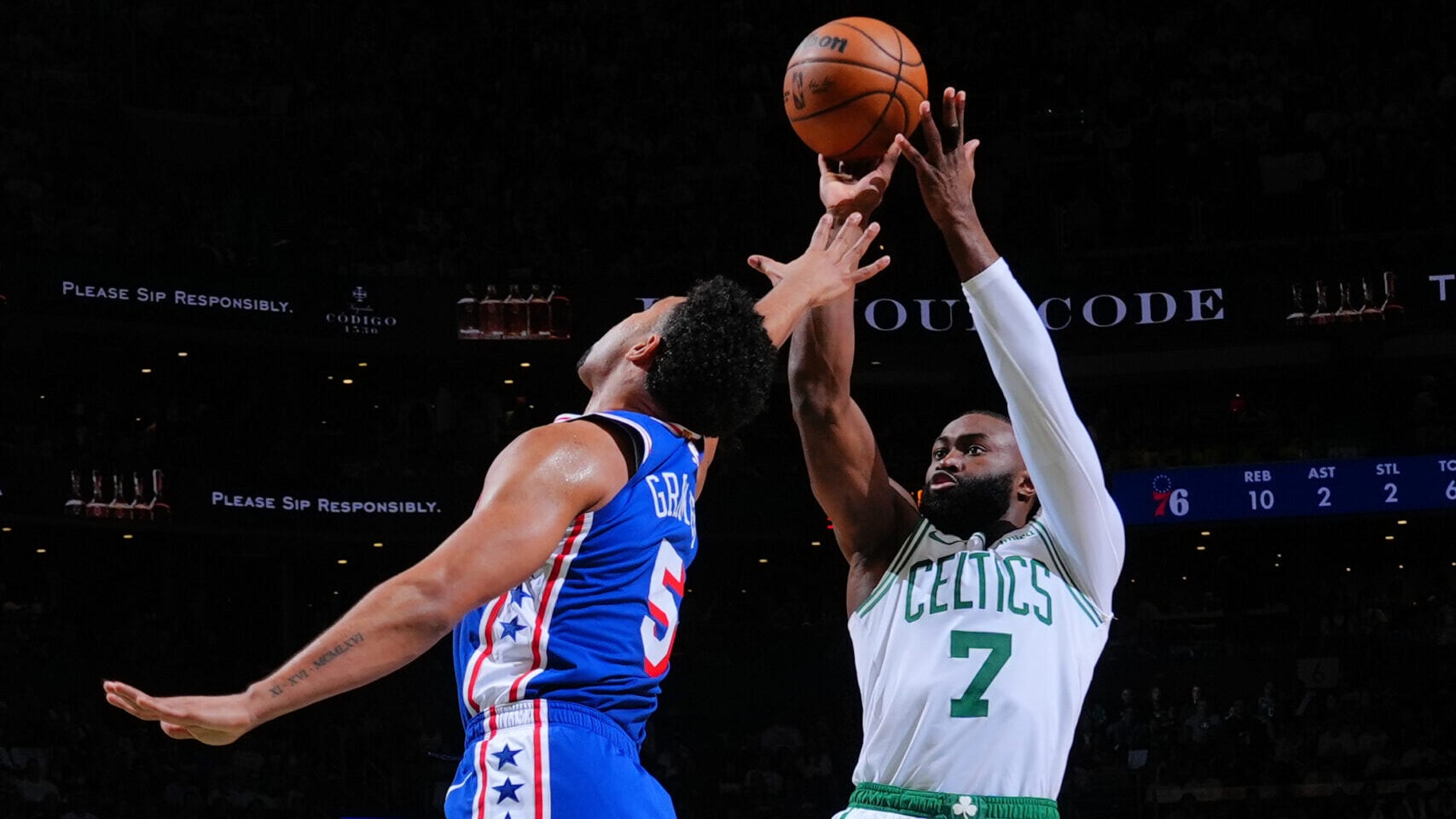
There was no let-up for the Celtics, who never trailed in Game 1 and beat the Sixers by 32 points. They’re in the playoffs for the 12th straight year and they now have 20 playoff wins by at least 20 points over that stretch.

The case for the Celtics: They were the only Eastern Conference team in the top five on both ends of the floor, and they were close (just a hair out of the top five on defense) before adding Jayson Tatum with 20 games to go. For the season as a whole, they had the point differential of a team that was 62-20.

The Celtics have playoff-tested formulas for winning possessions on both ends of the floor, and with Tatum back, they’re better equipped to execute them. They can have him or Jaylen Brown on the floor for all 48 minutes, and their bench ranked in the top two in the league for the fourth straight year. Even before Tatum made his season debut, they had outscored their opponents by 13.2 points per 100 possessions in Brown’s 1,102 minutes off the floor.

Defensively, the Celtics protect the rim nearly as well as the Thunder, having ranked third in opponent field goal percentage in the restricted area (64.0%) and first in the (lowest) percentage of their opponents’ shots (24.1%) that have come there.

The case against the Celtics: We only have to go back to Games 1 and 2 of their last playoff series, when they blew two 20-point, second-half leads, to remember that this team can lose the plot. The Celtics were consistently purposeful with their possessions when they won the championship two years ago, but less so in other postseasons.

The Celtics had the worst record (9-14) in games played between the top 10 teams in the league, having scored just 114.1 points per 100 possessions over those 23 games. They ranked last both in free-throw rate (20.7 attempts per 100 shots from the field) and the percentage of their shots (41%) that have come in the paint, so no other team is as dependent on jump shots.

Something to watch in Game 2: 3-point defense. Among playoff teams, the Celtics had the highest opponent 3-point rate, with 45.1% of their opponents’ shots having come from beyond the arc. The Sixers had only 23 3-point attempts in Game 1, they connected on only four of the 23, and we can expect them to shoot more and more accurately on Tuesday.

Next game: Tue. vs. PHI, 7 p.m. ET, Peacock

Last Week:5

Regular season record: 54-28

OffRtg: 121.2 (1) DefRtg: 116.0 (21) NetRtg: +5.2 (7) Pace: 99.5 (20)

First round series: Up 1-0 vs. Minnesota

Game 1 on Saturday was just the ninth time this season that the Nuggets registered an effective field goal percentage below 50%. But they still beat the Wolves by 11, going 30-for-33 (91%) at the free throw line and benefitting from Minnesota shooting just 20-for-63 (32%) outside the restricted area. It was the third straight year that the Nuggets came back from a double-digit deficit to win Game 1 of the first round.

The case for the Nuggets: They had the league’s No. 1 offense and scored 119.4 points per 100 possessions (the best mark by a wide margin) in 29 games against the league’s top 10 defenses. Shooting is the most important element of the game, and their effective field goal percentage of 57.7% was the fourth-highest mark in NBA history.

There is no formula for stopping Nikola Jokić, both the most efficient high-volume scorer and one of the best passers in NBA history. He’s got some weapons around him with the Nuggets having 10 players who shot 38% or better on at least 100 3-point attempts, while no other team has more than six.

Aaron Gordon is healthy and the Nuggets have now outscored their opponents by 12.7 points per 100 possessions in his 1,034 minutes (regular season plus Game 1) on the floor. Gordon’s minutes might remain somewhat limited (he played a little less than 30 on Saturday), but Jokić’s minutes will be extended in the playoffs. Game 1 was just the second time he played at least 40 minutes in regulation.

The case against the Nuggets: The history of teams that ranked in the bottom 10 defensively isn’t great. Of the 46 bottom-10 defenses that made the playoffs in the previous 29 seasons of play-by-play data, only 14 won a series, only seven made the conference finals, and only four reached the NBA Finals. One of those four (the 2000-01 Lakers) won the championship. The Nuggets ranked 21st defensively last season, too, and they lost in the conference semis.

They’re a better defensive team with Gordon and Peyton Watson, but Watson remains out for Game 2. It remains to be seen if Gordon’s minutes increase in the coming days and weeks.

Something to watch in Game 2: Paint defense. The Nuggets may have been a little lucky with how poorly the Wolves shot away from the basket on Saturday, and they could be a little better at protecting it. That starts with transition defense, but also ball containment and their rotations in the pick-and-roll.

Next game: Mon. vs. MIN, 10:30 p.m. ET, NBC/Peacock

Last Week:6

Regular season record: 53-29

OffRtg: 118.7 (4) DefRtg: 112.3 (7) NetRtg: +6.4 (5) Pace: 97.7 (25)

First round series: Up 1-0 vs. Atlanta

The Knicks’ postseason began with a drama-free victory over the Hawks in Game 1, and they’ve now held Atlanta to just 106 points per 100 possessions over their last three meetings.

The case for the Knicks: Statistically, they have the resume of a title contender. Only two teams – the Celtics and Spurs – ranked higher than the Knicks on both ends of the floor. Defensive questions will persist with Jalen Brunson and Karl-Anthony Towns on the floor, but the Knicks had the sixth-best defense (114.9 points allowed per 100 possessions in 24 games) against the league’s top 10 offenses.

On offense, the Knicks have two of the best players in the league, and Josh Hart isn’t the offensive liability that he’s been in the past, having shot a career-best 41.3% from 3-point range. This team is as comfortable as any living late in the shot clock, and late-clock opportunities increase in the postseason, with defenses better at taking away initial actions. Mitchell Robinson can be a huge factor on both ends of the floor off the bench, and he’s healthier than he was a year ago.

The case against the Knicks: Their starting lineup has been relatively mediocre (plus-2.3 points per 100 possessions in the regular season), it was bad (minus-6.2 per 100) in last year’s playoffs, and it played even with the Hawks (51-51) over its 21.3 minutes on Saturday. The bench has been terrific this season, but Jordan Clarkson and Miles McBride are two more defenders that could be exposed against a purposeful offense.

The Knicks also ranked 24th in the percentage of their shots (46%) that came in the paint and 25th in free throw rate (23.8 attempts per 100 shots from the field). So they’re more dependent on jump shots than most teams.

Something to watch in Game 2: Rebounding. Game 1 was the Knicks worst offensive rebounding game of the season, as they only retained 18.2% of available offensive boards, with Robinson not grabbing any in his 14 1/2 minutes. They can increase their chances of going up 2-0 by attacking the glass a little more on Monday.

Next game: Mon. vs. ATL, 8 p.m. ET, NBC

Last Week:9

Regular season record: 52-30

OffRtg: 118.3 (6) DefRtg: 114.1 (15) NetRtg: +4.1 (9) Pace: 100.7 (13)

First round series: Up 1-0 vs. Toronto

Game 1 on Saturday was just the eighth game that James Harden, Donovan Mitchell, Evan Mobley and Jarrett Allen have played together. They’re now 6-2 with all four, and their offense looked in form against the Raptors’ top-five defense, scoring 126 points on 99 possessions, the second most efficient performance for any team in Game 1.

The case for the Cavs: They’ve now outscored their opponents by 57 points (25 per 100 possessions) in just 108 total minutes (regular season plus Game 1) with all four of Harden, Mitchell, Mobley and Allen on the floor. More important is that they can have at least two of the four on the floor at all times, so their opponent is never facing an offense without a potent ball-handler or a defense without an elite rim protector.

The offense has been potent, scoring 123.2 points per 100 possessions over the last 15 games that Harden and Mitchell have played together. And the defense could be better than their 15th ranking would indicate. They ranked fifth defensively (114.3 points allowed per 100 possessions in 24 games) against the league’s top 10 offenses.

The case against the Cavs: They went 11-3 down the stretch of the regular season, but there were too many close games against bad teams, so they never had an extended stretch where they looked like a true title contender. While they had some good defensive numbers against the league’s top 10 offenses, the Cavs had the worst record (3-7) in games played between the top four teams in the East, having scored just 112.2 points per 100 possessions over those 10 games.

Something to watch in Game 2: The possession game. The Cavs shouldn’t expect to shoot as well as they did on Saturday, but they can continue to give themselves more shots than the Raptors. They dominated the glass in Game 1 and the Raptors are now 2-17 when they’ve grabbed less than 45% of available rebounds, but Cleveland could clean up the turnovers a bit.

Next game: Mon. vs. TOR, 7 p.m. ET, Peacock

Last Week:4

Regular season record: 60-22

OffRtg: 117.3 (9) DefRtg: 108.9 (2) NetRtg: +8.4 (2) Pace: 99.9 (19)

First round series: Down 0-1 vs. Orlando

Only one home team lost this weekend and it was the team that hasn’t won a home playoff game since 2008. Concerns about the Pistons’ offense will linger, with Sunday’s loss to Orlando marking Detroit’s seventh least efficient performance of the season (101 points on 98 possessions).

The case for the Pistons: They had the best record (30-12) in games between playoff teams, including 8-3 in games played between the top four in the East. They held the Celtics, Cavs and Knicks (who all ranked in the top six offensively) to just 109.1 points per 100 possessions over those 11 games. While the Thunder led the league defensively by a wide margin overall, the Pistons were basically even with the champs in defense (points allowed per 100 possessions) against the league’s top 10 offenses.

The Pistons were the league’s best team in the possession game, averaging 3.8 more shot opportunities per game than their opponents. They led the league in opponent turnover rate (16.8 per 100 possessions) and ranked third in offensive rebounding percentage (35.4%). They don’t outshoot their opponent from the perimeter, as they had the league’s best record (32-14) in games where they were outscored from 3-point range.

The case against the Pistons: They’re heavily dependent on one guy to carry their offense. They scored 9.3 more points per 100 possessions with Cade Cunningham on the floor (120.4) than they did with him off the floor (111.1).

While Jalen Duren is much improved at handling the ball in the short roll, Detroit’s offense was least efficient (0.84 points per chance) when the defense blitzed Cunningham in the pick-and-roll. We could see more of that in the playoffs, though Orlando didn’t blitz him at all on Sunday. Cunningham scored 39 points, but his teammates had an effective field goal percentage of just 43%, with Tobias Harris (5-for-15, including 1-for-7 from 3-point range) the only other Piston in double-figures.

Something to watch in Game 2: The restricted area. If the Pistons are going to end their 11-game losing streak in home playoff games, they need to dominate inside. In the regular season, they outscored their opponents by 13.9 points per game in the restricted area, the third biggest differential for any team in the last 15 seasons. But restricted-area points on Sunday were 42-30 in favor of the Magic.

Next game: Wed. vs. ORL, 7 p.m. ET, ESPN

Last Week:7

Regular season record: 53-29

OffRtg: 117.0 (10) DefRtg: 115.5 (20) NetRtg: +1.5 (14) Pace: 99.2 (22)

First round series: Up 1-0 vs. Houston

Though they’re the higher seed, the Lakers’ win vs. the Rockets on Saturday night felt like an upset, given the absences of Luka Dončić and Austin Reaves. They’re now 4-2 (with four straight wins) when LeBron James has played without the other two stars.

The case for the Lakers: They’re now 20-5 since Feb. 28, a mark which includes a 9-4 record against playoff teams. They had a top-10 defense over those last 24 regular-season games, and if they can get either Dončić or Reaves back in this series, they obviously have a much higher ceiling offensively.

They were 10-for-19 (53%) from 3-point range on Saturday, but that was a low volume. The Lakers are one of the teams that depend the least on 3-point shooting, going 23-17 when they shot worse than the league average (36%) from beyond the arc.

Clutch minutes are small sample sizes, but they are playoff-like, with more focus on every possession. The Lakers were also the league’s best clutch team, outscoring opponents by 26 points per 100 possessions with the score within five points in the last five minutes of the fourth quarter or overtime.

The case against the Lakers: It starts with the absences of Dončić and Reaves, and the lack of shot creation beyond that tandem. They don’t depend on 3s, but they still need to hit some, and they’re probably not going to shoot better than 50% again. In fact, across the eight Game 1s this weekend, the Lakers had the second-lowest expected field goal percentage (44.6%), but the highest actual field goal percentage (60.6%) in Game 1.

The Lakers were also 53-29, but had the point differential (sixth best in the West) of a team that was 46-36 this season. Point differential is a better indicator of postseason success than their league-best 22-8 record in clutch games.

Something to watch in Game 2: The possession game. The Lakers had an amazing 27 fewer shot opportunities (field goal attempts or trips to the line) than the Rockets in Game 1. That was the fourth biggest discrepancy in any game across the league this season and the biggest for a team that won. Assuming that they won’t shoot as well on Tuesday, the Lakers will need to be much better at taking care of the ball and securing the defensive glass.

Next game: Tue. vs. HOU, 10:30 p.m. ET, NBC/Peacock

Last Week:8

Regular season record: 52-30

OffRtg: 117.5 (8) DefRtg: 112.1 (6) NetRtg: +5.4 (6) Pace: 97.0 (29)

First round series: Down 0-1 vs. L.A. Lakers

Having suffered a knee injury in practice last week, Kevin Durant was a late scratch in Game 1, which turned out to be one of the weirdest playoff games you’ll ever see. The Rockets destroyed the Lakers in the possession game but shot just 38%, including 22-for-53 (42%) in the paint.

The case for the Rockets: As noted with the Lakers, point differential is a better indicator of a team’s strength than how they performed in close games. The Rockets had the point differential (third best in the West) of a team that was 56-26, they were one of six teams that ranked in the top 10 on both ends of the floor, and they were tied with the Pistons for the fewest losses (they were 30-7) in games that weren’t within five points in the last five minutes.

Field goal percentage is always lower in the playoffs than it is in the regular season, so rebounding means more. And the Rockets were the best rebounding team in the league, as they showed on Saturday night. They were a little worse after Steven Adams was lost for the season, but still ranked third (best in the West) in rebounding percentage after that.

The case against the Rockets: They had the worst record (5-12) in games played between the top six teams in the West, having scored just 111.8 points per 100 possessions over those 17 games. Nine of those 12 losses were within five points in the last five minutes, and they allowed 123 points on 93 clutch defensive possessions (1.32 per) over those nine losses.

While they led the league in offensive rebounding percentage, the Rockets’ offense was worse than average regarding effective field goal percentage (17th), free throw rate (18th) and turnover rate (27th). If opponents bring increased ball pressure in the playoffs, their lack of a point guard will be an issue.

Something to watch in Game 2: Paint finishing. Durant’s availability is obviously the most important issue, but whether he plays or not, the Rockets need to be better in the paint. The Lakers ranked 27th in opponent field goal percentage in the paint (60.0%) in the regular season and the Rockets’ 41.5% on Saturday was the second-worst mark against L.A. all year.

Next game: Tue. @ LAL, 10:30 p.m. ET, NBC/Peacock

Last Week:10

Regular season record: 49-33

OffRtg: 115.6 (13) DefRtg: 112.5 (8) NetRtg: +3.1 (10) Pace: 101.5 (10)

First round series: Down 0-1 vs. Denver

The Wolves got off to a good start in Denver on Saturday, leading by as many as 12 points in the first quarter. But it was all downhill from there, and they’re now 1-4 against the Nuggets this season.

The case for the Wolves: They’ve been to back-to-back conference finals, getting there by upsetting the Nuggets in 2024 and finding their way from this same spot (the No. 6 seed) in 2025. Over the four series that they won in those two playoffs, they held their opponents to an average of 8.9 fewer points per 100 possessions than those teams scored in the regular season.

The Wolves also allowed 108.6 points per 100 possessions in Rudy Gobert’s 121 minutes on the floor against Denver in the regular season, and that’s about as good as you’re going to do against the league’s No. 1 offense.

The case against the Wolves: They finished with the same record (49-33) as they had last year, but statistically, this was their worst season (plus-3.1 per 100 possessions) of the last three by a healthy margin. They took a step back in the possession game, and they saw the league’s second biggest jump in opponent free-throw rate.

The Nuggets ranked last among playoff teams in the possession game, but had six more shot opportunities (field goal attempts or trips to the line) than the Wolves in Game 1, and they outscored Minnesota by 16 points at the free-throw line.

Something to watch in Game 2: Bench play. The Wolves had two Kia Sixth Man of the Year candidates, but were outscored by two points in a little less than eight minutes with Nikola Jokić off the floor on Saturday. They have to win those minutes to have a chance.

Next game: Mon. @ DEN, 10:30 p.m. ET, NBC/Peacock

Last Week:11

Regular season record: 46-36

OffRtg: 115.0 (14) DefRtg: 112.9 (10) NetRtg: +2.2 (12) Pace: 102.5 (5)

First round series: Down 0-1 vs. New York

It’s a new season and the Hawks’ post-break success didn’t carry over into Game 1 on Saturday, when they struggled offensively against the Knicks for the second time in the last two weeks.

The case for the Hawks: They were 11 points per 100 possessions better after the All-Star break (plus-9.7, fourth) than they were before (minus-1.3, 19th). That was the biggest post-break improvement for any team in the last 27 years, and there’s a history of teams that make big post-break jumps overachieving in the playoffs (winning more series than they should have based on their seed).

While that differential included many wins over bad teams, the Hawks also had the fourth-best record (8-4) in games played between playoff teams after the All-Star break. The post-break success was fueled by a starting lineup that outscored opponents by 20.3 points per 100 in its 391 minutes. Given that starters’ minutes typically increase in the playoffs, the Hawks can lean on that group a little more.

The case against the Hawks: Their best player isn’t a big threat to shoot off the dribble. Jalen Johnson had an effective field goal percentage of just 43.8% on pull-up jumpers, a mark that ranked 50th among 65 players who attempted at least 250. That can allow his defender (Josh Hart on Saturday) to go under screens and keep the Hawks from gaining advantages when they set ball-screens.

Even with their huge overall improvement, the Hawks’ bench ranked in the middle of the pack after the All-Star break. And bench minutes were rough on Saturday, with their four reserves shooting just 5-for-15, including 0-for-5 from 3-point range.

Something to watch in Game 2: More purposeful possessions. The Hawks didn’t attack Jalen Brunson as much as they could have in Game 1, as he was the screener’s defender on only eight of the 46 ball-screens they set for Johnson and CJ McCollum.

Next game: Mon. @ NYK, 8 p.m. ET, NBC

Last Week:18

Regular season record: 45-37

OffRtg: 114.2 (18) DefRtg: 113.6 (13) NetRtg: +0.6 (17) Pace: 100.6 (14)

First round series: Up 1-0 vs. Detroit

The switch has been flipped. After brutal defeats in their last game of the regular season and their first Play-In game, the Magic might be playing their best basketball of the season. They blew out the Hornets to claim the No. 8 seed and were the only road team to win a Game 1 this weekend, stunning the Pistons on Sunday night.

The case for the Magic: This was a top-three defense in each of the last two seasons before falling off on that end of the floor this year. And the last two games (97.0 points allowed per 100 possessions) are evidence that the Magic can dial it up defensively and shut down two top-10 offenses. The Pistons didn’t commit as many turnovers as the Hornets, but they can be turnover-prone and the Magic had 11 steals on Sunday. Forcing more live-ball turnovers (that lead to transition opportunities) can take some of the pressure off the Magic’s half-court offense.

The Magic got efficient performances from Paolo Banchero (23 points on 8-for-15 shooting) and Franz Wagner (19 on 7-for-13), who might be better suited for playoff basketball, where they seek mismatches and bully smaller defenders.

The case against the Magic: The last two games have been great and the Magic have now won three of their last four against the Pistons, but the Magic haven’t shown that they can sustain success on either end of the floor. They’re one of three playoff teams that didn’t rank in the top 10 in either offensive or defensive efficiency.

Wagner and Banchero are All-Star-level talents, but counting the Play-In and their win on Sunday, the Magic have scored just 113.4 points per 100 possessions (worse than league average) in their 483 total minutes on the floor together, and they’re still just 5-9 when they’ve had both in the lineup against playoff teams.

Something to watch in Game 2: Their 3-point shooting. It’s best if Banchero and Wagner are attacking and not shooting too many 3s themselves. They need their teammates to complement them on the perimeter, but those teammates were just 7-for-28 (25%) from beyond the arc on Sunday.

Next game: Wed. @ DET, 7 p.m. ET, ESPN

Last Week:15

Regular season record: 46-36

OffRtg: 115.0 (15) DefRtg: 112.1 (5) NetRtg: +2.9 (11) Pace: 99.2 (21)

First round series: Down 0-1 vs. Cleveland

The Raptors seemingly got the first-round matchup they wanted, having gone 3-0 against the Cavs in the regular season. But all three of those games were in the first five weeks, and this is a very different team that they’re facing in the playoffs.

The case for the Raptors: Defense is generally more important than offense as it pertains to postseason success, and the Raptors had a top-five defense in the regular season. They ranked fourth in opponent turnover rate, and forcing turnovers can get the Raptors some transition opportunities.

The Raptors can generate good shots — they led the league in the percentage of their 3-point attempts (63%) that were wide open, and they were without their most prolific 3-point shooter (Immanuel Quickley) in Game 1. His return would give the offense a boost.

The case against the Raptors: With their loss in Cleveland on Saturday, the Raptors are 1-12 since Thanksgiving against the top four teams in the East. Ten of those 12 losses have come by double-digits and they’ve allowed 122.6 points per 100 possessions over those 13 games. While they ranked fifth defensively overall, they were 12th against the league’s top-10 offenses, and also 18th offensively against top-10 defenses.

The Cavs’ biggest weakness is probably 3-point defense, but the Raptors are one of three playoff teams (the Magic and Sixers are the others) that ranked in the bottom 10 in both 3-point percentage (35.4%, 21st) and 3-point rate (36.3% of their shots, 25th). They shot relatively well (13-for-27) from deep on Saturday, but their defense let them down.

Something to watch in Game 2: The Raptors can hope that the Cavs don’t shoot 50% from 3-point range again, but they also need to force tougher shots. According to tracking data, the Cavs had the highest shot-quality score of the weekend and the seventh highest allowed by the Raptors this season. It starts with pick-and-roll defense, with Cleveland scoring 1.26 points per chance when a ball-screen for James Harden, Donovan Mitchell or Dennis Schröder led directly to a shot, turnover or trip to the line.

Quickley was listed as “questionable” on the initial injury report for Monday.

Next game: Mon. @ CLE, 7 p.m. ET, Peacock

Last Week:13

Regular season record: 45-37

OffRtg: 114.2 (17) DefRtg: 112.9 (9) NetRtg: +1.4 (15) Pace: 98.1 (24)

First round series: Down 0-1 vs. Oklahoma City

The Suns lost their first SoFi Play-In Tournament game at home, so they got the champs instead of the Spurs, not that either is a significantly better option than the other. They got absolutely shut down in Game 1 in Oklahoma City on Sunday, when they shot just 12-for-32 (38%) in the paint, their fifth-worst mark of the year.

The case for the Suns: They had a top-10 defense and were the league’s most improved team by a wide margin regarding the possession game, averaging 3.1 more shot opportunities than their opponents. That was the league’s third-best differential and up from minus-4.3 per 100 (third worst) last season. The Thunder actually saw the league’s third biggest drop, going from second last season to 11th (plus-1.3 per 100) this year. The Thunder aren’t a great defensive rebounding team and the Suns ranked sixth in offensive rebounding percentage, having seen the league’s biggest jump from last season.

The Thunder will also give up some corner 3s, and the Suns ranked eighth in corner 3-point percentage (39.4%), with Royce O’Neale having the best mark (53.6%) among 115 players with at least 75 attempts.

The case against the Suns: While they ranked sixth in offensive rebounding percentage, the Suns were worse than average regarding effective field goal percentage (19th), free throw rate (28th) and turnover rate (19th). They also ranked in the bottom 10 in opponent free-throw rate and 28th in free-throw differential (making 2.7 fewer per game than their opponents), not a good thing when you’re playing against Shai Gilgeous-Alexander.

The Suns are now just 2-9 since Jan. 5 against the top six teams in the West, and one of those two wins was on the last day of the regular season, when both Phoenix and Oklahoma City rested their regulars.

Something to watch in Game 2: The possession game. The Suns have to win it to win, and they lost it big time in Game 1, committing 11 more turnovers (19-8) and grabbing five fewer offensive rebounds (14-19) than the Thunder.

Next game: Wed. @ OKC, 9:30 p.m. ET, ESPN

Last Week:19

Regular season record: 42-40

OffRtg: 113.1 (21) DefRtg: 113.5 (12) NetRtg: -0.4 (19) Pace: 101.6 (9)

First round series: Down 0-1 vs. San Antonio

The Blazers put an end to a four-year playoff drought by upsetting the Suns in the No. 7 vs. No. 8 SoFi Play-In Tournament game. Their reward is a first-round series against the team that went 30-4 in February, March and April. They were within two points midway through the third quarter on Sunday night, but then went scoreless on their next six possessions (with four turnovers) and saw the Spurs go on a 26-11 run.

The case for the Blazers: Jrue Holiday is healthy, and the Blazers outscored their opponents by 6.1 points per 100 possessions with him on the floor in the regular season. They were even better (plus-8.3 per 100) in 286 minutes with Holiday on the floor alongside Deni Avdija, Toumani Camara and Jerami Grant.

To beat the Spurs, you’ll need to make some 3s, and the Blazers ranked third in 3-point rate (46.9% of their shots). Their top seven rotation guys all attempted more than three 3-pointers per game. And if there’s a guy who can get Victor Wembanyama in foul trouble, it’s Avdija. He ranked third in free-throw rate (57.3 attempts per 100 shots from the field) among the 182 players (first among those in the playoffs) with at least 500 field goal attempts.

The case against the Blazers: They had the worst offense (ranking 21st) among this year’s playoff teams and had the worst point differential (minus-0.3 points per game) for any playoff team in the last three years. While they ranked third in 3-point rate, they were 28th in 3-point percentage (34.3%)

Something to watch in Game 2: Scoot Henderson. He was a bright spot on Sunday, scoring 18 points on 7-for-11 shooting (including 2-for-4 from 3-point range). He’s averaging 15.7 points on a true shooting percentage of 60.1% over his last 20 games. If this is going to be a short series, it will at least give the 22-year-old some high-intensity reps to build on.

Next game: Tue. @ SAS, 8 p.m. ET, NBC/Peacock

Last Week:16

Regular season record: 45-37

OffRtg: 114.3 (16) DefRtg: 114.4 (17) NetRtg: -0.1 (18) Pace: 100.4 (15)

First round series: Down 0-1 vs. Boston

Just when it looked like the Sixers were going into the playoffs with all three of their stars, Joel Embiid needed an emergency appendectomy. It’s not clear if he’ll be available at all in the first round or if he would have made a difference, as the Sixers lost by 32 points on Sunday afternoon.

The case for the Sixers: If Embiid can play (seems like a big “if”), he provides a matchup problem for any team in the league, and the Sixers were at their best (plus-5.8 points per 100 possessions) in the regular season with him on the floor. Even when he’s limited, he makes them a better team.

Paul George can still keep an opposing star in check and Tyrese Maxey has the offensive ability to win a game or two by himself. If he’s drawing crowds (like he did on Sunday), other Sixers should be open. They need to shoot better than 4-for-23 on 3-pointers, though.

The case against the Sixers: They were the only playoff team that didn’t rank in the top half of the league on either end of the floor. They also had the worst record (13-30) in games played between the 16 playoff teams. Shooting is the most important element of the game, and the Sixers ranked 26th in effective field goal percentage, in part because they took tough shots. They ranked 29th in shot quality, according to tracking data, with Embiid, Maxey and George all in the bottom 20 among the 182 players with at least 500 field goal attempts.

If Embiid can’t go, the offense will remain compromised. The Sixers scored just 111.7 points per 100 possessions (well below league average) in almost 2,500 regular-season minutes with either Adem Bona or Andre Drummond on the floor.

Something to watch in Game 2: Assuming that Embiid doesn’t play, the Sixers simply need to defend better and try to win ugly. That’s easier said than done against the league’s second-ranked offense, but maybe switching more ball screens (the Sixers had the second-lowest switch rate over the weekend) could flatten the Celtics out and limit their ball movement.

Next game: Tue. @ BOS, 7 p.m. ET, Peacock

Latest