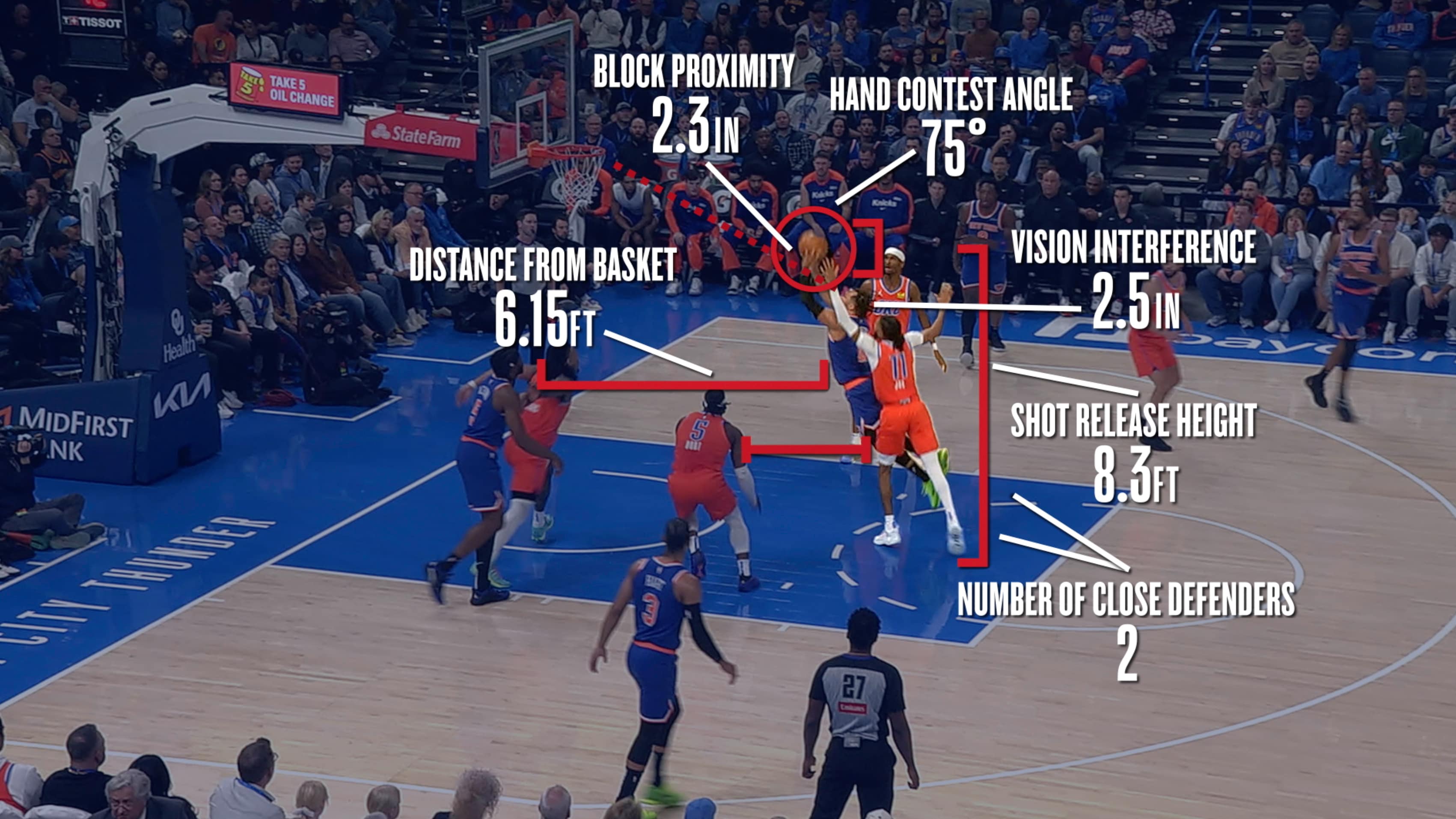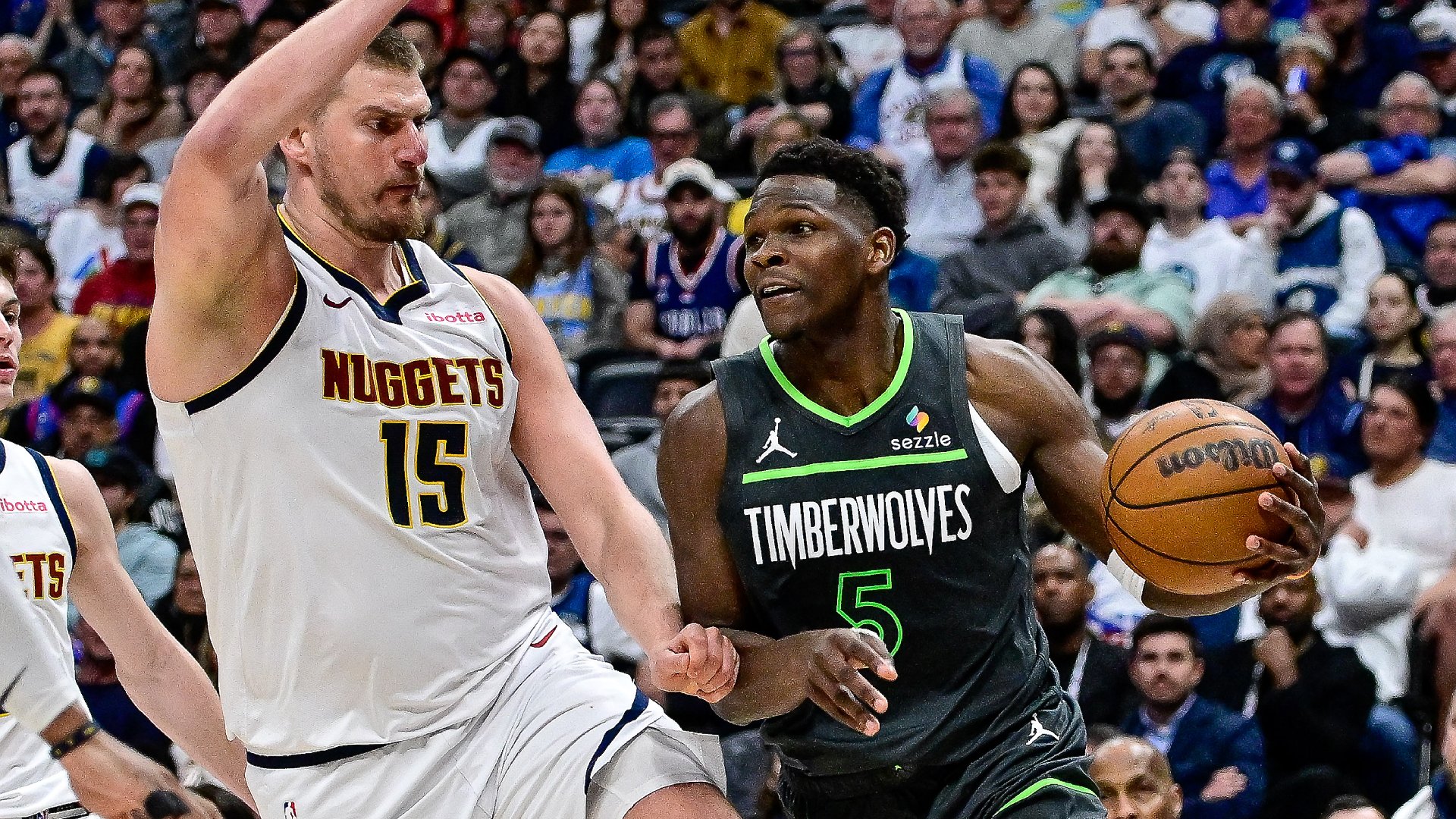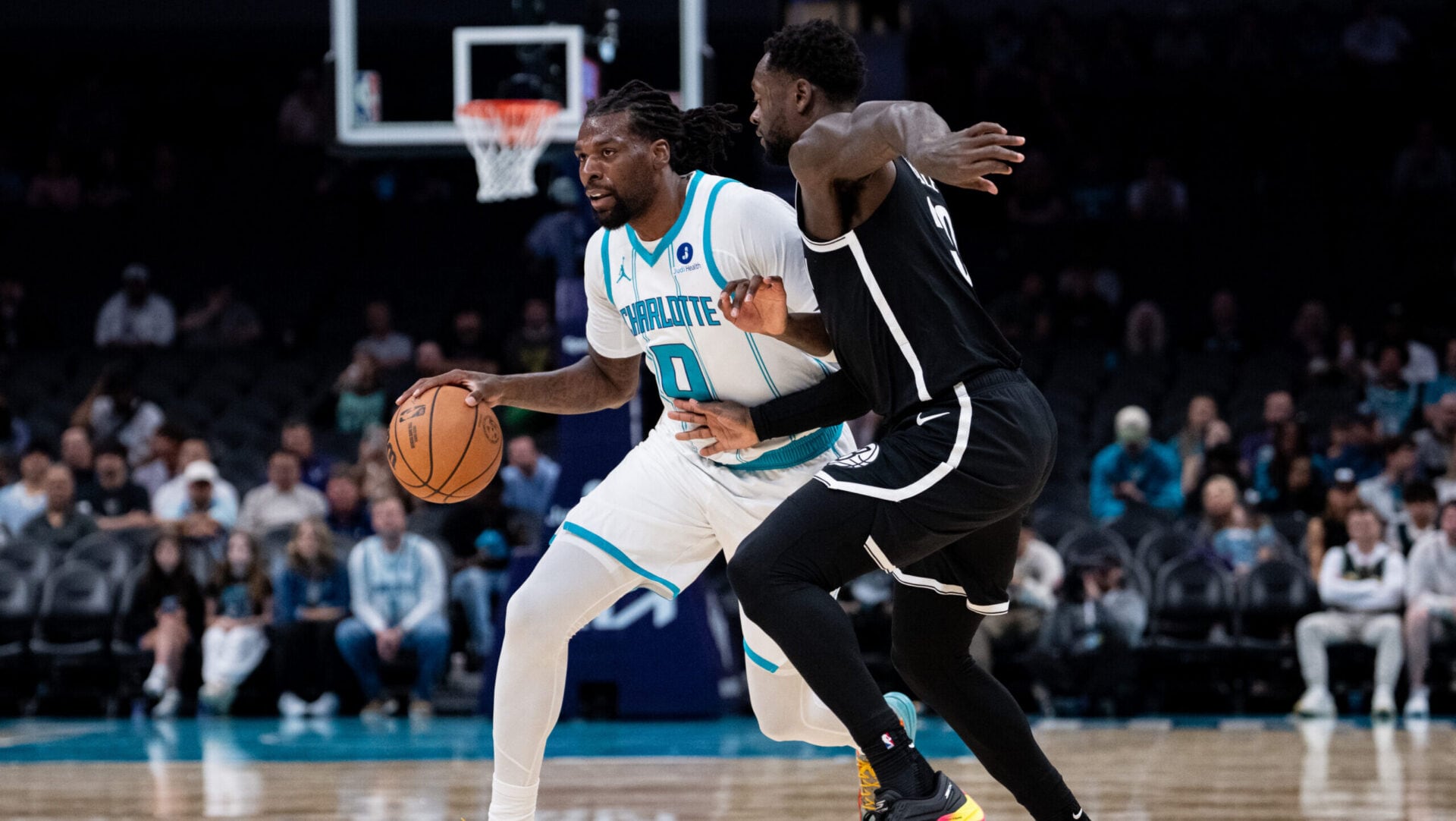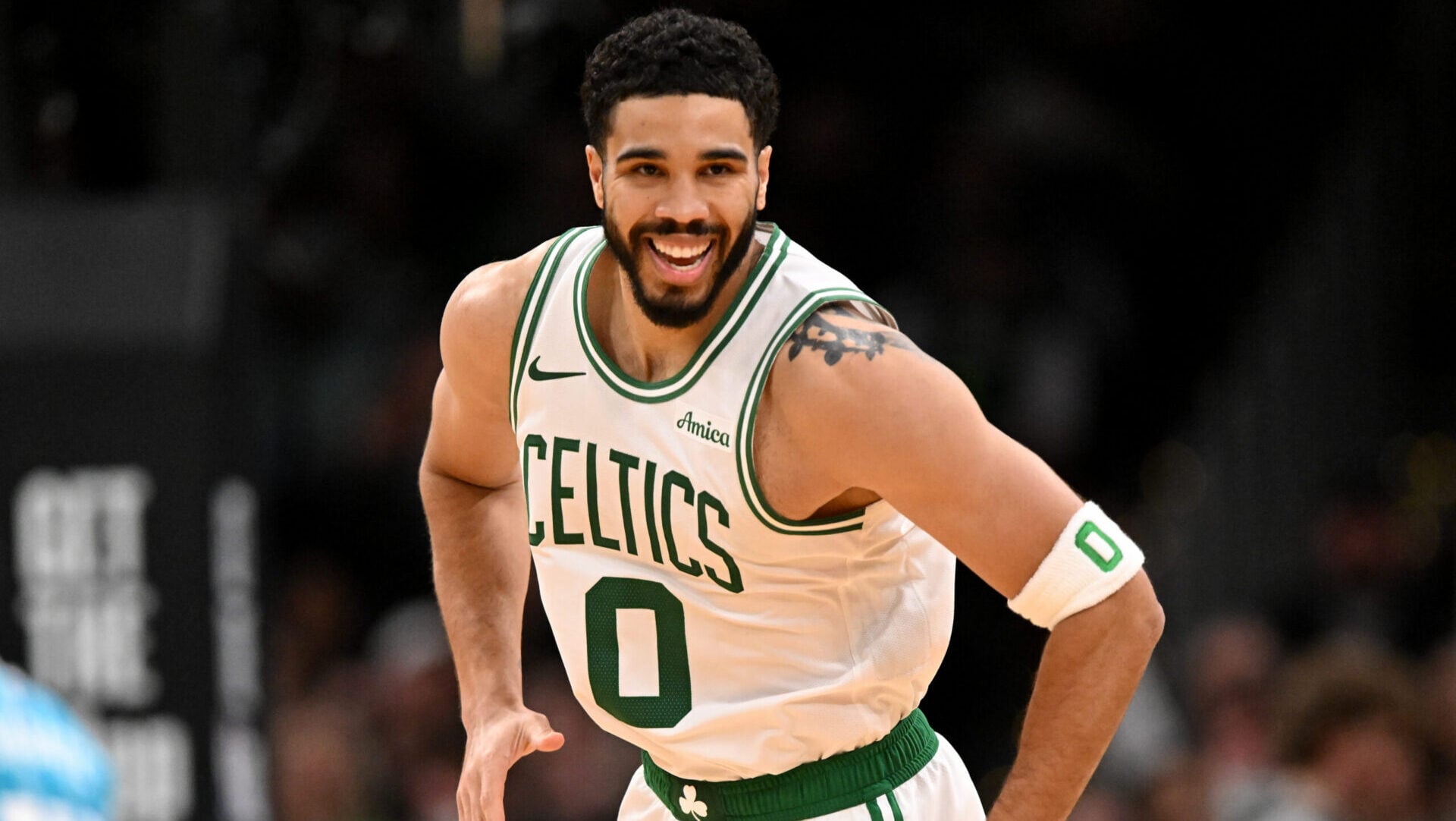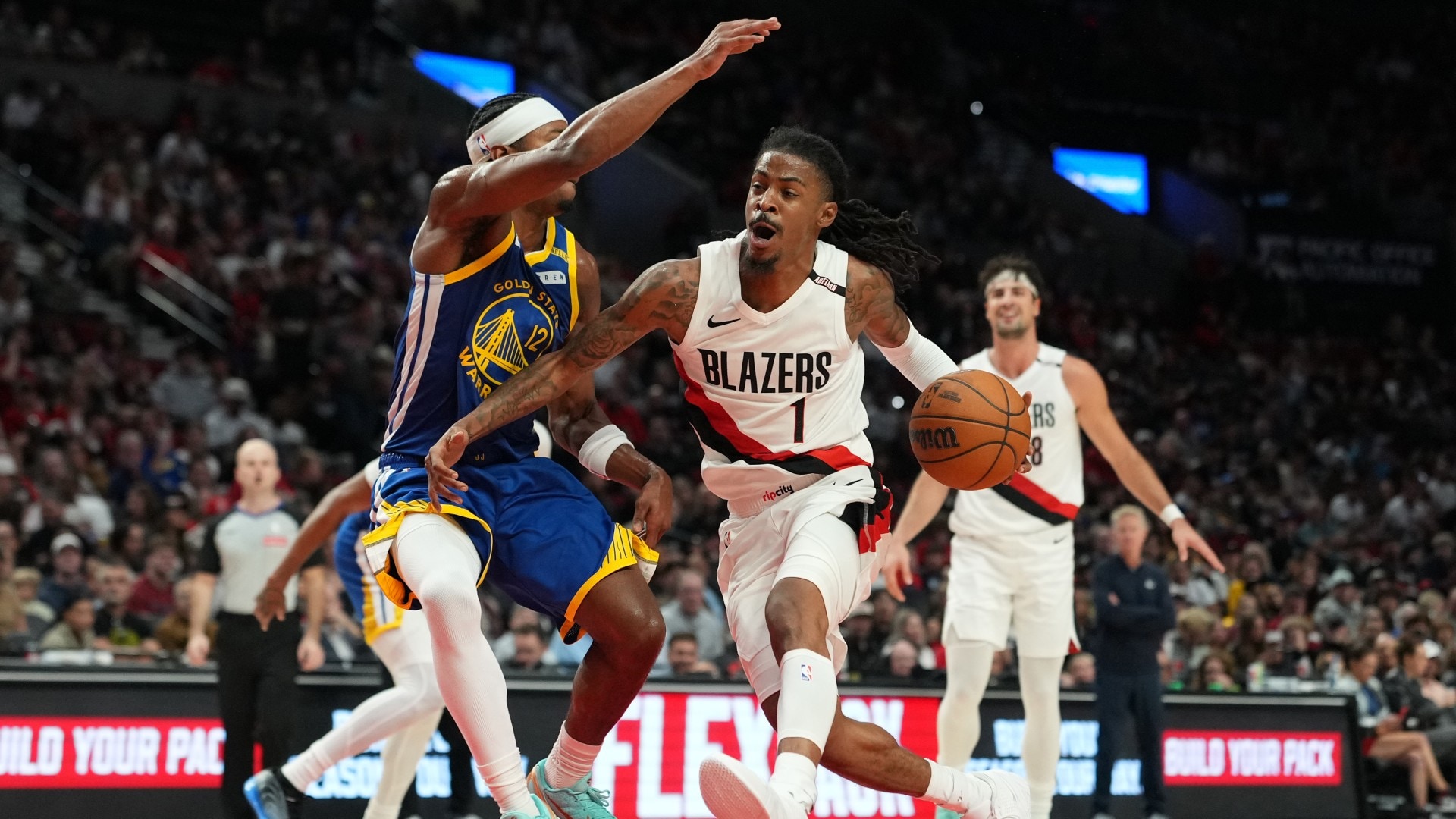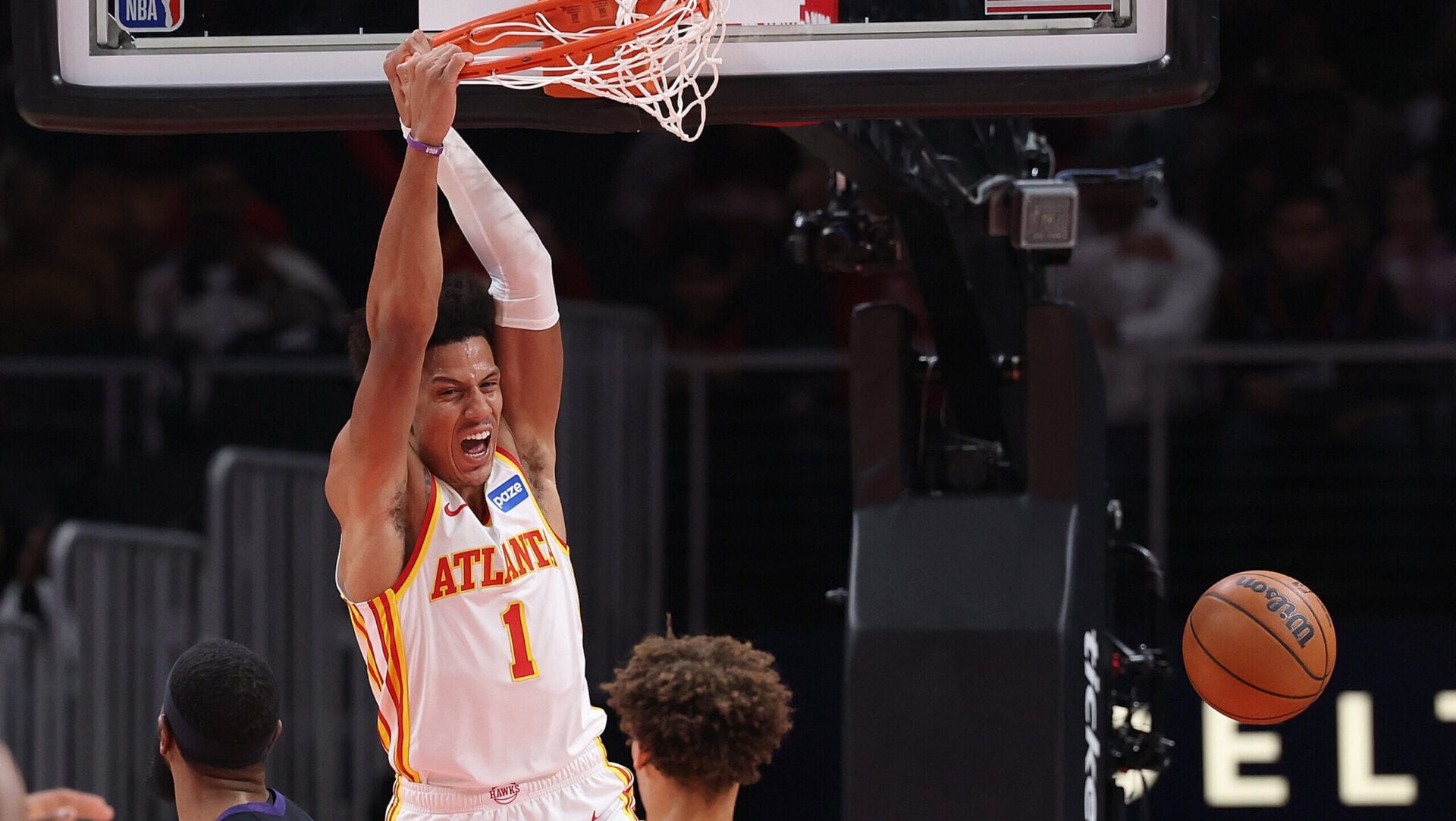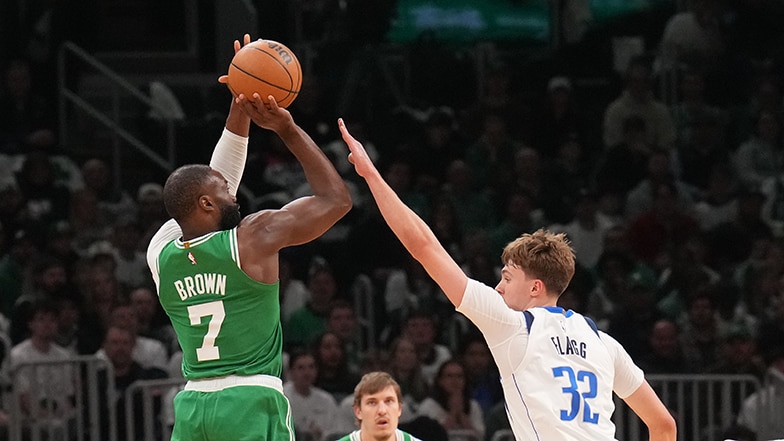
Jaylen Brown shoots over Cooper Flagg in a Celtics-Mavericks game on March 6, 2026.
• Inside The Game: Player Leverage
The outcome of a basketball game can be decided in many ways: some come down to the final moments and a last second shot while others are decided by a 10-0 run in the 2nd quarter when one team takes control.
Leverage, the newest metric from NBA Inside the Game, aims to quantify the moments and players that have the highest impact on the game’s outcome. While the final minutes of a close game are undeniably high-leverage situations, a player’s back-to-back 3-pointers in the early 3rd quarter may have more impact on the game’s outcome than one might think.
Utilizing a machine learning model powered by AWS AI to predict win probability given the game state (score, time remaining, etc.), Leverage takes events that occur and compares them to the opposite outcome. For example, a made shot is compared to a missed shot with a defensive rebound to find that event’s leverage.
For instance, suppose a team starts a possession with a 60% win probability, and a player makes a 3-pointer that boosts their win probability to 75%. Instead of looking at the difference between the start and end of the possession (60% to 75%), the made shot win probability is compared to that of a missed shot with a defensive rebound where the win probability would have dropped to 55%. The overall Leverage score for this situation would be based on the 20% swing (55% to 75%).
Leverage score can be positive or negative for each possession and will sum to a player’s leverage score for a game. The higher the leverage score, the more that player’s actions improved their chance to win the game. In general, a leverage score of 1.0 is associated with contributions that improve win probability by 10%.
For each event, not all credit is given to the shot-taker, but it is distributed across all players on the court utilizing an algorithm that relies on the NBA’s other tracking metrics including Expected Field Goal Percentage (xFG%) and Defensive Pressure Score. If a player makes a 3-pointer, for instance, the shooter is credited for making the shot while also assigning credit to the other offensive players and the defense as well. Leverage also takes into account the player who created the shot (self-created vs assisted).
Additionally, shooters get more credit based on how difficult the shot was using xFG%. Finally, Leverage also considers the sequence of events. If a steal leads to a fast break dunk, the player who forced the turnover is given additional credit for creating that transition opportunity.
Leverage introduces an innovative way to quantify how players influence their team’s chances of winning across every facet of the game (not just in scoring). Leverage also highlights the moments that can truly swing the outcome, and who steps up with the game on the line.
Below is a glossary of the of the different subtypes of Leverage:
- Offense: Leverage that is given to a player that relates to an event that occurred while that player was on offense
- Defense: Leverage that is given to a player that relates to an event that occurred while that player was on defense
- Shot Making: Leverage that is directly related to made and missed field goal and free throw attempts
- Creation: Leverage that is credited to an offensive player who creates a made shot or a missed shot above the average expected field goal percentage
- Rebound: Leverage credited to a player who secures the rebound (or whose team secures the rebound)
- Turnover: Leverage is given to an offensive player who commits a turnover
- On Ball Defense: Leverage for a player who affects the game via on-ball defense via a block, steal, or defending a missed shot that has below average expected field goal percentage