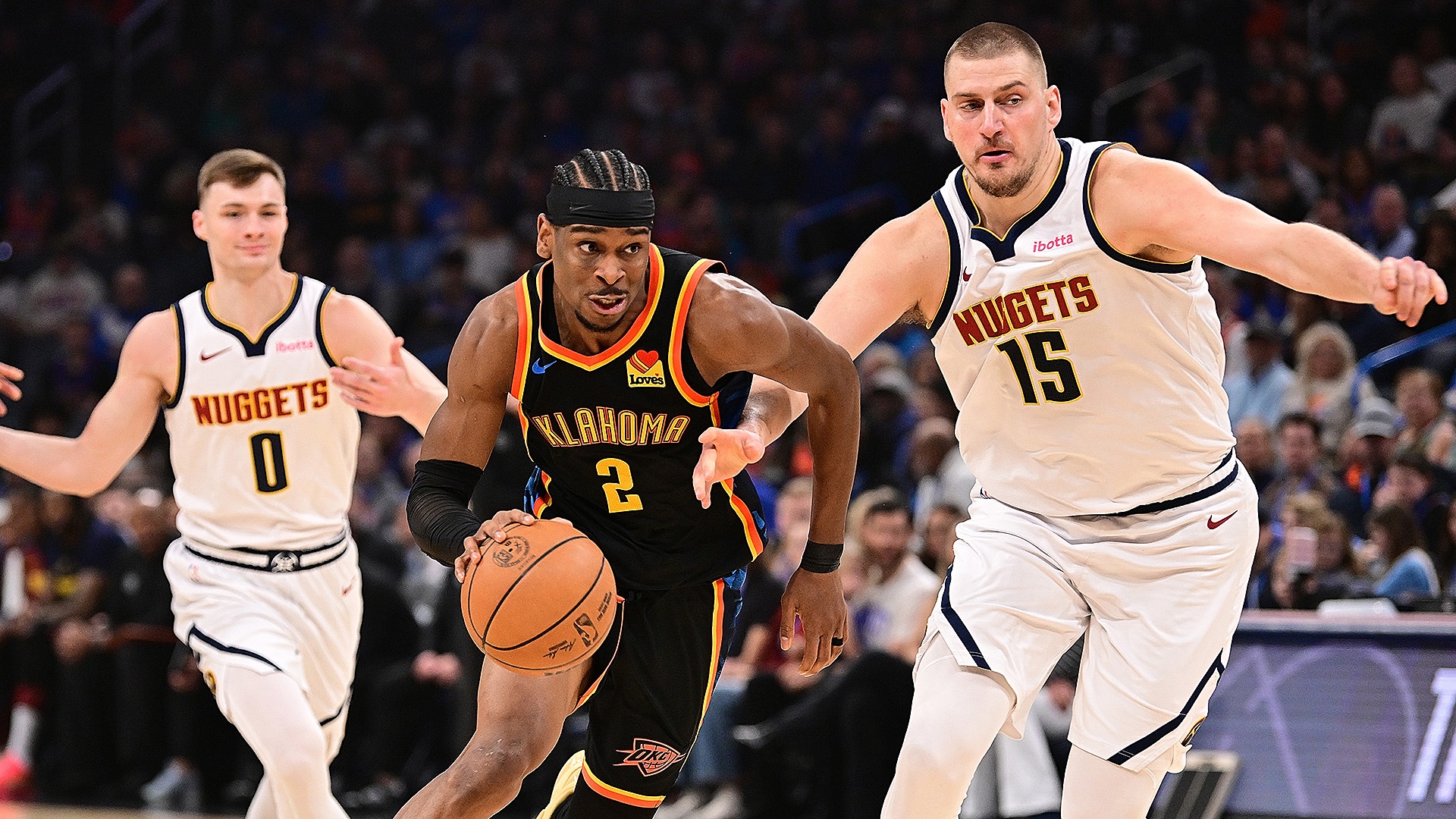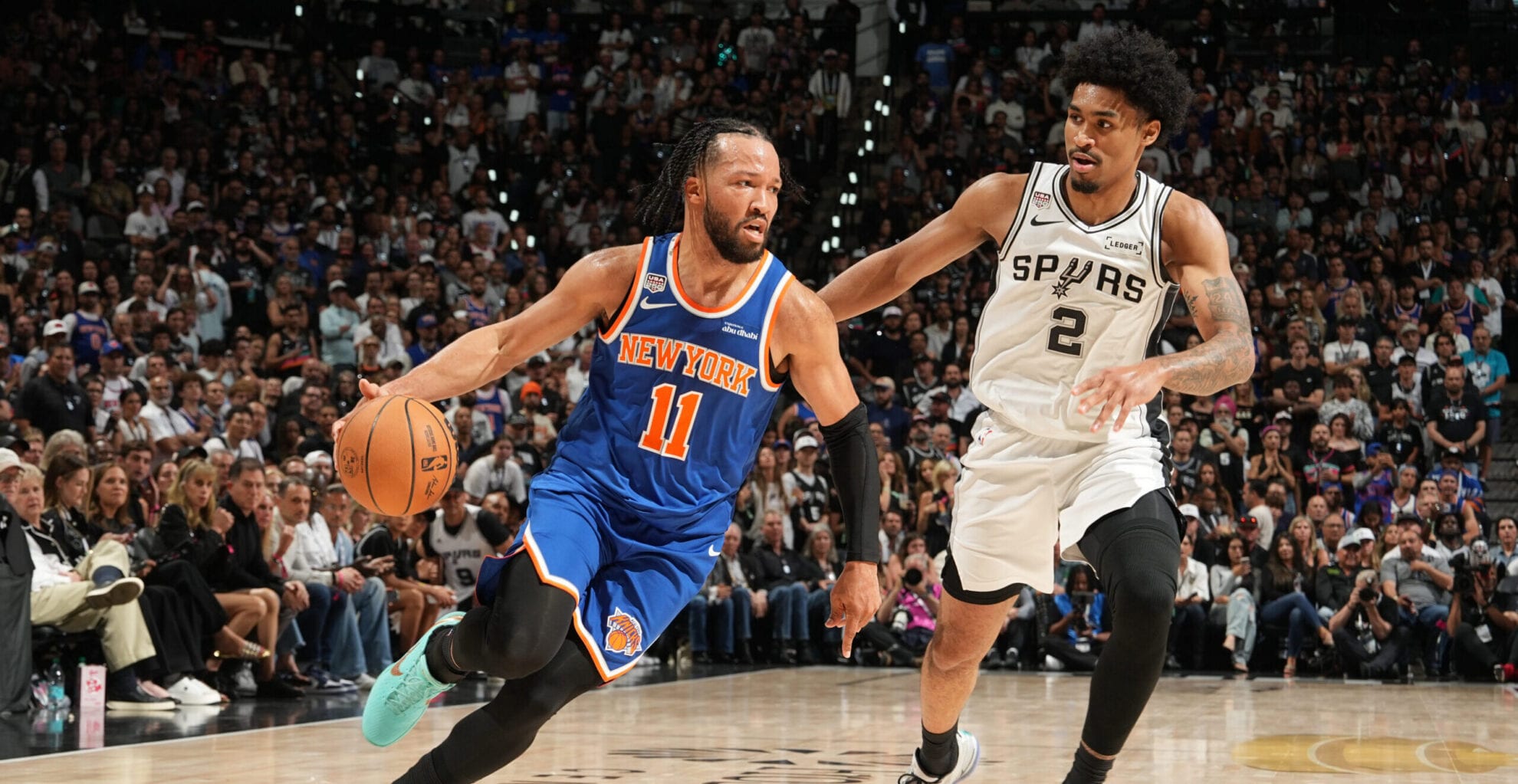
Shai Gilgeous-Alexander nails the faceup jumper to top 20 points, surpassing Wilt Chamberlain's record of 126 straight games with 20-plus.
One, two, three pump fakes didn’t dislodge Boston defender Baylor Sheierman, but it didn’t really matter. Shai Gilgeous-Alexander had his target and his rhythm, and he rose up from 20 feet to hit a jumper five minutes into the third quarter Thursday to claim a XXXL spot in the NBA record book.
It was, in fact, the second time in three nights that a current star chased down a glittering achievement of an NBA immortal.
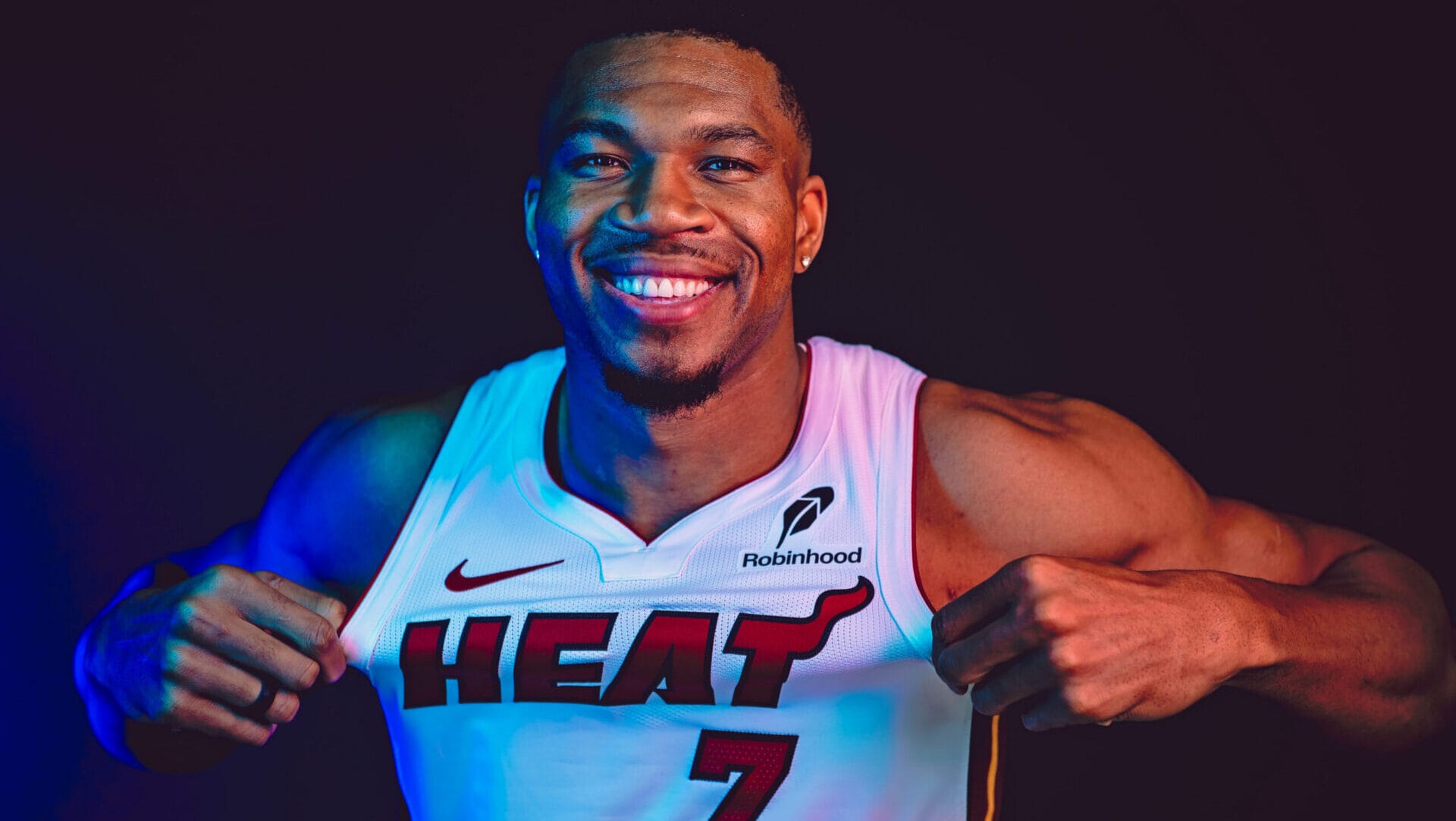
First it was Miami big man Bam Adebayo putting up 83 points against Washington on Tuesday to pass Kobe Bryant (81) for the second-most points scored in a game. Two nights later at Paycom Center, it was SGA pushing to 127 consecutive games his streak of scoring at least 20 points.
The league’s reigning Most Valuable Player finished with 35 points in the Thunder’s 104-102 victory over the Boston Celtics. That broke his tie with Wilt Chamberlain, whose legendary 100-point performance in March 1962 proved unreachable for Adebayo but whose run of 126 20-point nights (sandwiched around that milestone) fell to SGA 63 years after Chamberlain crafted it.
“All the records and accomplishments are great, but they don’t matter if you don’t win,” Gilgeous-Alexander said immediately after the final horn. “If we lost, I would have been [ticked]. I’m glad that we won and I got the record.”
A new mark of consistency, 63 years later 📝 pic.twitter.com/Ss6PP6kIWT
— OKC THUNDER (@okcthunder) March 13, 2026
In other words, this game had none of the shenanigans that some NBA purists groused about Tuesday, when the closing minutes of Miami’s blowout victory of the Wizards bent to Adebayo’s individual scoring splurge. As his points total shot past LeBron James’ Heat franchise record (61) and ticked through the 70s, decisions on both sides about defense, fouls, shot selection and substitutions gave way to Adebayo’s quest.
This one was organic, achieved within the parameters of OKC’s usual style and as a subplot to the hotly contested game between respective conference contenders.
The challenge now for Gilgeous-Alexander: How long will the streak continue? There’s less pressure now – it’s his to extend or not – but it is an issue with records, one that came up 42 years ago when Kareem Abdul-Jabbar broke Chamberlain’s career total of 31,419 points.
“If I had known you were going to break my record,” Chamberlain said not just of Abdul-Jabbar but of all rivals, “I would have put it a lot farther out of reach.”
The Dipper (Chamberlain’s preferred nickname) probably would think the same now that SGA has eclipsed another of his Bunyanesque scoring marks.
From Oct. 19, 1961 through Jan. 19, 1963 – 14 months on the calendar, a season and a half on the NBA schedule – Chamberlain scored at least 20 points every night he took the floor. It didn’t draw much attention at the time or the next six decades until Gilgeous-Alexander started stacking games on Nov. 1, 2024 and kept on going.
As streaks go, it doesn’t have the luster or fame of Yankee legend Joe DiMaggio’s 56-game hitting streak in 1941 in baseball. It’s not one of the NBA’s Mount Rushmore records, either, like Chamberlain’s 100-point game, Michael Jordan’s 10 scoring titles, LeBron James passing Abdul-Jabbar (38,387) in 2023 and extending the points mark by another 5K, or – the league’s Holy Grail – Bill Russell’s 11 championship rings in 13 seasons.
Still, once someone wonders, “Has anyone done this before?” and the answer comes back, “Yeah, Wilt,” people do perk up. No one else in NBA history has had a streak of 20-point nights hit triple digits. Oscar Robertson got to 79 games. Jordan and Kevin Durant maxed out at 72. Abdul-Jabbar reached 71; Kobe Bryant, 63; and LeBron James’ 49 rank 21st.
Unstoppable force vs. King of the counters
Wilt Chamberlain, an unstoppable player in the paint, won 4 MVP awards, was named to 13 All-Star teams and won the NBA title twice during his Hall of Fame career.
It speaks to basketball’s flexibility that Chamberlain and Gilgeous-Alexander took such different paths to the same destination.
Chamberlain was the game’s most unstoppable force – bigger and stronger than predecessor George Mikan, more skilled, athletic and powerful than the bigs who followed. At 7-foot-1 and 275 pounds, he dominated not just the alleged “plumbers and firemen” who populated the league – as Lakers coach JJ Redick snarkily claimed on his old podcast – but a staggering list Hall of Famers (Abdul-Jabbar, Bill Rusell, Elvin Hayes, Willis Reed, Walt Bellamy, Bob Lanier, Wes Unseld, Bob Pettit, Nate Thurmond and more).
His dunking was ferocious, capable of breaking a careless defender’s wrist on the rim, many feared. But he had other moves, from a reliable jumper to his finger rolls and fadeaway bank shots. Then there were his free throws as he took an NBA record 11.35 per game, though his notorious struggle from the foul line was one of the few breaks he gave opponents. Had Chamberlain merely sank the league average of about 73% (he shot 51.1%), his career scoring average would have risen from 30.1 ppg to 32.7 ppg.
“Wilt was the greatest offensive player I have ever seen,” said Russell, widely considered the greatest defender. “Because his talents and skills were so super-human, his play forced me to play at my highest level. If I didn’t, I’d risk embarrassment and our team would likely lose.”
Shai Gilgeous-Alexander spins up a season's worth of highlights to earn the starting nod at the 2026 NBA All-Star Game.
Gilgeous-Alexander is an entirely different scorer, a ball handler with elusive moves, a green light in the mid-range like few others in the modern NBA, and a knack for drawing fouls that drives foes and their fans to distraction.
“You gotta keep him off the free throw line, which is hard,” James said in December. “He uses these angles, he knows how to manipulate the game, in a good way. He knows what to do, what not to do, he’s always looking for hands and arms and elbows if you’re in his space.”
Said the OKC guard early this season: “If they stop something, I have a few counters. And if they stop those, I have a few more counters.”
Not all scoring streaks are created equal: Chamberlain averaged 49.2 ppg in his 126 games, way beyond the 20-point threshold to keep it alive. In fact, he scored 30 or more 120 times during the streak, with 65 games of at least 50, 22 of 60 and five of at least 70, including the legendary 100 on March 2, 1962.
Chamberlain’s streak ended on Jan. 20, 1963, when he was ejected just 4 minutes into a 116-115 loss in St. Louis, exiting with six points after arguing about a foul call on a teammate. Not to worry, though: On Feb. 26, he started another streak of 20-pointers that reached 92 games.
By the numbers
• Through his first seven seasons, before Chamberlain’s focus shifted to passing and defense (winning titles in 1967 and 1972), he scored at least 20 in 528 of 543 games. He won scoring titles each year and posted double-doubles in 968 of the 1,045 games he played.
• Gilgeous-Alexander, in 514 games across eight seasons, has hit or topped 20 points 368 times. During this streak, he has had five games of 50 or more, 18 of 40 or more, and 86 with at least 30. In only two games did he keep the streak alive by just scoring 20.
• The Thunder star has averaged 32.5 points during his streak, totaling 4,127 points to Chamberlain’s 6,193. And despite all the complaints about his free-throw opportunities, he has averaged 8.14 points on 9.08 foul shots during the streak. Chamberlain got to the line 2,048 times in his 126 games, making 1,247.
• One area in which Gilgeous-Alexander’s streak outshines Chamberlain’s is in its fit within the team: OKC has gone 103-24, compared to the Warriors’ 66-60 mark during Chamberlain’s. It has been more of a “thing” for the Thunder than it was for anyone 64 years ago, but it hasn’t gotten in the way or stubbed teammates’ toes. Gilgeous-Alexander’s work habits and consistency won them over long ago.
“He is ruthlessly consistent in the invisible spaces that I see but you guys don’t,” said coach Mark Daigneault. “And there’s probably 100 more that I don’t see. … It’s no accident – he has chiseled himself into this player.”
• Consecutive games of 20 points might not have the heft of a 30-point streak (Chamberlain, 65), never mind 40 (Chamberlain, 14 twice) or 50 (Chamberlain, 7). It’s not gaudy or mind-boggling like some of Chamberlain’s other numbers: 50.4 ppg and 48.5 minutes per game in 1961-62, 4,029 points (only Jordan one time barely cracked 3,000), 55 rebounds in a 1960 game against Russell, 124 nights with at least 30 points and 30 boards (only 32 other such performances in NBA history) or his 70 games with at least 50 points and 25 rebounds (nine for everybody else).
But a nod Chamberlain gave to Abdul-Jabbar later in his life suggests he would have appreciated Gilgeous-Alexander’s pursuit and atomic-clock reliability.
“It’s a record of longevity, not a flash in the pan,” he said in 1994, of the all-time points total. “The important records are the ones that take an athlete many games or years to amass. Anyone can have a great game, but having 1,000 good games has more significance.”
Or in this case, 127.
* * *
Steve Aschburner has written about the NBA since 1980. You can e-mail him here, find his archive here and follow him on X.