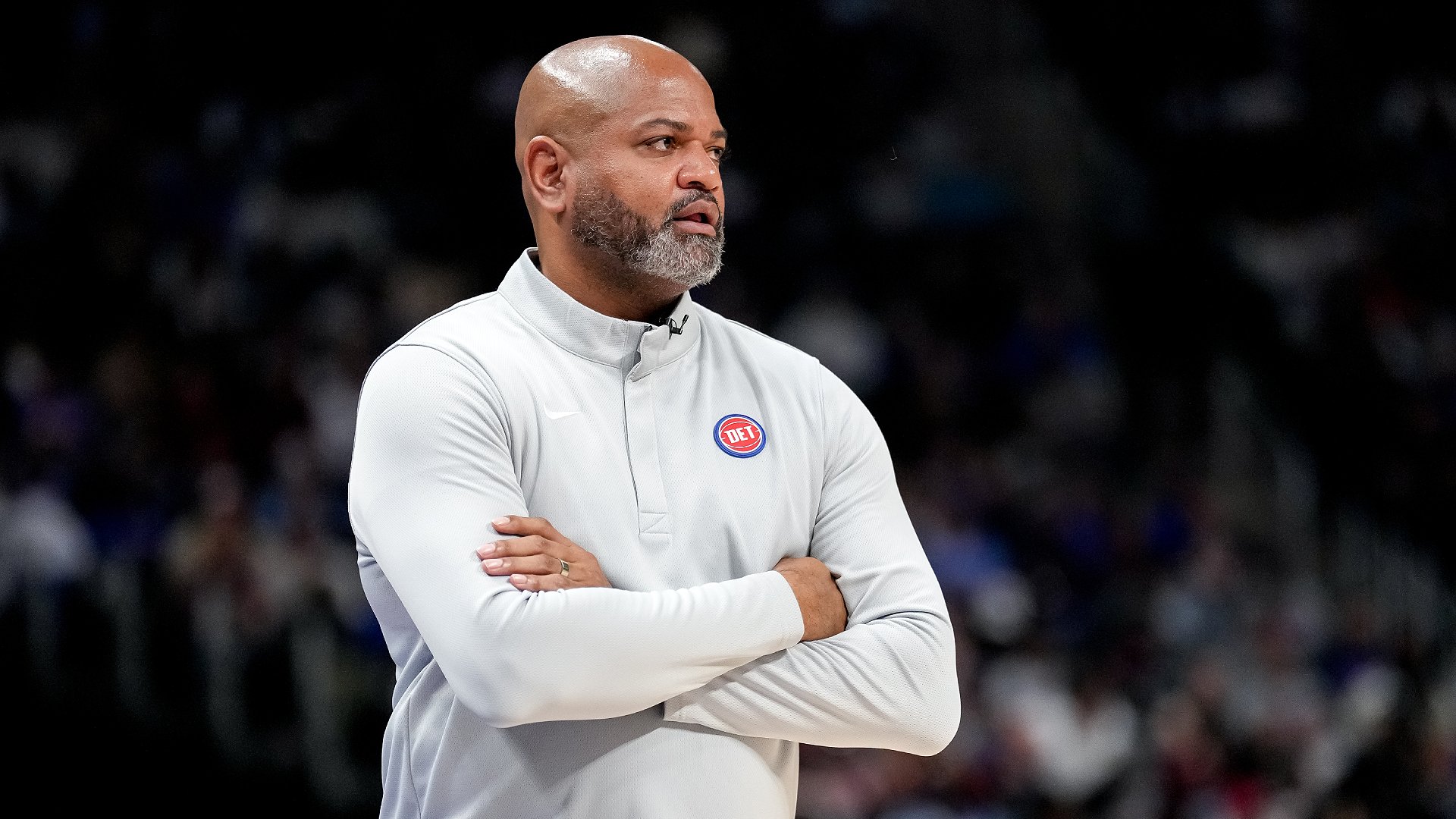
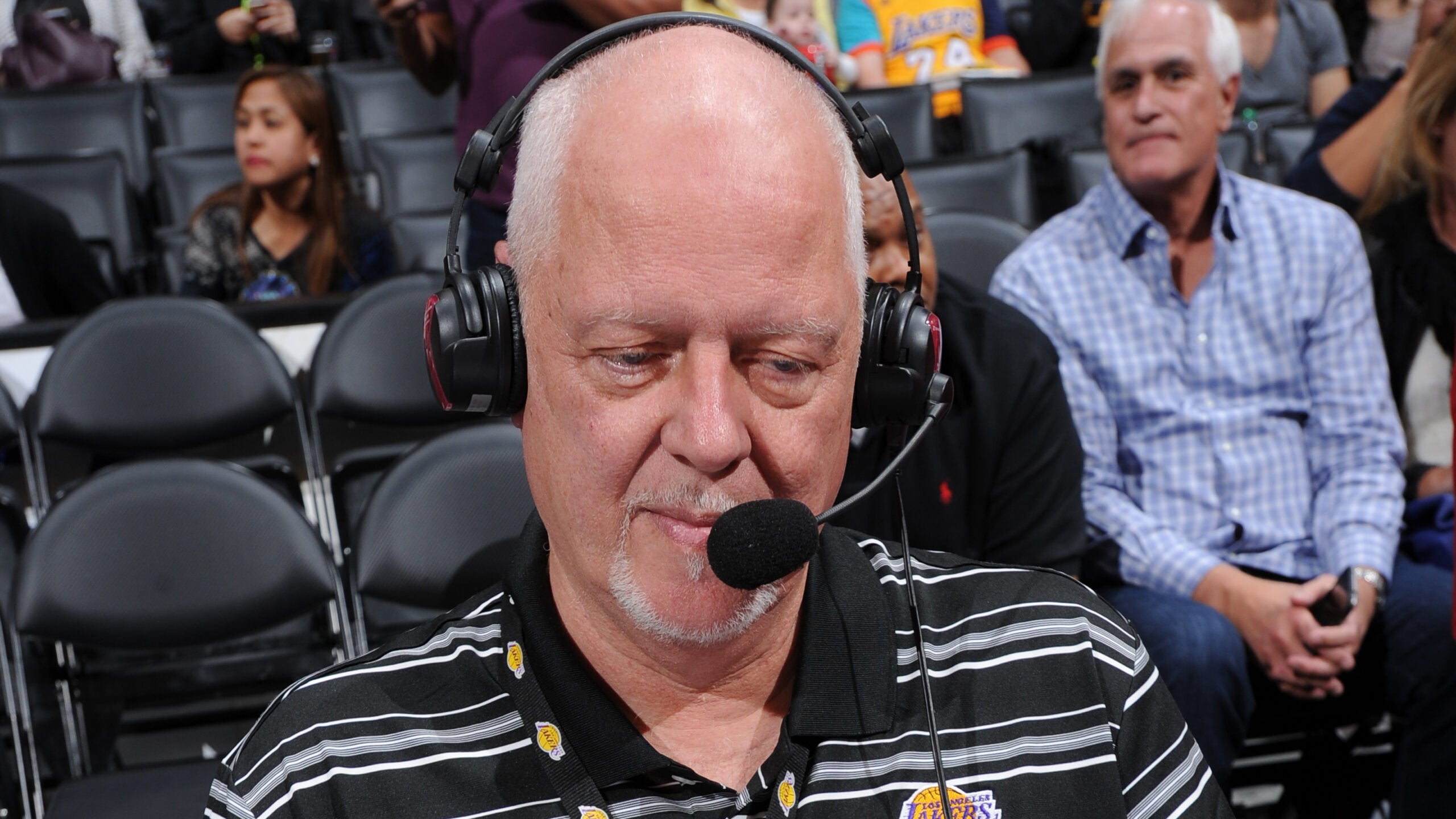
Close friends off the court, Pistons coach J.B. Bickerstaff and Magic coach Jamahl Mosley mutually agreed on no contact between them during their first-round series.
Editor’s Note: Read more NBA coverage from The Athletic here. The views on this page do not necessarily reflect the views of the NBA or its teams.
It all began at Grg’s in the early 2000s.
Tim Grgurich, the longtime assistant coach renowned inside NBA circlesbut almost anonymous outside them, and who is generally credited with creating the NBA’s modern, year-round player development culture, was holding his annual summer development camp in Las Vegas. At the Grg Camp, NBA players from every team came to get better. With Grg, there was no agenda. But Grg’s camps didn’t just help players reach the next level; they also served as a pipeline for up-and-coming coaches, all looking to find their footing and their place among their peers.
That’s where J.B. Bickerstaff and Jamahl Mosley really became friends.
“When we hit Vegas, we would go to dinners,” Mosley recalled last week.
“Right from then, it was, you’re around each other a little bit. And you go out a couple times, and it might have been the first or second year of Vegas camp. Once we connected and started hanging out, it was a real thing. And then it was just constant conversations, talking to each other.”
“We all broke down drills,” Bickerstaff said. “We all did one-on-one with the guys. We did all, like, all the sweat equity we could possibly build, is what we were doing there, to help young guys get better, and to teach the game. He and I, just personality-(wise), just fit, just matched. And we just continued to grow our relationship. Now, our families vacation together. Our wives are good friends. His kids call me Uncle J.B.; my kids call him Uncle Jamahl. We’re family at this point.”
Normally, though, you don’t compete against your family at work, knowing that if you succeed, it may cost your family member their job. But for the second time in three years, that’s where Bickerstaff and Mosley, both 47, are now, with their teams facing each other in the first round of the playoffs.
Bickerstaff is trying to continue the Pistons’ incredible metamorphosis from the league’s laughingstock two years ago to one of the favorites to win it all, after a 60-22 regular season that gave Detroit the top seed in the Eastern Conference. Mosley, in his fifth season as head coach in Orlando, is dealing with the expectations of trying to break through in the postseason after losing in the first round two straight years. It’s no secret around the league that Mosley’s future in Orlando is up in the air, a situation that would change significantly if the eighth-seeded Magic can pull off the upset over Detroit.
There’s no contact between them during the series, a mutually agreed-upon choice. They FaceTimed each other the day before Game 1 but won’t talk again until after the series ends.
“When it’s done, it’s done,” Mosley said. “After our Game 7 (in 2024, when Bickerstaff’s Cavaliers beat Mosley’s Magic) in Cleveland, hugged it out, said ‘I love you, go do your thing against Boston, you’re my guy.’ That’s it. That’s what it turns into. We’re in a dogfight, we’re gonna be mad at each other, we’re gonna try to beat the other person. The business we’re in causes that competitive nature to kick in, no matter what.”
Or, as Bernie Bickerstaff, J.B.’s father and the longtime NBA coach and executive, put it last week: “They genuinely care about each other’s success. Like, if Jamahl’s having a hard time, (J.B.)’s gonna call him. When you play basketball, you play against your best friends. Or, like the (Thompson) twins playing against each other. Once you step off the line, you’re good. But you’re not going to go, ‘Oh, that’s my brother; I’m gonna let him kick my ass.’”
J.B. Bickerstaff had a conventional route to the craft. His father won a championship in Washington in 1978 as an assistant on Dick Motta’s Bullets staff. When J.B. Bickerstaff was injured late during his playing career at the University of Minnesota, he knew he’d get into the family business. After a season in Minnesota doing color commentary on Timberwolves’ radio broadcasts, where he got to see pro systems and players up close, J.B. Bickerstaff went to work in Charlotte, on his father’s staff, as an assistant coach. Bernie Bickerstaff also gave Brown his first job in the NBA.
Mosley played at Colorado, then overseas, before being hired by George Karl in Denver as a scout and assistant.
“He knew a lot more than I did, because of his dad,” Mosley said of J.B. “He had been in the industry; I hadn’t been in the industry like that. He actually was a veteran in that regard, because he had seen the ups, the downs, the ins, the outs, the moving, all those things. That’s how I leaned on him. But it was constantly talking about us as assistant coaches, the relationships that we had with players, what that looked like for us, getting better. How we could improve. What does that look like?”
Growing up, J.B. Bickerstaff had seen the hours his dad put in, sitting in his office, watching tape. He saw how his father was with everyone, regardless of their station. Bernie Bickerstaff was fair and helpful to any number of people breaking into the business, but he didn’t suffer fools. There was no sugar coating, even for the young assistant who shared his surname.
“I think it was best that way,” J.B. Bickerstaff said. “Because it never looked like he was playing favorites. He would tell me what it was in the moment, so everybody knew — this is the standard we’re holding ourselves to. And regardless of who you are, I’m going to hold you to that standard. He always knew the right way to balance so that you heard the message. He would be hard on you sometimes, but then sometimes, he’d love you up and let you know when you did a good job. It wasn’t like he was always just going at you.”
Mosley, with Karl, was also starting his climb up the ranks. He and J.B. continually stayed in touch. And J.B. Bickerstaff also had another group of friends, many who’d played at Arizona for the late, great Lute Olsen: Luke Walton, Richard Jefferson and Channing Frye, along with Jesse Mermuys, who’d been director of operations at Arizona before starting his own rise up the NBA assistant ranks. (Mermuys is now in Phoenix as an assistant coach for Jordan Ott.) Walton and Jefferson were fast friends growing up.
Jefferson also introduced Bickerstaff to another friend of his from school.
“J.B. was rehabbing an injury coming out of college, and that’s the same place I’m getting ready for the (2001) draft,” Jefferson, now a lead analyst for ESPN after his 17-year NBA career, recalled last week.
“So I meet J.B. … He’s 22; I’m 21. I don’t know him. We just kind of become friends, kind of hang out. And Luke is still in college. So we start becoming friends, because we’re both just kind of stuck in Phoenix. Fast forward. We’re out at night, and he’s like, ‘Who’s that girl?’ And I’m like, ‘Oh, that’s Nikki Jones; she played soccer at Arizona. That’s my homie. She’s been my homie for years.’ He’s like, ‘Oh.’ Now, they’re married, and they have three kids.”
The young coaches got onto the coaching track. Bickerstaff went to Minnesota, then Houston; Mosley went to Cleveland, then Dallas. They started interviewing for head coaching jobs. Bickerstaff got his first shot as the Rockets’ interim coach in 2015 after Houston fired Kevin McHale 11 games into the 2015-16 season.
Early in Bickerstaff’s interim stint in Houston, the Rockets played the Knicks. After the game, he called his father. His mother, Eugenia, was also on speakerphone.
“And I was telling my dad, I was like, ‘Man, this s—t is hard,’” he said. “And my mom, in the background, said, ‘Boy, put your big-boy pants on and go to work.’ And that was it. And it was the mindset from that point forward, just do the job that’s in front of you every single day.”
Their peers started breaking through to the big chair, too. The Grizzlies hired Fizdale as head coach in 2016. The Hawks hired Pierce in 2018. Mosley, finally, got his shot in 2021. He was in Mexico with his family when the last round of interviews with the Magic began. His family included the Bickerstaffs.
“I was like, listen, I’ve been turned down nine times, 10 times, from different interviews,” Mosley said. “I was like, I’m going on vacation with my family, like we always do every summer. We’re going to go with the Bickerstaffs, we’re going to go with the Mermuyses, we’re going to go with the Waltons. We’re going to go on our vacation together, because that’s what we do.
“So I think I did one of the interviews with the Magic while I was there. And we were together. … that’s just how we did things. I was looking back to our kids’ photos. We would go see them at All-Star break when they were in Houston. I’ve got a picture of us looking super young, when we both had hair.”
They no longer do. Job casualty.
Bickerstaff is, like his father, stoic on the sideline. He’ll jump his guys when necessary, but his trait is being even-keeled in moments of challenge. There wasn’t a lot of yelling from him in the two days after Orlando came to Little Caesars Arena and out-toughed Detroit in Game 1.
“It’s very calming,” Pistons center Jalen Duren said. “He’s a guy that doesn’t add on extra pressures. He’s a guy that kind of mellows everything out and says, ‘OK, this is what’s happening, we’re going to deal with it, and we’re going to get through it. And we’re going to learn from it together.’ It’s been great all season.”
Two years removed from being fired by the Cavs, Bickerstaff is a finalist for NBA Coach of the Year honors with his team soaring behind emerging superstar Cade Cunningham. Mosley is just trying to survive, despite having his own No. 1 overall pick in forward Paolo Banchero and his role in resurrecting a moribund Orlando franchise over the last five seasons. His Magic have, in the last 10 days, responded to the moment, routing Charlotte in the last Play-In Tournament game before going toe-to-toe with the top-seeded Pistons. But they probably have to finish the job for their coach to keep his.
During this series, Mosley and Bickerstaff often stand just a few feet apart on the sidelines. But they will not speak with each other. Not now.
“He’s one of my closest friends,” Mosley said. “And this is why us playing this playoff series is hard. He’s one of my closest friends. And we talk all the time. He gives advice. We talk about things — what’s real, what’s not real, what’s the league like. We talk about all the things that we go through. … He’s now moved into that realm. When the Houston thing happened, we talked about what’s next moves, and what are you going to do here, and then Cleveland happened, and then we’re playing each other in the playoffs. And we didn’t talk. And once it was done, we talked.
“Knew all the things going on there and the realities of the NBA. We talked. The advice he gives, what he listens to, being supportive, and me supporting him, it’s real. We’re friends and family before any of this basketball stuff.”