Every Pick from First Round - 1996 NBA Draft
Take a look back at every first-round pick from the legendary 1996 NBA Draft.
The venerable Ernie Johnson opened TV coverage of the 1996 NBA Draft with “Tonight you’ve arrived at a place where childhood dreams will come true with the big city of New York as a backdrop. Some of the best young players in the world stand at the doorstep to the big time – the NBA.”
Moments later, then-NBA Commissioner David Stern walked onto the stage at Continental Airlines Arena in East Rutherford, N.J, and announced, “With the first pick in the 1996 NBA Draft, the Philadelphia 76ers select Allen Iverson from Georgetown University.”
Recognizable names with solid college basketball resumes – and in some cases, celebrated high school careers but no college experience – filled the 1996 Draft. But no one foretold in that moment what the 1996 Draft class would become.
It ended up one of the greatest draft classes ever, right there with the 1984 class that included Hakeem Olajuwon, Michael Jordan, Charles Barkley and John Stockton, and the 2003 class that included LeBron James, Carmelo Anthony, Chris Bosh and Dwyane Wade.
When careers from the 1996 class were over, the accolades exceeded expectations:
• Five Naismith Basketball Hall of Fame inductees: Allen Iverson, Ray Allen, Kobe Bryant, Steve Nash and Ben Wallace.
• Three MVPs: Iverson, Bryant and Nash.
• Two Defensive Player of the Year selections: Wallace and Marcus Camby.
• Eleven All-Stars: Iverson, Shareef Abdur-Rahim, Stephon Marbury, Allen, Antoine Walker, Bryant, Peja Stojaković, Nash, Jermaine O’Neal, Zydrunas Ilgauskas and Wallace.
• Eleven NBA champions: Allen, Antoine Walker, Samaki Walker, Bryant, Stojakovic, Derek Fisher, Travis Knight, Malik Rose, Shandon Anderson, Wallace and Darvin Ham.
• Eight All-NBA selections: Iverson, Marbury, Allen, Bryant, Stojakovic, Nash, O’Neal and Wallace.
• Six players with retired numbers: Iverson (Sixers), Nash (Suns), Bryant (Lakers), Stojakovic (Kings), Wallace (Pistons), Ilgauskas (Cavaliers).
• Four Olympic gold medalists: Abdur-Rahim, Marbury, Allen and Bryant.
• Four players on the NBA’s 75th Anniversary team: Iverson, Allen, Bryant and Nash.
• Three statues: Bryant at the Lakers’ arena; Iverson at the 76ers’ practice facility; Marbury in China.
Debate which class you think is the best, but allow Iverson to give his biased opinion.
“People talk about the class that Mike was in. People talk about 2003, LeBron and Wade and ‘Melo and that’s a great class,” Iverson said in the NBA documentary “Ready or Not: The 1996 Draft”. “But the ‘96 Draft class, hands down the best.”
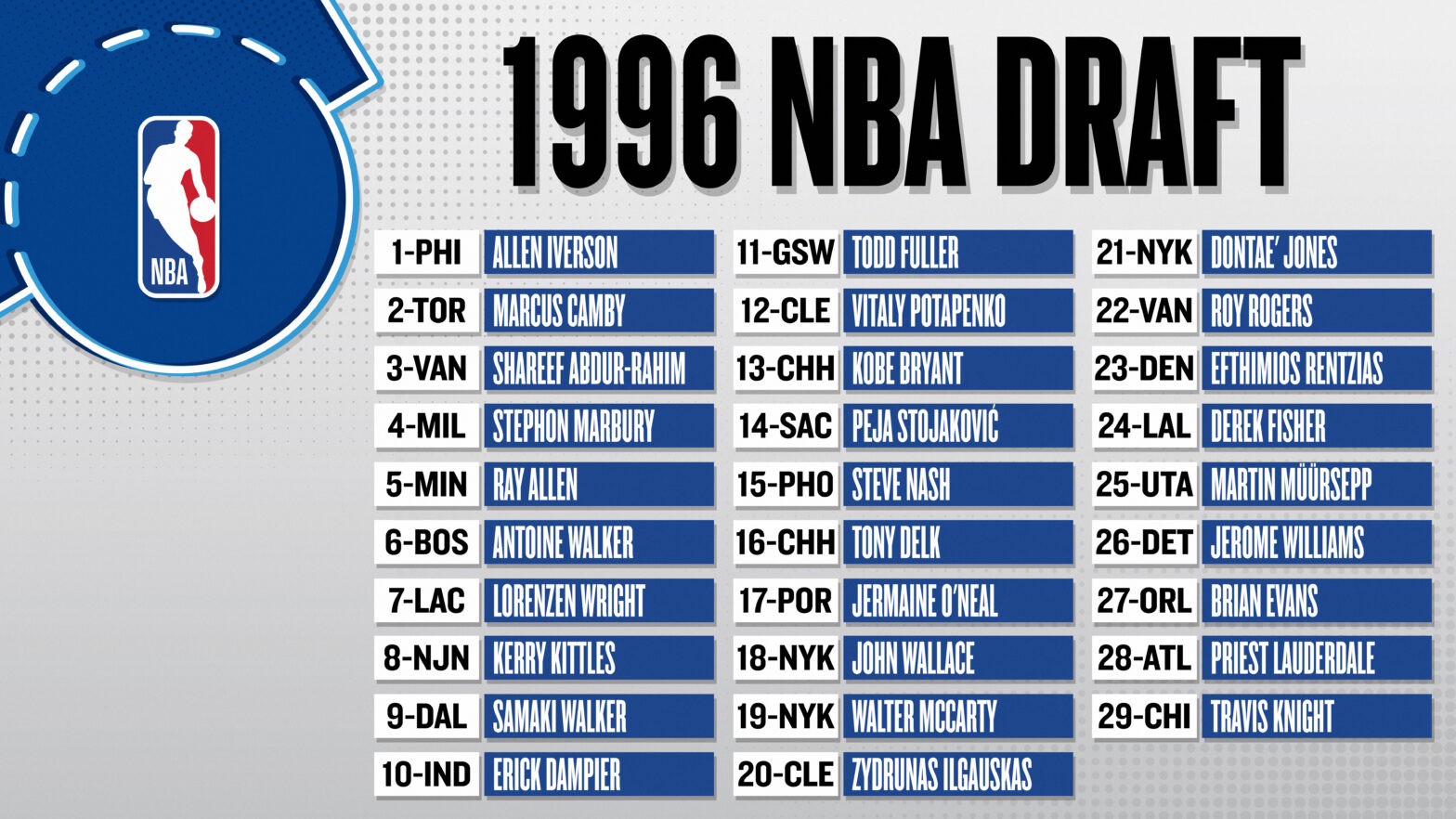
Greatness abounds throughout the class, including a player who wasn’t drafted and became a Hall of Famer – Wallace.
The class is a cornucopia of curiosities, a rabbit hole of endless warrens stretching from Hollywood to Lithuania. It covers family connections, iconic photo shoots, tragedy, cultural significance and trivia that will stump even the most diehard draftnik.
• NBA family connections: Jeff Nordgaard, the uncle of 2025-26 All-Rookie performer Kon Knueppel, was drafted 53rd in the second round; Jason Sasser, the uncle of Detroit Pistons guard Marcus Sasser, was drafted 41st; Peja Stojaković, drafted 14th, is the father of potential 2027 draft pick Andrej Stojakovic; and Drew Barry, the son of Hall of Famer Rick Barry, was drafted 57th by the Seattle SuperSonics.
• Hollywood roles: Ray Allen starred in Spike Lee’s He Got Game alongside Denzel Washington, and Walter McCarty and John Wallace also had roles in the movie.
• NBA/MLB crossovers: Ryan Minor, who died of colon cancer in 2023, was selected by the Sixers at No. 32 in the second round, and in a neat piece of trivia, Minor was the Baltimore Orioles third baseman who replaced Cal Ripken Jr. in the game Ripken’s record-setting consecutive games played streak ended. The Sixers used the No. 31 pick to take Mark Hendrickson, the most recent player to play both in the NBA and MLB.
• International influence: With Stojakovic, Vitaly Potapenko, Zydrunas Ilgauskas and Nash, this draft class helped the NBA’s global reach continue to grow.
• Iconic SLAM magazine cover: The memorable photo featuring the top picks in the uniforms of their new teams (minus Iverson) set a visual foundation for multiple star players.
In this group full of legends, Bryant, who died in a 2020 helicopter crash, stands out with his five championship rings, two Finals MVPs, regular-season MVP and 15 All-NBA selections.
Before the 30th anniversary on June 26, here is an oral history from those involved in the 1996 NBA Draft.
Kobe Bryant: High school sensation turned NBA all-time great
Kobe shares KG's advice at 1996 NBA Draft
Kobe Bryant talks with TNT's Craig Sager at the 1996 NBA Draft.
Bryant was part of a trend started by Kevin Garnett in 1995 when high school players bypassed college for the NBA. But Bryant was not a top-five or even a top-10 pick. However, then-Lakers front office executive Jerry West – and his game-changing eye for talent – was determined to make Bryant a Laker and reached a deal that would send Vlade Divac to Charlotte for the No. 13 pick. If available, Charlotte would take Bryant and complete the trade with the Lakers. That’s what happened.
Rod Thorn (former NBA and team executive, in the Prime documentary, “Jerry West: The Logo“): “I remember getting a call from Jerry, and he said, ‘I just worked out this high school kid from Pennsylvania, Kobe Bryant. He’s the best player I ever worked out, and I have to get him.’”
West (from his autobiography “West by West: My Charmed, Tormented Life”): “I didn’t need to watch much of Kobe’s workout at the Inglewood YMCA, going one-on-one with Michael Cooper (even though he was 40, he was still in good shape), to know that he was someone I coveted, that we had to have him. Earvin Johnson said he had never heard me more excited about a prospect. In fact, I thought that Kobe was possibly better than the players we had on the team at the time. Never in my life have I seen a workout like that. When I said I had seen enough, I meant it. I knew who he was, and just from looking at his eyes, I knew what he wanted.”
West (from “West by West”): “The deal for Kobe Bryant could not have been completed, would never have gotten done, were it not for Arn Tellem, Kobe’s original agent and my close friend. When we had the sense that the New Jersey Nets might take Kobe with the eighth pick in the draft, Arn helped persuade them not to; basically, he told them, and had Kobe’s parents tell them, Kobe had no interest in playing for New Jersey.”
West (from “West by West”): “Even though he was only 17 years old, Kobe was a once-in-a-lifetime player who could cast his shadow on the franchise for years to come. His fierce competitive drive was innate, could not be purchased on the street or in a store or anywhere. You need to possess more than a little nastiness to play basketball at the highest level, and Kobe had that in abundance. You need to have the cold-bloodedness of an assassin, and he possessed that too. He clearly modeled himself on Michael Jordan, which was fine. But I had no idea how long it would take him to mature and develop, and I did worry that it might take him a while to fit in.”
Bryant (to reporter Craig Sager at the 1996 Draft): “It’s the ultimate challenge. If I was 40 years old and I’m sitting back and I’m looking back at my career, if I went to college and played in the NBA, maybe had a great career, maybe not. And I’m still having that doubt in my mind, could I have answered that challenge? Could I have responded to the challenge of the NBA? And that’s something that I didn’t want to have on my shoulders, so I just really accepted it.”
West (at a January 2016 news conference during Bryant’s final season): “This has been a remarkable player, a player for the decades, simply one of the greatest players that ever played the game. And I’m talking about a handful of guys that ever played the game.”
Allen Iverson, small guard, big-time player
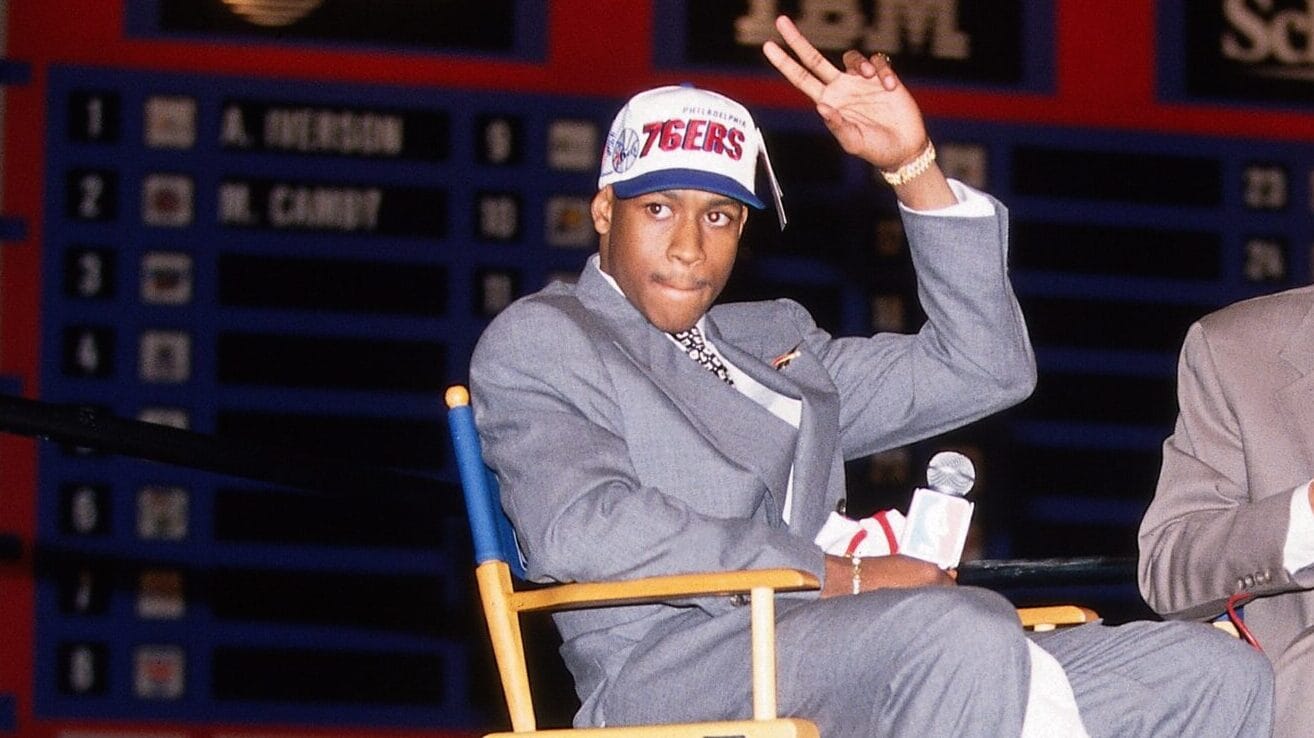
Allen Iverson speaks with the media after being selected by Philadelphia with the No. 1 overall pick in 1996.
In the years before the 1996 Draft, and in the years after that draft, taking a 6-0 guard was not a thing. But along came Allen Iverson, who starred for legendary coach John Thompson at Georgetown. Iverson entered the draft after his sophomore season in which he averaged 25 points, 4.7 assists, 3.8 rebounds and 3.4 steals.
Thompson (in “Ready or Not: The ‘96 Draft”): “When I first saw him, I said, ‘This little boy can be what I thought he was.’ But I’m going to tell you something. He was more.”
Shareef Abdur-Rahim: “Allen was like a blur from the beginning.”
Ray Allen (in “Ready or Not”): “Allen is an offensive genius. He would just slither through the lane, and he would make impossible shots. His heart was always bigger than his height. He was a little guy, played ferocious. He played way more bigger than the size was.”
Iverson (in “Ready or Not”): “I always felt like I was going to play harder than anybody out there on the basketball court. I’m going to come out here and play this game like it’s my last.”
Bryant (at NBA All-Star 2016): “AI as a competitor, he drove me to be as obsessive, more obsessive about the game, because I had to figure out how to solve that problem, you know? And I told him – I saw him here this weekend – I said, ‘You don’t realize how much you pushed me. And I don’t think people nowadays realize how great you were as a player and how big of a problem you were for defenses.’ ”
Allen, Marbury connected via trade, legacies
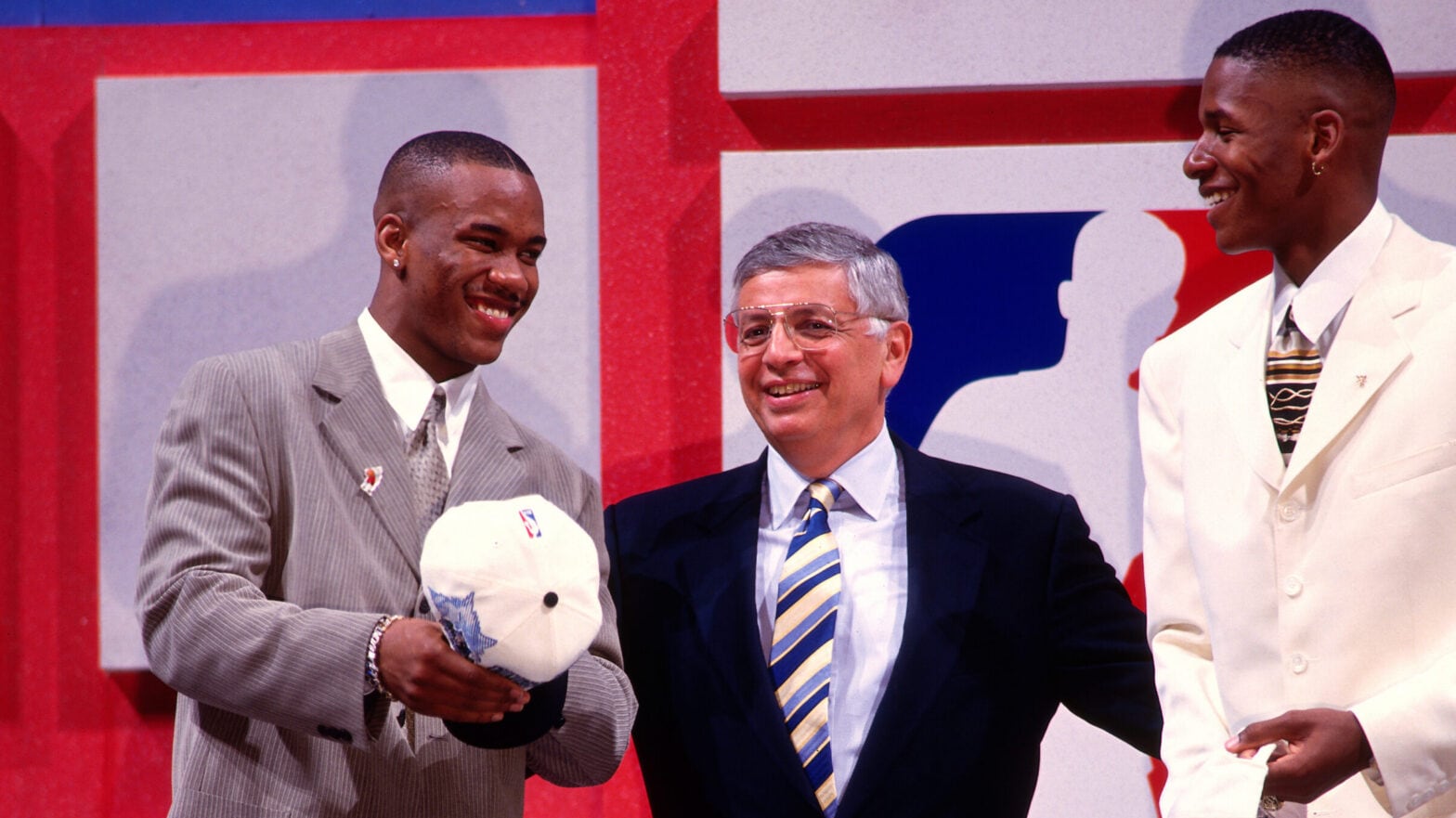
NBA Commissioner David Stern poses with Stephon Marbury (left) and Ray Allen after the Draft day trade in 1996.
Ray Allen and Stephon Marbury are linked – and not just because they are in the 1996 Draft class and not just because they were selected back-to-back. In a draft day trade, the Milwaukee Bucks drafted Marbury fourth and traded him to the Minnesota Timberwolves for Ray Allen, who the Timberwolves selected at No. 5.
Marbury had a 13-year NBA career that included two All-NBA selections and two All-Star appearances. He continued his playing career in China where he became a fan favorite, won three CBA titles and embraced the unique situation. Allen became one of the game’s all-time great 3-point shooters, helping usher in the modern era of long-range shooting, winning two titles and making one of the greatest shots in Finals history – a corner 3 for the Miami Heat against the San Antonio Spurs in the 2013 NBA Finals. The shot sent the game to overtime, leading to Miami’s Game 6 victory and eventual title.
Marbury on getting drafted (in “Ready or Not”): “My mom, my dad, they’ve watched my brothers go through hard times and not being able to make it to the NBA and then now finally one of her kids, one of their brothers made it and we all made it when I made it. … My facial expression and my emotions, that shared that energy spread amongst people all over the world. And I think my family’s emotions, when my name was called, showed that as well. And it allowed people to understand this journey that we’ve all taken to get thus far to be able to be here and to be able to say we made it.”
Allen on initially getting drafted by Minnesota (in “Ready or Not”): “When the fourth pick comes, I really heard that Milwaukee really loved me. Senator (Herb) Kohl (the Bucks’ owner), he really loved me and thought that I was a good fit for them, but the cameras go to Stephon’s table. The fifth pick came and the cameras came over my table and I just immediately, like my heart sunk. I couldn’t understand what was happening. Why was I being drafted by Minnesota? And they already have a two-guard (J.R. Rider), so I get drafted, I’m confused.”
Allen, who held the all-time record for made 3s until Stephen Curry broke it, (in “Ready or Not”): “I learned throughout my career that the ball finds energy. Keep moving, keep moving. Don’t let grass grow under your feet. And the minute my teammate throws me the ball and as the ball’s going up, the other coach says (expletive). Just like that. You don’t want to be on the other side of that. I wasn’t chasing a record. I was just doing my job. When that moment came, it’s serendipity.”
Shareef Abdur-Rahim, All-Star, gold medalist, absent from draft photo
Shareef Abdur-Rahim filled out paperwork to withdraw his name from the NBA Draft in 1996, thinking he would return to Cal for his sophomore season. He left the paperwork on then-Cal coach Todd Bozeman’s desk, and the Vancouver Grizzlies drafted him with the No. 3 pick.
In one of the iconic draft photos from that year, the players invited to the green room are sitting and standing next to Stern. Missing from the photo: Abdur-Rahim, now the NBA G League president.
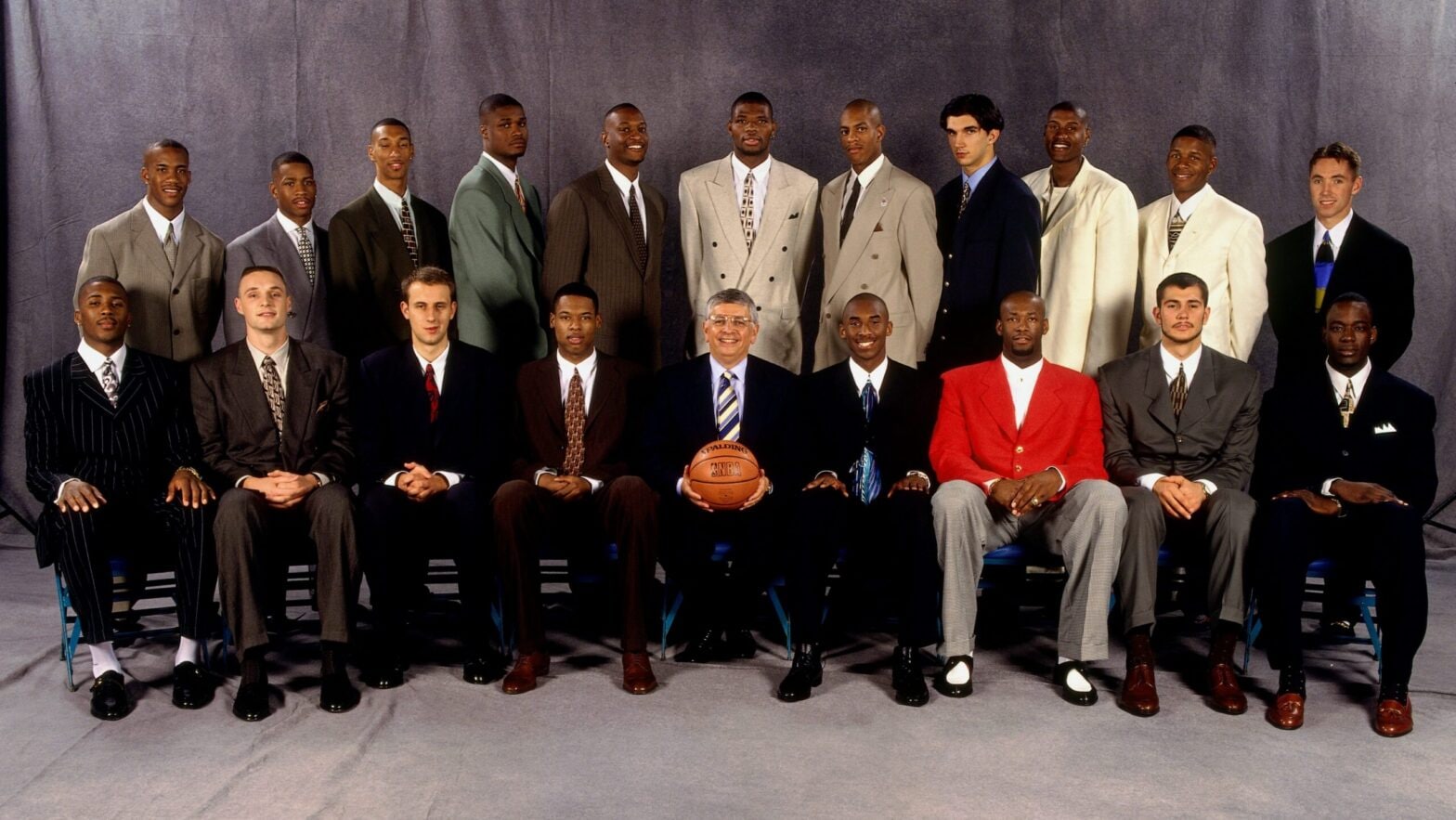
NBA Commissioner David Stern poses with the NBA Draft class in 1996.
Abdur-Rahim: “My draft night, it kind of started off rocky. I’m not in the picture with Commissioner Stern because I had a buddy from New York, and the day of the draft for some reason, we decided that he was going to show me around New York. We were staying in Meadowlands, but he came over and took me through the tunnel and just ran around New York and I ended up missing the bus to go to get to the draft. Every time my mom (Deborah Hester) looks at that picture, she gets upset with me because I missed the big draft picture with Commissioner Stern. The night itself is like a dream come true and it was everything we imagined. We have a picture somewhere. It’s my family, my brothers and sisters and my mom, my wife, all back at the Marriott Meadowlands after the draft that night just sitting down and it was just like a big relief and just elation. Everybody was just so excited about it. It was just the start. It was just a great, great night. It really was, but it started off rocky.”
Jeff Nordgaard (the 53rd overall pick in the second round): “Shareef is one of the most underrated players that I remember.”
Behind the scenes of classic NBA photo
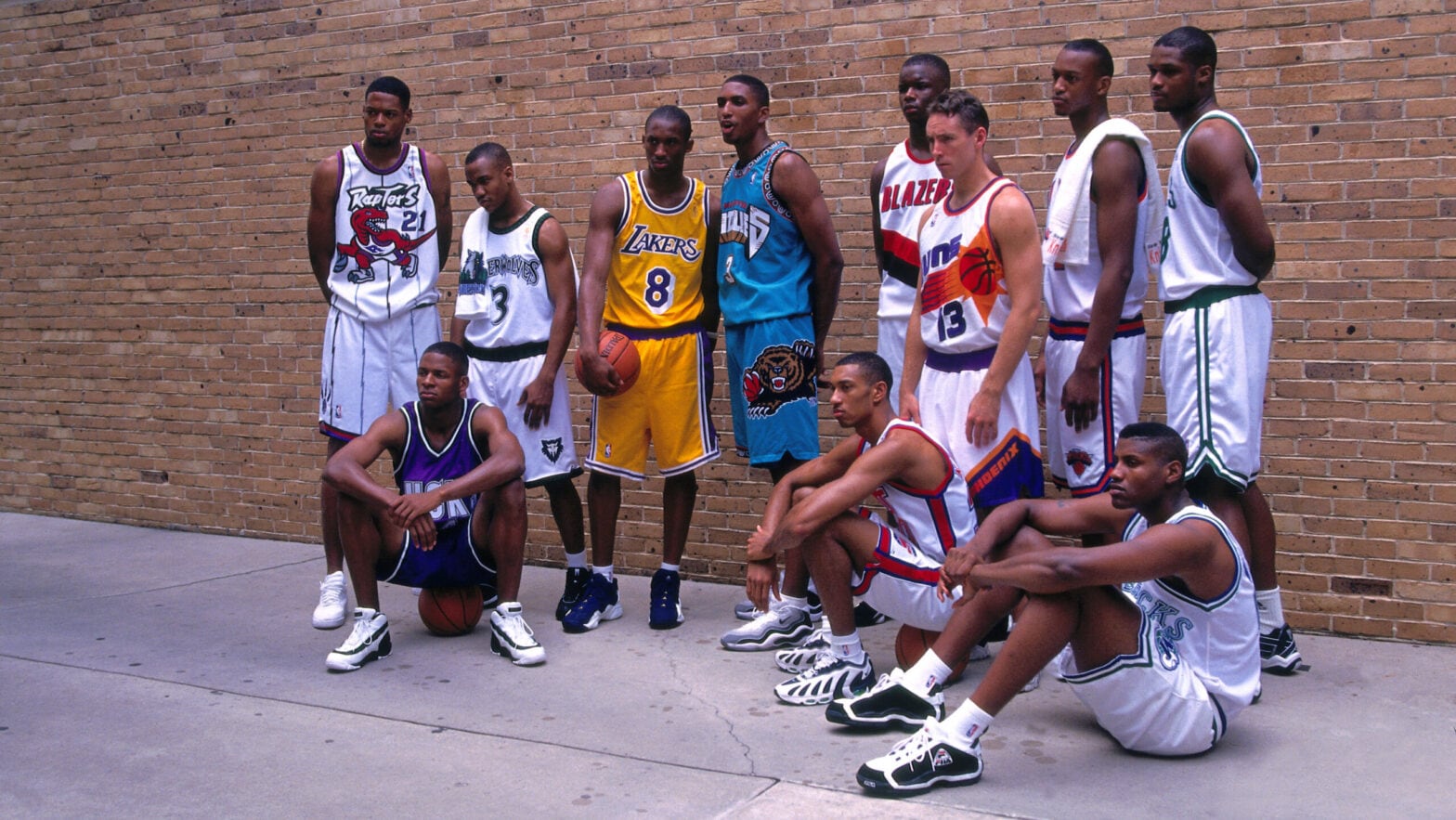
An alternate angle of the legendary SLAM cover photo taken at the 1996 rookie photoshoot.
Abdur-Rahim missing the official draft photo on draft night was just the beginning of images with fascinating backstories from the 1996 draft class.
Slam magazine’s cover photo of a special issue on that draft features several first-round picks with serious looks. Missing from the photo: Allen Iverson.
The players had gathered in Orlando for the NBA rookie photo shoot, and Slam editors and staffers figured they could sneak in a quick photo with players between scheduled activities.
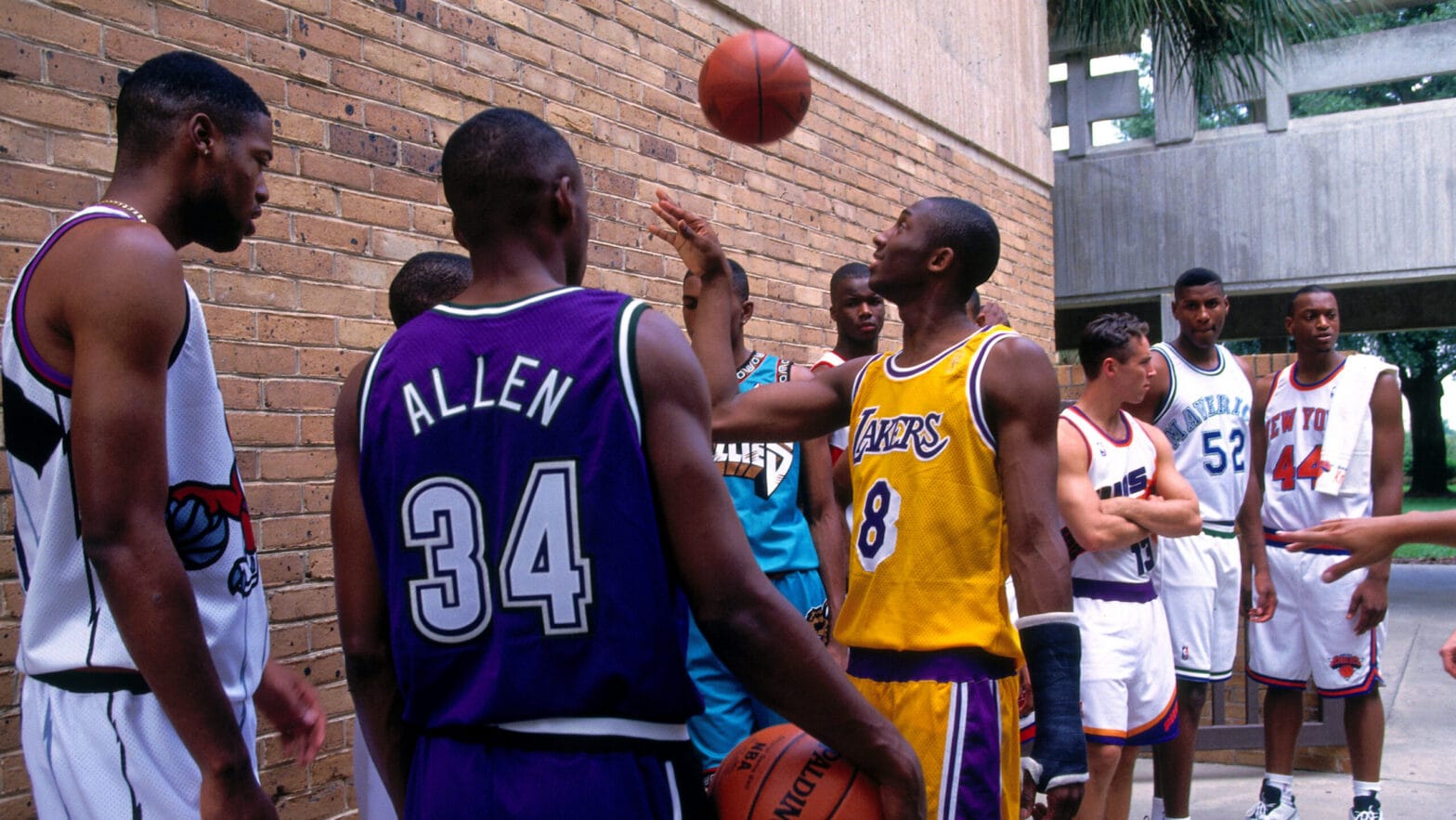
Kobe Bryant, Ray Allen and the 1996 Draft class before taking the classic SLAM cover photo.
Longtime NBA photographer Nathaniel S. Butler found time to shoot the Slam photos.
Butler: “Slam wanted to do a group photo because they had feelings that this was going to be a pretty wild class. There was a 10-minute break during a lunch period where we had to get them together to do this group photo. It was hectic, but we literally probably shot it in under five minutes. We placed everybody and just pulled it off. It’s taken on a life of its own with the success of the individual guys over their careers, but then collectively as that class and now it’s ‘Oh, is it ’96? Is it 2003? Is it this or that?’ ”
Butler on Iverson not in the photo: “We wanted AI on the left side of the frame next to Ray Allen and beneath Kobe. I was a Big East guy. I knew all about Iverson, and I loved him. There were a lot of moving parts to get everyone together. But every time I see the photo, I smile because he should be in there. Honestly, there was just miscommunication about it. He may have thought he was done after lunch. And then as he looks back on it now, I think he wishes that he were in the photo.”
Steve Nash, MVP, game-changer, Canadian legend
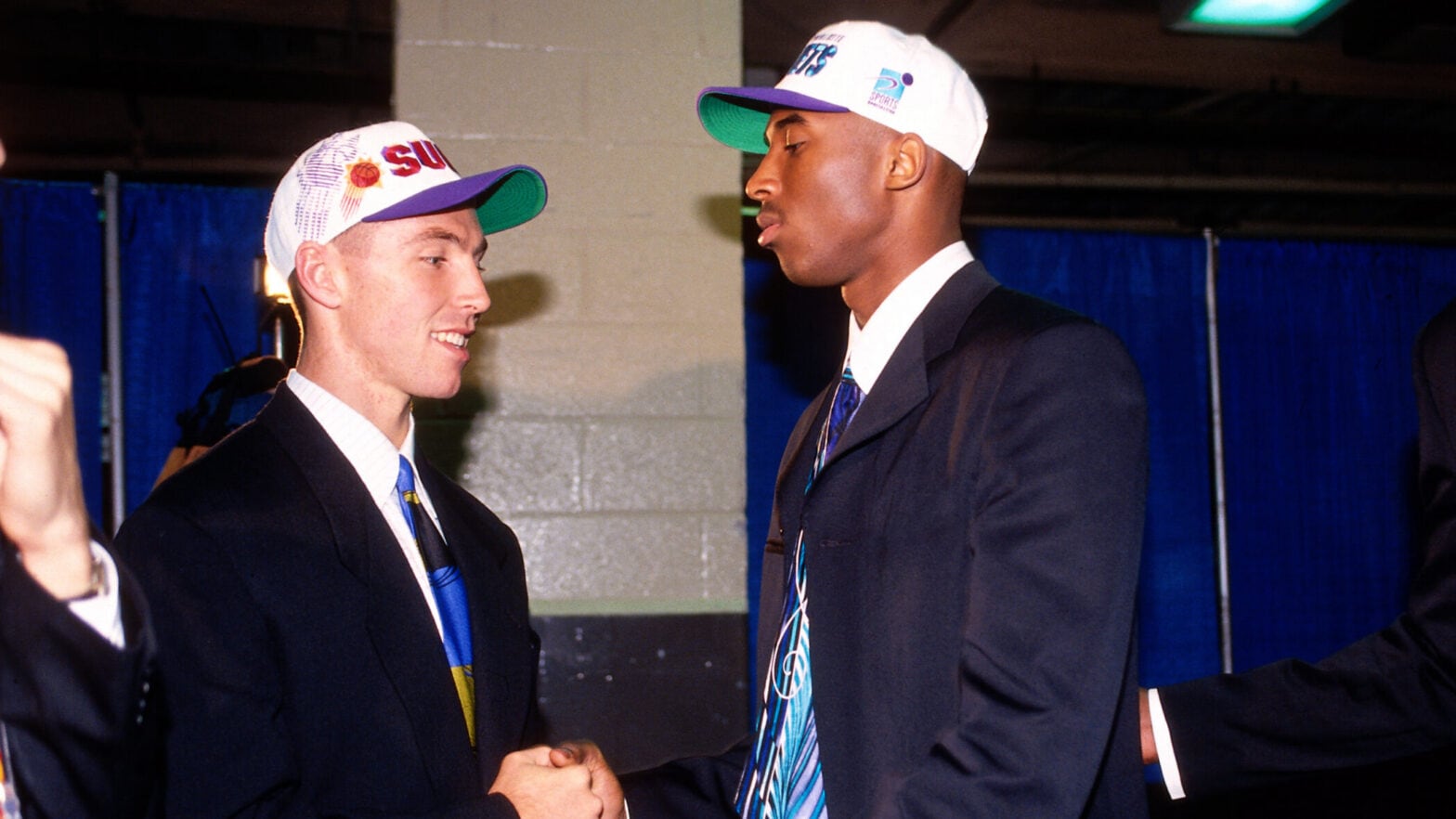
Steve Nash talks with Kobe Bryant at the 1996 NBA Draft.
In 1996, it was impossible to envision Nash’s impact on the NBA and Canada. While a first-round pick at No. 15 by the Phoenix Suns, Nash was still under the radar, and he didn’t play that much his first two seasons because the Suns had Kevin Johnson and Jason Kidd. A trade to Dallas helped Nash turn into an All-Star and All-NBA selection and a move back to Phoenix led to Nash winning two MVPs. He made his mark with an up-tempo style, scoring and passing and accelerated the growth of elite basketball in Canada.
Suns assistant coach Donnie Nelson to Suns owner Jerry Colangelo on Draft day (according to Sports Illustrated): “If Stevie is not a success, you can have my job.”
Nash (in “Ready or Not”): “I was excited. The Suns were a team that had been in the finals recently, had great players, had great reputation, and I felt lucky that I was going to get a chance to play for them.”
Then-Suns general manager Bryan Colangelo to Canada’s Sportsnet: “When it came time to making our selection nobody would think that Steve Nash from Santa Clara would be a two-time MVP Hall of Famer point guard.”
Abdur-Rahim: “I went to Cal and Steve was at Santa Clara, so Steve would come over and play in the summer before he would work out there. I was aware of him, got to know him and then obviously in the same draft and then it was always a lot of excitement for him when he came to Canada. The fascinating thing about Steve’s career, and this is just my opinion, is how he continued to get better and how he continued to build on his career. … It wasn’t until he went to Dallas where it was like, OK, he stretched out and you started to see how good he really was. Then his second stint in Phoenix he became all-league, MVP. Steve just was so consistent, and he kept getting better and changed his body, changed so many things that it just made him such a great, great player.”
Nash (in “Ready or Not”): “There’s so many times where you get frustrated or things are difficult or you have obstacles to overcome that you could easily just take your foot off the gas a little bit. And for someone with my genetic gifts, so to speak, that’s not good enough. I had to do everything possible to continue to try to improve every day or else I would’ve been very average.”
Nash (in his Hall of Fame speech in 2018): “I was never, ever supposed to be here. That’s for sure.”
Malik Rose, second rounder to two titles with the Spurs
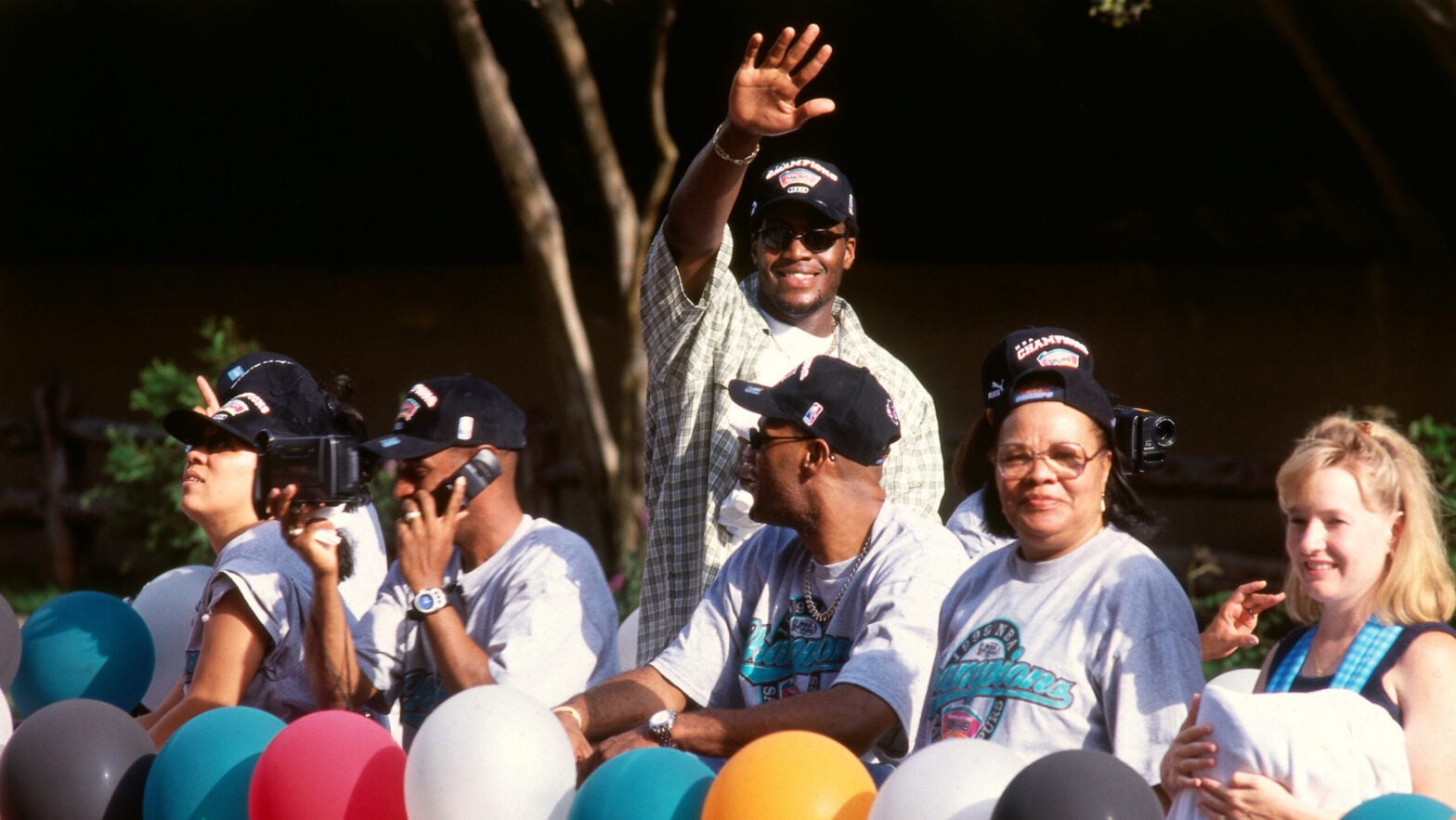
Malik Rose won two championships with San Antonio (1999 and 2003).
Fresh off a productive college career at Drexel, where he averaged 20.2 points and 13.2 rebounds in his senior season, Malik Rose, a second-round selection, No. 44 overall, did not want to attend the draft. Thirty years later, Rose, now an NBA basketball operations executive, is glad he did.
Rose: “The only thing I really remember is just not wanting to go to the draft. I knew I wasn’t going to be a first-round pick, but you couldn’t tell my mother that. My mother (Janet Rose), rest her soul, she was just convinced that I was going to get my name called and all that stuff. I was like, ‘Mom, I didn’t even get an invite to the green room. I’m pretty sure it’s not going to happen.’”
Rose: “I knew I was an NBA player. I had that confidence, but I guess I was too much of a realist. Maybe I was too much toward my end and not enough toward my mother’s end. Maybe there was a happy medium in the middle somewhere. … Although I didn’t believe I was going to go in the first round, there were a handful of names that went ahead of me in the second round that I remember being upset about.”
The Rose family made the trip from Philadelphia to the Meadowlands for the draft and sat in the stands with fans.
Rose: “My mom made a big to-do out of it. We were sitting in the stands in church clothes. My little brothers had suits. My sister had a nice outfit on and then my mother was dressed up and the whole time we’re shopping for these clothes, I’m like, ‘Mom, I’m not going to get called up there. What are you doing?’ She spent all this money, money we definitely didn’t have, but got us looking nice.”
The Philadelphia native was hoping the Sixers would select him, but they drafted Mark Hendrickson and Ryan Minor at No. 31 and No. 32. Twelve picks later, Charlotte drafted him.
Rose: “What made it special was the crowd around us, a couple of them recognized me. When they called my name, my family had a couple cousins up there with me, too. We all start jumping around and then the news cameras saw it. The news cameras came up into the stands and I did a little impromptu interview and it turned out to be a really special night.”
Now, Divac had just been traded to Charlotte in the Bryant deal and was Rose’s teammate.
Rose: “Vlade was the best vet ever. I love Vlade to this day, man. One of the coolest but weirdest things I had to do – I used to have my rookie duties, me and Tony Delk, we were rookies together on Charlotte – but one of my rookie duties is I had to buy Vlade’s cigarettes and make sure he had cigarettes every road trip. He bought me my first cell phone as well. He took care of me, man. I had some great vets, but I was like, damn, he smoked Viceroy’s.”
Ben Wallace, undrafted rookie to Basketball Hall of Fame
Look back at the Hall of Fame Career of Ben Wallace.
Ben Wallace started his college career at Cuyahoga Community College and finished at NCAA Division II Virginia Union. He’s not the first to take an unconventional path to the NBA. But no one knew then that Wallace would be the first undrafted player in modern NBA history to enter the Naismith Basketball Hall of Fame
Rose: “We were all trying to get drafted. Guys like Ben and myself were smaller school candidates. I know I went to two (pre-draft workouts). It was Miami and Milwaukee, I believe. Might have been Boston as well. And I had to go up against Ben quite a few times. I didn’t really know who he was, but after those workouts, I knew who he was. He was a guy who had a relentless work ethic. He clearly was out to prove something at the time and even though he didn’t get drafted, I think in the end he won out – or he proved his point. Put it like that.”
Wallace (in his Hall of Fame speech in 2021): “I tell you my legacy. I wasn’t welcome. I was too small. I couldn’t play the game the way they wanted me to play the game. Sounds like an uneven game to me. Put me on a level playing field and I’ll show you.”
Wallace and Camby, a four-time blocked shots leader, a four-time All-Defensive selection and Defensive Player of the Year, defined an era of rim protection.
The importance of the 1996 NBA Draft class
Abdur-Rahim: “When I talk about the class, I think of the breadth of it. The depth of that class is what makes it great. You got undrafted guys who became Hall of Famers, late first-round picks that were champions, late lottery picks that were MVPs. It was a big wave of European players. Kevin (Garnett) started it, but most of us like myself and Stephon, we were in the same high school class as Kevin. We felt connected to him, but we were kind of the first guys to just do one year of college in that era. And then that became a thing later. Kobe and Jermaine coming out of high school, that became a thing. Then it really was like in many ways a lot of basketball trends started with Allen, a big cultural trend started through that. It was just a lot of different fabrics you could pull at into that draft that makes it great.”
Nordgaard: “Nobody thought Steve Nash was going to be a two-time MVP. Certainly, Kobe is an all-timer and he was the 13th pick in the draft. I knew Ray was going to be amazing and AI was going to be something unique and special. Camby was not an All-Star ever, but he’s as good as a player that’s ever played in the NBA that didn’t make the All Star team. … I didn’t realize when the class was drafted that we’d have 11 All-Stars and five Hall of Famers. It’s been fun to lay claim to it over the years, especially when you’ve got the 2003 class and the 1984 class. I claim that both those classes were better at the top, but not as deep.”
Rose: “Looking back in hindsight, just how great it was. I’d be lying to you if I thought that then for sure, but even the first five years of my career, if I thought that this draft would go down in history as arguably one of the best. We’ve had a lot of All Star, All-NBA players and MVPs come from that draft and I’m proud to be part of it.”
Nash (in “Ready or Not”): “I feel a sense of kinship and pride in those other players that we shared that experience together that moment in time and that so many went on to have incredible careers.”
Antoine Walker (in “Ready or Not”): “I just honestly believe if you know basketball and you have a lot of respect for the game from top to bottom, it’s a no-brainer that the ‘96 class is the best ever.”
2026 Draft class prepares to enter the NBA
Thirty years later, a new group of players is ready to enter the league with the 2026 NBA Draft this Tuesday and Wednesday, and draft experts project a deep class. But just wait until 2056, when a proper evaluation can determine where this year’s class sits among the best.
* * *
Jeff Zillgitt has covered the NBA since 2008. You can email him at jzillgitt@nba.com, find his archive here and follow him on X.