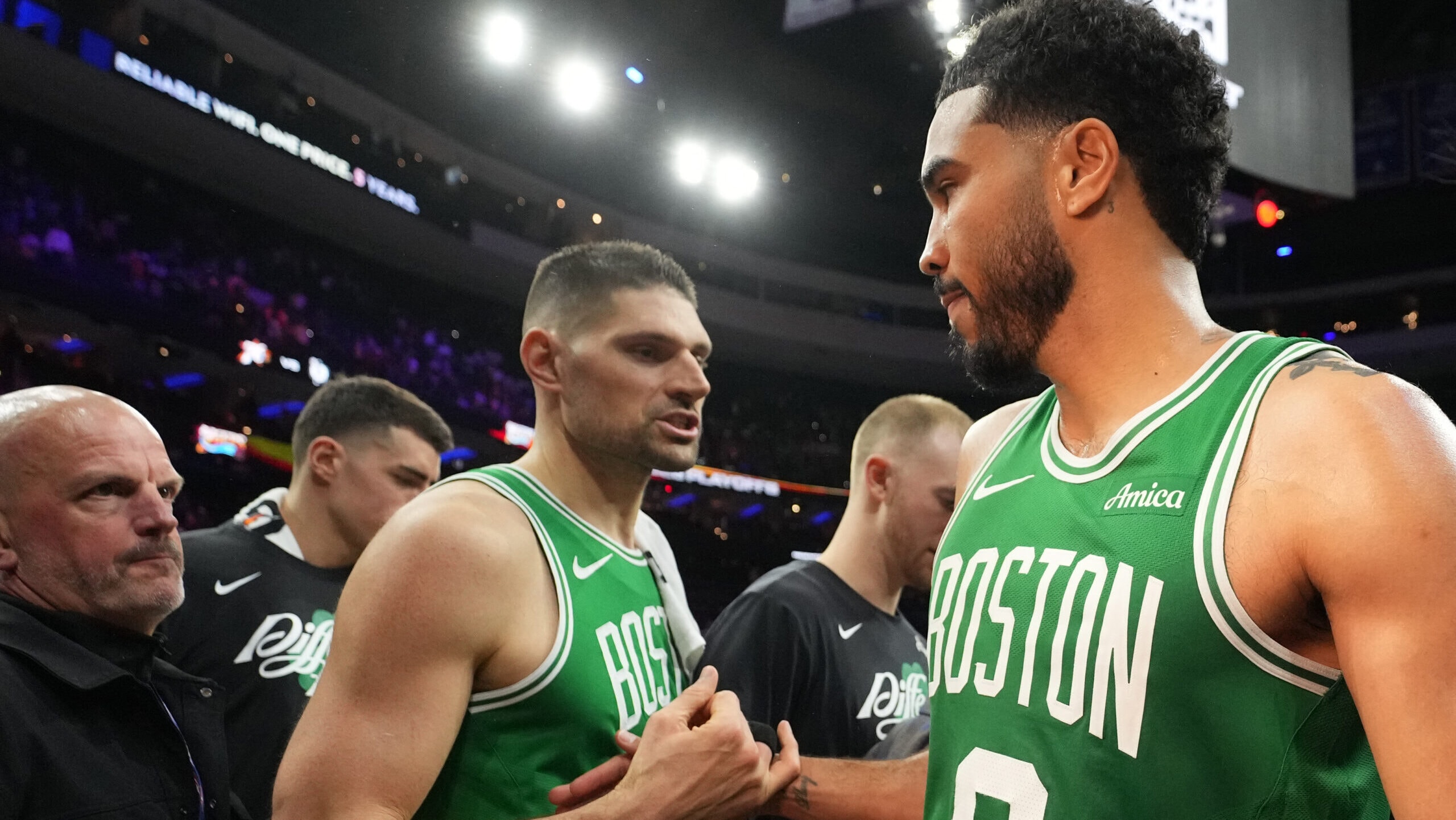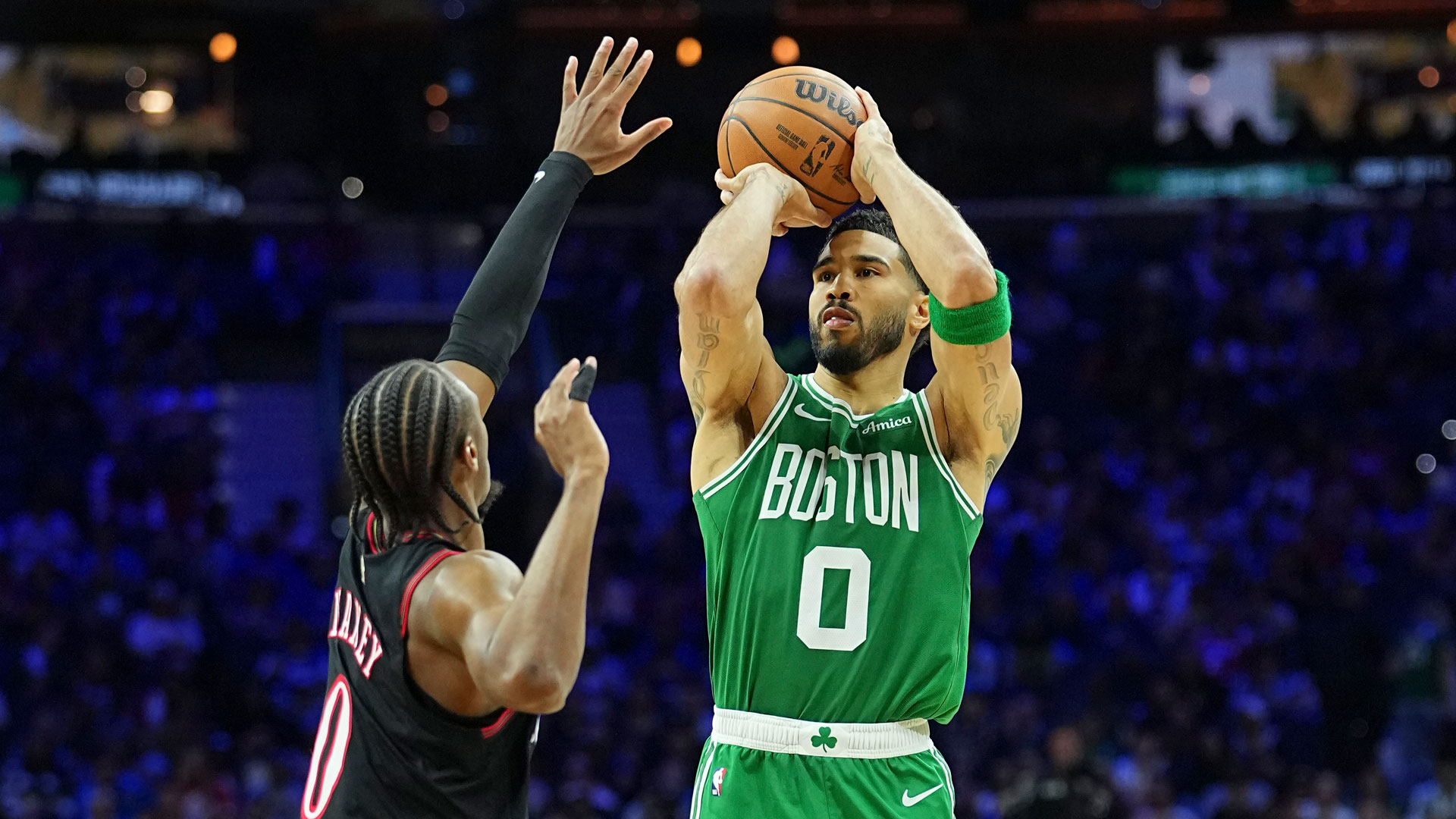
Jayson Tatum and the Celtics have shot the ball well deep into the shot clock the past two games.
The Boston Celtics are living by the 3.
Through the first four games of their first-round series against the Philadelphia 76ers, the Celtics have taken 55.9% of their shots from 3-point range, which would be the second-highest rate for any team in any playoff series in the 47 years of the 3-point line. And it’s working. The Celtics are up 3-1, having outscored the Sixers by 21.8 points per game from beyond the arc.
It’s been somewhat of a make-or-miss series, but the Celtics also won the possession game handily as they blew out the Sixers in Game 4. So there’s a lot for the Sixers to improve as they look to avoid elimination upon their return to Boston.
Here are three things to watch as the Celtics look to close things out in Game 5 on Tuesday (7 p.m. ET, ESPN).
1. Late-clock buckets
Late-clock offense is usually not very efficient. Every team in the league had a much lower effective field goal percentage in the last seven seconds of the shot clock (league average of 47.1%) than they did otherwise (56.2%).
But in the playoffs, it helps to be comfortable late in the clock. Opponents know the opposition’s offense and are better prepared to take away primary actions than they were in the regular season. So teams will more often have to generate as good a shot as possible in those last seven seconds.
The Celtics ranked third in the percentage of their shots (23.4%) that came in the last seven seconds of the shot clock in the regular season. But they were just 18th in effective field goal percentage in the last seven seconds (46.5%), and they shot just 10-for-44 (23%) in the last seven seconds of the clock over the first two games of this series.
But in Games 3 and 4, the Celtics shot 23-for-49 (47%) in the last seven seconds, including a remarkable 16-for-33 (48%) from 3-point range.
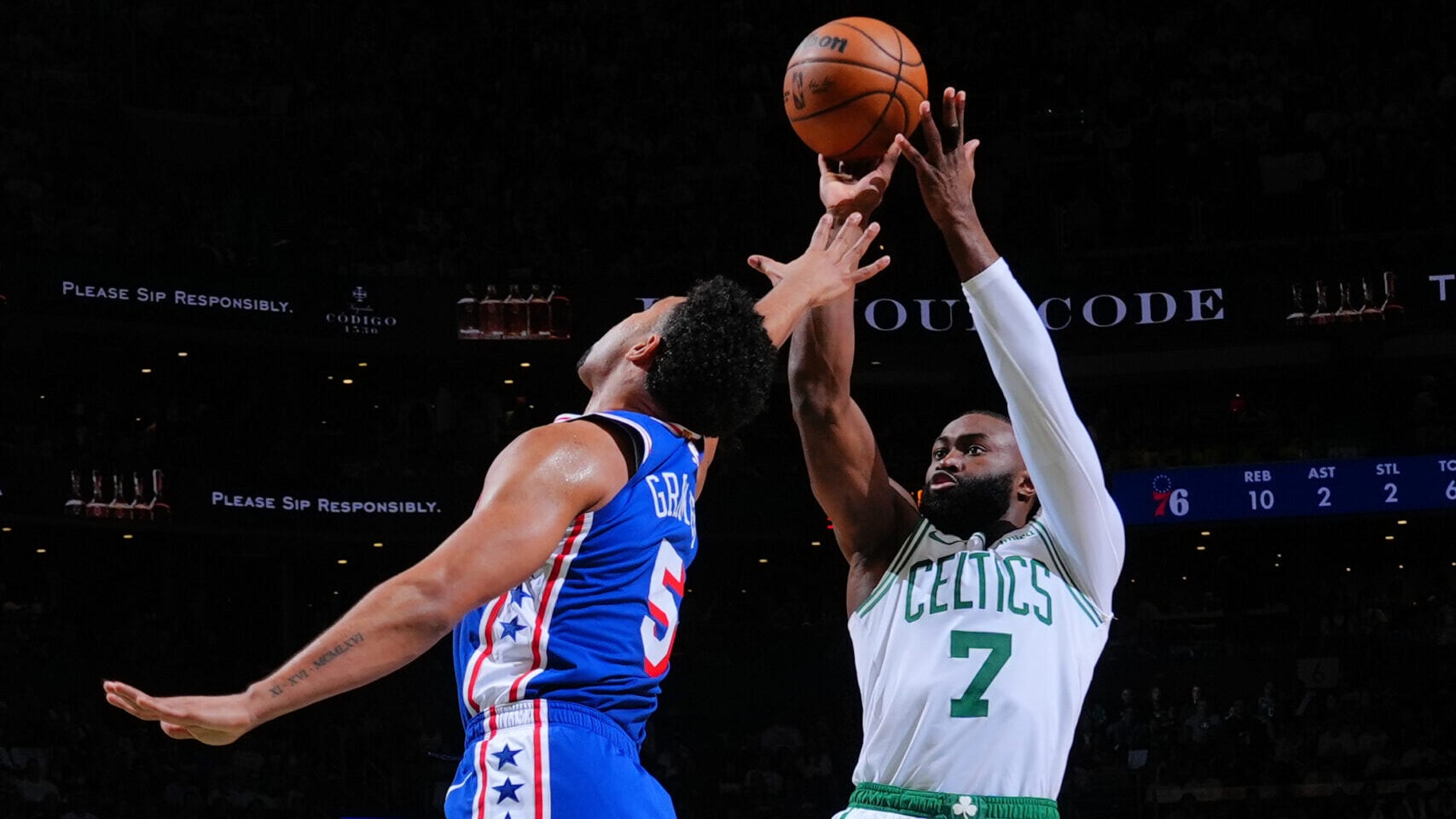
Payton Pritchard has led the way, shooting 5-for-9 from 3-point range in the last seven seconds of the shot clock over the last two games. Jayson Tatum went 3-for-4 on late-lock 3s in Philadelphia, while Jaylen Brown did more of his work inside the arc: 1-for-1 from 3-point range, but 4-for-7 on 2-pointers late in the clock.
He’s going to isolate and try to get around the foul line, where his jumpers are comfortable, even if they’re contested, like one big bucket he had late in Game 3…
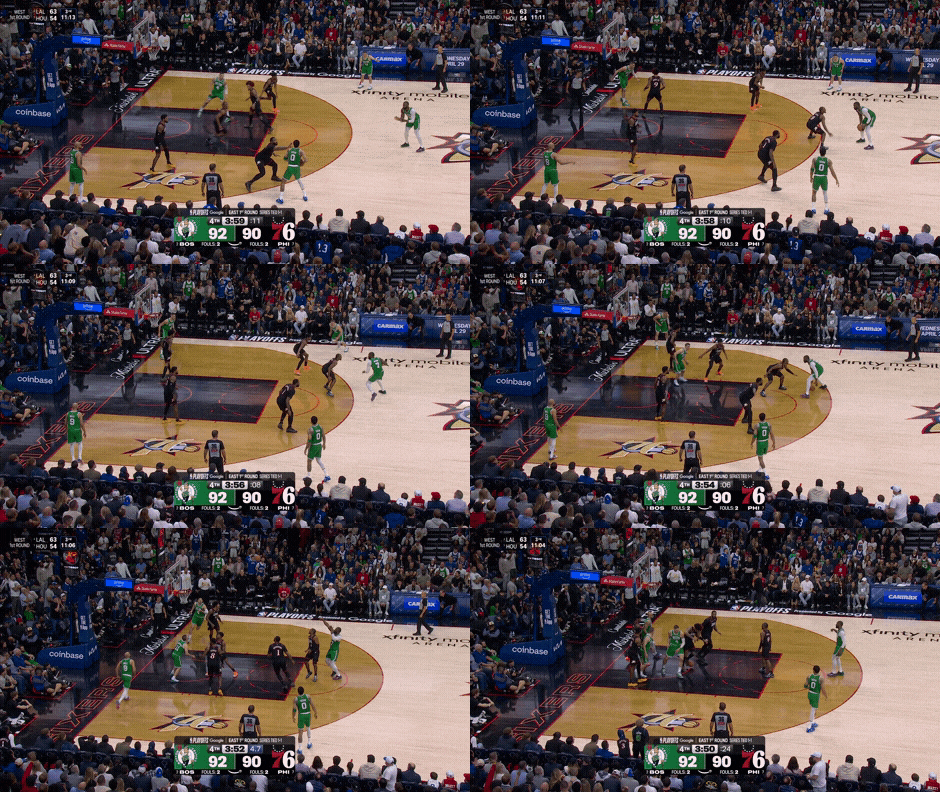
Because the Celtics were so bad late in the clock in Games 1 and 2, the Sixers actually have a higher effective field goal percentage in the last seven seconds of the shot clock for the series. But over the four games, the Celtics (33-for-93) have taken 34 more late-clock shots than the Sixers (26-for-59).
Boston is more consistently living late in the clock and under-pressure shot-making could again be the difference in Game 5.
2. Paul George is holding his own
After the Sixers got blown out in Game 4, it’s fair to wonder if they’re better off with or without Joel Embiid. Historically, he’s almost always been a positive factor for them, even when he’s not at his best. But he took a lot of shots away from other guys and didn’t score very efficiently on Sunday, when he was also the primary target of the Celtics’ offense.
But while Embiid’s value in this series is questionable, Paul George’s is not. Maybe because he’s got fresh legs after serving a 25-game suspension near the end of the regular season or maybe because he’s just a fantastic, two-way player, George has held his own against the Celtics’ two All-NBA forwards.
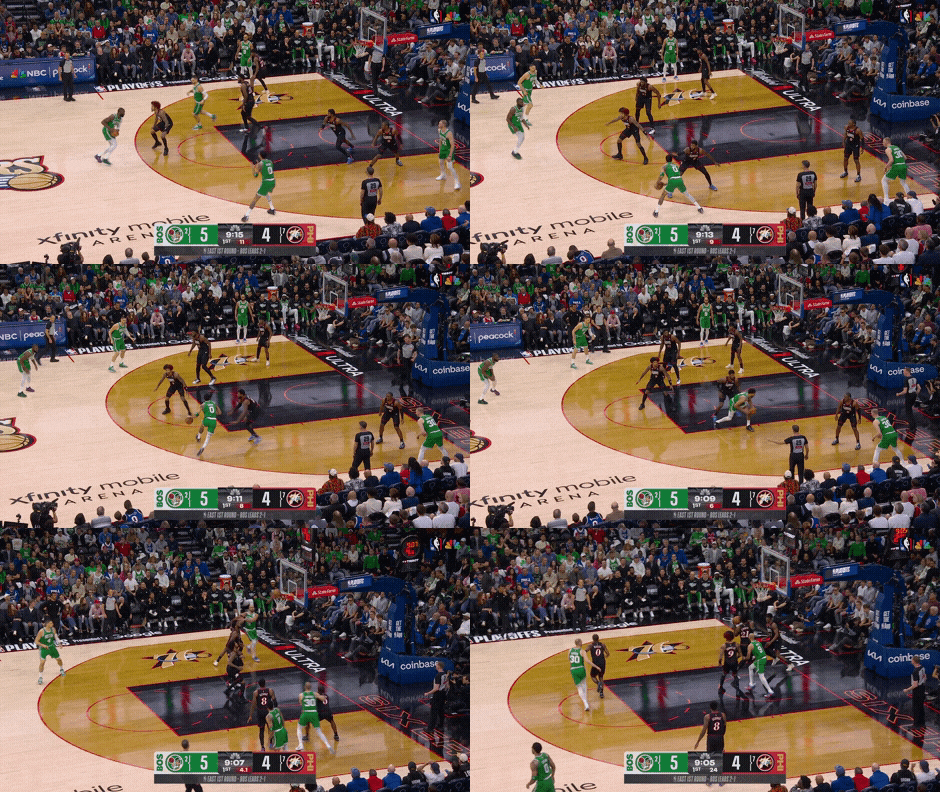
He’s done good work defensively against both Jayson Tatum…
and Jaylen Brown…
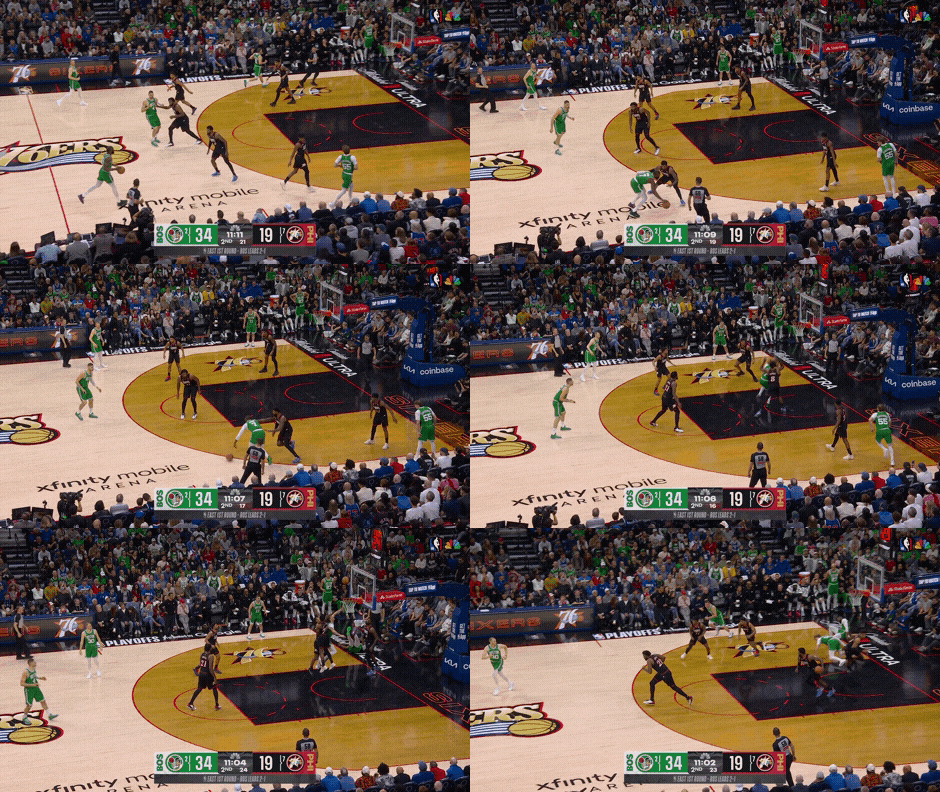
On the other end of the floor, George hasn’t been the Sixers’ most prolific scorer, but he’s been their most efficient, averaging 17.5 points on a true shooting percentage of 63.6%. He’s only 4-for-15 (27%) from mid-range, but he’s 10-for-16 in the paint and 10-for-17 from beyond the arc. Derrick White is a first-team All-Defensive candidate, and George has looked very comfortable with that matchup.
The Sixers may be looking at another early exit from the playoffs, but George reestablishing himself as one of the best two-way forwards in the league is a positive development.
3. Celtics’ center minutes
One of the more surprising developments of this series is that Nikola Vučević (85) has played more minutes than Neemias Queta (73).
Vučević is the former All-Star, while Queta had played a total of 26 playoff minutes before this series. But Queta has started 79 of the 80 games he’s played this year, and the Celtics were at their best (plus-13.2 points per 100 possessions) with him on the floor in the regular season.
They allowed 7.8 fewer points per 100 with him on the floor (105.6) than they did with him off the floor (113.4), a remarkable differential for a full-time starter. The biggest strength of the Celtics’ defense is rim protection and Queta is the foundation of that.
The numbers with either center in this series are almost identical on both ends of the floor, but the preference for Vučević may be about the way the Sixers are defending the pick-and-roll.
Actually, neither team is switching many ball-screens. Thus far in the playoffs, Boston (11%) and Philadelphia (12%) have the second and third-lowest switch rates, respectively. And with little switching, the defense has to bend a little more.
That can provide a shooter like Vučević plenty of time and space for open, pick-and-pop 3-pointers. He had a ton of those opportunities in Game 3, attempting 9 3-pointers in his 31 minutes. And while he’s just 5-for-17 (29%) from beyond the arc in the series, the Celtics have been more efficient when Vučević has set a ball-screen (1.00 points per chance) than when Queta has (0.83).
The Celtics are where they are because they ranked in the top five on both ends of the floor, but the center minutes seem like an either-or situation. It’s a fascinating choice given the disparate skill sets that the two centers have, and time will tell if head coach Joe Mazzulla leads one more than the other going forward.
* * *
John Schuhmann has covered the NBA for more than 20 years. You can e-mail him here, find his archive here and follow him on Bluesky.