Editor’s Note: Read more NBA coverage from The Athletic here. The views on this page do not necessarily reflect the views of the NBA or its teams.
***
The Nigerian national men’s basketball team was not a juggernaut. So its head coach, Mike Brown, reached out of his comfort zone and halfway across the world, scavenging for hidden advantages.
A colleague with the Golden State Warriors, where Brown worked at the time, knew Paul Henare, who was head coach of New Zealand’s national team from 2015 to 2019. If Nigeria wasn’t a powerhouse, then New Zealand basketball was a home constructed with cardboard boxes. This was no breeding ground for NBA stars. Thus, New Zealand had to scrap. And in one particular way, the situation signaled a change in the sport.
Brown wanted to learn how an offensive rebounding strategy, one that went against basketball’s norms, had become so successful. Henare’s group with New Zealand was ultra-aggressive on the glass. For years, NBA teams had steered away from crashing too many players to recover their own missed shots. The logic went like this: If a player chased a potential offensive rebound, then he would be running in the opposite direction he would go if he were getting back transition. This would allow the opponent to rush the ball up the court quicker, leading to more fast breaks and more open shots.
For years, NBA teams made a choice: Either go for offensive boards or favor transition defense. By the 2010s, just about every organization had chosen the latter strategy.
This is why Henare stood out.
Not only did his teams maul the offensive glass, sending all five guys to the paint when the shot went up, but they also weren’t allowing easy buckets on the other end. So, leading into the Tokyo Olympics in 2021, Brown set up a video call with Henare. He wanted to learn about the strategy referred to as “tagging up,” in which everyone crashes the offensive boards, though not recklessly. There are fundamentals behind tagging up, as Henare explained to Brown.
When players crash, they aren’t golden retrievers playing fetch. Instead, they approach defenders at specific areas of the floor, meeting from behind, pinning those defenders into wherever they’re planted and blocking their pathways to leak out in transition or to retrieve long rebounds, which have grown more common with the popularity of the 3-pointer.
The opposite effect held true, too. The more crashers there were, the more defenders had to stay back to box them out. Here is an example from a recent Cleveland Cavaliers-Golden State Warriors game:
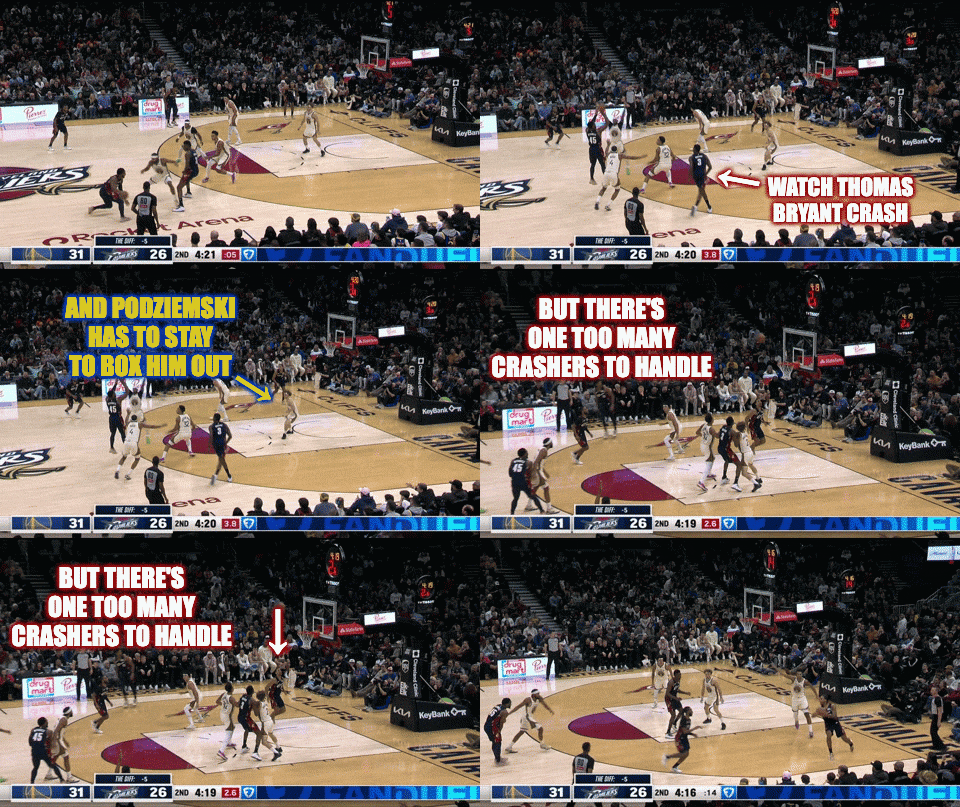
Henare showed clips of what tagging up looks like when it’s executed best. Brown asked questions. Henare answered.
“I do remember Coach Brown being intrigued,” Henare said. “It wasn’t like he was taking this call just to ask a couple of questions. Like, no, no, he’s legit interested in this.”
He wasn’t the only one.
After a long video chat, Brown implemented some of those strategies into the Nigerian team, though his group never waded into the riskiest waters, crashing all five players. He continued to teach tagging-inspired rebounding after becoming head coach of the Sacramento Kings. Now leading the New York Knicks, he has zeroed in on offensive rebounding.
Succeeding on the boards is the first step to winning the possession game. And never before have NBA coaches obsessed over the possession game like they do today.
For example, Brown’s Knicks are one of the league’s top two-way rebounding groups this season, able to gobble up misses after all types of clanks. The Knicks create 4.6 more scoring chances per game than their opponents receive (let’s call these “net chances”), the most in the NBA, according to Second Spectrum. No other team averages more than four, though that’s not for lack of trying. Think about it like this: Based on how many points the Knicks average, an advantage of 4.6 scoring chances spots them 5.6 points. That can be the difference between a win and a loss.
Because of numbers like that, which also take turnovers into account, offensive rebounding — not just in New York but everywhere — is booming.
In 2020-21, only one team offensive rebounded more than 30 percent of its own misses. The next season, five teams crested that number. As of Monday, 20 were doing it. Two more teetered just below.
The NBA’s approach to offensive rebounding has flipped seemingly overnight. Organizations are using G League teams as guinea pigs. For example, the Knicks’ affiliate has been sending four players to the offensive glass this season. And it’s not just that these teams are crashing with verve; it’s how they’re going about it.
To Henare — and to the others who teach these concepts, which now includes a slew of NBA coaches, such as the Memphis Grizzlies’ Tuomas Iisalo, the Boston Celtics’ Joe Mazzulla, the Houston Rockets’ Ime Udoka, the Phoenix Suns’ Jordan Ott, the Cavaliers’ Kenny Atkinson, the Toronto Raptors’ Darko Rajaković and more — this is not chaos. It is a science.
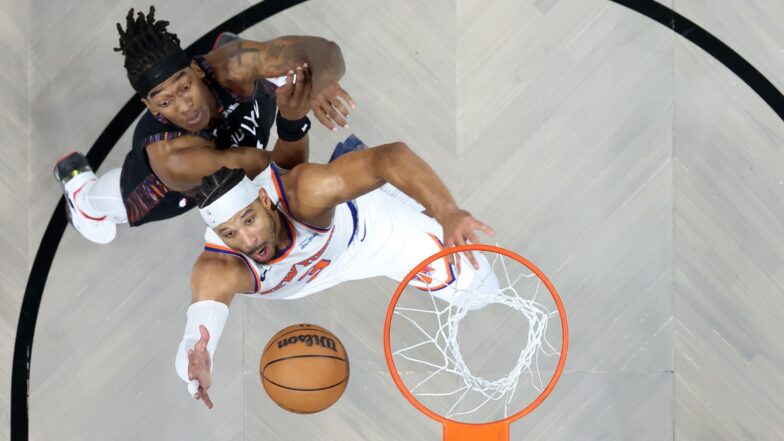
Mike Brown’s Knicks have been a big proponent of crashing the offensive glass.
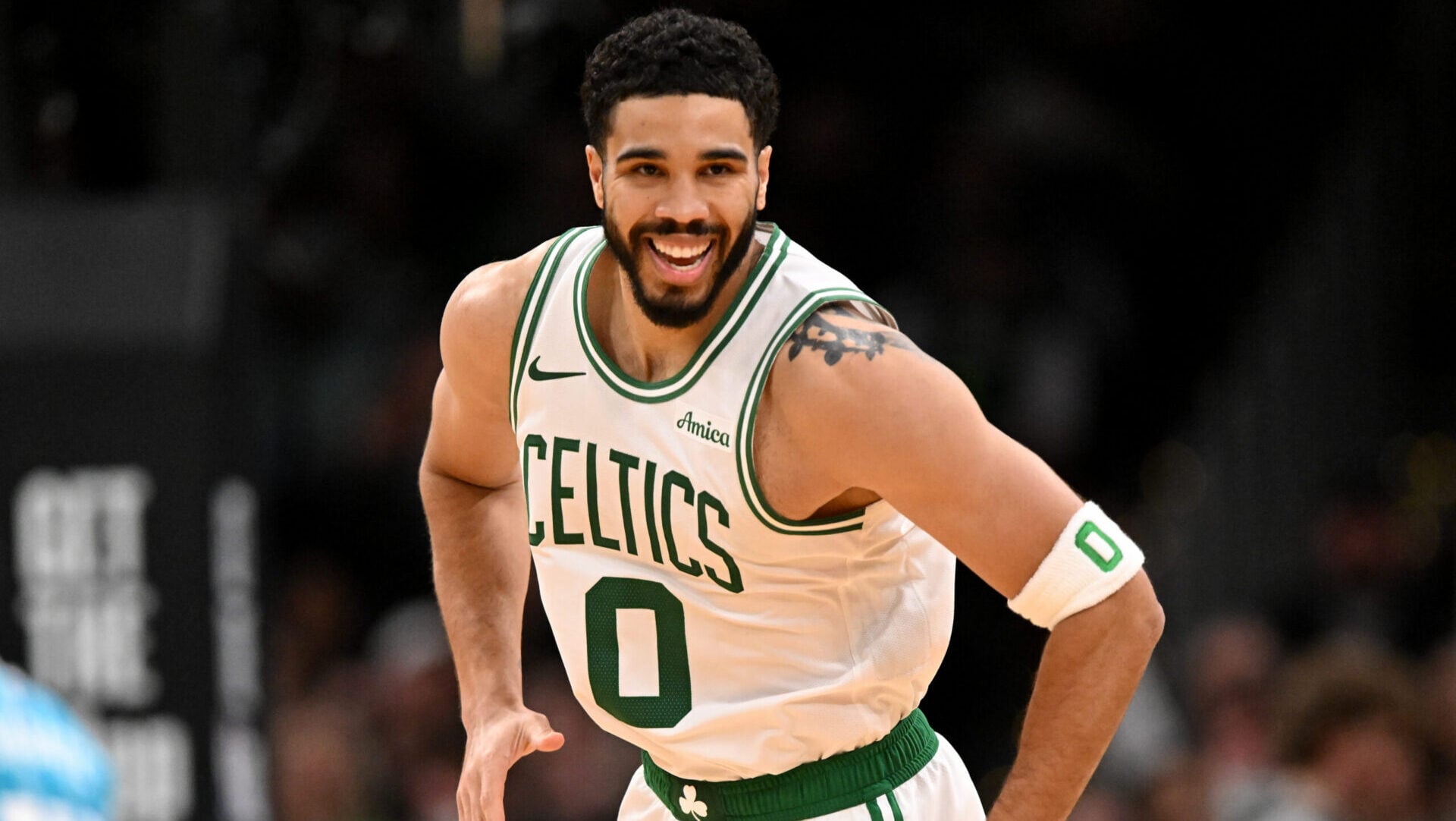
The stripped-down Celtics were not supposed to get better offensively. With Jayson Tatum hurt, Kristaps Porziņģis, Jrue Holiday and Al Horford gone and many of their splashiest shooters showing up with frozen jumpers, an explosion was not on the table.
This is why Boston plays the way it does. The Celtics have experimented with offensive rebounds for years. And now, they’re better at it than ever.
Boston is the rare team that doesn’t shoot well but still scores often. The Celtics average 122.0 points per 100 possessions, second in the NBA heading into Monday’s action. They make up for too many jangled shots in a few ways.
First, they lift for an onslaught of 3-pointers.
Second, they turn the ball over less than anyone.
And third, a scrappy group devoid of conventional rebounders (which shows on the defensive side) is devouring offensive boards. The Celtics entered Monday seventh in offensive rebound rate. And before you ask, ‘What depraved Boston homer could have seen this coming?’ — the answer is Mazzulla.
The science of crashing has haunted the Celtics’ coach for years.
“It’s just another way to help control the shot margin,” Mazzulla said.
In July 2021, when Mazzulla was an assistant for then-head coach Udoka, the Celtics used their summer-league team to experiment with crashing three players per shot attempt, generally considered a no-no at the time. They liked what they saw. A year later, with Mazzulla stepping in as interim head coach, they took their trials to another level, deploying aggressive crashing strategies with their G League affiliate, the Maine Celtics.
The science of crashing has haunted the Celtics’ coach for years.
“It’s just another way to help control the shot margin,” Mazzulla said.
In July 2021, when Mazzulla was an assistant for then-head coach Udoka, the Celtics used their summer-league team to experiment with crashing three players per shot attempt, generally considered a no-no at the time. They liked what they saw. A year later, with Mazzulla stepping in as interim head coach, they took their trials to another level, deploying aggressive crashing strategies with their G League affiliate, the Maine Celtics.
Maine went even more radical than the summer Celtics did, routinely crashing four guys for offensive rebounds, a strategy the squad’s head coach, Alex Barlow, was hesitant to implement at first. With encouragement from a member of the Celtics’ analytics department, Drew Cannon, as well as from his coaching analytics-focused assistant in the G League, Alex Merg, he changed his mind.
“Our whole philosophy was, let’s send everybody and let’s see how it works,” Barlow said. “Let’s see if the trade-off is a net positive.”
The outcome was decisive.
Maine won rebounding battle after rebounding battle, creating extra shooting chances more nights than not, all while its transition defense remained in the top half of the league. The team wasn’t tagging up, the strategy where it pins those opponents from behind, but a stampede of crashers meant the enemy couldn’t scamper in the opposite direction. Doing so would increase the chances of another offensive rebound.
Now, Merg runs coaching analytics for the NBA Celtics. And the team is succeeding with its own version of glass gluttony.
The Celtics crash the offensive boards with at least three players on 19.1 percent of their shots, the league’s third-highest frequency, according to Second Spectrum. They are sixth in the NBA in net chances created, which also factors in their stingy ball security.
Boston will tag up properly, though not with all five guys.
The old-school approach to offensive rebounding was for perimeter players to sneak across the baseline and hope to leap in front of opponents for loose balls. But the game has changed. Because 3-pointers are so prevalent, the rock often hits the cylinder with more velocity, which leads to more long rebounds.
This is where tagging up comes into play.
In theory, and if done properly, pinning a defender into place doesn’t just stop him from darting the other way in transition. It also gives a perimeter player time to slither in for a rebound that bounced beyond the free-throw line.
“The misnomer of offensive rebounding negatively impacting transition defense, I think the data has caught up … where there isn’t a significant difference whether you crash two, three or four and the transition rate or the points per possession based on that,” Mazzulla said. “And so, I think that with all the analytics and the data going on, you’re seeing that there actually could be a positive correlation to that.”
Listen in on a pregame coaching meeting, and offensive boards are a common topic.
Earlier this season, the Celtics bashed the Cavaliers, another team focused on winning the possession game. The fight on the glass became the main focus of Atkinson, who warned his crew at morning shootaround that Boston prioritized similar parts of the game that Cleveland did. The players drilled the ways that the Celtics crashed.
“We did everything but fly a plane over with — what do you call those things? The banners? That’s the only thing we didn’t do,” Atkinson said. “We gotta win the possession game.”
The Celtics snagged a dominant 18 offensive rebounds that night and won by 20.
The Cavaliers got out-crashed, which is rare, even if they’re not one of the league’s elite offensive-rebounding squads, mostly because of their personnel.
No one crashes more than the Cavs or their offspring. The Cavaliers send at least three crashers to the glass on 27.4 percent of their shots, tops in the league, according to Second Spectrum. The only franchise that’s close is the Suns (26.7 percent), whose head coach, Ott, was an assistant in Cleveland until last season. Phoenix and Cleveland are second and third, respectively, in net chances created, one reason why the Suns, especially, have outplayed expectations thus far.
No NBA squad “tags up” in its most extreme fashion. Technically, “tagging up” requires sending all five players to the paint. But coaches are repurposing elements of the philosophy.
Many teams tag only on 3-pointers, not on 2s, since the longer shot means the longer rebound and a chance for a feisty guard to chase down a board that looks more like a loose ball, the type of moment that particularly irks Rockets center Steven Adams, one of history’s greatest rebounders.
“You get your guy. You’re freakin’ good,” Adams said. “You feel like you have it, and then a f—— guard just full jump comes and takes it.”
Of course, neither Adams nor his Rockets are victims of the NBA’s rebounding revolution.
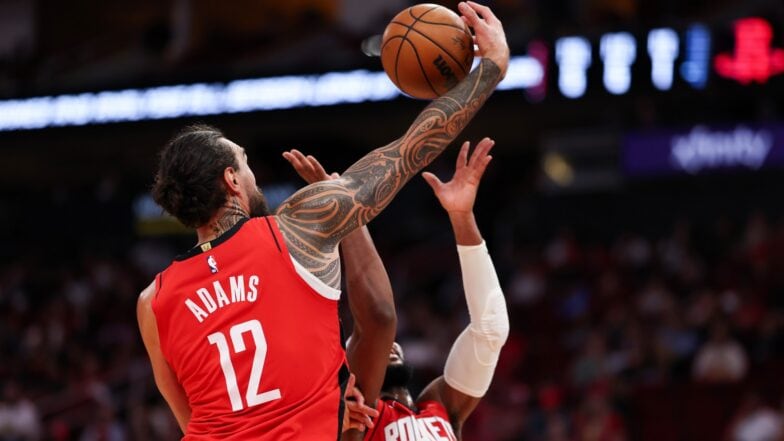
Steven Adams, who is from New Zealand but has never played for the Tall Blacks, is one of the NBA’s best rebounders.
The following is an unreasonable claim: The best offensive rebounding team of its era should be better at offensive rebounding.
Yes, the Rockets overflow with size and also employ Adams, another New Zealand native whose identity is intertwined with the offensive boards.
New Zealanders are somehow all over NBA’s offensive rebounding revolution, and not even on purpose. Henare drew inspiration for tagging up from a coach in the Australian league, Aaron Fearne, who later coached New Zealand’s under-19 squad. Ross McMains, an assistant with New Zealand’s national team, now holds the same position with the Celtics. And then there’s Adams, a long-haired, unmovable 7-footer who doesn’t play for his country’s national team, didn’t know about its bold approach to the glass until asked about it for this article, and yet looks as comfortable down low as Aquaman does at sea.
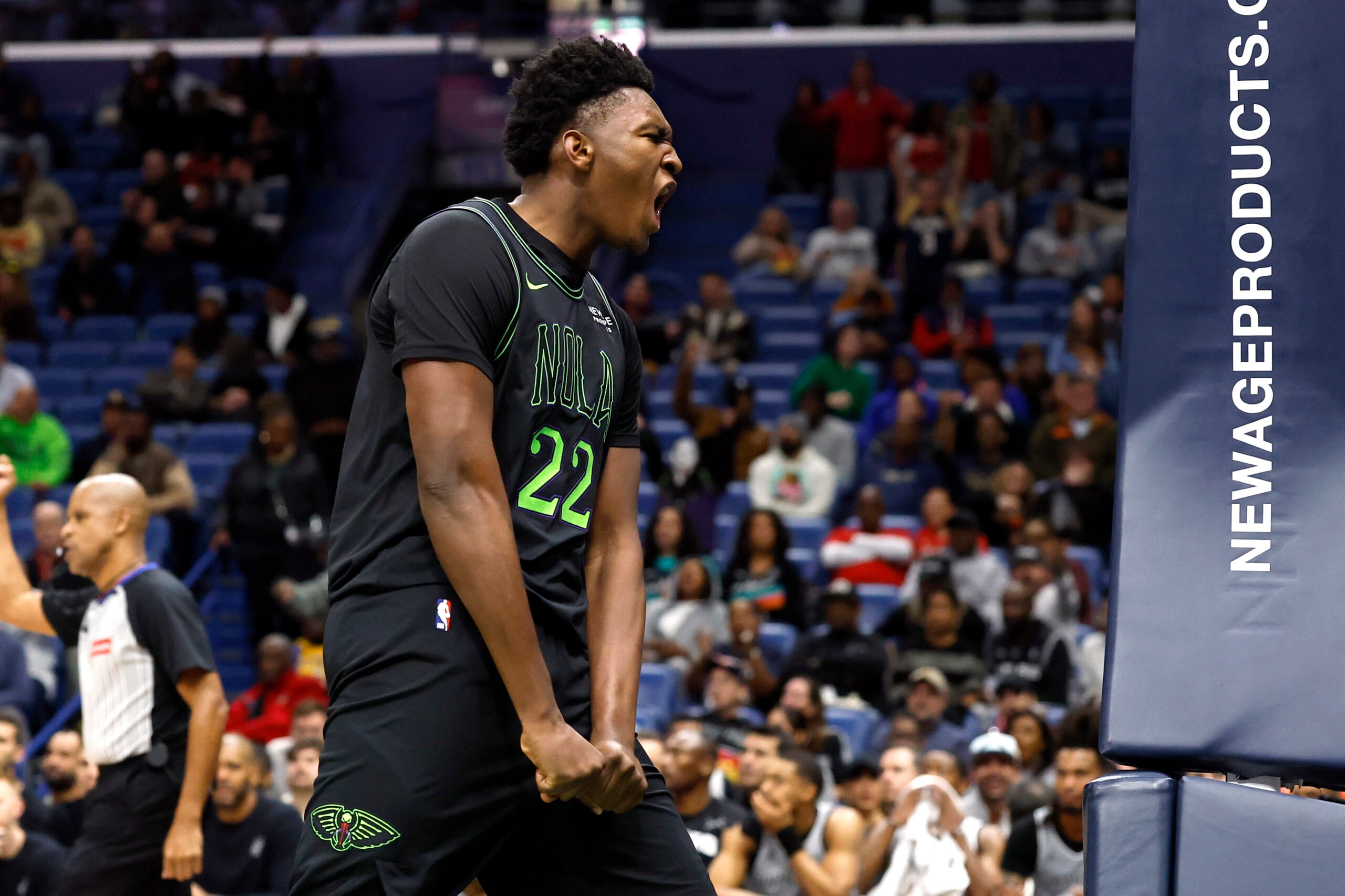
As of Monday, Houston had recovered 40.8 percent of its own missed shots, a rate that would annihilate the previous single-season record, which dates back to 1996, when the NBA began compiling reliable play-by-play data.
But the Rockets should be even better — so says Udoka.
Houston is overflowing with size, regularly leaning on lineups where the shrimp is 6-foot-7 Amen Thompson, who lives for physicality. A bunch of pseudo 7-footers surround him. And Udoka has encouraged the group to crash the offensive glass even more than it has.
The Rockets crash at least three players on only 15.2 percent of their possessions, eighth in the NBA, according to Second Spectrum, though they are heading in the direction Udoka prefers. Only a couple of weeks ago, their internal metrics placed them in the middle of the pack in that statistic.
“We see the numbers and how it impacts us,” Udoka said. “Although we are getting a good amount (of rebounds) with two (crashers).”
He’s shown those numbers to the players, specifically to the veterans, such as Kevin Durant, a brilliant basketball mind and all-time great who isn’t used to playing this way. Nearly two decades in the league molds habits, and flying into the paint for a faint chance at a rebound was not one of them for most of Durant’s career.
When the Rockets do send at least a trio to the boards, there’s no stopping them. They win the offensive rebound 56.3 percent of the time in those scenarios. As Udoka tells his players, the more often they send three, the more their already historic rebounding can shatter whatever the basketball world previously believed was possible.
“There are certain guys that are a little older, more seasoned,” Udoka said. “They are who they are at this point, but we still want them to go and be a body.”
The Rockets’ model to win the rebounding battle, and thus the possession game, is even more extreme than the Celtics’. Houston scores the fourth-most points per possession of any team in the league, yet has treaded around the middle of the pack in shooting efficiency all season. Unlike Boston, the Rockets don’t take many 3s and turn the ball over in bunches.
Their best offense is a missed shot.
“Not sounding mean or anything,” Adams prefaced, “but if you know your team isn’t that great at shooting, you’re gonna need more attempts.”
The Rockets are creating them — and those second-chance opportunities provide better looks, too. Offensive rebounds, which defenses scramble themselves to prevent, present ample opportunities for stand-still 3-pointers or open cutting lanes. All 30 NBA teams average more points per possession after offensive boards than they do in their first-chance, half-court offense, according to Cleaning the Glass.
The league is changing, even for the guys who have been around forever.
Teams have crashed at least three players on the offensive boards twice as often this season as they did only three years ago. The Rockets aren’t the only ones who see obscene returns when they reach that threshold. Sending a third guy to the boards can make even the squad with the slipperiest fingers look like Houston does.
Sixteen teams recover more than half of their missed shots on possessions that they crash three-plus guys, per Second Spectrum. Twenty-nine retrieve at least 40 percent when they crash at least three. The only outlier, hovering at 38.0 percent, is the Washington Wizards.
The Milwaukee Bucks send three players to the offensive glass less than anyone, a staple of a Doc Rivers team, which subscribes to the old-school choice of transition defense over offensive rebounds. But on the few occasions the Bucks bombard the glass, they dominate. They have a 58.4 percent offensive rebound rate when they crash at least three guys, tops in the league. But they crash too little for numbers like that to matter.
Of course, if crashing isn’t reckless, if it’s done correctly with the principles of tagging up applied, it shouldn’t hurt the team in transition.
Iisalo tagged up when he led teams in Germany and France before coming to the NBA. He’s implemented many of those concepts in his new home. The Grizzlies send at least three crashers to the glass on 18.8 percent of their shots, the fourth-highest frequency in the league.
“It’s very hard to get into the low 120s in offensive rating (points per 100 possessions) without the offensive rebounding,” Iisalo said. “That’s what it takes to be an elite offensive team nowadays.”
But the Grizzlies haven’t sacrificed defense because of it. They allow transition opportunities approximately three times for every 10 defensive rebounds, the 12th-lowest frequency in the NBA, according to Cleaning the Glass. A scroll through the teams that crash frequently and also focus on pinning their defenders in shows a similar theme.
The Suns are elite in this skill: Second in three-player crash rate and third in transition frequency following defensive rebounds. The Portland Trail Blazers, whose head coach, Tiago Splitter, ran the same system in Paris as Iisalo did not long ago, are fifth in both. The Raptors are ninth and 11th. The Celtics, just as Mazzulla would hope, are third and sixth.
It’s all in the quest to create more opportunities to score, a pursuit that could become even more extreme if it continues to work.
“I think it will continue to go in that direction,” Mazzulla said. “How can you just find different ways to win the shot margin, get more possessions, get more shots, get better shots?”
***
Fred Katz is a senior NBA writer for The Athletic. Follow Fred on Twitter @FredKatz