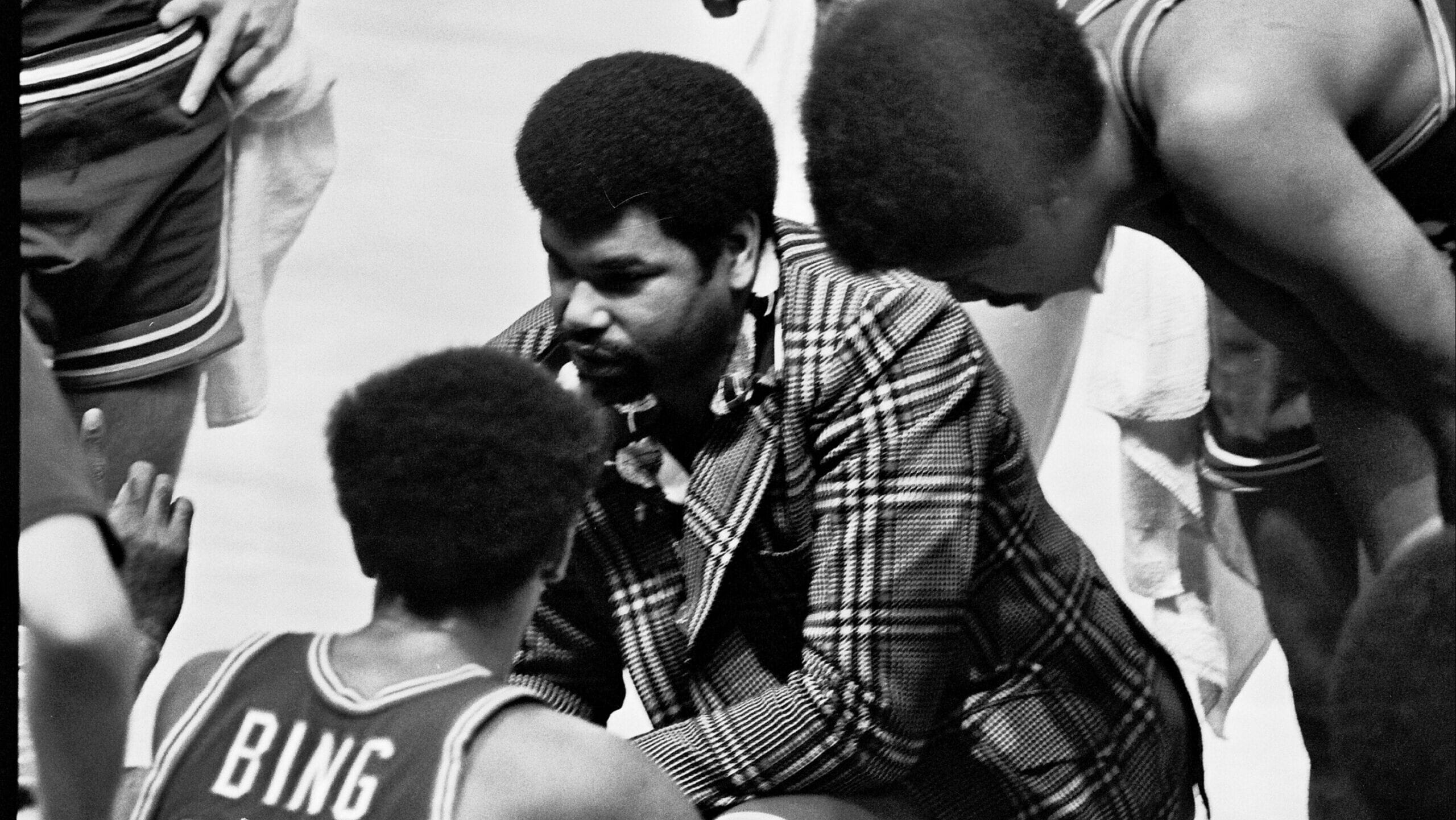
Ray Scott became the 1st Black winner of the NBA’s Coach of the Year award in 1974.
Ray Scott barely had time to sit down in his new gig as an NBA coach, Earl Lloyd’s new and only assistant, when Lloyd got fired seven games into the 1972-73 season.
Just like that, Scott was the Detroit Pistons’ head coach, with 75 more games stretching out over the next five months, no staff and no real plan.
Somehow, though, he and the Pistons muddled through. They came back in 1973-74 and stunned the league, at 52-30 doubling their victory total from just two seasons earlier. Scott, thrust into the job at a time when coaching giants roamed the NBA landscape (Red Holzman, Jack Ramsay, Bill Sharman, Dick Motta), was voted as the Coach of the Year.
That was notable, with Scott as the first Black winner of the award. He was the fifth Black head coach in league history and only its second “suit coach” after Lloyd. (Bill Russell, Lenny Wilkens and Al Attles preceded them, getting hired from 1966 to 1969 but as player-coaches.)
Eighteen months later, like so many COY winners before and since, Scott got fired. In fact, his coaching run was more than halfway over when he took home that trophy. He and the Pistons flipped from 90-67 in his first two seasons to 57-67 by the time Oscar Feldman, a new GM under new Detroit ownership, fired him in January 1976.
Fifty years on, Scott is 87, doing well and enviably happy, living in Michigan with his wife Jennifer. In 2022, he published his memoir, “The NBA in Black and White: The Memoir of a Trailblazing NBA Player and Coach” (Seven Stories Press), written with his late friend, noted basketball author Charley Rosen.
He’s a sharp and charming storyteller, and his book is a special blend of basketball, biography and social commentary. Scott, for all his achievements, has been a keen observer with Forrest Gump-like proximity to big personalities from music (think Motown) and entertainment to newsmakers in America’s Civil Rights Movement.
At a certain level, it’s a shame he has been a ghost on the NBA scene for the past half century. But Scott sounds like he wouldn’t change a thing, and in an hour-long, wide-ranging phone conversation, he makes you believe it.
On Court for the Ascension
Scott sees the growth of the NBA during his years as a player and coach as inextricably linked to what was going on throughout the nation.
“I feel that the league owes a thank you to Dr. Martin Luther King, Jr.,” he told NBA.com. “Because of integration all these kids started coming out of these inner cities and playing at these universities, and they turned into All-Americans.”
From the 1960 U.S. Olympic men’s basketball team to the 1964 edition, Scott noted in his book, blacks went from three roster spots to five. The NBA by 1960 had about 24% black players; five years later, that percentage more than doubled.
The league bumped from eight to nine member teams for Scott’s 1961-62 rookie season by adding the expansion Chicago Packers, a franchise that would morph and move to become the Baltimore Bullets and eventually the Washington Wizards. By the time Scott retired as a player in 1972, there were 17 NBA teams – and 11 more in the ABA, where Scott played his last two seasons with the Virginia Squires.
In between, Scott made his mark as a reliable, 6-foot-9 power forward and center for the Pistons and the Bullets. He averaged 14.9 points and 10.5 rebounds in 684 NBA games, then 11.4 and 6.5 in 127 more for the Squires.
“Ray was very smart, on and off the court,” said Rod Thorn, a teammate in Detroit for 1 ½ seasons and an NBA lifer as a player, coach, GM and league executive.
“He knew what to do, where to be – he was very easy to play with. Nothing would surprise me about Ray. He was glib, he could talk to anybody. He had a plethora of people he was friendly with from different fields. The glass was always half-full with him.”
Thorn recalled one pregame session when Dave DeBusschere was serving as Pistons player-coach: “We were playing the Lakers and Dave was talking about who was going to guard who. When he got to the forwards, he said ‘Ray, who do you want? [Legendry Hall of Famer Elgin] Baylor or Rudy LaRusso?’ Ray said, ‘Y’know Dave, I would be a better matchup for LaRusso, since we’re kind of the same kind of athlete…’”
Thorn laughed, and so did Scott when the story was relayed to him.
“I came up with All-Americans in Philadelphia, and I competed against the greatest player of all-time,” Scott said. “I always said, ‘You don’t have to worry about me having humility – I spent the first years of my [basketball] life playing against Wilt Chamberlain.”
Chamberlain was a once-in-a-century athlete and dominant basketball force from Philly’s Overbrook, a year ahead of Scott, who attended South Catholic and then West Philadelphia. But he was surrounded by other talented young players, competing in neighborhood games with and against the likes of Woody Sauldsberry, Hal Lear, Guy Rodgers, Wayne Hightower and John Chaney.
“Very solid, very real,” Hall of Famer Spencer Haywood said of Scott as a player, “and he came out of a school of basketball in Philadelphia with Wilt, Sonny Hill, all of those guys. I went to play in New York and stopped by Rucker [summer league] for a minute, and Lenny Wilkens said, ‘I want you to go where the professors are.’
“That was down in Philadelphia, the Baker League. They were setting back picks and stuff, and I was like ‘What the…!?’ They had another level of play. It was more ‘academic.’ With all those universities there, they were a little more … polished, I would say.”
Scott played briefly at Brooklyn’s City Tech junior college after graduating from high school in January, then hired on as a bellhop for a summer job at Kutsher’s Country Club in the Catskill Mountains. Chamberlain had preceded him there, participating in evening games with other top collegians as entertainment for the resort’s guests (Red Auerbach was on the payroll as athletic director).
Scott went to the University of Portland but poor grades undermined his hoops plans – he did face Baylor and his Seattle University team twice – then landed in the Eastern League with the Allentown Jets. Playing weekends across Pennsylvania, Scott’s game and profile grew over nearly three seasons there. The Knicks, Cincinnati Royals and the Pistons all contacted him, with Detroit being the most interested.
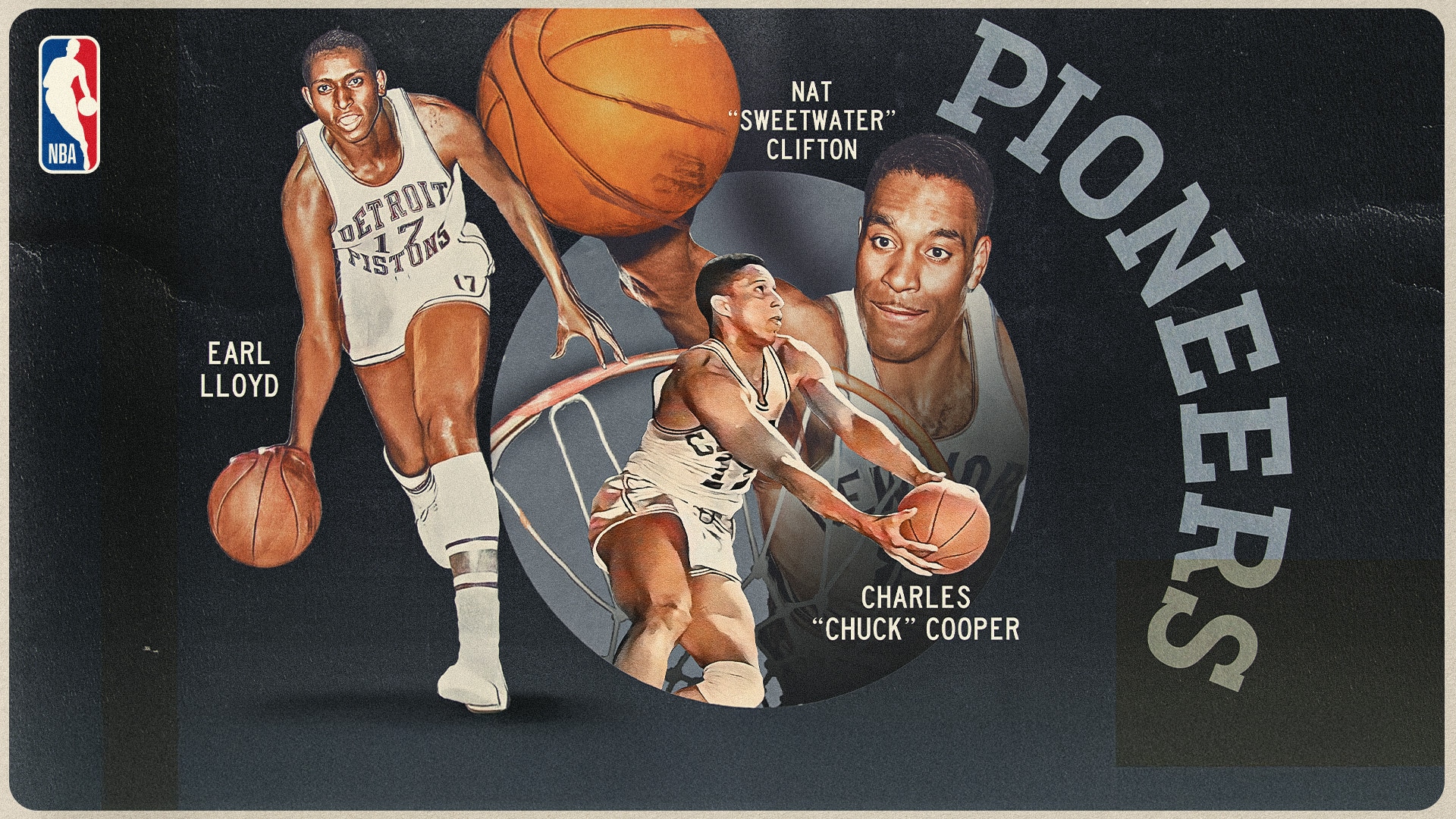
In between Lloyd’s historic firsts – first black player to appear in an NBA game on Oct. 31, 1950, and first black assistant and “suit” head coach – he was scouting for the Pistons. He told Scott that Detroit would draft him and, with the No. 4 overall pick, it did. Scott learned the news when he picked up an evening newspaper on a Manhattan subway ride and let out a holler that startled over riders. And never forgot Lloyd’s loyalty.
By the autumn of 1972, Lloyd had gotten a green light to hire an assistant. So he called Scott, who had begun working in the Squires’ front office. But the younger man could not say no.
“I was happy as a clam to be living on the beach in Virginia Beach,” he said. “I had nothing prepared. I had no notes. But Earl was my mentor. He became the guy who brought me to Detroit twice.”
Coach of the Moment, Coach of the Year
GM Ed Coil broke the news of Lloyd’s firing to the two men on an off day in Portland, with Scott agreeing to take the top job only at Lloyd’s urging. The team had talent, with Hall of Famers Dave Bing at guard and Bob Lanier at center. The cast included Curtis Rowe, Chris Ford and eventually John Mengelt and George Trapp.
The Xs & Os were only part of the challenge for Scott, who stood out among the other men working the NBA sidelines. Given how long ago it was and sports’ culture of heckling and harassment, Scott’s recollections are a little surprising in that the crowds weren’t rougher on him.
“We were coming out of the ’60s,” he said, a nod to what he considered progress in race relations. “I feel like the ’60s and the ’70s were the greatest 20 years we’ve ever had. What we were thinking, you’re saying: How are people gonna treat me?
“I will say this, I was called the ‘n-word’ in New Orleans more than any other city I ever played in. But I was called that by black people there too – I was the opponent and they were there to see Pistol Pete Maravich.”
Scott got into a beef one night with Jazz coach Butch van Breda Kolff, he said, because van Breda Kolff was yelling at Lanier. Other coaches were more supportive, in a fraternal way that exists to this day when they’re not locked into heated hardwood battle.
“The NBA had mature men, men like Cotton Fitzsimmons, Bill Fitch,” Scott said. “I wouldn’t say they took me under their wing … but they took me under their wing. We’d go have a drink, have a cup of coffee.”
In Scott’s COY season, Detroit started 8-4, slipped to 12-11, then strung together seven victories. A midseason stretch winning 21 of 27 got the Pistons to their high mark, 44-22. Lanier averaged 22.5 points and 13.3 rebounds to finish third in MVP voting and Bing contributed 18.8 points and 6.9 assists. The team ranked in the Top 10 both offensively and defensively, though it finished third in its division behind both Milwaukee (59-23) and Chicago (54-28).
Facing the Bulls in the playoffs, with every game alternating between Chicago Stadium and Detroit’s Cobo Arena, the Pistons fell behind 3-2 in the best-of-seven series. Lanier and Bing combined for 50 points and their bench outscored Chicago’s 24-12 to win Game 6.
But a furious comeback in the final quarter of Game 7, when Detroit held the Bulls to 16 points, came up short 96-94. Scott blamed himself for not preparing sufficiently for Chicago center Clifford Ray, a blue-collar guy who had an uncharacteristic outburst of 15 points and 15 rebounds.
Injuries, contract grumbles and a regression to the mean pulled the Pistons down to 40-42 in 1974-75. And things weren’t improving the following season. Fred Zollner, a NBA charter owner, had made a new contract for Scott a condition when he sold the franchise in 1974 to Bill Davidson, but the coach no longer had any angles in the front office or corporate suite.
Complicating things more: His assistant, Herb Brown, had been the new bosses’ hire – and, sure enough, became Scott’s replacement at 17-25 in January. Also, Lanier never fully clicked with Scott for reasons of his own.
“I wish Bob had liked me,” Scott said of the introspective, sometimes sensitive big man. “I think we could have won a championship. He asked me before my second or third game, ‘How does it feel to have such a prestigious position?’ I said ‘Bob, I played for 11 years.’ His question really confused me. And Bob was my cornerstone [player]. But he didn’t feel I was capable or qualified.
“I’ve always said basketball is a people business, so you’re going to have people problems.”
A Pivot Toward Insurance
Scott got one nibble after that from the basketball world in which he’d spent his entire adult life. He was hired by Eastern Michigan University of the Mid-American Conference before start of the 1976-77 season. In three years coaching the Hurons, they went 29-52 – a representative sample for a Ypsilanti, Michigan, program with a 737-849 record and just four NCAA tournament appearances in 54 years.
Scott did some color commentary on University of Detroit basketball broadcasts. Then his inquisitive mind nudged him toward a new challenge – to learn the insurance business – after answering a jobs ad with Colonial Life Insurance. They furthered his education with university classes and he rose to become Colonial’s first black regional director, overseeing the state of Michigan.
He and Jennifer have raised three daughters, Allison, Devon and Nia, in the Ypsilanti area and enjoy their grandchildren and great-grandchildren. He and Rosen wrote the manuscript for a second book, about Scott’s love of boxing, that is set to come out later this year. In his first book, he shared tales of his introduction to and friendships with sports, show biz and political celebrities, from Aretha Franklin to Malcolm X to Muhammad Ali.
“[Those experiences] mean everything to me,” Scott said. “The people who change your view, that’s always interesting. You want to meet those people because you want to see what it is they have. There is something unique there.”
A couple of significant numbers stand out from Scott’s relatively brief career on the Pistons’ bench:
- After he won his Coach of the Year Award, 17 years passed before Houston’s Don Chaney in 1991 became the second black coach to win it. Since then, eight others have been honored a total nine times – including a run of four in a row from 2006-09 (Avery Johnson, Sam Mitchell, Byron Scott, Mike Brown) – as more black coaches have gotten hired, period.
- A couple of weeks ago – Jan. 26, to be exact – the 50th anniversary of Scott’s firing by the Pistons passed quietly.
When he reflects on his NBA coaching stint, Scott mostly sounds thrilled to have built a life for himself and his family in a place that felt so cold and lonely when he arrived in 1961. The call from Lloyd brought him back. But he seems to have zero regrets that the NBA never came a-knockin’ in all those years.
He didn’t either, after all.
“Neither of us did,” Scott said. “Once you yourself off the beaten path, it becomes a position for the new guy. ‘He’s in the insurance business’ or ‘he’s got a car dealership,’ so you don’t hear from that guy again. But I made it stop.
“I was never so hung up on coaching that I felt like, this is what I want to do,” Scott said. “Here I am in Michigan, 65 years later. It’s just a good life.”
* * *
Steve Aschburner has written about the NBA since 1980. You can e-mail him here, find his archive here and follow him on X.